Enzyme Substrates
Subcategories of "Enzyme Substrates"
Found 1527 products of "Enzyme Substrates"
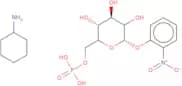
2-Nitrophenyl α-D-glucopyranoside
CAS:2-Nitrophenyl a-D-glucopyranoside is a chromogenic substrate commonly used to assay the activity of glucosidases. Upon cleavage of the glycosidic bond by glucosidases, the released 2-nitrophenyl group yields a yellow color detectable by spectrophotometry. This substrate has high sensitivity and is widely used in a variety of applications, including drug discovery and enzyme kinetics studies.
Formula:C12H15NO8Purity:Min. 95%Color and Shape:White to off-white solid.Molecular weight:301.25 g/mol4-Nitrophenyl N,N',N''-triacetyl-b-D-chitotriose
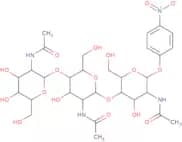
CAS:Substrate for determining hydrolytic activity of chitinasePurity:Min. 95%Color and Shape:White PowderMolecular weight:748.69 g/mol4-Nitrophenyl a-D-thiomannopyranoside
CAS:4-Nitrophenyl a-D-thiomannopyranoside is a chemiluminescence substrate that can be used to measure the activity of β-galactosidase, an enzyme involved in the hydrolysis of lactose. This product is available as a white to yellowish powder and has been shown to have high purity and quality. It also displays strong fluorescence when reacted with hydrogen peroxide and has been used for diagnostics tests such as staining, food testing, and enzyme substrate reactions.Purity:Min. 95%Molecular weight:317.32 g/mol4-Methylumbelliferyl-beta-D-galactopyranoside
CAS:Fluorogenic substrate for β-D-galactosidase yielding a blue fluorescent solution upon cleavage.Formula:C16H18O8Purity:Min. 98.0 Area-%Molecular weight:338.32 g/mol4-Nitrophenyl 2-acetamido-2-deoxy-β-D-glucopyranoside-6-sulfate potassium
CAS:4-Nitrophenyl 2-acetamido-2-deoxy-beta-D-glucopyranoside-6-sulfate potassium is a chromogenic substrate for N-acetylglucosamine-6-sulfatase. Upon hydrolysis, para-nitrophenol is released yielding a yellowish colour. 4-Nitrophenyl 2-acetamido-2-deoxy-beta-D-glucopyranoside-6-sulfate potassium is used in different applications such as the Mucopolysaccharidosis IIID (Sanfilippo D) screeningFormula:C14H17N2O11S•KPurity:Min. 95%Color and Shape:PowderMolecular weight:460.46 g/molAldol® 515 N-glutaryl-L-phenylalanine amide potassium salt, Biosynth Patent: EP 2427431 and US 8940909
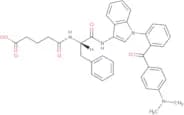
CAS:Aldol® 515 N-glutaryl-L-phenylalanine amide is a chromogenic and fluorogenic enzyme substrate used for detection of L-glutamate-phenylalanine (GluPhe)-specific peptidase activity. The colorless enzyme substrate is cleaved the GluPhe-specific peptidase, yielding development of orange-red coloration. In addition, red fluorescence is generated when Aldol® 355 fluorescence enhancer or a suitable matrix is present. Aldol® 515 N-glutaryl-L-phenylalanine amide can be used in enzyme assays and live bacterial cultures. Aldol® 515 N-glutaryl-L-phenylalanine amide is suitable for use in liquid and solid media, under aerobic as well as anaerobic conditions.
Formula:C37H35KN4O5Purity:Min. 95%Color and Shape:PowderMolecular weight:654.8 g/mol2-Nitrophenyl b-D-galactopyranoside-6-phosphate cyclohexylammonium salt
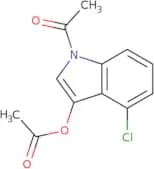
CAS:2-Nitrophenyl beta-D-galactopyranoside-6-phosphate cyclohexylammonium salt is a chromogenic substrate used to detect the enzymatic activity of beta-galactosidase-6-phosphatase. After cleavage, the nitrophenyl moiety is released exhibiting a light yellowish color. 2-Nitrophenyl beta-D-galactopyranoside-6-phosphate cyclohexylammonium salt is used in diagnostic assays such as lysosomal storage disorder.Purity:Min. 95%Color and Shape:PowderMolecular weight:480.4 g/mol4-Chloro-3-Indoxyl-1,3-diacetate
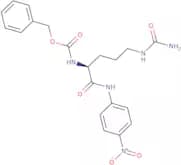
CAS:4-Chloro-3-indoxyl-1,3-diacetate is a fluorogenic or chromogenic substrate used in food testing. It is also an enzyme substrate that can be used to detect the presence of bioluminescence. 4-Chloro-3-indoxyl-1,3-diacetate has been shown to have high purity and high quality for use in diagnostic kits. 4-Chloro-3-indoxyl-1,3-diacetate is a ligand that is conjugated with other molecules to form complexes for use in fluorescence and chemiluminescence experiments.Purity:Min. 95%Molecular weight:251.67 g/molN-α-CBZ-L-citrulline-p-nitroanilide
CAS:Nalpha-CBZ-L-Citrulline-p-nitroanilide is a synthetic chromogenic enzyme substrate used in protease enzymatic stutides. After hydrolysis, p-nitroaniline is released, which produces a yellow color detectable spectrophotometrically at 405 nm.
Formula:C20H23N5O6Purity:Min. 95%Molecular weight:429.43 g/mol4-Nitrophenyl phosphate mono(2-amino-2-ethyl-1,3-propanediol) salt monohydrate
CAS:4-Nitrophenyl phosphate mono(2-amino-2-ethyl-1,3-propanediol) salt monohydrate is a chromogenic substrate that can be used to detect the presence of alkaline phosphatase. It is also used in food testing and diagnostics. 4NPPMD is a substrate for the enzyme alkaline phosphatase, which has been shown to play a role in the inflammatory response. The production of 4NPPMD by bacteria in the environment can be detected with chemiluminescence or bioluminescence. This product has been shown to react with both horseradish peroxidase and alkaline phosphatase, as well as other enzymes that are involved in metabolic pathways. This substrate also has high purity and fluorescence properties.Formula:C11H21N2O9PPurity:Min. 95 Area-%Molecular weight:356.26 g/molN-Benzoyl-DL-arginine 4-nitroanilide hydrochloride
CAS:N-α-benzoyl-DL-arginine-4-nitroanilide hydrochloride is commonly used as a substrate in various enzymatic assays, particularly for studying proteases like trypsin and chymotrypsin. It serves as a synthetic substrate to measure the activity of these enzymes. For instance, it has been used to determine trypsin activity in different organisms and tissues. The substrate has also been employed in studying the enzymatic properties of various proteases, including those found in latex, snake venoms, and plant seeds. Additionally, it has been utilized to assess the effects of different compounds on trypsin activity, such as condensed tannins and wine.
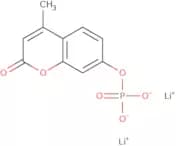
Formula:C19H22N6O4•HClPurity:Min. 95%Color and Shape:PowderMolecular weight:434.88 g/mol4-Methylumbelliferyl phosphate dilithium
CAS:4-Methylumbelliferyl phosphate dilithium is a fluorogenic substrate for alkaline phosphatase. After enzymatic cleaveage, free 4-methylumbelliferone (also known as hymecromone) is released, exhibiting blue fluorescence upon excitation with UV light. The strongest fluorescence of 4-methylumbelliferone requires deprotonation of the hydroxyl group (thus requires alkaline pH), with a maximal fluorescence intensity obtained with excitation at 350 to 370 nm and emission at 440 to 470 nm. The use of 4-methylumbelliferyl phosphate dilithiumas a substrate for measuring the alkaline phosphatase activity is used for bone metabolism disorder studies and hypophosphatasia diagnosis.Formula:C10H7O6P•Li2Purity:Min. 95%Color and Shape:PowderMolecular weight:268.01 g/molResorufin acetate
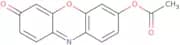
CAS:Resorufin acetate is a fluorogenic substrate for esterase activity measurments in lipid metabolism studies. It is also used as a substrate for chymotrypsin, a digestive enzyme produced by the pancreas that aids in protein digestion in the small intestine.
Formula:C14H9NO4Purity:Min. 95%Color and Shape:PowderMolecular weight:255.23 g/molAzoic Diazo Component 24 (Salt) [for Biochemical Research]
CAS:Formula:C30H28Cl2N6O6·ZnCl2Purity:>95.0%(T)Color and Shape:Yellow to Brown to Dark green powder to crystalMolecular weight:775.77Aldol® 467 N-acetyl-beta-D-glucosaminide, Biosynth Patent: EP 2427431 and US 8940909
CAS:Aldol® 467 N-acetyl-beta-D-glucosaminide is a chromogenic and fluorogenic enzyme substrate used for detection of ?-N-acetyl-glucosaminidase activity. The colorless enzyme substrate is cleaved in the presence of ?-N-acetyl-glucosaminidase yielding development of a yellow product. In addition, green fluorescence is generated when a suitable matrix or Aldol® 355 fluorescence enhancer is present. Aldol® 467 N-acetyl-beta-D-glucosaminide amide can be used in enzymatic assays or in live bacterial cultures. Aldol® 467 N-acetyl-beta-D-glucosaminide is suitable for use in liquid and solid media, under aerobic as well as anaerobic conditions.Formula:C31H31ClN2O9Purity:Min. 92.0 Area-%Molecular weight:611.04 g/molAc-D-Cha-GR-aminoluciferin
Ac-D-Cha-GR-aminoluciferin is a modified form of D-luciferin used as a luminescent enzyme substrate for protease. This modified substrate provides a longer light emission than normal luciferins, allowing their use in cell-based bioluminescence assays.Formula:C30H41N9O6S2Molecular weight:687.83 g/mol4-Methylumbelliferyl a-D-arabinopyranoside
A fluorogenic MOSCERDAM® substrate targeting alpha-arabinofuranosidasePurity:Min. 95%Molecular weight:308.28 g/mol4-Methylumbelliferyl b-D-celloheptaoside
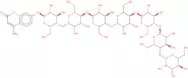
CAS:A fluorogenic MOSCERDAM® substrate targeting cellulasesPurity:Min. 95%Molecular weight:1,311.15 g/mol4-Nitrophenyl 2-acetamido-6-O-(2-acetamido-2-deoxy-b-D-glucopyranosyl)-2-deoxy-a-D-galactopyranoside
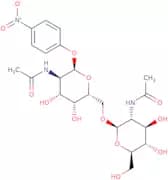
CAS:4-Nitrophenyl 2-acetamido-6-O-(2-acetamido-2-deoxy-b-D-glucopyranosyl)-2-deoxy-a-D-galactopyranoside is a chromogenic pNP glycoside substrate designed for the detection and assay of specific enzymes, particularly glycosidases. Upon enzymatic hydrolysis, this substrate releases a quantifiable 4-nitrophenol moiety enabling straightforward colorimetric measurement. This pNP-linked substrate is versatile and can be efficiently employed in enzyme activity assays, screening enzyme inhibitors, and assessing enzyme mechanisms, enhancing research and development processes in the field of glycobiology.Purity:Min. 95%Color and Shape:White PowderMolecular weight:545.49 g/mol5-Chloro-N-(2-chloro-4-nitrophenyl)-2-(β-D-glucopyranosyloxy)benzamide
CAS:Please enquire for more information about 5-Chloro-N-(2-chloro-4-nitrophenyl)-2-(β-D-glucopyranosyloxy)benzamide including the price, delivery time and more detailed product information at the technical inquiry form on this pageFormula:C19H18Cl2N2O9Purity:Min. 99 Area-%Molecular weight:489.26 g/mol






![Azoic Diazo Component 24 (Salt) [for Biochemical Research]](/_next/image/?url=https%3A%2Fstatic.cymitquimica.com%2Fproducts%2F3B%2Fthumb-webp%2FB0785.webp&w=3840&q=75)