Enzyme Substrates
Subcategories of "Enzyme Substrates"
Found 1528 products of "Enzyme Substrates"
4-Methylumbelliferyl-b-D-xylotrioside
CAS:4-Methylumbelliferyl-b-D-xylotrioside is a fluorogenic substrate that reacts with an enzyme in the presence of oxygen to produce light. It is used in diagnostic applications, such as detecting the presence of a specific enzyme or protein. 4-Methylumbelliferyl-b-D-xylotrioside can also be used as a chromogenic substrate for the detection of DNA and RNA. This compound can be conjugated with other molecules for use in immunoassays and other diagnostic applications. 4-Methylumbelliferyl-b-D-xylotrioside has been shown to bind to bacterial cells and activate them, which leads to the production of light through bioluminescence.
Purity:Min. 95%Molecular weight:572.51 g/mol5-Bromo-4-chloro-3-indoxyl nonanoate
CAS:5-Bromo-4-chloro-3-indoxyl nonanoate (5BCNI) is a chromogenic substrate for the detection of alkaline phosphatase. It is soluble in most organic solvents and is stable at room temperature for up to 30 days. 5BCNI has been shown to be a high quality, sensitive and specific substrate for the detection of alkaline phosphatase in culture media, diagnostics, conjugates, environmental testing and chemiluminescence. It has also been used as an enzyme substrate in bioluminescence studies. The CAS number for 5BCNI is 133950-77-3.Formula:C17H21BrClNO2Molecular weight:386.72 g/molN-(4-Nitrophenyl)-D-glucopyranosylamine
N-(4-Nitrophenyl)-D-glucopyranosylamine is a conjugate that is used in food testing, environmental testing, and diagnostics. It is a fluorogenic substrate that reacts with the enzyme glucose oxidase to produce a yellow color. This product has high purity and quality and CAS No. 553-03-6. It also has bioluminescence properties.
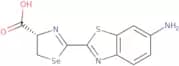
Purity:Min. 95%Aminoseleno-D-luciferin
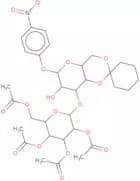
CAS:Selenium analogue of firefly luciferin with red-shifted bioluminescenceFormula:C11H9N3O2SSePurity:Min. 95%Molecular weight:326.23 g/mol4-Nitrophenyl 3-O-(2,3,4,6-tetra-O-acetyl-a-D-mannopyranosyl)-4,6-O-cyclohexylidene-b-D-mannopyranoside
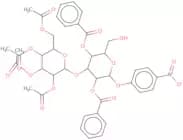
CAS:4-Nitrophenyl 3-O-(2,3,4,6-tetra-O-acetyl-a-D-mannopyranosyl)-4,6-O-cyclohexylidene-b-D-mannopyranoside is a chromogenic pNP enzyme substrate, which features a cyclohexylidene-protected mannopyranosyl core. Upon enzymatic hydrolysis by glycosidases or other related enzymes, it releases a yellow-colored product, 4-nitrophenol, that can be easily detected spectrophotometrically. This substrate is useful for studying enzyme specificity, kinetics, and inhibition, as well as for the screening of enzyme inhibitors, the identification of glycosidase-producing organisms, and the development of new analytical methods.Purity:Min. 95%Molecular weight:711.66 g/mol4-Nitrophenyl 3-O-(2,3,4,6-tetra-O-acetyl-a-D-mannopyranosyl)-2,4-di-O-benzoyl-b-D-mannopyranoside
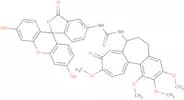
CAS:4-Nitrophenyl 3-O-(2,3,4,6-tetra-O-acetyl-a-D-mannopyranosyl)-2,4-di-O-benzoyl-b-D-mannopyranoside is a bioactive metabolite that can be found in the gene expression profile of a human genome. It has been shown to have an effect on gene expression levels and cellular function. This metabolite is found in the environment and has been shown to be mediated by environmental factors. The high level of gene expression has been shown to be due to its ability to bind to DNA.Purity:Min. 95%Molecular weight:839.75 g/molColchicine fluorescein
CAS:Colchicine fluorescein is the fluorogenic form of colchicine. It is used for staining assembly of tubulin. Colchicine-site inhibitors (abbrevated as CBSIs) disrupt tubulin polymerization. Colchicine fluorescein serves as a probe to study the binding of colchicine to tubulin, as the colchicine binding site is a promising target for discovering novel antitumour agents.
Formula:C41H34N2O10SPurity:Min. 90 Area-%Color and Shape:Orange PowderMolecular weight:746.78 g/molrac-7-(3',4'-Dihydroxybutyloxy)coumarin-4'-phosphate disodium salt
CAS:This Clips-O substrate rac-7-(3',4'-Dihydroxybutyloxy)coumarin-4'-phosphate allows the detection of single and dual enzymatic activity (phosphatase and oxidation of 4-amino-3-hydroxybutyloxy spacer either enzymatically or by exposure to sodium periodate) with a single substrate resulting in a fluorescent signal. The main virtues of Clips-O substrates are an increased stability towards non-enzymatic hydrolysis that results in a reduced background and high sensitivity.Formula:C13H13Na2O8PPurity:Min. 95%Color and Shape:PowderMolecular weight:374.2 g/molAldol® 484 β-D-galactopyranoside, Biosynth Patent: EP 2427431 and US 8940909
CAS:Aldol® 484 beta-D-galactopyranoside is a chromogenic enzyme substrate for beta-galactosidase activity. The colorless product is cleaved by lactose-utilizing bacteria in liquid or solid media, yielding intense red color. Aldol® 484 beta-D-galacto-pyranoside can also be used in beta-gal reporter gene assays or for identification of beta-gal positive transformants on agar. Aldol® 484 beta-D-galactopyranoside can be used under aerobic and anaerobic conditions.Formula:C26H24ClFN2O7Purity:Min. 95.0 Area-%Molecular weight:530.93 g/mol3-Indolyl b-D-cellotrioside
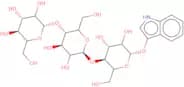
3-Indolyl b-D-cellotrioside is a chemiluminescent substrate that is used for the detection of bacterial activity. 3-Indolyl b-D-cellotrioside reacts with hydrogen peroxide to produce light, which can be detected by luminometers. This product can be used in diagnostic tests to detect the presence of bacteria in food, water, and other samples. It has been shown to have excellent performance characteristics and high purity and quality.Purity:Min. 95%Molecular weight:619.57 g/molButyl 4-nitrophenyl hexyl phosphonate
CAS:Butyl 4-nitrophenyl hexyl phosphonate is a lipase suicide inhibitor that is a chromogenic substrate for lipases which upon enzymatic action, binds irreversibly to the lipase and inactivates it. The substrate can be used for the determination of active sites in lipases, especially in lipases preferring long chain leaving groups.Purity:Min. 95%Molecular weight:343.364-Nitrophenyl 2-O-(2,3,4,6-tri-O-acetyl-a-D-mannopyranosyl)-4,6-O-benzylidene-a-D-mannopyranoside
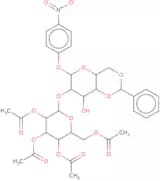
4-Nitrophenyl 2-O-(2,3,4,6-tri-O-acetyl-a-D-mannopyranosyl)-4,6-O-benzylidene-a-D-mannopyranoside is a fluorogenic substrate that is used for the detection of alpha amylase activity in food testing. It is also used as a chromogenic substrate for the detection of beta amylase activity. 4NP2ODM is a conjugate that can be used for the detection of alpha or beta amylases in environmental testing. This compound has high purity and quality and CAS No. 90105037.Purity:Min. 95%Molecular weight:719.64 g/molBoc-Val-Pro-Arg-AquaSpark®, Ramot at Tel-Aviv University Ltd. Patent family WO 2017/130191
CAS:Targets Factor C substrate and peptidaseFormula:C49H66ClN7O11Purity:Min. 85 Area-%Molecular weight:964.56 g/mol4-Methyl-2-nitrophenyl b-D-galactopyranoside
4-Methyl-2-nitrophenyl b-D-galactopyranoside is a fluorogenic substrate for β-galactosidase. It has a high purity and is of high quality. 4-Methyl-2-nitrophenyl b-D-galactopyranoside is used as an enzyme substrate in diagnostics, as a chromogenic substrate in staining, and as a conjugate in chemiluminescence. It can be used for the detection of β-galactosidase in culture media and for the detection of β-galactosidase in environmental testing. This chemical also has bioluminescent properties that make it useful for food testing.Purity:Min. 95%Molecular weight:315.28 g/molDnp-pyaywmr trifluoroacetate
CAS:Dnp-pyaywmr trifluoroacetate is a fluorogenic substrate that can be used in the detection of enzymes. It has a CAS number of 135662-06-5 and an EC number of 231-610-7. This chemical is not intended for human or animal use, but it can be used to detect the presence of specific enzymes in food testing, environmental testing, and diagnostics. Dnp-pyaywmr trifluoroacetate is also used as a ligand for fluorescent probes. Chemiluminescence and bioluminescence are two forms of light emission that can occur when this chemical is added to a solution containing a living cell.Formula:C56H66F3N13O16SPurity:Min. 95%Molecular weight:1,266.3 g/molAldol® 467 β-D-galactopyranoside, Biosynth Patent: EP 2427431 and US 8940909
CAS:Aldol® 467 beta-D-galactopyranoside is a chromogenic and fluorogenic enzyme substrate used for detection of beta-galactosidase activity. The colorless product is cleaved by lactose-utilizing bacteria grown in liquid or solid media, yielding yellow coloration and green fluorescence. Aldol® 467 beta-D-galactopyranoside can also be used in beta-galactosidase gene reporter assays or immunoassay applications (ELISA). Aldol® 467 beta-D-galactopyranoside can be used under aerobic and anaerobic conditions.
Formula:C29H28ClNO9Purity:Min. 95.0 Area-%Molecular weight:570 g/molCaspase substrate
CAS:Caspase substrates are a class of pharmacological agents that regulate apoptosis. Caspases are proteases that cleave specific proteins in the cell, leading to apoptosis. Pro-apoptotic proteins activate caspases, while anti-apoptotic proteins inhibit them. Caspase substrates can be either pro-caspase or anti-caspase, depending on the desired effect. They may also be used to regulate caspases without affecting their activity. The caspase substrate is cleaved by caspases and releases a polypeptide fragment that triggers apoptosis in some cells, but not others. For example, the Hl-60 cell line is resistant to the pro-apoptotic effects of the substrate because it contains an anti-apoptotic protein called Bcl-2. In contrast, myocardial cells contain pro-apoptotic proteins and are sensitive to the pro-apoptotic effects of the substrate. In
Purity:Min. 95%Molecular weight:821.75 g/mol4-Nitrophenyl phosphate bis(tris) salt
CAS:Please enquire for more information about 4-Nitrophenyl phosphate bis(tris) salt including the price, delivery time and more detailed product information at the technical inquiry form on this pageFormula:C14H28N3O12PMolecular weight:461.36 g/molResorufin pentyl ether
CAS:Resorufin pentyl ether is a drug transporter that can be used as an experimental model for studying the effects of chemical pesticides on humans. Resorufin pentyl ether inhibits energy metabolism and inhibits hepatic p450 activity and polymerase chain reaction in hepatocyte-like cells in vitro. It has been shown to inhibit the enzyme activities of rat liver p450s and human cytochrome P450 3A4 (CYP3A4) at physiological levels. Resorufin pentyl ether has also been shown to be toxic in mice, with toxicity studies showing an LD50 of 4.5 mg/kg after oral administration. This drug is not active against bacteria or fungi, but it is able to inhibit protein synthesis in model systems containing mouse monoclonal antibodies or calf thymus DNA.Purity:Min. 95%Molecular weight:283.32 g/mol5-Bromo-4-chloro-3-indolyl 2-acetamido-2-deoxy-a-D-glucopyranoside
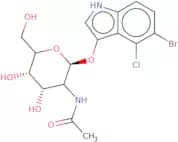
5-Bromo-4-chloro-3-indolyl 2-acetamido-2-deoxy-a-D-glucopyranoside is a fluorogenic substrate that reacts with horseradish peroxidase to produce light. It is used in the detection of β-galactosidase activity in food testing, staining, and environmental testing. This product is also used as a chromogenic substrate for the determination of β-galactosidase activity in immunological assays. 5BICAPG is a conjugate that can be used as a diagnostic ligand for the detection of β -galactosidase enzyme activity. This product has been shown to react with horseradish peroxidase and produce chemiluminescence or bioluminescence when exposed to oxygen. 5BICAPG has also been found to be an excellent enzyme substrate for various enzymes including alkaline phosphataseFormula:C16H18BrClN2O6Purity:Min. 95%Molecular weight:449.68 g/mol