Enzyme Substrates
Subcategories of "Enzyme Substrates"
Found 1526 products of "Enzyme Substrates"
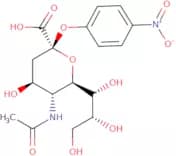
2-O-(4-Nitrophenyl)-a-D-N-acetylneuraminic acid
CAS:2-O-(4-Nitrophenyl)-a-D-N-acetylneuraminic acid, also known as p-nitrophenyl N-acetylneuraminic acid, is a chromogenic substrate specifically designed for the detection and quantification of neuraminidase (sialidase) activity. Upon cleavage by neuraminidase, it releases a yellow-colored product, 4-nitrophenol, which can be easily monitored spectrophotometrically at 405 nm. This substrate is widely used in various applications, including enzyme kinetics studies, inhibitor screening, and the determination of neuraminidase activity in biological samples such as viruses, bacteria, and cell lysates. It is particularly useful for studying the enzymatic properties of neuraminidases from different sources and for the development of novel antiviral and antibacterial agents targeting neuraminidase activity.
Formula:C17H22N2O11Purity:Min. 90 Area-%Color and Shape:White PowderMolecular weight:430.36 g/molLuc-S.aureus K
Luc-S.aureus K is an enzyme conjugate containing luciferase and a specific antibody against Staphylococcus aureus. It is used for detection of S.aureus in laboratory cultures, food, and environmental samples. The light produced by this product is proportional to the amount of bacteria present in the sample. This product can be used as a chemiluminescent substrate for detecting alkaline phosphatase activity or as a fluoro-luminescent substrate for detecting beta-galactosidase activity. Luc-S.aureus K has high purity and high quality, with 100% specific binding affinity for S.aureus and no cross reactivity with other bacteria or host cells, making it suitable for use in diagnostic applications.
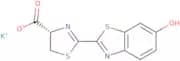
Formula:C17H17KN2O8S2Purity:Min. 85 Area-%Molecular weight:480.55 g/molD-Luciferin Firefly, potassium salt
CAS:Water soluble substrate for firefly luciferase. Used for imaging the expression of the LUC marker gene and luciferase-fusion conjugates in living cells, tissues and organisms. Extensively utilized in reporter gene assays, immunoassays and hygiene monitoring.
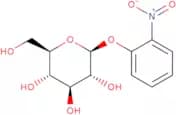
Formula:C11H7KN2O3S2Purity:Min. 99.0 Area-%Molecular weight:318.42 g/mol2-Nitrophenyl-β-D-glucopyranoside
CAS:Chromogenic beta-Glucosidase substrate yielding a yellow solution upon cleavage.
Formula:C12H15NO8Molecular weight:301.26 g/molRef: 3D-N-4320
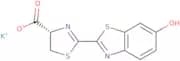
Discontinued productD-Luciferin Firefly, potassium salt
CAS:Water soluble substrate for firefly luciferase. Used for imaging the expression of the LUC marker gene and luciferase-fusion conjugates in living cells, tissues and organisms. Extensively utilized in reporter gene assays, immunoassays and hygiene monitoring. Endotoxin free product.
Formula:C11H7KN2O3S2Purity:Min. 98 Area-%Color and Shape:Slightly Yellow PowderMolecular weight:318.41 g/molRef: 3D-FL08608
Discontinued productAldol® 455 β-D-glucopyranoside, Biosynth Patent: EP 2427431 and US 8940909
CAS:Aldol® 455 beta-D-glucopyranoside is a chromogenic and fluorogenic enzyme substrate used for detection of beta-glucosidase activity. The colorless enzyme substrate is cleaved by beta-glucosidase producing bacteria grown in liquid or solid media, yielding a yellow color and green to orange fluorescence. Aldol® 455 beta-D-glucopyranoside can be used under aerobic and anaerobic conditions.
Formula:C27H24ClNO7Purity:Min. 92.0 Area-%Molecular weight:509.94 g/molRef: 3D-A-4689_P00
Discontinued productBCM® Staphylococcus aureus Plating medium
Please enquire for more information about BCM® Staphylococcus aureus Plating medium including the price, delivery time and more detailed product information at the technical inquiry form on this page
2-Naphthyl b-D-glucopyranoside monohydrate
CAS:2-Naphthyl-lpha-D-glucopyranoside is a substrate for α-glucosidase. 2-Naphthol is released upon hydrolyzation. By simultaneous coupling with a suitable staining reagent, such as hexazonium p-rosaniline, the corresponding reddish-brown azo-dye is formed. Naphthols can also be detected by fluorescence analysis.
Purity:Min. 95%Color and Shape:PowderMolecular weight:324.33 g/molRef: 3D-EN06885
Discontinued product4-Methylumbelliferyl 2-acetamido-2-deoxy-b-D-galactopyranoside-6-sulfate potassium salt
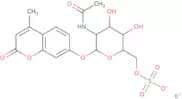
CAS:4-Methylumbelliferyl 2-acetamido-2-deoxy-beta-D-galactopyranoside-6-sulfate potassium salt is a fluorogenic substrate for N-acetylgalactosamine-6-sulfatase. After enzymatic cleaveage, free 4-methylumbelliferone (also known as hymecromone) is released, exhibiting blue fluorescence upon excitation with UV light. The strongest fluorescence of 4-methylumbelliferone requires deprotonation of the hydroxyl group (thus requires alkaline pH), with a maximal fluorescence intensity obtained with excitation at 350 to 370 nm and emission at 440 to 470 nm. The use of 4-methylumbelliferyl 2-acetamido-2-deoxy-beta-D-galactopyranoside-6-sulfate potassium saltas a substrate for measuring the N-acetylgalactosamine-6-sulfatase activity is used for diagnosis of Mucopolysaccharidosis IVA (MPS IVA) (a rare lysosomal storage disorder) and Morquio A syndrome screening.
Formula:C18H20KNO11SPurity:Min. 95%Color and Shape:PowderMolecular weight:497.52 g/molRef: 3D-EM03197
Discontinued product2-Amino-5-pyridyl 2-acetamido-3,4,6-tri-O-acetyl-2-deoxy-a-D-galactopyranose
2-Amino-5-pyridyl 2-acetamido-3,4,6-tri-O-acetyl-2-deoxy-a-D-galactopyranose is a chromogenic substrate for the enzyme β galactosidase. It is used to detect the presence of β galactosidase in bacterial cultures. The substrate is soluble in water and has a long shelf life. 2APAAG can be used for food testing and environmental testing as it produces a bioluminescent signal when cleaved by β galactosidase.
Purity:Min. 95%Espresso-Gal
Espresso-Gal (Espresso-beta-D-galactopyranoside) is a chromogenic indicator for beta-galactosidase activity. The colorless product is cleaved by lactose-utilizing bacteria in liquid media or on agar plates and yields an espresso brown colored precipitate. Espresso-Gal can also be used as detecting agent for beta-galactosidase activity in reporter gene assays or for identification of positive transformants on agar plates when using the α-complementation approach. Read more in the Application Notes.
Purity:Min. 95%Isopropyl-beta-D-thiogalactopyranoside, approx. 15.0% dioxane
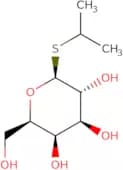
CAS:A non-metabolizable allolactose analogue, widely used in molecular biology for overexpression of recombinant proteins from inducible systems under the control of lac promoter. IPTG binds to the LacI repressor and causes its release from the lac operator, allowing gene expression to take place. Present in vectors of pGEX, pGEM-T, pET, pRSET, pMAL class and others.Formula:C9H18O5SPurity:Min. 95%Color and Shape:PowderMolecular weight:238.30 g/mol5-Bromo-6-chloro-3-indoxyl phosphate, p-toluidine salt
CAS:Substrate for visualizing alkaline phosphatase activity. Produces a magenta colored insoluble end product that is detected visually, when used together with Nitroblue tetrazolium. The substrate system is versatile and functions in a variety of applications, including Northern, Southern, and Western blotting, in situ hybridization, ELISAs and immunohistochemistry. DMF soluble.Formula:C15H15BrClN2O4PPurity:Min. 98.0 Area-%Molecular weight:433.63 g/mol4-Nitrophenyl b-D-glucopyranoside-6-phosphate
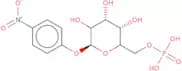
CAS:4-Nitrophenyl beta-D-glucopyranoside-6-phosphate is a chromogenic substrate for glucose-6-phosphatase. Upon hydrolysis, para-nitrophenol is released yielding a yellowish colour. 4-Nitrophenyl beta-D-glucopyranoside-6-phosphate is used in different applications such as the Glycogen storage disease diagnosis (e.g., von Gierke disease)
Formula:C12H16NO11PPurity:Min. 98 Area-%Color and Shape:PowderMolecular weight:381.23 g/molRef: 3D-EN32426
Discontinued productCoelenterazine-v
CAS:Coelenterazine-v is a coelenterazine analog that emits a red fluorescent light in the presence of calcium (Ca2+). It is used as a reporter molecule for intracellular calcium concentration. Coelenterazine-v has been used in vitro to detect protein–protein interactions and in animal experiments to detect luciferase activity. Other coelenterazine-v analogs have also been developed with different color properties, including blue, green, yellow, orange, and purple. All these analogs, including coelenterazine-v, are used for optical imaging of cells or tissues or for detecting the activity of luciferases.
Formula:C28H21N3O3Purity:Min. 95%Molecular weight:447.48 g/molRef: 3D-FC63211
Discontinued product4-Methylumbelliferyl a-D-mannopyranoside 6-sulfate sodium salt
4-Methylumbelliferyl alpha-D-mannopyranoside 6-sulfate sodium salt is a fluorogenic substrate for sulfatase. After enzymatic cleaveage, free 4-methylumbelliferone (also known as hymecromone) is released, exhibiting blue fluorescence upon excitation with UV light. The strongest fluorescence of 4-methylumbelliferone requires deprotonation of the hydroxyl group (thus requires alkaline pH), with a maximal fluorescence intensity obtained with excitation at 350 to 370 nm and emission at 440 to 470 nm. The use of 4-methylumbelliferyl alpha-D-mannopyranoside 6-sulfate sodium saltas a substrate for measuring the sulfatase activity is used for Mucopolysaccharidosis (MPS) screening and other lysosomal storage disorder diagnosis.
Formula:C16H17O11SNaPurity:Min. 98 Area-%Color and Shape:White PowderMolecular weight:440.36 g/molBronze-Gal
Bronze-Gal (Bronze-beta-D-galactopyranoside) is a chromogenic indicator for beta-galactosidase activity. The colorless product is cleaved by lactose-utilizing bacteria in liquid media or on agar plates and yields a bronze colored precipitate. Bronze-Gal can also be used as detecting agent for beta-galactosidase activity in reporter gene assays or for identification of positive transformants on agar plates when using the α-complementation approach. Read more in the Application Notes.
Purity:Min. 95%Molecular weight:443.575-Bromo-4-chloro-3-indoxyl choline phosphate
CAS:5-Bromo-4-chloro-3-indoxyl choline phosphate is a synthetic enzyme substrate for detecting phosphatidylcholine-specific phospholipase C.
Formula:C13H17BrClN2O4PPurity:Min. 99 Area-%Molecular weight:411.63 g/molRef: 3D-B-7116
Discontinued productAquaSpark® 510 Calibration Probe, Ramot at Tel-Aviv University Ltd. Patent family WO 2017/130191
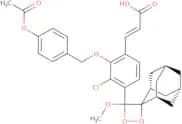
CAS:AquaSpark® Calibration Probe is a water-soluble dioxetane-based chemiluminescent probe. Deprotonation of the free phenol group of the calibration probe under mild basic conditions results in an emissive decomposition process. No addition of enhancer or sensitizing agent is required to produce the bright green light emission in aqueous solutions.
AquaSpark® Calibration Probe is used for:Formula:C21H23ClO6Purity:Min. 95.0 Area-%Molecular weight:406.12 g/mol4-Chloro-1-naphthol
CAS:4-Chloro-1-naphthol is a chemical compound that has been used in clinical pathology to identify human immunoglobulin. It is also used as a potential biomarker for the diagnosis of Alzheimer's disease. 4-Chloro-1-naphthol binds to the amyloid fibrils and has anti-angiogenic effects in the hippocampus, which may be due to its ability to inhibit the formation of new blood vessels. This chemical compound can be used as a substrate molecule for electrochemical impedance spectroscopy and is used in wastewater treatment.
Formula:C10H7ClOPurity:Min. 97.0 Area-%Molecular weight:178.62 g/molAquaSpark® 510 acetate, 10 mM in DMSO, Ramot at Tel-Aviv University Ltd. Patent family WO 2017/130191
CAS:Chemiluminescence substrate for C2-esterase (acetyl esterase)
Formula:C30H31ClO8Purity:Min. 95%Color and Shape:Clear LiquidMolecular weight:554.17 g/molAldol® 455 β-D-galactopyranoside, Biosynth Patent: EP 2427431 and US 8940909
CAS:Aldol® 455 beta-D-galactopyranoside is a chromogenic substrate for the enzyme β-galactosidase. It is used to detect the activity of β-galactosidase in cell culture, and has been shown to be highly purified and of high quality. This product can be used as a ligand for receptor binding studies or as an agent in enzyme substrates in fluorescence and chemiluminescence reactions.
Formula:C27H24ClNO7Purity:Min. 93.0 Area-%Molecular weight:509.94 g/molRef: 3D-A-4684_P00
Discontinued product3,4-Cyclohexenoesculetine-N-acetyl-glucosamine
Please enquire for more information about 3,4-Cyclohexenoesculetine-N-acetyl-glucosamine including the price, delivery time and more detailed product information at the technical inquiry form on this page
Purity:Min. 95%Luc-coliforms
CAS:Luc-coliforms is a food testing kit that can be used to test for coliforms. It is composed of a series of enzyme substrates, culture media, and ligands specific to the bacteria being tested. The kit uses chromogenic or fluorogenic substrates that react with coliforms to produce a color change in the reaction mixture. Luc-coliforms is designed for use on solid foods such as meat, eggs, and vegetables.
Formula:C17H18N2O8S2Purity:Min. 95 Area-%Molecular weight:442.46 g/mol4-Nitrophenyl β-rutinoside
CAS:4-Nitrophenyl beta-rutinoside is a chromogenic substrate for beta-glucosidase. Upon hydrolysis, para-nitrophenol is released yielding a yellowish colour. 4-Nitrophenyl beta-rutinoside is used in different applications such as the Flavonoid glycoside hydrolysis, food industry applications
Formula:C18H25NO12Purity:Min. 95%Color and Shape:PowderMolecular weight:447.39 g/molRef: 3D-EN46671
Discontinued productL-Arginyl-L-arginine 7-amido-4-methylcoumarin trihydrochloride
CAS:Fluorogenic substrate for cathepsin B or aminopeptidase III. Yields a blue fluorescent solution upon cleavage.
Formula:C22H36Cl3N9O4Purity:Min. 98 Area-%Molecular weight:596.95 g/mol4-Nitrophenyl 3-O-(a-D-mannopyranosyl)-a-D-mannopyranoside
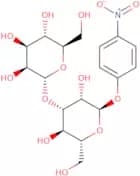
CAS:Chromogenic substrate for α-glucanase
Formula:C18H25NO13Purity:Min. 97 Area-%Color and Shape:White PowderMolecular weight:463.39 g/molBronze-Gal
Bronze-Gal (Bronze-beta-D-galactopyranoside) is a chromogenic indicator for beta-galactosidase activity. The colorless product is cleaved by lactose-utilizing bacteria in liquid media or on agar plates and yields a bronze colored precipitate. Bronze-Gal can also be used as detecting agent for beta-galactosidase activity in reporter gene assays or for identification of positive transformants on agar plates when using the α-complementation approach. Read more in the Application Notes.
Molecular weight:443.57 g/molRef: 3D-B-8935
Discontinued product4-Methylumbelliferyl myo-inositol-1-phosphate N-methyl-morpholine salt
CAS:Please enquire for more information about 4-Methylumbelliferyl myo-inositol-1-phosphate N-methyl-morpholine salt including the price, delivery time and more detailed product information at the technical inquiry form on this page
Formula:C16H19O11P·C5H11NOColor and Shape:PowderMolecular weight:519.44 g/mol3,4-Cyclohexenoesculetine-N-acetyl-glucosamine
Please enquire for more information about 3,4-Cyclohexenoesculetine-N-acetyl-glucosamine including the price, delivery time and more detailed product information at the technical inquiry form on this page
5-Bromo-6-chloro-3-indoxyl choline phosphate
CAS:Please enquire for more information about 5-Bromo-6-chloro-3-indoxyl choline phosphate including the price, delivery time and more detailed product information at the technical inquiry form on this page
Formula:C13H17BrClN2O4PPurity:Min. 99 Area-%Molecular weight:411.63 g/molRef: 3D-B-7118
Discontinued productAquaSpark® 515 Singlet Oxygen Probe, Ramot at Tel-Aviv University Ltd. Patent family WO 2017/130191
CAS:The AquaSpark® 515 Singlet Oxygen Probe (SOCL) is a highly selective and sensitive chemiluminescence probe for the detection of singlet oxygen (1O2). The SOCL probe reacts specifically with 1O2 to form an intermediate dioxetane that spontaneously decomposes to emit green light with extraordinary intensity
Formula:C21H23ClO4Purity:Min. 95.0 Area-%Molecular weight:374.13 g/mol6-Chloro-3-indoxyl palmitate
CAS:6-Chloro-3-indoxyl palmitate is a high quality, pure chemical reagent that can be used as a substrate for enzyme activity. It is a chromogenic substrate that is used in the detection of esterase activity. 6-Chloro-3-indoxyl palmitate is also used as a fluorogenic substrate in the presence of horseradish peroxidase and hydrogen peroxide to produce chemiluminescence. 6-Chloro-3-indoxyl palmitate has been shown to be an effective bioluminescent substrate for luciferase enzymes, such as firefly luciferase and Renilla luciferase.
Formula:C24H36ClNO2Purity:Min. 98 Area-%Molecular weight:406.01 g/mol6-Chloro-3-indolyl phosphate p-toluidine salt
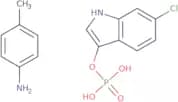
CAS:A substrate for visualising alkaline phosphatase activity. Produces a red colored insoluble end product that is detected visually, when used together with Nitroblue tetrazolium. The substrate system is versatile and functions in a variety of applications, including Northern, Southern, and Western blotting, in situ hybridization, ELISAs and immunohistochemistry. DMF soluble.
Formula:C15H16ClN2O4PPurity:Min. 98%Color and Shape:White Off-White PowderMolecular weight:354.73 g/molRef: 3D-EC09439
Discontinued productAquaSpark® α-D-galactoside, 10 mM in DMSO, Ramot at Tel-Aviv University Ltd. Patent family WO 2017/130191
CAS:AquaSpark™ α-D-galactoside is a dioxetane-based substrate for the luminescence detection of α-galactosidase activity. It is the first single-compound chemiluminescent substrate commercially available for the detection of α-galactosidase activity. α-galactosidase assays are used in molecular biology to monitor the transcriptional activity of the GLA gene that is correlated with metabolic diseases or gene mutations. In microbiology the α-galactosidase activity is used to detect specific bacteria such as α-galactosidase positive Salmonella strains (Salmonella Enteritidis RKI 05/07992).
Formula:C34H39ClO12Molecular weight:675.12 g/mol2-Chloro-4-nitrophenyl-α-L-fucopyranoside
CAS:2-Chloro-4-nitrophenyl-alpha-L-fucopyranoside is a compound that is commonly used as an enzyme substrate for glycogen synthase kinase (GSK). It is activated by GSK-3β and has been shown to inhibit the activity of this enzyme. This compound has also been found to have inhibitory effects on other enzymes such as carbonic anhydrase and lactate dehydrogenase. Additionally, 2-Chloro-4-nitrophenyl-alpha-L-fucopyranoside exhibits antifungal activity against various fungi, including those resistant to other antifungal agents such as fluopyram and prothioconazole. Its mechanism of action involves interfering with ergosterol biosynthesis, an essential component of fungal cell membranes. Furthermore, this compound has potential applications in the development of new drugs targeting GSK-3β and β-catenin signaling pathways, which are implicated in various diseases including cancer and neuro
Formula:C12H14ClNO7Purity:Min. 98 Area-%Molecular weight:319.7 g/molBis(4-methylumbelliferyl)phosphate
CAS:Bis(4-methylumbelliferyl)phosphate is a fluorescent probe that can be used for the diagnosis of β-glucosidase. It has a phosphate group and can be used to study phosphodiesterases and phosphodiesters. Bis(4-methylumbelliferyl)phosphate is also a liposomal probe that can be used in kinetic studies. This compound has been shown to inhibit β-glucosidase, which is an enzyme found in human saliva and pancreatic juice, at high concentrations. The inhibition of this enzyme leads to the accumulation of glucose and galactose in the blood, which can lead to diabetes mellitus or cancer.
Formula:C20H15O8PMolecular weight:414.31 g/molResorufin b-D-cellobioside
CAS:Resorufin b-D-cellobioside is a fluorogenic substrate for measurement of cellulase activity. The product of enzyme reaction, resorufin, exhibits fluorescence emission at 585 nm with excitation at 571 nm at or near physiological pH values.
Formula:C24H27NO13Purity:Min. 95 Area-%Color and Shape:Brown Orange PowderMolecular weight:537.47 g/molRef: 3D-ER28833
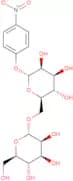
Discontinued product4-Nitrophenyl 6-O-(a-D-mannopyranosyl)-a-D-mannopyranoside
CAS:4-Nitrophenyl 6-O-(alpha-D-mannopyranosyl)-alpha-D-mannopyranoside is a chromogenic substrate for alpha-mannosidase. Upon hydrolysis, para-nitrophenol is released yielding a yellowish colour. 4-Nitrophenyl 6-O-(alpha-D-mannopyranosyl)-alpha-D-mannopyranoside is used in different applications such as the Lysosomal storage disorder diagnosis (e.g., alpha-mannosidosis)
Purity:Min. 95%Color and Shape:PowderMolecular weight:463.39 g/molRef: 3D-EN06126
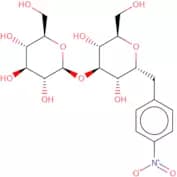
Discontinued product4-Nitrophenyl 3-O-(β-D-glucopyranosyl)-α-D-glucopyranoside
4-Nitrophenyl 3-O-(beta-D-glucopyranosyl)-alpha-D-glucopyranoside is a chromogenic substrate for alpha-glucosidase. Upon hydrolysis, para-nitrophenol is released yielding a yellowish colour. 4-Nitrophenyl 3-O-(beta-D-glucopyranosyl)-alpha-D-glucopyranoside is used in different applications such as the Gaucher disease screening, carbohydrate metabolism studies
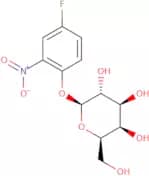
Formula:C18H25NO13Purity:Min. 95%Molecular weight:463.39 g/mol4-Fluoro-2-nitrophenyl b-D-galactopyranoside
CAS:4-Fluoro-2-nitrophenyl beta-D-galactopyranoside, a fluorinated analog of ONPG, is a chromogenic enzyme substrate specifically used to detect beta-galactosidase in bacterial media. 4-Fluoro-2-nitrophenyl beta-D-galactopyranoside is used in Lactose intolerance screening, bacterial beta-galactosidase detection (E. coli)
Purity:Min. 95%Color and Shape:PowderMolecular weight:319.24 g/molRef: 3D-EF15715
Discontinued productEthyl umbelliferone-3-carboxylate-α-D-glucopyranoside
Ethyl umbelliferone-3-carboxylate-a-D-glucopyranoside is a fluorogenic substrate used for detecting alpha-glucosidase activity in enzymatic assays. When alpha-glucosidase cleaves , the glycosidic bond, umbelliferone-3-carboxylate is released, which exhibits strong fluorescence. This substrate is commonly utilized in glycobiology research, diagnostic tests, and high-throughput screening of enzyme inhibitors.
Formula:C18H20O10Purity:Min. 95%Color and Shape:Off-white to yellow solid.Molecular weight:396.35 g/molRef: 3D-EE45724
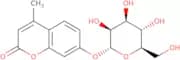
Discontinued product4-Methylumbelliferyl a-D-mannopyranoside
CAS:4-Methylumbelliferyl alpha-D-mannopyranoside (4-MU-a-D-Man) is a fluorogenic substrate used in activity assays for alpha-mannosidase. When it is hydrolyzed by alpha-mannosidase, it produces a fluorescent compound, 4-methylumbelliferone (4-MU). 4-MU-a-D-Man is often used in medical research to monitor the activity of alpha-mannosidase, which is important in lysosomal storage diseases. In addition, 4-Methylumbelliferyl alpha-D-mannopyranoside has been used to study the the activity of concanavalin A, a lectin that specifically binds to alpha-D-mannopyranosyl and alpha-D-glucopyranosyl residues on various glycoproteins. The use of this fluorogenic enzyme substrate permits study the degree of alpha-D-mannosidic linkage cleavage by the enzyme.Formula:C16H18O8Purity:Min. 98 Area-%Color and Shape:White Off-White PowderMolecular weight:338.31 g/molRef: 3D-EM03179
Discontinued product5-Bromo-4-chloro-3-indoxyl-alpha-L-fucopyranoside
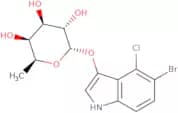
CAS:5-Bromo-4-chloro-3-indoxyl-alpha-L-fucopyranoside is a chromogenic substrate for alpha-L-Fucosidase. It produces a green-blue color.
Formula:C14H15BrClNO5Purity:Min. 98 Area-%Color and Shape:PowderMolecular weight:392.63 g/molRef: 3D-EB03266
Discontinued productCoelenterazine 400a
CAS:Coelenterazine 400a is a light-emitting molecule that is used in bioluminescence assays. It is a subunit of the luciferin family and has been shown to have some effects on blood pressure, growth factor, and protein–protein interactions. Coelenterazine 400a can be used as a test compound for cancer research. This molecule emits light when it interacts with other molecules, such as NADPH and cytochrome P450 reductase. The luminescence signal can be detected with a fluorescence resonance energy transfer (FRET) assay.
Formula:C26H21N3OPurity:Min. 95.0 Area-%Molecular weight:391.46 g/molBis-(4-methylumbelliferyl)phosphate
CAS:Bis-(4-methylumbelliferyl)phosphate, or bis-4MU-phopshate, is a fluorogenic substrate used to study phosphatase activity, particularly in enzyme-linked immunosorbent assays (ELISAs).
Formula:C20H15O8PPurity:Min. 95 Area-%Color and Shape:White PowderMolecular weight:414.3 g/molRef: 3D-EB15696
Discontinued product4-Trifluoromethylumbelliferyl b-D-glucuronide potassium salt
CAS:4-Trifluoromethylumbelliferyl b-D-glucuronide potassium salt is a fluorogenic substrate for beta-glucuronidase. Upon hydrolysis, the fluorogenic moiety (blueish) 4-trifluoromethylumbelliferone (also known as TFMU) is released. 4-Trifluoromethylumbelliferyl b-D-glucuronide potassium salt is commonly used in bacterial detection and for drug metabolism studies as well as lysosomal storage disorder screening.Formula:C16H12F3O9KPurity:Min. 95 Area-%Color and Shape:White PowderMolecular weight:444.35 g/molRef: 3D-ET11032
Discontinued product5-Bromo-4-chloro-3-indoxyl-alpha-D-galactopyranoside
CAS:Chromogenic substrate for α-galactosidase yielding a blue precipitate. Used for species differentiation within the family Enterobacteriaceae and differentiation of Bifido bacteria species from Lactobacillus species.
Formula:C14H15BrClNO6Purity:Min. 99 Area-%Molecular weight:408.64 g/mol5-Bromo-3-indoxyl choline phosphate
Please enquire for more information about 5-Bromo-3-indoxyl choline phosphate including the price, delivery time and more detailed product information at the technical inquiry form on this page
Formula:C13H18BrN2O4PMolecular weight:377.18 g/mol4-Trifluoromethylumbelliferyl β-D-galactopyranoside
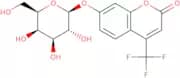
CAS:4-Trifluoromethylumbelliferyl β-D-galactopyranoside is a fluorogenic substrate for beta-galactosidase . Upon hydrolysis, the fluorogenic moiety (blueish) 4-trifluoromethylumbelliferone (also known as TFMU) is released. 4-Trifluoromethylumbelliferyl β-D-galactopyranoside is commonly used in bacterial detection and in LacZ gene expression assays.
Formula:C16H15F3O8Purity:Min. 95%Color and Shape:PowderMolecular weight:392.28 g/molRef: 3D-ET06963
Discontinued product