Metabolismo
Los inhibidores del metabolismo son compuestos que interfieren con las vías metabólicas, alterando la producción y utilización de energía dentro de las células. Estos inhibidores se utilizan para estudiar la regulación del metabolismo, el papel de las vías metabólicas en enfermedades como el cáncer y la diabetes, y para desarrollar nuevas estrategias terapéuticas. Los inhibidores del metabolismo pueden dirigirse a diversas enzimas y procesos involucrados en la glucólisis, la oxidación de ácidos grasos y otras funciones metabólicas. En CymitQuimica, ofrecemos una amplia gama de inhibidores del metabolismo de alta calidad para apoyar su investigación en bioquímica, trastornos metabólicos y desarrollo de fármacos.
Subcategorías de "Metabolismo"
- AhR(41 productos)
- Aminopeptidasa(67 productos)
- CETP(18 productos)
- Anhídrido carbónico(178 productos)
- Caseína quinasa(130 productos)
- DHFR(33 productos)
- Descarboxilasa(4 productos)
- Deshidrogenasa(269 productos)
- FAAH(64 productos)
- FXR(58 productos)
- Factor Xa(80 productos)
- Ácido graso sintasa(32 productos)
- Ferroptosis(215 productos)
- GR(3 productos)
- GSNOR(3 productos)
- Glucoquinasa(54 productos)
- HIF / HIF Prolilhidroxilasa(142 productos)
- HMG-CoA reductasa(33 productos)
- Hidroxilasa(30 productos)
- IDO(82 productos)
- LDL(8 productos)
- Lipasa(97 productos)
- Lípido(59 productos)
- Lipoxigenasa(124 productos)
- MAO(87 productos)
- MPO(2 productos)
- NAMPT(36 productos)
- P450(6 productos)
- PAI-1(25 productos)
- PDE(166 productos)
- PED(1 productos)
- PKM(15 productos)
- PPAR(164 productos)
- Fosfolipasa(82 productos)
- ROR(42 productos)
- Receptor de retinoides(29 productos)
- SGK(11 productos)
- Tiorredoxina(12 productos)
- Transferasa(30 productos)
- Transportador(42 productos)
- UGT(4 productos)
- Inhibidores de la xantina oxidasa (XO)(9 productos)
Mostrar 34 subcategorías más
Se han encontrado 8626 productos de "Metabolismo"
Ordenar por
Pureza (%)
0
100
|
0
|
50
|
90
|
95
|
100
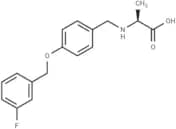
Safinamide Acid
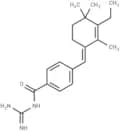
CAS:<p>Safinamide acid, a potential impurity in commercial safinamide preparations and a degradation product of safinamide under thermal and oxidative stress, is encountered in the pharmaceutical formulation process.</p>Fórmula:C17H18FNO3Forma y color:SolidPeso molecular:303.33Magmas-IN-1
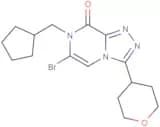
CAS:<p>Magmas-IN-1 (compound 9), a small molecule Magmas inhibitor (SMMI), targets the mitochondria-associated granulocyte-macrophage colony-stimulating factor (GM-CSF</p>Fórmula:C20H27N3OPureza:98%Forma y color:SolidPeso molecular:325.45PDE1-IN-2
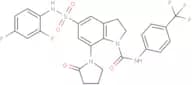
CAS:<p>PDE1-IN-2 is an PDE1 inhibitor(PDE1C, PDE1B and PDE1A with IC50 values of 6, 140 and 164 nM, respectvely).</p>Fórmula:C16H21BrN4O2Pureza:98%Forma y color:SolidPeso molecular:381.27MGAT2-IN-2
CAS:<p>MGAT2-IN-2 is a potent inhibitor of acyl CoA:monoacylglycerol acyltransferase 2 (MGAT2) (IC50 of 3.4 nM).</p>Fórmula:C26H21F5N4O4SPureza:98%Forma y color:SolidPeso molecular:580.53L-CCG-lll
CAS:<p>inhibitor of both glial and neuronal uptake of glutamate, aspartate and cysteate.</p>Fórmula:C6H9NO4Pureza:98%Forma y color:SolidPeso molecular:159.14N-Lignoceroyl Taurine
CAS:<p>N-Acyl taurines, such as N-lignoceroyl taurine, alongside various arachidonoyl amino acid conjugates like N-arachidonoyl dopamine and N-arachidonoyl-L-serine, have been identified in bovine brain and through mass spectrometry lipidomic studies in the brain and spinal cord of both wild-type and FAAH knockout mice. Notably, N-lignoceroyl taurine levels were found to be 23-26 times higher in FAAH knockout mice than in wild types, suggesting its degradation by FAAH, despite in vitro evidence showing FAAH hydrolyzes N-lignoceroyl taurine significantly slower than oleoyl ethanolamide. Additionally, N-acyl taurines with polyunsaturated acyl chains are known to activate TRPV1 and TRPV4 channels within the transient receptor potential (TRP) family of calcium channels.</p>Fórmula:C26H53NO4SForma y color:SolidPeso molecular:475.8C14-SPM
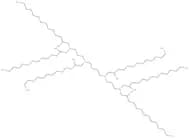
CAS:<p>C14-SPM, a branched-chain polyamine lipidoid, facilitates the delivery of siRNA [1].</p>Fórmula:C94H194N4O6Forma y color:SolidPeso molecular:1476.57Lp-PLA2-IN-2
CAS:<p>Lp-PLA2-IN-2 is a selective and potent lipoprotein-associated phospholipase A2 (Lp-PLA2) inhibitor, with an IC50 0f 120 nM for recombinant human Lp-PLA2.</p>Fórmula:C19H23FN2O4SPureza:98%Forma y color:SolidPeso molecular:394.46ICMT-IN-39
CAS:<p>ICMT-IN-39, also known as compound 18, functions as an inhibitor of ICMT with an IC50 value of 0.031 µM [1].</p>Fórmula:C22H29NOForma y color:SolidPeso molecular:323.47Raloxifene Bismethyl Ether hydrochloride
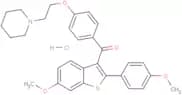
CAS:<p>Raloxifene Bismethyl Ether hydrochloride is a Raloxifene metabolite and an estrogen receptor inactive compound on which both hydroxyl groups are absent.</p>Fórmula:C30H32ClNO4SPureza:98%Forma y color:SolidPeso molecular:538.1Yonkenafil
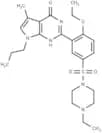
CAS:<p>Yonkenafil, a PDE5 inhibitor, may reduce stroke damage and aid in Alzheimer's treatment.</p>Fórmula:C24H33N5O4SForma y color:SolidPeso molecular:487.61Eucalyptacid A
CAS:<p>Eucalyptacid A, a metabolite with antifungal properties, demonstrates efficacy against Alternaria solani, displaying minimum inhibitory concentrations (MIC)</p>Fórmula:C17H32O5Forma y color:SolidPeso molecular:316.43Quizalofop
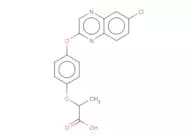
CAS:<p>Quizalofop (Xylafop) is a reagent of biochemical.</p>Fórmula:C17H13ClN2O4Pureza:97.14%Forma y color:SolidPeso molecular:344.75IDO1/2-IN-1 hydrochloride
CAS:<p>IDO1/2-IN-1 hydrochloride: Dual IDO1/2 inhibitor, IC50 of 28/144 nM, oral, with antitumor properties.</p>Fórmula:C16H19BrClFN8O4Forma y color:SolidPeso molecular:521.73Cholesterylamine
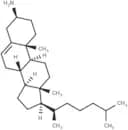
CAS:<p>Cholesterylamine, a cationic lipid, can be incorporated into PLGA to create particles with a charged surface, facilitating its use in drug delivery systems and</p>Fórmula:C27H47NForma y color:SolidPeso molecular:385.679(Z),11(Z)-Octadecadienoic acid
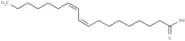
CAS:<p>9(Z),11(Z)-Octadecadienoic acid, an isomer of linoleic acid, demonstrates antitumor activity with an EC50 value of 446.1 µM [1].</p>Fórmula:C18H32O2Forma y color:SolidPeso molecular:280.45ICMT-IN-5
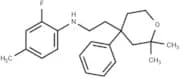
CAS:<p>ICMT-IN-5 (compound 46) is an ICMT inhibitor with an IC50 value of 0.3 μM [1].</p>Fórmula:C22H28FNOForma y color:SolidPeso molecular:341.468-Hydroxyguanine hydrochloride
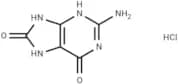
CAS:<p>8-Hydroxyguanine, generated through the oxidative degradation of DNA by the hydroxyl radical, serves as an indicator of oxidative stress in biological systems.</p>Fórmula:C5H5N5O2HClForma y color:SolidPeso molecular:203.615-PGDH-IN-1
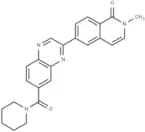
CAS:<p>15-PGDH-IN-1: potent oral 15-PGDH inhibitor, IC50=3nM, useful for tissue repair research.</p>Fórmula:C24H22N4O2Forma y color:SolidPeso molecular:398.46Tetramyristoylcardiolipin
CAS:<p>Tetramyristoylcardiolipin (TMCL), an anionic lipid, plays a crucial role in studying cell membrane function and drug delivery mechanisms [1].</p>Fórmula:C65H132N2O17P2Forma y color:SolidPeso molecular:1275.69