Estándares farmacéuticos
Los estándares farmacéuticos son un conjunto integral de materiales de referencia esenciales para garantizar la seguridad, eficacia y calidad de los productos farmacéuticos. Esta categoría incluye estándares para ingredientes farmacéuticos activos (APIs), que son los componentes centrales responsables de los efectos terapéuticos. Además, abarca compuestos y metabolitos relevantes tanto para las industrias farmacéutica como veterinaria, proporcionando puntos de referencia para la medición y análisis precisos de estas sustancias. Los estándares de control de nitrosaminas son cruciales para detectar y mitigar las nitrosaminas potencialmente dañinas en las formulaciones de medicamentos. Los estándares de toxicología ayudan a evaluar la seguridad y los posibles efectos adversos de los compuestos farmacéuticos. Además, los estándares de activadores e inhibidores enzimáticos son vitales para la investigación y el desarrollo, permitiendo estudios precisos de las vías bioquímicas y los mecanismos de acción de los medicamentos. Estos estándares farmacéuticos son herramientas indispensables para el cumplimiento normativo, el control de calidad y la investigación, asegurando que los productos farmacéuticos cumplan con estrictos criterios de seguridad y eficacia.
Subcategorías de "Estándares farmacéuticos"
- APIs para investigación e impurezas(274.845 productos)
- Activadores e inhibidores de enzimas(2.827 productos)
- Nitrosaminas(2.605 productos)
- Compuestos y metabolitos farmacéuticos y veterinarios(2.869 productos)
- Toxicología(13.652 productos)
Se han encontrado 7836 productos de "Estándares farmacéuticos"
Ordenar por
Pureza (%)
0
100
|
0
|
50
|
90
|
95
|
100
N,N-Diethyl-N'-1-naphthylethylenediamine oxalate
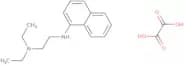
CAS:N,N-Diethyl-N'-1-naphthylethylenediamine oxalate (NDENOX) is a naphthalene derivative that is used to inhibit the growth of bacteria. It binds to the extracellular site on the bacterial cell membrane and inhibits sulfadiazine uptake. NDENOX has been shown to be effective against S. aureus and other bacteria that are resistant to sulfonamides, but not against Staphylococcus epidermidis or E. coli. This drug also inhibits enzyme activity in damaged human serum, which may be due to its binding with kynurenine or pupal. NDENOX is hydrolyzed by hydrochloric acid and procaine to release naphthalene and diethylenetriamine, respectively.Fórmula:C18H24N2O4•C2H2O4xPureza:Min. 95 Area-%Forma y color:PowderPeso molecular:332.39 g/molIlexsaponin B1
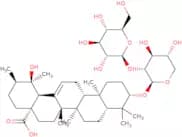
CAS:<p>Ilexsaponin B1 is a saponin, which is a bioactive compound derived from the genus Ilex, commonly found in certain holly plants. This compound is structurally characterized by its glycosidic bonds, which consist of a sugar moiety linked to a triterpenoid or steroid aglycone, contributing to its amphiphilic nature. The source of Ilexsaponin B1 is typically extracted from the leaves or roots of Ilex species through a series of solvent extraction and chromatographic techniques.</p>Pureza:Min. 95%13-cis-β-Carotene
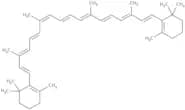
CAS:<p>13-cis-b-Carotene is a carotenoid that has been classified as a provitamin. It is not active in humans but it can be converted to b-carotene, an active form of vitamin A. 13-Cis-b-Carotene is found in plant foods such as carrots and sweet potatoes and can be used for the prevention of atherosclerosis and heart disease. 13-Cis-b-Carotene has been shown to have antiatherogenic effects by inhibiting the oxidation of LDL cholesterol and may also inhibit the proliferation of cancer cells. The conversion of 13-cis-b-carotene to b-carotene occurs through a number of reactions, including beta oxidation, desaturation, and hydrolysis by esterases or glucuronidases.</p>Fórmula:C40H56Pureza:Min. 95%Forma y color:PowderPeso molecular:536.87 g/molDelta 5-avenasterol
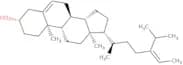
CAS:Producto controlado<p>Delta 5-avenasterol is a fatty acid that is used as an anti-inflammatory. It has been shown to reduce inflammation in animals by inhibiting the production of arachidonic acid, which is a precursor of prostaglandins and leukotrienes. Delta 5-avenasterol also has antioxidant properties and can be used as an additive in animal feed to reduce oxidative stress. The most common form of delta 5-avenasterol found in plants is delta 5,6-avenasterol, but delta 5-avenasterol can also be found in soybean oil. Delta 5-avenasterol can be detected using various assays including the chromatographic assay with an ionization detector and a spectrophotometric assay with a UV detector.</p>Fórmula:C29H48OPureza:Min. 95%Peso molecular:412.69 g/mol(R)-3,3'-Dibromo-1,1'-bi-2-naphthol
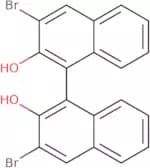
CAS:<p>(R)-3,3'-Dibromo-1,1'-bi-2-naphthol is an aromatic hydrocarbon that is chiral. It has been used as a reagent in organic synthesis and as a fluorescent labeling agent for HPLC analysis. (R)-3,3'-Dibromo-1,1'-bi-2-naphthol has also been used to synthesize biphenyls. (R)-3,3'-Dibromo-1,1'-bi-2-naphthol can be found in natural products such as flavanones and styrene. It can act as a solvating or additive agent in organic reactions and reactions involving aromatics.</p>Fórmula:C20H12Br2O2Pureza:Min. 95%Forma y color:PowderPeso molecular:444.12 g/mol7-Dehydro desmosterol
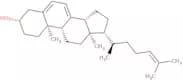
CAS:Producto controlado<p>7-Dehydro Desmosterol is a hydroxylated sterol found in the liver. It is an intermediate in cholesterol synthesis and participates in the regulation of glucose metabolism. The enzyme responsible for its synthesis (7-dehydrocholesterol reductase) is inhibited by radiation, which leads to its accumulation in the liver. 7-Dehydro desmosterol has been shown to have beneficial effects on experimental models of diabetes and metabolic disorders. In these studies, it was found that 7-dehydro desmosterol can inhibit glucose absorption from the intestine and stimulate insulin secretion from pancreatic beta cells.</p>Fórmula:C27H42OPureza:Min. 95%Forma y color:PowderPeso molecular:382.62 g/mol2-(Benzylmethylamino)-3',4'-dihydroxyacetophenone
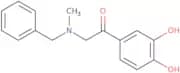
CAS:Producto controladoPlease enquire for more information about 2-(Benzylmethylamino)-3',4'-dihydroxyacetophenone including the price, delivery time and more detailed product information at the technical inquiry form on this pageFórmula:C16H17NO3Pureza:Min. 95%Peso molecular:271.31 g/molAcriflavine neutral
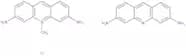
CAS:Acriflavine is a chemical agent that inhibits the growth of bacteria by binding to nuclear DNA and disrupting the synthesis of proteins. Acriflavine has been shown to be effective in treating infections caused by wild-type strains of bacteria, but has little effect on resistant mutants. It also has little effect on bacterial cells that are not actively growing (i.e., in the stationary phase). Acriflavine binds to DNA and acts as a crosslinking agent, which prevents transcription and replication. This drug also inhibits mitochondrial functions. Acriflavine is commonly used in combination with benzalkonium chloride or other antimicrobial agents because it does not have any bactericidal effects when used alone.END>>Pureza:Min. 95%Forma y color:Orange To Red Brown SolidPeso molecular:259.73 g/mol(R)-(+)-(2,2-Bis(Diphenylphosphino)-1,1-binaphthyl)palladium(II)chloride
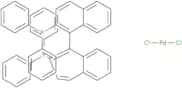
CAS:Producto controlado(R)-(+)-(2,2-Bis(Diphenylphosphino)-1,1-binaphthyl)palladium(II)chloride is a colorless solid that can be made into a crystalline form. It has a molecular weight of 518.8 g/mol and the chemical formula C12H14P4Cl2. The compound has four asymmetric carbon atoms and two stereocenters in the molecule. This compound is used as a catalyst for organic reactions and in the synthesis of other compounds. (R)-(+)-(2,2-Bis(Diphenylphosphino)-1,1-binaphthyl)palladium(II)chloride is soluble in ethanol and ether but insoluble in water. It reacts with oxygen to produce phosphorous acid and hydrogen chloride gas. This compound has been shown to have nuclear magnetic resonance spectra at room temperature with chemical shifts (Fórmula:C44H33Cl2P2PdPureza:Min. 95%Peso molecular:801.01 g/molBupropion hydrochloride related compound B
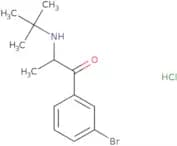
CAS:Producto controladoPlease enquire for more information about Bupropion hydrochloride related compound B including the price, delivery time and more detailed product information at the technical inquiry form on this pageFórmula:C13H18BrNOHClPureza:Min. 95%Forma y color:White/Off-White SolidPeso molecular:320.65 g/molBetamethasone valerate related compound A
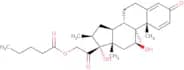
CAS:Producto controladoBetamethasone valerate related compound A is a corticosteroid compound that is used in the treatment of inflammation. It has anti-inflammatory and immunosuppressive properties, which are thought to be due to its inhibition of farnesyltransferase. Betamethasone valerate related compound A can be given as an intranasal solution or by injection. The drug substance is a mixture of betamethasone 17-valerate and betamethasone 17,21-dipropionate, which have different kinetic properties. The chemical stability of the drug substance is maintained by using a reaction mechanism involving chromatography.Fórmula:C27H37FO6Pureza:Min. 95%Peso molecular:476.58 g/molAtorvastatin
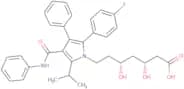
CAS:<p>Atorvastatin is a statin used to reduce low-density lipoprotein (LDL) cholesterol and triglyceride levels in the blood. It is marketed under the trade name Lipitor®. Atorvastatin inhibits the enzyme HMG-CoA reductase, which is responsible for the production of cholesterol. This drug also reduces plaque formation in atherosclerotic lesions by inhibiting inflammation and has been shown to be effective in reducing mortality from coronary heart disease. In addition, atorvastatin has a low incidence of side effects, particularly when compared with other statins such as simvastatin, pravastatin, or lovastatin. The risk of developing adverse reactions to this drug increases with age and prolonged use. The most common side effects are muscle pain or weakness, headache, nausea, high blood sugar levels (elevated glucose), and liver problems.</p>Fórmula:C33H35FN2O5Pureza:Min. 95%Forma y color:PowderPeso molecular:558.64 g/molgamma-Dodecalactone
CAS:<p>Gamma-dodecalactone is a naturally occurring fatty acid that exhibits antifungal and antitumor properties. The molecule is hydroxylated in vivo, forming an acid complex with the addition of water. This reaction produces a hydroxylate group, which increases the solubility of the compound. In vitro studies have shown that when gamma-dodecalactone is metabolized, it forms oxidation products such as nepeta cataria.</p>Pureza:Min. 95%S-(+)-1-Aminotetrahydronaphthalene
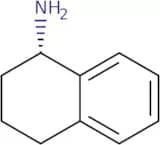
CAS:<p>S-(+)-1-Aminotetrahydronaphthalene is an amido derivative that is the enantiomer of S-(-)-1-amino-N,N'-diphenylformamide. It has been shown to have anti-obesity effects in mice by increasing energy expenditure and reducing food intake. S-(+)-1-Aminotetrahydronaphthalene also inhibits the release of fatty acids from adipose tissue, which may be due to its ability to suppress lipolysis. The molecular mechanism for these effects is not yet known, but it is thought that the amide group on this compound interacts with certain protein surfaces and steric interactions are involved in its activity.</p>Fórmula:C10H13NPureza:Min. 95%Peso molecular:147.22 g/mol3-Methylglutaric acid
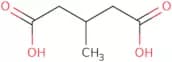
CAS:<p>3-Methylglutaric acid is an organic compound that belongs to the group of alkanocarboxylic acids. It has been shown to reduce the formation of malonic acid, which can be toxic to the heart and cause congestive heart failure. 3-Methylglutaric acid also inhibits oxidation catalysts and increases the production of energy in cells by providing electrons. The kinetic data for 3-methylglutaric acid have been determined using a gas chromatography technique on a high-temperature conversion reactor at a pH of 7.0 with a concentration of 0.1 M potassium phosphate buffer (pH 7) and a temperature of 70°C. 3-Methylglutaric acid has been shown to inhibit monoclonal antibody cationic polymerization, which may be due to its reactive nature and its ability to donate hydrogen ions or electrons.</p>Fórmula:C6H10O4Pureza:Min. 95%Peso molecular:146.14 g/mol(17a)-3-Ethynyl-19-norpregna-3,5-dien-20-yn-17-ol
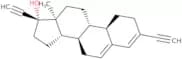
CAS:Producto controlado<p>Please enquire for more information about (17a)-3-Ethynyl-19-norpregna-3,5-dien-20-yn-17-ol including the price, delivery time and more detailed product information at the technical inquiry form on this page</p>Fórmula:C22H26OPureza:Min. 95%Peso molecular:306.44 g/mol2'-Chloro-2-bromoacetophenone
CAS:<p>2'-Chloro-2-bromoacetophenone is a compound that belongs to the class of methyl ketones. It is known to have a high transfer hydrogenation activity and has been used in the synthesis of phenacyl, which is an important biomolecular. It also has a low toxicity and does not irritate skin or mucous membranes. 2'-Chloro-2-bromoacetophenone can be used as an antiarrhythmic agent for respiratory disorders. This compound can be used for formylation reactions, such as those found in microbial metabolism, due to its ability to transfer hydrogen from organic compounds.</p>Fórmula:C8H6BrClOPureza:Min. 95%Peso molecular:233.49 g/mol2-Chloro-N-1-naphthylacetamide
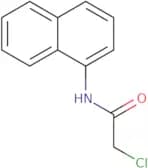
CAS:<p>2-Chloro-N-1-naphthylacetamide is a synthetic organic compound that belongs to the class of sulfur compounds. It is used in the synthesis of other compounds and has been shown to be a potent inhibitor of hydroxylapatite and sulfate hydrolysis. The reaction mechanism for this compound’s inhibition of sulfate hydrolysis is not known, but it may be due to its ability to act as an electron donor or acceptor. 2-Chloro-N-1-naphthylacetamide also has carcinogenic properties, with some studies suggesting that it can cause liver cancer in rodents.</p>Fórmula:C12H10ClNOPureza:Min. 95%Peso molecular:219.67 g/molFmoc-(S)-3-amino-3-(2-naphthyl)propionic acid
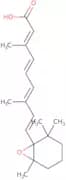
CAS:<p>Please enquire for more information about Fmoc-(S)-3-amino-3-(2-naphthyl)propionic acid including the price, delivery time and more detailed product information at the technical inquiry form on this page</p>Fórmula:C28H23NO4Pureza:Min. 95%Peso molecular:437.49 g/molall-trans 5,6-Epoxy retinoic acid
CAS:<p>5,6-Epoxy retinoic acid is a synthetic retinoid that has been shown to have biological properties in tissue culture and rat liver microsomes. It is an agonist of the retinoic acid receptor (RAR) and binds to DNA at the same site as all-trans retinoic acid. 5,6-Epoxyretinoic acid also has effects on gene expression in human serum and inhibits the proliferation of cancer cells by inducing apoptosis. The synthetic retinoid can be used as a novel chemotherapeutic agent for breast cancer or leukemia.</p>Fórmula:C20H28O3Pureza:Min. 95 Area-%Forma y color:Yellow PowderPeso molecular:316.43 g/mol