


APIs para investigación e impurezas
Subcategorías de "APIs para investigación e impurezas"
- Aminoácidos y derivados(12.440 productos)
- Antraquinonas y derivados(407 productos)
- Derivados de Benzimidazol e Imidazol(10.464 productos)
- Derivados de Benzodiazepinas(335 productos)
- Carbohidratos y glucoconjugados(5.388 productos)
- Ésteres y derivados(42.306 productos)
- Ácidos Grasos y Derivados Lipídicos(32.486 productos)
- Flavonoides y Polifenoles(17.100 productos)
- Radicales libres y agentes oxidantes/reductores(214 productos)
- Cetonas y Derivados(2.692 productos)
- Antibióticos naturales y semisintéticos(6.409 productos)
- Nitrilos y Cianoderivados(3.070 productos)
- Nitrosaminas y derivados(55 productos)
- Nucleósidos y Nucleótidos(3.492 productos)
- Fosfatos y Fosfonatos Orgánicos(1.203 productos)
- Sulfonatos y Sulfatos Orgánicos(10.451 productos)
- Organometálicos(4.425 productos)
- Otros(6.340 productos)
- Péptidos y Proteínas(3.164 productos)
- Polímeros y derivados(100 productos)
- Derivados de Purinas y Pirimidinas(8.974 productos)
- Derivados de Quinazolina y Quinolina(66.217 productos)
- Quinonas y derivados(24.378 productos)
- Sales y derivados de API(92.894 productos)
- Esteroides y derivados(4.987 productos)
- Sulfonamidas y derivados(2.607 productos)
- Terpenoides y derivados(3.860 productos)
- Tiazolidinedionas y Tiopiranos(2.755 productos)
- Compuestos β-adrenérgicos(231 productos)
Se han encontrado 66870 productos de "APIs para investigación e impurezas"
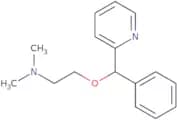
N,N-Dimethyl-2-(1-phenyl-1-(pyridin-2-yl)methoxy)ethanamine
CAS:Producto controladoN,N-dimethyl-2-(1-phenyl-1-(pyridin-2-yl)methoxy)ethanamine is a drug impurity that is produced as a result of the metabolism of the drug 1-[(2R)-2-phenylethyl]pyrrolidin-2-one. It is an analytical standard and an impurity in pharmaceutical products. It has been shown to be metabolized by CYP3A4, CYP1A2, and CYP2C19 and excreted unchanged in urine.Fórmula:C16H20N2OPureza:Min. 95%Forma y color:Brown Clear LiquidPeso molecular:256.34 g/molTrandolaprilat
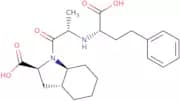
CAS:Trandolaprilat is a prodrug of enalaprilat, which is an angiotensin-converting enzyme (ACE) inhibitor. Trandolaprilat binds to the active site of ACE and inhibits its activity, thereby causing a decrease in the formation of angiotensin II, a potent vasoconstrictor. Trandolaprilat has been shown to be effective in treating congestive heart failure and other cardiac disorders. Trandolaprilat has also been shown to have an effect on energy metabolism, as it inhibits the binding of ATPase to adenosine triphosphate (ATP). This inhibition leads to increased levels of ATP in cells and may be responsible for its cardioprotective effects.
Fórmula:C22H32N2O6Pureza:Min. 95%Forma y color:White PowderPeso molecular:420.5 g/mol4-[2'-(7''-Deazaguanine)ethyl]benzoic acid N-hydroxysuccinimide ester
CAS:4-[2'-(7''-Deazaguanine)ethyl]benzoic acid N-hydroxysuccinimide ester is a useful intermediate in the synthesis of 7''-deazaguanine, which is a key building block in the synthesis of DNA. 4-[2'-(7''-Deazaguanine)ethyl]benzoic acid N-hydroxysuccinimide ester is a versatile building block that can be used in the synthesis of complex compounds. It has been shown to react with amines, sulfonyl chlorides, and epoxides to form amides, sulfonamides, and epoxy amines respectively. The CAS number for this compound is 204257-65-8.Fórmula:C19H17N5O5Pureza:Min. 95%Peso molecular:395.37 g/molDaunomycinone
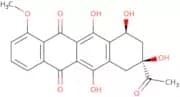
CAS:Daunomycinone is a chemical compound that belongs to the group of antitumor agents. It is used in cancer therapy and has been shown to inhibit protein synthesis, leading to cell death. Daunomycinone can be synthesized by reacting adriamycin with trifluoroacetic acid in the presence of an organic base. This reaction produces a daunomycinone molecule that has a hydroxyl group at one end and a carbonyl group at the other. The binding constants between daunomycinone and human serum proteins have been determined experimentally using molecular modeling techniques. Hydrogen bonding interactions are also present in this complex, which may account for its high affinity for proteins found in human serum.Fórmula:C21H18O8Pureza:Min. 95%Forma y color:Red PowderPeso molecular:398.36 g/mol4-(Aminomethyl)-1-cyclohexene-1-carboxylic acid
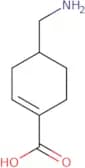
CAS:4-(Aminomethyl)-1-cyclohexene-1-carboxylic acid is an antifibrinolytic agent that can be used to control bleeding. It is a carboxymethyl cellulose with a menthol flavour and it stabilizes the hemostatic effect of tranexamic acid. 4-(Aminomethyl)-1-cyclohexene-1-carboxylic acid has been shown to be effective in controlling bleeding in patients with disorders such as hemophilia and von Willebrand disease. The drug is stable in acidic compositions, making it useful for dental applications as well.Fórmula:C8H13NO2Pureza:Min. 95%Forma y color:White PowderPeso molecular:155.19 g/mol1-Acetate 4-methanesulfonate 1,4-butanediol
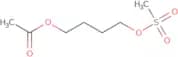
CAS:1-Acetate 4-methanesulfonate 1,4-butanediol (1AMB) is a precursor to the hematopoietic stem cell factor G-CSF. It is a white or yellow crystalline powder that is soluble in water and has a sweet taste. The compound can be used as an additive for food products and pharmaceuticals, but it may also cause toxic effects on the liver and other tissues. 1AMB has been shown to have cytotoxic and hepatotoxic effects in animals, so appropriate animal studies should be conducted before using this substance in humans.Fórmula:C7H14O5SPureza:Min. 95%Forma y color:Clear Colourless To Pale Yellow LiquidPeso molecular:210.25 g/mol1-β-D-Ribofuranosyl-3-guanylurea picrate
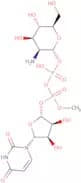
CAS:Producto controlado1-beta-D-Ribofuranosyl-3-guanylurea picrate is also known as 1-(diaminomethylene)-3-(beta-D-ribofuranosyl)urea picrate, 1-amidino-3-b-D-ribofuranosylurea monopicrate and Azacitidine Related Compound C. 1-beta-D-Ribofuranosyl-3-guanylurea picrate is an impurity generated from the hydrolysis of the drug Azacitidine, available on the market with the trade name Vidaza. Azacitidine is a chemical analogue of cytidine and is used in the treatment of myelodysplastic syndrome.Fórmula:C7H14N4O5•C6H3N3O7Pureza:Min. 95.0 Area-%Forma y color:PowderPeso molecular:463.31 g/molCetirizine glycerol ester impurity
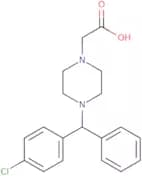
CAS:Cetirizine glycerol ester impurity is a drug product that is an analytical impurity. It is a natural, API impurity, and synthetic. The CAS number for this impurity is 1243652-36-9. Research and Development (R&D) of cetirizine glycerol ester impurity is required for the manufacture of pharmaceutical products. High purity cetirizine glycerol ester impurity can be used as a pharmacopoeia standard for HPLC analyses.Fórmula:C24H31ClN2O5Pureza:Min. 95%Peso molecular:462.97 g/mol1-Benzyl-4-(5,6-dimethoxy-1-oxoindan-2-ylidene)methylpiperidine
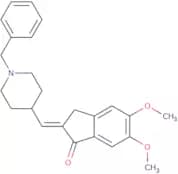
CAS:1-Benzyl-4-(5,6-dimethoxy-1-oxoindan-2-ylidene)methylpiperidine is an analytical standard and a drug product. It is a synthetic compound that has been shown to have pharmacological effects similar to those of the analgesic or opioid drugs. 1-Benzyl-4-(5,6-dimethoxy-1-oxoindan-2-ylidene)methylpiperidine can be used as an impurity standard for HPLC analyses as well as metabolic studies. This compound is also known to have potential interactions with other drugs.Fórmula:C24H27NO3Pureza:Min. 98 Area-%Forma y color:PowderPeso molecular:377.48 g/molN-Desmethyl galanthamine
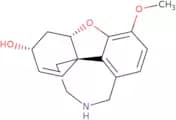
CAS:Producto controladoN-Desmethyl galanthamine is a plant alkaloid that is found in the Huperzia serrata plant. It has been shown to have cholinergic activity and calcium binding properties. N-Desmethyl galanthamine inhibits acetylcholinesterase, an enzyme responsible for the breakdown of acetylcholine, which is a neurotransmitter. This inhibition leads to increased levels of acetylcholine, which results in increased neuron stimulation and improved memory function. N-Desmethyl galanthamine also binds to β2 nicotinic receptor sites and blocks the binding of nicotine, leading to decreased nicotine dependence.
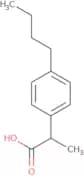
Fórmula:C16H19NO3Pureza:Min. 95%Peso molecular:273.33 g/mol2-(4-Butylphenyl)propionic acid, racemic
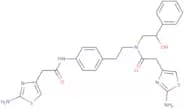
CAS:2-(4-Butylphenyl)propionic acid (p-butylhydratropic acid) is a known impurity of ibuprofen (Ibuprofen impurity B) which derives from an impurity present in the isobutylbenzene starting material and 2-(4-butylphenyl)propionic acid. p-Butylhydratropic acid is therefore used as a reference analytical standard.Fórmula:C13H18O2Pureza:Min. 95%Forma y color:Colorless PowderPeso molecular:206.28 g/molN-(2-Amino-4-thiazolyl)acetyl mirabegron
CAS:N-(2-Amino-4-thiazolyl)acetyl mirabegron is a research chemical that belongs to the category of drugs. It is custom synthesized and purified through analytical methods. N-(2-Amino-4-thiazolyl)acetyl mirabegron has been studied for its metabolism in vivo, including its pharmacokinetics and pharmacodynamics. This drug product is a metabolite of mirabegron, an agent used for the treatment of overactive bladder syndrome (OAB). The metabolite is also present in urine and plasma samples.
Fórmula:C26H28N6O3S2Pureza:Min. 95%Peso molecular:536.7 g/molCetirizine Impurity B
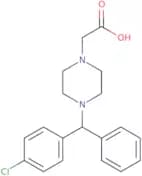
CAS:Cetirizine Impurity B is a custom synthesis impurity. It is a product of the metabolism of cetirizine, an anti-allergic drug. Cetirizine Impurity B is used as an impurity standard for drug development and analytical HPLC studies. It has been assigned CAS number 113740-61-7 by the Chemical Abstracts Service. The purity of this compound is greater than 99%.
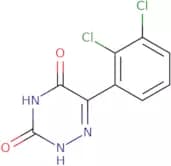
Fórmula:C19H21ClN2O2Pureza:Min. 90 Area-%Forma y color:PowderPeso molecular:344.8 g/mol6-(2,3-Dichlorophenyl)-1,2,4-triazine-3,5(2H,4H)-dione
CAS:6-(2,3-Dichlorophenyl)-1,2,4-triazine-3,5(2H,4H)-dione is a chlorinating agent that converts alcohols to alkyl chlorides. It is used for the conversion of diazotizable aromatic compounds to diazo compounds. This compound has been shown to be neuroprotective in animal models and provides protection against glutamate excitotoxicity. 6-(2,3-Dichlorophenyl)-1,2,4-triazine-3,5(2H,4H)-dione also reacts with nitrite ions to form the corresponding nitroso derivatives. These derivatives can cause DNA damage and are mutagenic. 6-(2,3-Dichlorophenyl)-1,2,4-triazine-3,5(2H,4H)-dione has been shown to react with aminoguanidine to produce a chromatFórmula:C9H5Cl2N3O2Pureza:Min. 95%Forma y color:PowderPeso molecular:258.06 g/molCetirizine impurity B dihydrochloride
CAS:Cetirizine impurity B dihydrochloride is a minor impurity of cetirizine, which is a non-sedating antihistamine. The purity of the compound was determined by high performance liquid chromatography (HPLC) and its bioequivalence to cetirizine was assessed in a population pharmacokinetic study. Cetirizine impurity B dihydrochloride has been shown to have a similar pharmacokinetic profile to cetirizine and can be used as an alternative for the treatment of allergic rhinitis.Fórmula:C19H21ClN2O2•(HCl)2Pureza:Min. 90 Area-%Forma y color:PowderPeso molecular:417.76 g/molEthyl 3-aminopyrazole-4-carboxylate
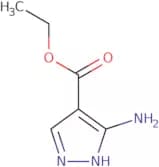
CAS:Ethyl 3-aminopyrazole-4-carboxylate is an anticancer drug that inhibits the growth of cancer cells by inhibiting protein synthesis. It has been shown to inhibit the activity of dpp-iv and pde5, which are enzymes involved in cellular proliferation. Ethyl 3-aminopyrazole-4-carboxylate has also been shown to have antiinflammatory properties, which may be due to inhibition of prostaglandin synthesis.
Ethyl 3-aminopyrazole-4-carboxylate is a multinuclear compound that reacts with nitrogen atoms from the pyrazoles to form a stable molecule. Dimethylformamide is used as a solvent for this reaction. The synthesis of ethyl 3-aminopyrazole-4-carboxylate starts with acetylation, which converts the carboxylic acid group into an acetic acid group. The acetic acid group reacts with ammonia and hydrogen cyanFórmula:C6H9N3O2Pureza:Min. 95%Forma y color:PowderPeso molecular:155.16 g/mol3,3',5,5'-Tetraiodothyroformic acid
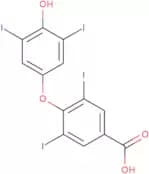
CAS:Cymit Quimicaetic beta-D-glucosiduronic acidFórmula:C13H6I4O4Pureza:Min. 95 Area-%Forma y color:Off-White PowderPeso molecular:733.8 g/molN-(Aminosulphonyl)-3-[[[2-[(aminoiminomethyl)amino]-4-thiazolyl]methyl]thio]propanamide, hydrochloride
CAS:Famotidine is a histamine H2 receptor antagonist. It is used to prevent stomach ulcers, heartburn, or "acid indigestion." Famotidine is available in various forms for oral administration: tablets, capsules, and solution. The chemical name for famotidine is N-(aminosulphonyl)-3-[[[2-[(aminoiminomethyl)amino]-4-thiazolyl]methyl]thio]propanamide hydrochloride.Fórmula:C8H15ClN6O3S3·HClPureza:Min. 95%Forma y color:White To Off-White SolidPeso molecular:411.35 g/mol4-(1-Hydroxy-1-methylethyl)-2-propyl-1-[[2'-[1-(triphenylmethyl)-1H-tetrazol-5-yl][1,1'-biphenyl]-4-yl]methyl]-1H-imidazole-5-carbox ylic acid sodium salt
CAS:4-(1-Hydroxy-1-methylethyl)-2-propyl-1-[[2'-[1-(triphenylmethyl)-1H-tetrazol-5-yl][1,1'-biphenyl]-4-yl]methyl]-1H-imidazole-5-carbox ylic acid sodium salt is a research and development compound that is synthesized using the drug product synthesis method. This compound belongs to the class of Impurity standards, which are used for quality control in analytical chemistry. The CAS number for this compound is 879097–59–3, and the molecular formula is C26H34N6O4S. The molecular weight of this compound is 564.49 g/mol. 4-(1-Hydroxy-1-methylethyl)-2-propyl-[1-[2'-[(1,3,5 -tris(triphenylmethylFórmula:C43H39N6O3·NaPureza:Min. 95%Peso molecular:710.8 g/molSildenafil N-Oxide
CAS:Sildenafil N-Oxide is a solvate, hydrate, and prodrug of sildenafil citrate. It is used for the treatment of erectile dysfunction or pulmonary hypertension. Sildenafil N-Oxide is an oral drug that is converted to its active form, sildenafil, in the liver by CYP3A4. Sildenafil N-Oxide's effects on human erection are thought to be due to its ability to block phosphodiesterase type 5 (PDE5), which increases the levels of cGMP in smooth muscle cells and causes relaxation of the corpus cavernosum. This leads to increased blood flow into the penis and an erection.Fórmula:C22H30N6O5SPureza:Min. 95%Peso molecular:490.58 g/mol

![4-[2'-(7''-Deazaguanine)ethyl]benzoic acid N-hydroxysuccinimide ester](/_next/image/?url=https%3A%2Fstatic.cymitquimica.com%2Fproducts%2F3D%2Fthumb-webp%2FFD20837.webp&w=3840&q=75)

![N-(Aminosulphonyl)-3-[[[2-[(aminoiminomethyl)amino]-4-thiazolyl]methyl]thio]propanamide, hydrochlo…](/_next/image/?url=https%3A%2Fstatic.cymitquimica.com%2Fproducts%2F3D%2Fthumb-webp%2FIA58075.webp&w=3840&q=75)
![4-(1-Hydroxy-1-methylethyl)-2-propyl-1-[[2'-[1-(triphenylmethyl)-1H-tetrazol-5-yl][1,1'-biphenyl]-…](/_next/image/?url=https%3A%2Fstatic.cymitquimica.com%2Fproducts%2F3D%2Fthumb-webp%2FIH159138.webp&w=3840&q=75)
