Apoptose
Les inhibiteurs de l'apoptose sont des composés qui empêchent ou retardent le processus de mort cellulaire programmée, connu sous le nom d'apoptose. Ces inhibiteurs sont essentiels pour étudier les mécanismes de survie cellulaire et sont utilisés pour enquêter sur les maladies où l'apoptose est dysrégulée, telles que le cancer, les troubles neurodégénératifs et les maladies auto-immunes. En modulant l'apoptose, ces inhibiteurs peuvent aider au développement de thérapies visant à contrôler la mort cellulaire. Chez CymitQuimica, nous offrons une sélection complète d'inhibiteurs de l'apoptose de haute qualité pour soutenir vos recherches en biologie cellulaire, oncologie et domaines connexes.
Sous-catégories appartenant à la catégorie "Apoptose"
- ASK(6 produits)
- BCL(11 produits)
- Caspase(125 produits)
- FOXO1(3 produits)
- IAP(66 produits)
- Mdm2(12 produits)
- PD-1/PD-L1(125 produits)
- PDK(9 produits)
- PERK(25 produits)
- Sérine/thréonine kinase(15 produits)
- Survivant(13 produits)
- TNF(92 produits)
- c-RET(51 produits)
- p53(62 produits)
Affichez 6 plus de sous-catégories
5600 produits trouvés pour "Apoptose"
Trier par
Degré de pureté (%)
0
100
|
0
|
50
|
90
|
95
|
100
Antiangiogenic agent 7
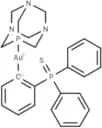
CAS :<p>Antiangiogenic agent 7 (Compound 1) induces apoptosis, elevates Reactive Oxygen Species (Reactive Oxygen Species), and inhibits the intracellular enzyme thioredoxin reductase. It exhibits anticancer activity with IC50 values ranging from 0.08 to 3.5 μM against cervical cancer cells (HeLa), prostate cancer cells (PC-3), and non-small cell lung cancer cells (A549). Additionally, Antiangiogenic agent 7 suppresses tumor growth in a mouse xenograft model.</p>Formule :C24H26AuN3P2SCouleur et forme :SolidMasse moléculaire :647.46Metamizole hemimagnesium
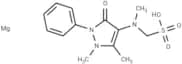
CAS :<p>Metamizole (Dipyrone) hemimagnesium is an anti-inflammatory and antioxidant compound known for its ability to reduce fever. It decreases levels of C-reactive protein (CRP) and interleukin 6 (IL-6). Additionally, Metamizole hemimagnesium acts as an orally active cyclooxygenase (COX) inhibitor, suppressing cell proliferation and promoting apoptosis. It is utilized in the study of inflammation and fever.</p>Formule :C13H17MgN3O4SCouleur et forme :SolidMasse moléculaire :335.662SIJ1777
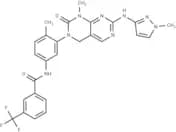
CAS :<p>SIJ1777, a derivative of GNF-7, exhibits potent anticancer effects against melanoma cells harboring BRAFI/II/III mutations. The compound significantly inhibits the activation of MEK, ERK, and AKT. Furthermore, SIJ1777 notably induces apoptosis (cell death) and effectively prevents migration, invasion, and anchorage-independent growth of melanoma cells with BRAFI/II/III mutations.</p>Formule :C26H23F3N8O2Couleur et forme :SolidMasse moléculaire :536.51Scytonemin
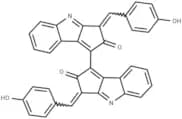
CAS :<p>Scytonemin, a cyanobacterial pigment, inhibits cancer cell growth by decreasing Plk1 activity, especially effective on U266 myeloma cells.</p>Formule :C36H20N2O4Couleur et forme :SolidMasse moléculaire :544.55CP-31398
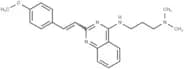
CAS :<p>CP-31398 stabilizes the active conformation of p53 in cancer cells with either mutated or wild-type p53, enhancing its activity. Additionally, CP-31398 upregulates target genes of p53 such as p21WAF1/Cip1 and KILLER/DR5. This compound possesses tumor-suppressive properties.</p>Formule :C22H26N4OCouleur et forme :SolidMasse moléculaire :362.47GPD-1116
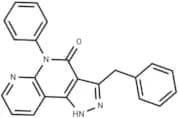
CAS :<p>GPD-1116 is an orally active inhibitor of phosphodiesterase (PDE)4 and PDE1. The compound effectively reduces smoke-induced apoptosis in lung cells. Additionally, GPD-1116 has shown efficacy in various animal disease models, including emphysema, acute lung injury, chronic obstructive pulmonary disease (COPD), asthma, and pulmonary arterial hypertension.</p>Formule :C22H16N4OCouleur et forme :SolidMasse moléculaire :352.39Oxamic acid
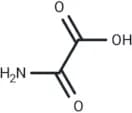
CAS :<p>Oxamic acid is an inhibitor of LDH-A and exhibits antitumor activity. It demonstrates antiproliferative effects on cancer cells and can induce apoptosis.</p>Formule :C2H3NO3Couleur et forme :SolidMasse moléculaire :89.05SC428
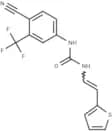
CAS :<p>SC428 acts as an inhibitor of the androgen receptor (AR), specifically targeting the N-terminal domain of AR. This compound effectively diminishes the transactivation of various AR forms, including AR-V7, ARv567es, full-length AR (AR-FL), and its LBD mutants. Additionally, SC428 significantly inhibits AR-FL nuclear translocation, chromatin binding, and AR-regulated gene transcription under androgen stimulation. In vitro, SC428 suppresses the proliferation of tumor cells. In vivo, it inhibits tumor growth in mice transplanted with 22Rv1 cells by inducing apoptosis.</p>Formule :C15H10F3N3OSCouleur et forme :SolidMasse moléculaire :337.32HDAC-IN-9
<p>HDAC-IN-9, a dual tubulin/HDAC inhibitor, impedes A549 cell invasion/migration and shows strong anti-tumor/angiogenic effects.</p>Formule :C33H38N2O4Couleur et forme :SolidMasse moléculaire :526.67D-Cl-amidine hydrochloride
<p>D-Cl-amidine hydrochloride is a potent and highly selective inhibitor of PAD1. It exhibits excellent tolerance and does not induce significant toxicity [1].</p>Formule :C14H20Cl2N4O2Couleur et forme :SolidMasse moléculaire :347.24Anticancer agent 53
CAS :<p>Anticancer agent 53 exhibits potent in vitro cytotoxicity, triggers apoptosis, halts S/G2/M cycle, and has antitumor effects without toxicity.</p>Formule :C31H25FN4O6SCouleur et forme :SolidMasse moléculaire :600.62HDAC6/HSP90-IN-2
<p>HDAC6/HSP90-IN-2, a cancer research chemical, inhibits HDAC6 & Hsp90 with IC50s of 105.7 & 61 nM.</p>Formule :C19H22N2O5Couleur et forme :SolidMasse moléculaire :358.39NLRP3-IN-78
CAS :<p>NLRP3-IN-78 (compound 21) is an NLRP3 inhibitor with a 46.72% inhibition rate of GSDMD-induced pyroptosis at 5 μM. It binds to the NLRP3 protein and prevents GSDMD-NT oligomerization. Additionally, NLRP3-IN-78 inhibits GSDMD cleavage and upstream NF-κB signaling, demonstrating anti-inflammatory activity.</p>Formule :C12H5Cl2N3O4S2Couleur et forme :SolidMasse moléculaire :390.222Isoforretin A
CAS :<p>Isoforretin A is a potent inhibitor of thioredoxin-1 (Trx1) with significant biological activity, inducing anti-tumor effects mediated by reactive oxygen species (ROS). The compound inhibits Trx1 activity by covalently binding to the activation site residues Cys32/Cys35, which triggers ROS accumulation, leading to DNA damage and apoptosis (Apoptosis) in cancer cells. Additionally, Isoforretin A has demonstrated the ability to suppress the growth of HepG2 tumors in a mouse hepatic cell carcinoma xenograft model.</p>Formule :C28H38O10Couleur et forme :SolidMasse moléculaire :534.6BRD1991
CAS :<p>BRD1991 is a chemical compound that specifically disrupts the interaction between Beclin 1 and Bcl-2, thereby inducing autophagy.</p>Formule :C33H35Cl2N3O4Couleur et forme :SolidMasse moléculaire :608.55KMUP-1
CAS :<p>KMUP-1 is a xanthine derivative known for its vasodilatory properties. It functions as a phosphodiesterase (PDE) inhibitor and an activator of soluble guanylate cyclase (sGC), engaging the NO/sGC/cyclic guanosine monophosphate pathway. Additionally, KMUP-1 can open K+ channels and has the potential to alleviate ischemia-induced cardiac myocyte apoptosis (apoptosis). This compound is useful in cardiovascular and anti-inflammatory research.</p>Formule :C19H23ClN6O2Couleur et forme :SolidMasse moléculaire :402.878RWJ-56110
CAS :<p>protease-activated receptor-1 (PAR1) antagonist</p>Formule :C41H43Cl2F2N7O3Degré de pureté :98%Couleur et forme :SolidMasse moléculaire :790.73Anticancer agent 69
<p>Anticancer agent 69 targets PC3 cells (IC50=26 nM), raises ROS, lowers EGFR, and induces apoptosis.</p>Formule :C19H26N8SCouleur et forme :SolidMasse moléculaire :398.53Ganoderic acid R
CAS :<p>Ganoderic acid R: potent anticancer, induces apoptosis, cytotoxic to MDR and sensitive tumor cells.</p>Formule :C34H50O6Couleur et forme :SolidMasse moléculaire :554.76RIPK1-IN-28
CAS :<p>RIPK1-IN-28 (compound 13) is an orally active inhibitor of RIPK1. It exhibits inhibitory effects on human I2.1 and Hepa1-6 cells, with IC50 values of 0.4 and 1.2 nM, respectively.</p>Formule :C27H24N4O4Couleur et forme :SolidMasse moléculaire :468.504