Apoptose
Les inhibiteurs de l'apoptose sont des composés qui empêchent ou retardent le processus de mort cellulaire programmée, connu sous le nom d'apoptose. Ces inhibiteurs sont essentiels pour étudier les mécanismes de survie cellulaire et sont utilisés pour enquêter sur les maladies où l'apoptose est dysrégulée, telles que le cancer, les troubles neurodégénératifs et les maladies auto-immunes. En modulant l'apoptose, ces inhibiteurs peuvent aider au développement de thérapies visant à contrôler la mort cellulaire. Chez CymitQuimica, nous offrons une sélection complète d'inhibiteurs de l'apoptose de haute qualité pour soutenir vos recherches en biologie cellulaire, oncologie et domaines connexes.
Sous-catégories appartenant à la catégorie "Apoptose"
- ASK(9 produits)
- BCL(3 produits)
- Caspase(153 produits)
- FOXO1(2 produits)
- IAP(67 produits)
- Mdm2(12 produits)
- PD-1/PD-L1(92 produits)
- PDK(9 produits)
- PERK(26 produits)
- Sérine/thréonine kinase(18 produits)
- Survivant(14 produits)
- TNF(49 produits)
- c-RET(60 produits)
- p53(63 produits)
Affichez 6 plus de sous-catégories
6026 produits trouvés pour "Apoptose"
Trier par
Degré de pureté (%)
0
100
|
0
|
50
|
90
|
95
|
100
PZ671
PZ671 is a potent PROTAC degrader targeting Bcl-xL, exhibiting an IC50 of 1.3 nM in MOLT-4 cells and a DC50 of 0.9 nM for Bcl-xL. It induces apoptosis in MOLT-4 cells and effectively inhibits tumor growth in MOLT-4 xenograft mice, while quickly restoring transiently reduced platelet counts. PZ671 is applicable in cancer research, including studies on small cell lung cancer.Couleur et forme :Odour SolidTat-ASIC1a (1-20) (mouse, rat)
Tat-ASIC1a (1-20) (mouse, rat) is a competitive ASIC1a transmembrane peptide with significant neuroprotective effects. It alleviates acidotoxic neuronal damage by targeting the ASIC1a-RIPK1 pathway and an auto-inhibition mechanism. This compound effectively safeguards the brain in ischemic stroke mouse models against damage from ischemia and is applicable in research on neurodegenerative diseases, such as Huntington's disease and Parkinson’s disease.Couleur et forme :Odour SolidAngiogenesis inhibitor 3
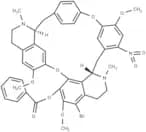
CAS :Angiogenesis Inhibitor 3 (compound 8) is a potent anti-cancer agent, blocking HUVEC/HCT-15 cell growth and inducing apoptosis.Formule :C44H42BrN3O9Couleur et forme :SolidMasse moléculaire :836.72BC13
BC13 is a CDK6/BRD4 inhibitor with IC50 values of 234 nM for CDK6 and 36 nM for BRD4. It exhibits antiproliferative properties, induces apoptosis (cell death) and DNA damage, and elevates ROS levels.Formule :C37H39N7O5Couleur et forme :SolidMasse moléculaire :661.75Bcl-2/Mcl-1-IN-4
Bcl-2/Mcl-1-IN-4 (compound 20) acts as a dual inhibitor targeting Bcl-2 (Ki=0.49 μM) and Mcl-1 (Ki=0.51 μM). This compound effectively suppresses cancer cell proliferation and induces apoptosis in U937 cells. It is utilized in cancer research.Couleur et forme :Odour SolidDP-15
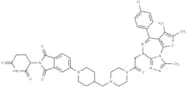
CAS :DP-15 acts as a degrader of GSPT1 and BRD4, with DC50 values of 5.25 nM and 0.48 nM, respectively. This compound exhibits antiproliferative activity in AML and NHL cells, showing IC50 values in the nanomolar range, induces G1 phase cell cycle arrest, and triggers apoptosis in MOLM13 cells. Additionally, DP-15 demonstrates anti-leukemic properties in the MOLM-13 xenograft mouse model. [Pink: ligand for target protein JQ-1 carboxylic acid; Black: linker; Blue: ligand for E3 ligaseCereblonThalidomide-5-OH]Formule :C42H44ClN9O5SCouleur et forme :SolidMasse moléculaire :822.374Fludarabine triphosphate
CAS :Fludarabine triphosphate inhibits key enzymes, causing cell death.Formule :C10H15FN5O13P3Couleur et forme :SolidMasse moléculaire :525.17VEGFR-2-IN-61
VEGFR-2-IN-61 (Compound 7b) is an inhibitor of VEGFR-2 with an IC50 of 2.83 µM. It effectively inhibits the proliferation of various cancer cells, including MCF-7 cells, with an IC50 of 2.12 µM. Additionally, VEGFR-2-IN-61 suppresses cell migration and induces oxidative stress and apoptosis in MCF-7 cells.Formule :C27H25N5OCouleur et forme :SolidMasse moléculaire :435.52ARI-1
ARI-1 is a receptor tyrosine kinase-like orphan receptor 1 (ROR1) inhibitor that binds to ROR1's extracellular Frizzled domain, effectively inhibiting aberrantCouleur et forme :Odour SolidAMPK-IN-6
AMPK-IN-6 (compound 13a) is a potent AMPK inhibitor with an IC50 value of 0.093 µM. It induces apoptosis and suppresses autophagy. Additionally, AMPK-IN-6 exhibits antiproliferative activity and holds potential for research into pulmonary arterial hypertension.Formule :C18H20FN5OCouleur et forme :SolidMasse moléculaire :341.383F3-PEG8-RiboTAC
F3-PEG8-RiboTAC is a RiboTAC compound that specifically degrades the mRNA of the oncogene LGALS1. This compound can induce apoptosis (cell death) in tumor cells and inhibit their invasion. F3-PEG8-RiboTAC exhibits antitumor activity and is applicable in research on leukemia and triple-negative breast cancer. (RNase L ligand; RNA binder; Linker)Couleur et forme :Odour SolidTNF-α-IN-11
TNF-α-IN-11 (Compound 10) is a TNF-α inhibitor exhibiting a dissociation constant (K D) of 12.06 μM.Formule :C24H26N2O5Couleur et forme :SolidMasse moléculaire :422.47Thymocartin Acetate
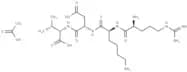
CAS :Thymocartin Acetate, a thymopoietin fragment (32-35), inhibits enzyme breakdown; potential for immunodeficiency treatment.Formule :C23H44N8O9Couleur et forme :SoildMasse moléculaire :576.64dASK1
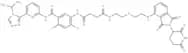
CAS :dASK1 is a selective CRBN-based PROTAC degrader targeting apoptosis signal-regulating kinase 1 (ASK1). It forms a stable ternary complex with ASK1, facilitating its rapid and sustained degradation via the ubiquitin-proteasome pathway. dASK1 exhibits strong ASK1 degradation capabilities and is applicable for hepatitis research.Formule :C38H38F2N10O8Couleur et forme :SolidMasse moléculaire :800.77Cytostatin
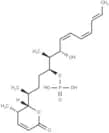
CAS :Cytostatin: Natural antitumor, inhibits cell adhesion, blocks B16 melanoma, induces apoptosis, selectively targets PP2A (IC50 = 29 nM).Formule :C21H33O7PCouleur et forme :SolidMasse moléculaire :428.462RIPK1 ligand-Linker Conjugate-1
RIPK1ligand-Linker Conjugate-1 is a Target Protein Ligand-Linker Conjugate that consists of a RIPK1 ligand and a PROTAC linker, designed to recruit E3 ligase. It is utilized in the synthesis of PROTACRIPK1Degrader-1.Couleur et forme :Odour SolidLY 219703
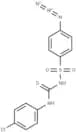
CAS :LY 219703 is a photoactivatable diarylsulfonylurea.Formule :C13H10ClN5O3SCouleur et forme :SolidMasse moléculaire :351.77E3 ligase Ligand 36
CAS :E3 ligase Ligand 36 is an E3 ligase ligand that can be utilized for synthesizing PROTACs, such as PROTAC BRM/BRG1 degrader-1.Formule :C25H30N4O5SCouleur et forme :SolidMasse moléculaire :498.6TNF-α/IL-1β-IN-1
TNF-α/IL-1β-IN-1 (compound 11a) is an anti-inflammatory agent that effectively reduces the expression of TNF-α and IL-1β, inhibits oxidative stress and myocardial cell apoptosis, and demonstrates significant activity against septic myocardial injury. Additionally, it improves myocardial blood flow in vivo.Formule :C41H58N2O7Couleur et forme :SolidMasse moléculaire :690.91EGFR-IN-169
EGFR-IN-169 is an epidermal growth factor receptor (EGFR) inhibitor derived from ginsenoside, with an IC50 of 5.19 μM. It disrupts colorectal cancer cell migration and growth by inhibiting the EGFR-mediated RalA/EMT pathway. With an IC50 of 4.46 μM against HCT-116 cells and a selectivity index (SI) of 16.92, EGFR-IN-169 also inhibits CDKs, induces G0/G1 cell cycle arrest, and suppresses cell migration and invasion. Additionally, EGFR-IN-169 reduces mitochondrial membrane potential, induces apoptosis and reactive oxygen species (ROS) production. It is applicable in cancer research, particularly for colorectal cancer.Couleur et forme :Odour Solid