Nucléotides
Les nucléotides sont des composés organiques qui servent de building blocks aux acides nucléiques, essentiels à la formation de l'ADN et de l'ARN. Chaque nucléotide est composé d'une base azotée, d'une molécule de sucre et d'un ou plusieurs groupes phosphate. Ces nucléotides s'assemblent pour former de longues chaînes, créant le matériel génétique qui porte et transmet l'information génétique dans tous les organismes vivants. Dans cette section, vous trouverez une large gamme de nucléotides essentiels pour la recherche en génétique, biologie moléculaire et biochimie. Ils sont fondamentaux pour étudier les processus génétiques, synthétiser des acides nucléiques et développer des outils diagnostiques et thérapeutiques. Chez CymitQuimica, nous proposons des nucléotides de haute qualité pour soutenir vos recherches scientifiques et applications, garantissant précision et fiabilité dans vos expériences.
Sous-catégories appartenant à la catégorie "Nucléotides"
2634 produits trouvés pour "Nucléotides"
Trier par
Degré de pureté (%)
0
100
|
0
|
50
|
90
|
95
|
100
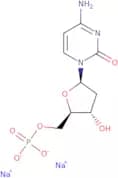
2'-Deoxycytidine-5'-monophosphate disodium
CAS :2'-Deoxycytidine-5'-monophosphate disodium (2DdCMP) is a competitive inhibitor of receptor protein tyrosine kinases. It has been shown to inhibit the growth of various human cancer cell lines in vitro and to reduce tumor size in mice bearing transplanted human tumor xenografts. 2DdCMP inhibits the proliferation of cancer cells by interfering with the expression of growth factors that are involved in mitogenesis. This drug also inhibits the growth of new blood vessels, which is essential for tumor formation and progression. 2DdCMP binds to an allosteric site on receptor molecules, thereby blocking the binding site of other proteins such as growth factors and kinases that may be involved in tumorigenesis.Formule :C9H12N3O7PNa2Degré de pureté :Min. 95%Couleur et forme :White PowderMasse moléculaire :351.16 g/molDecitabine
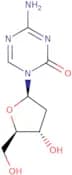
CAS :<p>A synthetic cytosine analogue that incorporates into DNA and prevents DNA methylation via DNA (cytosine-5)-methyltransferase 1 (DNMT1) inhibition. Demonstrated potent anti-leukaemic effects attributed to cell cycle arrest and induction of apoptosis. Has anti-growth effects on solid tumor cell lines.</p>Formule :C8H12N4O4Degré de pureté :Min. 98 Area-%Couleur et forme :White PowderMasse moléculaire :228.21 g/mol1-(5'-O-Benzoyl-2'-deoxy-2'-fluoro-β-L-arabinofuranosyl)thymine
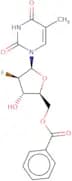
CAS :1-(5'-O-Benzoyl-2'-deoxy-2'-fluoro-β-L-arabinofuranosyl)thymine is a modified nucleoside analog with structural modifications that enhance its biological properties, stability, and pharmaceutical potential. The compound features thymine (5-methyluracil) as the nucleobase, a pyrimidine derivative. The sugar component is 2'-deoxy-2'-fluoro-β-L-arabinofuranose, which includes the L-arabinose configuration, a departure from the natural D-ribose or D-deoxyribose configuration typically found in DNA and RNA, influencing how the molecule is recognized by biological systems. The 2'-fluoro substitution at the sugar position improves the compound's stability and resistance to enzymatic degradation, while also potentially enhancing its antiviral activity. A 5'-O-benzoyl group serves as a protecting group, safeguarding the 5'-hydroxyl group during synthesis.Formule :C17H17FN2O6Degré de pureté :Min. 95%Masse moléculaire :364.33 g/mol2',3'-Dideoxyuridine-5'-triphosphate lithium - 100mM aqueous solution
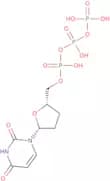
CAS :2',3'-Dideoxyuridine-5'-triphosphate can be used with uracil DNA glycosylase to minimize PCR carryover contamination and enables the kinetics of deoxyuridine 5′-triphosphate nucleotidohydrolases to be investiagated.Formule :C9H15N2O13P3•LixDegré de pureté :Min. 95%Couleur et forme :Clear LiquidMasse moléculaire :452.14 g/mol6-Thio-9-(β-D-arabinofuranosyl)purine
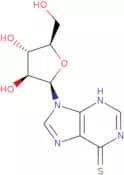
CAS :6-Thio-9-(b-D-arabinofuranosyl)purine is a purine analog that inhibits the enzyme uridine phosphorylase, which is involved in the metabolism of uridine. It has been shown to inhibit the growth of L1210 cells and also to be effective against subcutaneous tumors in mice. 6-Thio-9-(b-D-arabinofuranosyl)purine is active against schistosomiasis in mice, with an LD50 of 1 mg/kg. This drug has also been shown to have potential antitumor activity and was able to inhibit the growth of human lymphocytes and leukocytes.Formule :C10H12N4O4SDegré de pureté :Min. 95%Couleur et forme :PowderMasse moléculaire :284.29 g/mol9-(b-D-Arabinofuranosyl)guanine - Bio-X ™
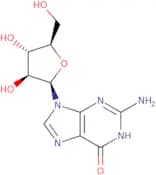
CAS :9-(b-D-Arabinofuranosyl) guanine is a purine nucleoside in which guanine is attached to arabinofuranose via a beta-N(9)-glycosidic bond. 9-(b-D-Arabinofuranosyl) guanine binds to the phosphate groups in DNA and inhibits the synthesis of DNA causing cell death. It also has antineoplastic properties.Formule :C10H13N5O5Degré de pureté :Min. 95%Couleur et forme :PowderMasse moléculaire :283.24 g/molInosine 5'-diphosphate trisodium
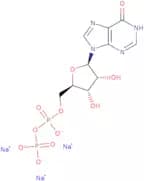
CAS :Inosine 5'-diphosphate trisodium salt is an antiviral compound that is used to inhibit the replication of many viruses, including herpes, influenza, and HIV. It has been shown to be effective against cancer cells in vitro. Inosine 5'-diphosphate trisodium salt is a modified nucleotide that is used as a phosphoramidite for DNA synthesis. This compound can also be used as an activator for deoxyribonucleoside triphosphates. It has been shown to have anticancer activity in vivo and in vitro and also inhibits viral DNA synthesis by preventing the formation of ribonucleotide triphosphates from ribonucleotides. The molecular weight of this compound is 390.4 g/mol and its CAS number is 81012-88-6.Formule :C10H11N4O11P2•Na3Degré de pureté :Min. 95%Couleur et forme :PowderMasse moléculaire :494.13 g/mol2'-Azido-2'-deoxyuridine
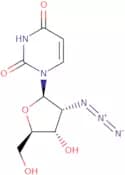
CAS :<p>2'-Azido-2'-deoxyuridine is a synthetic nucleoside analog of uridine in which the 2'-hydroxyl group on the ribose sugar is replaced with an azido group (–N₃), and the base is unmodified uracil. This modification alters the sugar's conformation and chemical reactivity, enabling the use of this analog in bioorthogonal labeling strategies, particularly through azide-alkyne "click" chemistry. Its incorporation into nucleic acids can influence polymerase recognition and chain elongation, making it a useful probe in studies of RNA synthesis, structure, and function.</p>Formule :C9H11N5O5Degré de pureté :Min. 98 Area-%Couleur et forme :White Off-White PowderMasse moléculaire :269.21 g/molAcetyl hypoxanthine
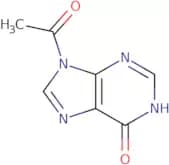
CAS :<p>Acetyl hypoxanthine is an inorganic compound that has a cyclophosphate group. It can be synthesized from the reaction of acetic acid and 6-chloropurine, which is activated with trifluoroacetic acid and irradiated with ultraviolet light. Acetyl hypoxanthine can then be synthesized by ammonolysis of chloroacetone using ammonia or by chlorinating acetylene with chlorine. The advantages of this compound are its high yield and low cost.</p>Formule :C7H6N4O2Degré de pureté :Min. 95 Area-%Couleur et forme :PowderMasse moléculaire :178.15 g/molCladribine
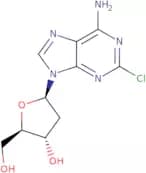
CAS :<p>Deoxyadenosine analog resistant to adenosine deaminase</p>Formule :C10H12ClN5O3Degré de pureté :Min. 97 Area-%Couleur et forme :PowderMasse moléculaire :285.69 g/molGemcitabine base
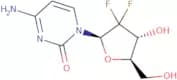
CAS :<p>Gemcitabine is a prodrug that is converted to 5-fluorouracil (5FU) in the body. It has been shown to inhibit the growth of bladder and pancreatic cancer cells by interfering with the synthesis of DNA. Gemcitabine inhibits DNA replication by binding to the epidermal growth factor receptor, which leads to cell death. Gemcitabine also acts as a competitive inhibitor of deoxycytidine kinase, which prevents the formation of deoxycytidine monophosphate from deoxyuridine monophosphate, preventing DNA replication. In addition, gemcitabine can activate apoptosis in some tumor cells by increasing levels of intracellular free calcium, which leads to activation of enzymes such as phospholipases and proteases that degrade proteins, lipids, and nucleic acids.</p>Formule :C9H11F2N3O4Degré de pureté :Min. 98 Area-%Couleur et forme :White PowderMasse moléculaire :263.2 g/mol2’-Deoxy-2’-fluorouridine 5’-monophosphate triethyl ammonium
2’-Deoxy-2’-fluorouridine 5’-monophosphate triethyl ammonium is a fluorinated nucleotide analog used in biochemical and medicinal researchFormule :C9H12FN2O8P•C6H15NDegré de pureté :Min. 95%Couleur et forme :PowderMasse moléculaire :427.36 g/molDihydrozeatin riboside
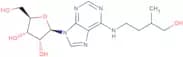
CAS :<p>Dihydrozeatin riboside is a cytokinin, a group of plant hormones that regulate various aspects of plant growth and development. It is found in the form of an ester, dihydrozeatin riboside, which is produced by the action of trifluoroacetic acid on zeatin. The natural function of this hormone is to stimulate cell division in plants, but it has also been shown to have antibacterial effects against bacterial strains such as Bacillus subtilis and Escherichia coli. Dihydrozeatin riboside inhibits bacterial growth by binding to DNA-dependent RNA polymerase, thereby preventing transcription and replication. The high frequency of human activity has been shown using a patch-clamp technique on human erythrocytes. This active form is metabolized through a number of metabolic transformations, including hydrolysis by esterases or glucuronidases, oxidation by cytochrome P450 enzymes, reduction</p>Formule :C15H23N5O5Degré de pureté :Min. 95%Couleur et forme :PowderMasse moléculaire :353.37 g/molN4-Benzoylcytidine
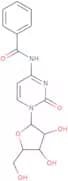
CAS :<p>N4-Benzoylcytidine is a nucleoside that is used as part of the synthesis of the antiviral drug acyclovir. It is synthesized by reacting uridine with benzoyl chloride in a solid-phase synthesis. N4-Benzoylcytidine has shown to inhibit the growth of virus type-1 and other viruses, including those that cause herpes simplex and varicella zoster. This nucleoside also inhibits epidermal growth factor (EGF) and is a hybridization probe for human immunodeficiency virus (HIV). The benzoate group on this compound reacts with hydroxyl groups on proteins, which may be why it has been shown to stimulate epidermal growth in mammalian cells.</p>Formule :C16H17N3O6Degré de pureté :Min. 98 Area-%Couleur et forme :White PowderMasse moléculaire :347.32 g/mol5'-Ethylcarboxamidoadenosine
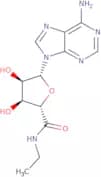
CAS :<p>5'-Ethylcarboxamidoadenosine (5-ECA) is an adenosine receptor antagonist that is used as a radioligand to study the binding of adenosine and other nucleotides to their receptors. 5-ECA binds to the A3 receptor, which is a member of the G protein-coupled receptor family. This compound also inhibits platelet aggregation and has been shown to have anti-inflammatory effects in mice with colon cancer. 5-ECA was found to inhibit tumor growth in a mouse model system by suppressing IL-2 production and reducing levels of PGE2, an effect that may be due to inhibition of cyclase activity. 5-ECA can be used in vitro for studies on pluripotent cells because it does not affect their ability to differentiate.</p>Formule :C12H16N6O4Degré de pureté :Min. 95%Couleur et forme :White PowderMasse moléculaire :308.29 g/mol5-Iodo-2'-O-methyluridine
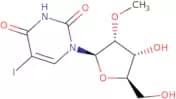
CAS :<p>5-Iodo-2'-O-methyluridine is a novel antiviral drug that inhibits replication of DNA and RNA viruses. It is chemically synthesized from 2' deoxyuridine monophosphate, which is modified to create the 5-iodo derivative. The modification at the 5th position of the uracil ring prevents the incorporation of methylation into DNA and RNA, which can lead to cancerous growths. This compound has been shown to be an excellent activator for DNA synthesis in vitro. It has also been shown to have anticancer properties in vitro and in vivo.</p>Formule :C10H13IN2O6Degré de pureté :Min. 95%Couleur et forme :PowderMasse moléculaire :384.12 g/mol3'-Amino-2',3'-dideoxycytidine
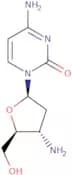
CAS :3'-Amino-2',3'-dideoxycytidine's lack of a 3'-hydroxyl group makes it a chain terminator for DNA polymerase, a key application in Sanger sequencing. Additionally, the 3'-amino group serves as a functional handle for modifying the 3' end of oligonucleotides with various labels or conjugates, expanding their utility in research and diagnostics.Formule :C9H14N4O3Degré de pureté :Min. 95%Couleur et forme :Off-White PowderMasse moléculaire :226.23 g/mol2'-Deoxyadenosine-5'-diphosphate sodium salt
CAS :<p>2'-Deoxyadenosine-5'-diphosphate sodium salt is a nucleotide that is involved in the synthesis of DNA. It is a structural analog of adenosine-5'-diphosphate and can be used as an experimental tool to study metabolic disorders. 2'-Deoxyadenosine-5'-diphosphate sodium salt binds to p2y receptors and blocks their activation, which inhibits cellular energy metabolism. This compound is structurally similar to adenosine-5'-triphosphate, but has been shown to inhibit the expansion of cells when heated, unlike adenosine-5'-triphosphate. 2'-Deoxyadenosine-5'-diphosphate sodium salt also inhibits cell proliferation in cancer cells and may have potential as a therapeutic agent for bowel disease.</p>Formule :C10H12N5O9P2·xNaDegré de pureté :Min. 95 Area-%Couleur et forme :PowderMasse moléculaire :408.18 g/molN4-Acetyl-2'-O-methylcytidine
CAS :<p>N4-Acetyl-2'-O-methylcytidine is a chemical compound that is an analog of cytidine. It has been shown to have the ability to stabilize RNA molecules at high temperatures and has been used in the study of epigenetics and thermophilic organisms. N4-Acetyl-2'-O-methylcytidine is also known as AEMC. This compound can be used for reversed phase high performance liquid chromatography, which separates compounds based on their size and shape. Furiosus is a strain of bacteria that contains this chemical compound in its genome. Furiosus was found to contain this compound in its DNA by using posttranscriptional modification techniques such as high performance liquid chromatography (HPLC) and proton nuclear magnetic resonance (NMR).</p>Formule :C12H17N3O6Degré de pureté :Min. 95%Couleur et forme :White Off-White PowderMasse moléculaire :299.29 g/mol3'-Fluoro-3'-deoxyuridine
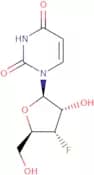
CAS :3'-Fluoro-3'-deoxyuridine is a nucleoside analog that inhibits DNA synthesis and has been used to treat hepatitis.Formule :C9H11FN2O5Degré de pureté :Min. 95%Couleur et forme :PowderMasse moléculaire :246.19 g/mol