Apoptosi
Gli inibitori dell'apoptosi sono composti che prevengono o ritardano il processo di morte cellulare programmata, noto come apoptosi. Questi inibitori sono fondamentali per lo studio dei meccanismi di sopravvivenza cellulare e vengono utilizzati per indagare sulle malattie in cui l'apoptosi è disregolata, come il cancro, i disturbi neurodegenerativi e le malattie autoimmuni. Modulando l'apoptosi, questi inibitori possono aiutare nello sviluppo di terapie mirate a controllare la morte cellulare. Presso CymitQuimica, offriamo una vasta selezione di inibitori dell'apoptosi di alta qualità per supportare le tue ricerche in biologia cellulare, oncologia e campi correlati.
Sottocategorie di "Apoptosi"
- ASK(6 prodotti)
- BCL(11 prodotti)
- Caspasi(127 prodotti)
- FOXO1(3 prodotti)
- IAP(65 prodotti)
- Mdm2(12 prodotti)
- PD-1/PD-L1(126 prodotti)
- PDK(9 prodotti)
- PERK(24 prodotti)
- Chinasi di serina/treonina(15 prodotti)
- Survivin(13 prodotti)
- TNF(91 prodotti)
- c-RET(51 prodotti)
- p53(62 prodotti)
Mostrare 6 più sottocategorie
Trovati 5622 prodotti di "Apoptosi"
Ordinare per
Purezza (%)
0
100
|
0
|
50
|
90
|
95
|
100
Microtubulin-IN-1
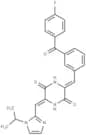
CAS:<p>Microtubulin-IN-1 (Compound 8g) is an inhibitor of microtubulin, targeting the colchicine-binding site to disrupt tubulin integrity and induce upregulation of p53 protein expression. It exhibits antiproliferative activity across various cancer cell lines, including NCI-H460, BxPC-3, and HT-29, with IC50 values of 2.4, 1.6, and 2.07 nM, respectively. Additionally, Microtubulin-IN-1 induces cell cycle arrest at the G2/M phase and apoptosis in NCI-H460 cells.</p>Formula:C25H21FN4O3Colore e forma:SolidPeso molecolare:444.458SL-176
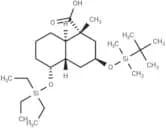
CAS:<p>SL-176, a WIP1 inhibitor, when combined with GSK-J4, can induce cell cycle arrest and apoptosis (apoptosis), thereby inhibiting tumor growth both in vitro and in vivo.</p>Formula:C24H48O4Si2Colore e forma:SolidPeso molecolare:456.80617-Demethoxy-reblastatin
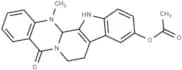
CAS:<p>17-Demethoxy-reblastatin (17-DR) acts as an inhibitor of heat shock protein 90 (Hsp90). It suppresses the proliferation of HepG2 and SMMC7721 cancer cells, diminishes colony formation, and triggers apoptosis via a mitochondria and caspase-mediated pathway.</p>Formula:C28H42N2O7Colore e forma:SolidPeso molecolare:518.64LSD1-IN-21
<p>LSD1-IN-21: potent LSD1 inhibitor, crosses blood-brain barrier, IC50 of 0.956 μM; lowers TNF-α, anti-cancer, anti-inflammatory.</p>Formula:C24H25N5O2SColore e forma:SolidPeso molecolare:447.55RIP1 kinase inhibitor 1
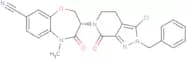
CAS:<p>RIP1 kinase inhibitor 1 is an orally available and brain-penetrating inhibitor of RIP1 kinase with pKi of 9.04.</p>Formula:C24H20ClN5O3Purezza:98%Colore e forma:SolidPeso molecolare:461.9Evo312
CAS:<p>Evo312 is an inhibitor of protein kinase C beta I (PKCβI) with an IC50 of 117.34 nM and exhibits dose-dependent characteristics. It acts by inhibiting the expression of the PKCβI protein, which leads to cell cycle arrest and apoptosis in PANC-GR (gemcitabine-resistant pancreatic cancer cells). Evo312 also demonstrates antiproliferative effects in pancreatic cancer cells PANC-1 and PANC-GR, with IC50 values of 0.08 μM and 0.07 μM respectively, while presenting an IC50 of 2.95 μM in normal human pancreatic ductal epithelial cells HPDE6-c7. Additionally, Evo312 has shown antitumor activity in a mouse xenograft model using PANC-GR cells.</p>Formula:C21H19N3O3Colore e forma:SolidPeso molecolare:361.39VEGFR-2-IN-52
CAS:<p>VEGFR-2-IN-52 (compound 14d) serves as a powerful inhibitor of VEGFR-2, exhibiting an IC 50 of 191.1 nM. It effectively reduces the protein expression levels of p-VEGFR-2, MMP9, p-ERK1/2, and p-MEK1. In addition, VEGFR-2-IN-52 demonstrates cytotoxic properties by inducing apoptosis and arresting the cell cycle at the G0/G1 phase, and it enhances the levels of ROS.</p>Formula:C20H25ClN4O2SColore e forma:SolidPeso molecolare:420.96LQB-118
CAS:<p>LQB-118, an orally active compound sourced from sandalwood, demonstrates multiple therapeutic capabilities. It has shown proficiency in inhibiting glioblastoma cell migration and inducing apoptosis. Additionally, LQB-118 can curtail both migration and invasion of prostate cancer cells by modulating the AKT/GSK3β pathway and regulating MMP-9/reck gene expression. The compound is also effective against yeast polysaccharide-induced inflammation in both in vivo and in vitro settings. Notably, LQB-118 specifically triggers ROS-mediated and mitochondrial-dependent apoptosis in Leishmania amazonensis, highlighting its potential in studies focusing on inflammation, infections, and various cancers.</p>Formula:C19H12O4Colore e forma:SolidPeso molecolare:304.30BHA536
CAS:<p>BHA536 is an orally effective inhibitor of PKCα/β and the NF-kB signaling pathway. This compound inhibits the proliferation of ABC DLBCL cells harboring CD79 mutations by causing cell cycle arrest in the G1 phase and induces apoptosis in TMD8 cells. Additionally, BHA536 exhibits antitumor activity in mice.</p>Formula:C30H30ClN3O5Colore e forma:SolidPeso molecolare:548.03Microtubule inhibitor 2
<p>Microtubule inhibitor 2: potent, selective, oral, induces ferroptosis, strong antitumor effect.</p>Formula:C20H23NO7Colore e forma:SolidPeso molecolare:389.4YL-1-9
CAS:<p>YL-1-9 is an inhibitor that prevents the degradation of p53 by MDM2 through tight binding to the crucial hydrophobic pocket of MDM2. It can induce cell cycle arrest and apoptosis in breast cancer cells [1].</p>Formula:C22H23F3N2O3Colore e forma:SolidPeso molecolare:420.425CLM3
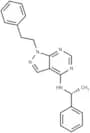
CAS:<p>CLM3, a pyrazolopyrimidine derivative, functions as a multitargeted tyrosine kinase inhibitor. It exhibits antiproliferative and proapoptotic activities on endothelial and cancer cells, activities that are synergistically enhanced by SN38. The primary mechanism of action for CLM3 involves the inhibition of phosphorylation in tyrosine kinases such as VEGFR-2, EGFR, and RET, along with their associated signaling pathways.</p>Formula:C21H21N5Colore e forma:SolidPeso molecolare:343.43JAK2/FLT3-IN-1 TFA
<p>JAK2/FLT3-IN-1 (TFA), an oral JAK2/FLT3 inhibitor, shows anticancer properties; IC50: JAK2 (0.7 nM), FLT3 (4 nM), JAK1 (26 nM), JAK3 (39 nM).</p>Formula:C27H35F4N7O3Colore e forma:SolidPeso molecolare:581.61Caspase-3 activator 4
CAS:<p>Caspase-3 Activator 4 (compound 4o) is an effective caspase-3 activator that can cross the blood-brain barrier. This compound exhibits antiproliferative activity and can induce cell apoptosis (apoptosis). Additionally, Caspase-3 Activator 4 enhances the gene expression of TNF-α and reduces the expression of cleaved caspase-3/caspases 3.</p>Formula:C31H27N5O3Colore e forma:SolidPeso molecolare:517.58Cernuumolide J
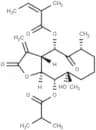
CAS:<p>Cernuumolide J (TMJ-105) functions as a JAK2/STAT3 inhibitor and exhibits potent activity against HEL leukemia cells by inhibiting their growth in both time-dependent and concentration-dependent manners, with an IC 50 value of 1.79 μM. This compound effectively induces G2/M phase arrest and apoptosis by downregulating the phosphorylation of JAK2, STAT3, and Erk, while simultaneously upregulating the phosphorylation of JNK and p38 MAPK. Cernuumolide J holds potential for research applications in anti-cancer therapy.</p>Formula:C24H34O8Colore e forma:SolidPeso molecolare:450.52ONC213
CAS:<p>ONC213, an αKGDH inhibitor, functions by hindering αKGDH activity, thus suppressing mitochondrial respiration and elevating α-ketoglutarate levels, ultimately inducing apoptosis (Apoptosis) in AML cells. It is utilized in the study of acute myeloid leukemia.</p>Formula:C23H22F2N4OColore e forma:SolidPeso molecolare:408.44Mps-BAY1
CAS:Mps-BAY1, an MPS1 inhibitor, exhibits anticancer activity. It inhibits cell proliferation and induces cell apoptosis by activating mitotic aberrations in cancer cells, leading to overall aneuploidy and polyploidy. Mps-BAY1 is used in research pertaining to colorectal and cervical cancer.Formula:C27H20N6OColore e forma:SolidPeso molecolare:444.49Tubulin polymerization-IN-68
CAS:<p>Tubulin polymerization-IN-68 (compound 32) serves as a tubulin inhibitor, disrupting cellular microtubule networks by hindering tubulin polymerization. It also upregulates PARP-1 and caspase-3 expression, thereby inducing apoptosis and exhibiting anticancer properties. Notably, Tubulin polymerization-IN-68 effectively suppresses HepG2 cells with an IC50 of 93 nM and markedly reduces the growth of HepG2 xenograft tumors in nude mice through oral administration.</p>Formula:C16H13N3OColore e forma:SolidPeso molecolare:263.29APD-94
CAS:<p>APD-94 is a dual inhibitor targeting tubulin and Bmi-1. It disrupts the normal polymerization of tubulin and suppresses the expression of Bmi-1. This compound induces cell cycle arrest at the G2/M phase and triggers apoptosis, thereby inhibiting cancer cell proliferation. Additionally, APD-94 inhibits the growth of HT29 cell xenograft tumors in NOD/SCID mice and is applicable to colorectal cancer research.</p>Formula:C18H17N3O4Colore e forma:SolidPeso molecolare:339.345PF-3837
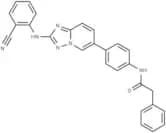
CAS:PF-3837 is an inhibitor of the Mps1 kinase, with a Ki value of 0.33 nM and an IC50 value of 5.5 nM. It disrupts cell cycle checkpoints by inhibiting the catalytic activity of Mps1, thereby reducing genomic stability and leading to cancer cell apoptosis (Apoptosis). PF-3837 is utilized in the study of breast cancer.Formula:C21H26N8O2Colore e forma:SolidPeso molecolare:422.48