3D-FS165340 - sodium-malonate
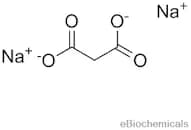
Sodium malonate dibasic monohydrate
CAS:Formula:CH2(CO2Na)2·H2OPurity:≥ 98.0%Color and Shape:White to off-white crystalline powderMolecular weight:166.04Sodium malonate dibasic monohydrate
CAS:Sodium malonate dibasic monohydrate is a chemical that is used as a building block in organic chemistry, often for the synthesis of complex compounds. It is also an intermediate for the production of other chemicals, such as pharmaceuticals. It can be used as a reagent and has been found to be useful in research into various aspects of biochemistry. The CAS number for this product is 26522-85-0.Formula:C3H4Na2O5Molecular weight:166.04 g/molSodium Malonate extrapure, 99%
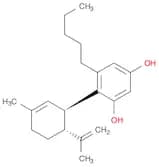
CAS:Formula:C3H2O4Na2Purity:min. 99%Color and Shape:White, Crystalline Powder, Clear, ColourlessMolecular weight:148.03Abnormal Cannabidiol
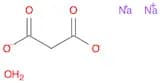
CAS:Formula:C21H30O2Purity:98%, 10mg/mL in Methyl acetateColor and Shape:LiquidMolecular weight:314.4617Propanedioic acid, sodium salt, hydrate (1:2:1)
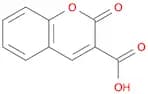
CAS:Formula:C3H4Na2O5Purity:98%Color and Shape:SolidMolecular weight:166.04042-Oxo-2H-chromene-3-carboxylic acid
CAS:Formula:C10H6O4Purity:97%Color and Shape:SolidMolecular weight:190.1522SK-216
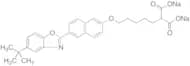
CAS:Controlled ProductApplications SK-216 is a plasminogen activator inhibitor-1 (PAI-1) that limits tumor progression and angiogenesis, a therapeutic target in the management of malignancy.
References Masuda, T., et al.: Mol. Cancer Ther., 12, 2378 (2013)Formula:C29H29NNa2O6Color and Shape:NeatMolecular weight:533.52Sodium ethoxide, 96%
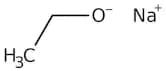
CAS:Sodium ethoxide is used as a strong base in organic synthesis. It is actively involved in the Claisen condensation, Stobbe reaction and Wolf-kishner reduction. It is an important starting material for the synthesis of ethyl ester and diethyl ester of malonic acid. In Williamson ether synthesis, it rFormula:C2H5NaOPurity:96%Color and Shape:White to cream or pale yellow to yellow or pale orange, PowderMolecular weight:68.05Mesoxalate sodium (monohydrate)
CAS:Mesoxalate sodium (monohydrate) is primarily located in the cytoplasm within the cell. Mesoxalic acid can be biosynthesized from malonic acid.Formula:C3HNa2O6Purity:99.85%Color and Shape:SolidMolecular weight:180.02cis-Aconitic acid
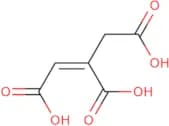
CAS:Cis-aconitic acid is a dicarboxylic acid that is a major intermediate in the citric acid cycle. It is an important metabolite of glucose and fatty acids, and it plays a role in regulating energy metabolism. Cis-aconitic acid has been shown to increase the transcriptional activity of genes involved in the citric acid cycle. This compound also interacts with NADH to form an intramolecular hydrogen bond, which stabilizes the molecule's structure. Cis-aconitic acid binds to sodium citrate and is converted into citric acid by human macrophages. Citric acid can then be converted back into cis-aconitic acid by enzyme activities that are specific for this reaction. The analytical method for cis-aconitic acid relies on p-hydroxybenzoic and malonic acids as indicators.Formula:C6H6O6Purity:Min. 95%Color and Shape:PowderMolecular weight:174.11 g/molSodium barbiturate
CAS:Controlled ProductSodium barbiturate is a drug that binds to the malonic acid cycle and inhibits the production of energy. It also has antimicrobial properties, inhibiting the growth of bacteria and fungi. Sodium barbiturate has been shown to have cytotoxic effects on colorectal adenocarcinoma cells in vitro, although it does not have any significant cytotoxicity against bowel disease cells (Caco2). This drug has been shown to be effective in treating inflammatory bowel disease in human subjects. The mechanism behind this effect is not yet fully understood but may involve its ability to react with metal ions as well as its ability to inhibit tubule cells by binding to their plasma membrane.
Formula:C4H2N2Na2O3Purity:Min. 95%Color and Shape:PowderMolecular weight:150.07 g/mol1,3-Acetonedicarboxylic acid
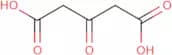
CAS:1,3-Acetonedicarboxylic acid is a crystalline solid that belongs to the group of carboxylic acids. 1,3-Acetonedicarboxylic acid interacts with its receptor by binding to a hydroxyl group and two hydrogen atoms. It has been shown that 1,3-acetonedicarboxylic acid can inhibit HIV infection in vitro by preventing the virus from attaching to cells. It also inhibits malonic acid oxidation and citric acid cycle enzymes in rat liver mitochondria. The synthesis of 1,3-acetonedicarboxylic acid can be achieved through different methods:
1) By reacting sodium carbonate with malonic acid
2) By reacting hydrogen fluoride with malonic acid
3) By reacting sodium carbonate with citric acid (malonic ester) and then hydrolyzing it
4) By reacting sodium carbonate with malonitrile and then hydroFormula:C5H6O5Purity:Min. 95%Color and Shape:PowderMolecular weight:146.1 g/mol3-Aminophenylacetylene
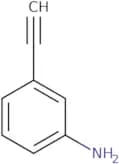
CAS:3-Aminophenylacetylene is a colorless liquid that is soluble in water. It has a molecular weight of 123.14 and a chemical formula of C6H5CHNH2. The transport rate of 3-aminophenylacetylene can be determined by FT-IR spectroscopy, and the epidermal growth factor can be used for the determination of 3-aminophenylacetylene. The anhydrous sodium copper complex is formed by the reaction of 3-aminophenylacetylene with hydrochloric acid. There are two possible mechanisms for this reaction: one involves the formation of a diazonium salt, while the other involves an analytical method that uses hydrogen bond or molecular docking analysis to determine the structure of 3-aminophenylacetylene. High values are obtained when 3-aminophenylacetylene reacts with malonic acid and protein synthesis.
Formula:C8H7NPurity:Min. 97.5 Area-%Color and Shape:Clear LiquidMolecular weight:117.15 g/molAzidopalmitic acid
CAS:Azidopalmitic acid is a synthetic fatty acid that is used in the detection of cellular DNA. It can be detected using methods such as tritiated, expressed, or myristic azide. Azidopalmitic acid has also been shown to be compatible with polymerase chain reaction (PCR) and immobilized metal ion affinity chromatography (IMAC). This molecule is useful for conjugates that are radiolabeled with [3H]azidoacetyl palmitate and [14C]azidoacetyl palmitate. Azidopalmitic acid has been synthetically produced by reacting malonic acid with sodium azide. This compound is also reusable, which makes it an ideal way to label nucleotides during PCR reactions.
Formula:C16H31N3O2Purity:Min. 95%Color and Shape:White PowderMolecular weight:297.44 g/molBetaine monohydrate
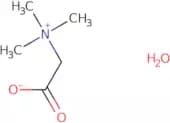
CAS:Betaine is a group P2 compound that is an organic acid. It has been shown to improve the performance of polymerases, which are enzymes in cells that are responsible for synthesizing DNA. Betaine also helps with energy metabolism and in the synthesis of fatty acids. This compound can be found in plants and animals, as well as being manufactured synthetically. The melting point of betaine is between -6°C (21.2°F) and -13°C (8.6°F). When this compound is dissolved in water, it undergoes a phase transition from a solid state to a liquid state at its melting point. The boiling point of betaine is between 148°C (300.4°F) and 149°C (301.2°F). Betaine interacts with other molecules through hydrogen bonding interactions or by forming an acid-complex with sodium carbonate or malonic acid.Formula:C5H11NO2·H2OColor and Shape:White PowderMolecular weight:135.16 g/mol3-Chloropropionic acid
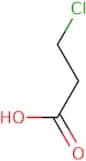
CAS:3-Chloropropionic acid is a non-toxic organic compound that exhibits significant cytotoxicity against many bacterial strains. It is a white solid, which is soluble in water and has no odor. 3-Chloropropionic acid can be synthesized by the reaction of malonic acid with ethylene diamine or by the reaction of bromoacetic acid with sodium salts. The optimum pH for this reaction is 6.5 to 7.5 and the optimum temperature is 25°C to 30°C. This compound has been shown to inhibit the synthesis of fatty acids in bacteria, which may be due to its hydroxyl group. 3-Chloropropionic acid reacts with trifluoroacetic acid, giving an ester product, which can then be hydrolyzed back to 3-chloropropionic acid. This chemical also has a physiological function as an intermediate in the synthesis of other chemicals such as biotin and pantothenFormula:C3H5ClO2Purity:Min. 95%Color and Shape:PowderMolecular weight:108.52 g/mol2-Chloronaphthalene
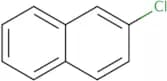
CAS:2-Chloronaphthalene is a polychlorinated naphthalene that has been shown to be an effective inducer of p450 activity, which is a cytochrome P450 enzyme. 2-Chloronaphthalene is also a structural analog of the polychlorinated biphenyls (PCBs), and has been shown to have similar toxic effects on the liver. 2-Chloronaphthalene is used as an intermediate in organic synthesis and as a precursor for other compounds. It can be used to synthesize malonic acid, which can be reacted with sodium hydroxide or carbon disulfide to produce polymeric matrices such as polyvinyl chloride.
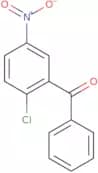
Formula:C10H7ClPurity:Min. 95%Color and Shape:Colourless Or White To Pink SolidMolecular weight:162.62 g/mol2-Chloro-5-nitrobenzophenone
CAS:2-Chloro-5-nitrobenzophenone is a reactive intermediate that belongs to the class of aryl chlorides. It has been used in organic synthesis as a monomer and homologue for the preparation of other organic compounds. 2-Chloro-5-nitrobenzophenone can be synthesized from malonic acid and an aryl chloride by treatment with sodium hydroxide or potassium carbonate in an organic solvent. This compound reacts with acetonitrile at room temperature to form chloroform, nitronium ion, and hydrogen chloride. The reaction system can also be prepared by treating 2-chloro-5-nitrobenzophenone with pyridine in acetonitrile under reflux conditions. 2-Chloro-5-nitrobenzophenone is used as a reagent in plant cell culture experiments where it induces DNA cleavage and inhibits protein synthesis.Formula:C13H8ClNO3Purity:Min. 95%Color and Shape:PowderMolecular weight:261.66 g/mol