AC-17685 - toluene-998-for-analysis | 108-88-3
Sorry, no product with reference AC-17685 been found, but please check out the following similar products:
ACETONITRILE MSCHROM FOR LC-MS ANALYSIS
CAS:<p>Assay (by GC) Min 99.9 %<br>Water (KF) Max 0.01 %<br>absorbance at 195 nm Max 0.097<br>absorbance at 200 nm Max 0.022<br>absorbance at 230 nm Max 0.004<br>propionitrile (GC) Max. 0.2 %<br>non-volatile matter Max. 0.0002 %<br>free acid (as CH3COOH) Max. 0.001 %<br>free alkali (as NH3) Max. 0.0001 %<br>HPLC-gradient at 210 nm Max. 1 mAU<br>HPLC-gradient at 254 nm Max. 0.2 mAU<br>baseline drift at 210 nm Max. 12 mAU<br>fluorescence (chinin) at 254 nm Max. 0.5 ppb<br>fluorescence (chinin) at 365 nm Max. 0.5 ppb<br>suitability for the LC-MS complying</p>Formula:CH3CNPurity:Min 99.9 % (Assay by GC)Color and Shape:Clear ColorlessMolecular weight:41.05Ref: BC-201102500
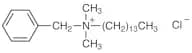
2500mlTo inquireBenzyldimethyltetradecylammonium Chloride [Ion association reagent for extraction photometric analysis and sensitizer in photometric determination of metals]
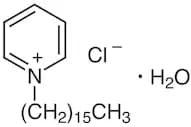
CAS:Formula:C23H42ClNPurity:>98.0%(T)(HPLC)Color and Shape:White to Almost white powder to crystalMolecular weight:368.05CPC Monohydrate (=Cetylpyridinium Chloride Monohydrate) [Ion association reagent for extraction photometric analysis and sensitizer in photometric determination of metals]
CAS:Formula:C21H38ClN·H2OPurity:>98.0%(T)(HPLC)Color and Shape:White to Almost white powder to crystalMolecular weight:358.01Barbituric Acid [for Colorimetric Analysis of Furfural Derivatives]
CAS:Formula:C4H4N2O3Purity:>99.0%(T)Color and Shape:White powder to crystalMolecular weight:128.094-(5-Chloro-2-pyridylazo)-1,3-phenylenediamine [for Colorimetric Analysis of Co, Cd]
CAS:Formula:C11H10ClN5Purity:>99.0%(T)(HPLC)Color and Shape:Orange to Amber to Dark red powder to crystalMolecular weight:247.694-(3,5-Dibromo-2-pyridylazo)-1,3-phenylenediamine [for Colorimetric Analysis of Co, Cd]
CAS:Formula:C11H9Br2N5Purity:>98.0%(T)Color and Shape:Light yellow to Brown powder to crystalMolecular weight:371.04Graphite Gas Analysis Crucible; Ht (mm), 24.5; ID (mm), 10.0; OD (mm), 12.7; Tip Dia (mm), 6.80
<p>This Thermo Scientific Chemicals brand product was originally part of the Alfa Aesar product portfolio. Some documentation and label information may refer to the legacy brand. The original Alfa Aesar product / item code or SKU reference has not changed as a part of the brand transition to Thermo Sci</p>Orcein, for analysis
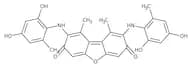
CAS:<p>Orcein, for analysis; Red dye used in microscopy as a mordant for the staining of flagella, as well as for detecting elastic tissue in sputum.</p>Formula:C28H24N2O7Color and Shape:Black to Brown, Crystals or Crystalline powderMolecular weight:500.51Clarke's Analysis of Drugs and Poisons
<p>Moffat, Anthony C; Osselton, M David; Widdop, Brian; Watts, Jo<br><br>Fourth edition<br><br>Scheduled closure of pharmpress.com<br><br>Edited by Anthony C Moffat - Emeritus Professor, Centre for Pharmaceutical Analysis, The School of Pharmacy, University of London, UK, M David Osselton - Head, Centre for Forensic Sciences, School of Conservation Studies, Bournemouth University, UK, Brian Widdop - Emeritus Doctor. Formerly, Laboratory Director, Medical Toxicology Unit, Guy's Hospital, London, UK, and Jo Watts - Executive Development Editor, Royal Pharmaceutical Society of Great Britain, London, UK<br><br>ISBN 978 0 85369 711 4<br><br>Published May 2011<br><br>Hardback276 x 219mm (2736pp)<br><br><br>DESCRIPTION:<br><br> Clarke's Analysis of Drugs and Poisons is the definitive source of analytical data for drugs and poisons. Written by over 40 international experts, the resource also boasts an editorial advisory board of over 45 world renowned scientists. <br>This reference work has been completely revised and updated for the new edition, and comprises two volumes. <br>The book is essential for all forensic and clinical toxicologists, pathologists, hospital pharmacists, pharmaceutical analysts, clinical pharmacologists, clinical and forensic laboratories, and poison information centres.<br> <br>CONTENTS:<br><br> Volume one<br> Part one: methodology and analytical techniques<br> Contains 44 chapters by leading international scientists covering the practice areas and analytical procedures used in toxicology<br> Volumes two <br> Parts two and three: analytical and toxicological data<br> Contains 2111 drug and poison monographs detailing physical properties, analytical methods, pharmacokinetic data and toxicity data.<br> Part four: Indexes to analytical data<br> This part contains indexes of analytical data, including all data for colour tests, chromatography, ultraviolet spectrophotometry, infrared spectrometry and mass spectrometry.<br> <br>REVIEWS:<br><br> 2011, Journal of Forensic Science <br>"This continues to be an invaluable reference for pharmaceutical scientists, clinical and forensic toxicologists and environmental chemists...Both the number of substances discussed in the monograph section and the depth of information presented are quite impressive." <br> Randall C. Baselt, Ph.D., Journal of Forensic Science, 2011<br> <br>2011, TIAFT Bulletin<br> "Pathologists, clinicians, lawyers and students will find the new Clarke engaging, systematic in its approach and daunting in the massive amount of information provided. It is not until you become accustomed with the layout and logical style of the book that one appreciates the thought that has gone into producing this excellent and essential reference. No toxicologist should be without one!" <br> Dimitri Gerostamoulos, TIAFT Bulletin 41(2), 2011<br> 10-Jul-2011, Chromatographia<br> "The work provides a compilation and easy access to analytical data for numerous compounds that can give an overview without the need of an extensive database search. This is especially true for data of older compounds that cannot be easily found elsewhere...the reader is provided with substantial information making the work an incomparable reference book in drug analysis." <br> Gerhard K.E. Scriba, Department of Pharmaceutical Chemistry, University of Jena, Chromatographia, 10 July 2011<br> <br> From the reviews of the previous edition<br> 'Some things in life are worth the wait and truly this 3rd edition of Clarke's Analysis of Drugs and Poisons falls into this category the quality is superb' Australian Journal of Forensic Sciences<br> 'Clarke has gained an international reputation as a reliable source of information for the analyses of drugs, and this new highly-expanded edition is the 21st century's successor.' Veterinary and Human Toxicology<br> 'The content is comprehensive, absorbing and layout is well planned and executed. Without doubt, this volume will be a much well thumbed institution in any serious analytical laboratory and will assist generations of scientists in years to come.' Pharmacy Education<br> <br>WHAT'S NEW?:<br><br><br> - Volume one has been greatly expanded from 31 to 44 chapters providing extensive coverage of all methodology and analytical techniques. Of significant interest include: <br><br><br><br><br><br>Quality control and assessment - separated into two chapters to reflect the differing situations/purposes/remits of the toxicology laboratory versus the pharmaceutical industry (accreditation with ISO17025 becoming the international standard in labs) <br><br><br>Method development and validation - now present since reliable analytical techniques and data should be of the utmost importance to any analyst <br><br><br>'Sampling, storage and stability', 'Measuring and reporting uncertainty' and 'Interpretation of results' now included to cover all aspects accreditation <br><br><br>Pharmacokinetics now coupled with Pharmacogenomics <br><br><br><br><br> - All chapters have been updated, for instance the colour test chapter now includes the analysis of metals, while newer analytical techniques, such as liquid chromatography-mass spectrometry (LC-MS) and atomic absorption spectrometry-inductively coupled- mass spectrometry (AAS-ICP-MS) are also covered. Parts two and three now contain 2111 monographs (1730 in 3rd edition). This includes over 200 new monographs with retention of all monographs included in previous edition. New monographs include metals, natural toxins and weapons of mass destruction Over 300 updated monographs including amphetamine, morphine and MDMA <br>DIGITAL PRODUCTS:<br><br><br> <br> <br> </p>Color and Shape:276 x 219mmFinancial Analysis in Pharmacy Practice
<p>Herist, Keith N; Rollins, Brent; Perri, Matthew<br><br>First edition<br><br>Scheduled closure of pharmpress.com<br><br>Keith N Herist, is Clinical Associate Professor, Clinical and Administrative Pharmacy, University of Georgia College of Pharmacy, USA. Brent L Rollins, is Assistant Professor, Pharmacy Administration, Philadelphia College of Osteopathic Medicine, School of Pharmacy, USA. Matthew Perri III, is Professor, Clinical and Administrative Pharmacy, University of Georgia College of Pharmacy, USA.<br><br>ISBN 978 0 85369 897 5<br><br>Published Jun 2011<br><br>Paperback 234 x 156mm (240pp)<br><br><br>DESCRIPTION:<br><br> Financial Analysis in Pharmacy Practice covers the basics of accounting and financial management, and demonstrates the application of these principles to pharmacy practice. <br>The book includes: <br> -the guiding principles of accounting.<br><br> -financial statements, from detailed transactions to summary reports.<br><br> -basics of finance and financial analysis .<br><br> -budgeting and inventory management.<br><br> -pricing goods and services.<br><br> -personal financial management.<br><br>Case studies, based on realistic examples are used to show how accounting and financial management principles apply to all areas of pharmacy practice. <br>Financial Analysis in Pharmacy Practice is an invaluable resource for graduate students in pharmacy administration and professional pharmacy students, as well as pharmacists in the public and private sectors who wish to be well informed when making financial decisions. <br>Financial Analysis in Pharmacy Practice is also available as an eBook . <br>CONTENTS:<br><br> 1. Introduction<br> 2. Understanding the Guiding Principles of Accounting<br> 3. From Detailed Transactions to Summary Reports<br> 4. Financial Statements<br> 5. Basics of Finance and Financial Analysis<br> 6. Financial Aspects of Inventory Management<br> 7. Budgeting<br> 8. Pricing Goods and Services<br> 9. Personal Financial Management<br> <br>REVIEWS:<br><br> Dec-2011, Journal of Pharmacy Practice and Research<br> "Of particular value to the pharmacist audience is Chapter 6, which the authors devote to the financial aspects of inventory management. Useful discussions in this chapter include inventory valuation methods...benchmarking inventory turnover rates and reorder points...the text is logically sequenced and well structured, making it easy to read and follow. The use of tables and figures is appropriate and not overdone. The use of case studies breaks up the chapters and maintains the reader's attention, bringing them back to a scenario they are familiar with to highlight the pharmacy relevance...a useful introductory resource for pharmacists wishing to embark on a career of management"<br> Natalie Bula, Acting Director of Pharmacy, Canberra Hospital and Health Services, Journal of Pharmacy Practice and Research, 41 (4) December 2011.<br> 18-Jul-2011, International Journal of Pharmaceutical Compounding<br> "Finally, a great "how to do it" book on finances and pharmacy. This easy-to-read, introductory text covers the basics of accounting and financial management, as well as demonstrating the application of these principles to pharmacy practice...This book, which was written by a team of accountants and pharmacists, is a great teaching tool about finances or to review your current knowledge on the topic<br> International Journal of Pharmaceutical Compounding, 18 July 2011 <br> </p>Color and Shape:234 x 156mmClarke's Analysis of Drugs and Poisons
<p>Moffat, Tony; Osselton, David; Elliott, Simon<br><br>Scheduled closure of pharmpress.com<br><br>Edited by Anthony C Moffat, David Osselton and Simon Elliott<br><br>Product code MC_CLARKE<br><br><br>DESCRIPTION:<br><br> Clarke's is the definitive source of analytical data for drugs and poisons. It is intended for use primarily by scientists faced with the need to identify and quantify these substances in body fluids, tissue samples and pharmaceutical and industrial products. <br>44 sections cover all practice areas and analytical procedures used in toxicology including drugs and alcohol in driving, drugs in sport, workplace drug testing and postmortem toxicology. <br>Written by more than 40 international experts, Clarkes Analysis of Drugs and Poisons is the complete online analytical toxicology reference. <br> </p>HEPARIN FOR PHYSICO-CHEMICAL ANALYSIS CRS
CAS:HEPARIN FOR PHYSICO-CHEMICAL ANALYSIS CRSFormula:C9H20N3NaO3Molecular weight:241.2632FOLLITROPIN FOR PEPTIDE MAPPING AND GLYCAN ANALYSIS CRS
CAS:FOLLITROPIN FOR PEPTIDE MAPPING AND GLYCAN ANALYSIS CRSLow Molecular Weight Heparin for Boron Analysis
CAS:Heparin and its salts; other human or animal substances prepared for therapeutic or prophylactic uses, not elsewhere specified or includedColor and Shape:PowderMolecular weight:5600 - 6400 daltonsImidazole (Reag. USP, Ph. Eur.) for analysis
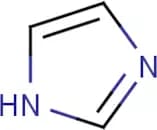
CAS:<p>Imidazole (Reag. USP, Ph. Eur.) for analysis</p>Purity:ACS GradeColor and Shape:SolidMolecular weight:68.08g/molSulfanilamide, for analysis
CAS:Formula:C6H8N2O2SColor and Shape:White to off-white crystalline powder or crystalsMolecular weight:172.21Sodium dodecyl sulfate, for analysis
CAS:Formula:C12H25O4SNaPurity:(Titration) ≥ 99.0%Color and Shape:White powderMolecular weight:288.38Silver chloride, 99+% for analysis
CAS:Formula:AgClPurity:≥ 99.0%Color and Shape:White to off-white powder to crystalsMolecular weight:143.32



![Barbituric Acid [for Colorimetric Analysis of Furfural Derivatives]](/_next/image/?url=https%3A%2Fstatic.cymitquimica.com%2Fproducts%2F3B%2Fthumb-webp%2FB1063.webp&w=3840&q=75)
![4-(5-Chloro-2-pyridylazo)-1,3-phenylenediamine [for Colorimetric Analysis of Co, Cd]](/_next/image/?url=https%3A%2Fstatic.cymitquimica.com%2Fproducts%2F3B%2Fthumb-webp%2FC0932.webp&w=3840&q=75)
![4-(3,5-Dibromo-2-pyridylazo)-1,3-phenylenediamine [for Colorimetric Analysis of Co, Cd]](/_next/image/?url=https%3A%2Fstatic.cymitquimica.com%2Fproducts%2F3B%2Fthumb-webp%2FD1552.webp&w=3840&q=75)