Apoptose
Os inibidores da apoptose são compostos que previnem ou retardam o processo de morte celular programada, conhecido como apoptose. Esses inibidores são vitais no estudo dos mecanismos de sobrevivência celular e são usados para investigar doenças onde a apoptose é desregulada, como câncer, distúrbios neurodegenerativos e doenças autoimunes. Ao modular a apoptose, esses inibidores podem ajudar no desenvolvimento de terapias destinadas a controlar a morte celular. Na CymitQuimica, oferecemos uma ampla seleção de inibidores da apoptose de alta qualidade para apoiar sua pesquisa em biologia celular, oncologia e áreas relacionadas.
Subcategorias de "Apoptose"
- ASK(6 produtos)
- BCL(11 produtos)
- Caspase(125 produtos)
- FOXO1(3 produtos)
- IAP(66 produtos)
- Mdm2(12 produtos)
- PD-1/PD-L1(125 produtos)
- PDK(9 produtos)
- PERK(25 produtos)
- Serina/treonina quinase(15 produtos)
- Survivina(13 produtos)
- TNF(92 produtos)
- c-RET(51 produtos)
- p53(62 produtos)
Exibir 6 mais subcategorias
Foram encontrados 5593 produtos de "Apoptose"
Ordenar por
Pureza (%)
0
100
|
0
|
50
|
90
|
95
|
100
K20
<p>K20 selectively inhibits KRas G12C (IC50: 1.16 nM), shows anticancer activity in H358 cells (IC50: 0.78 μM), and induces apoptosis via Erk dephosphorylation.</p>Fórmula:C24H20Cl2F4N4O2Cor e Forma:SolidPeso molecular:543.34HL001
CAS:<p>HL001 is an orally active small molecule inhibitor of cyclophilin A (CypA) and a receptor antagonist of lysophosphatidic acid 1 (LPA1). It induces cell cycle arrest and apoptosis in tumor cells via p53. By downregulating G3BP1, HL001 promotes reactive oxygen species production and DNA damage to stabilize p53. It disrupts the interaction between MDM2 and p53-72R in a CypA-dependent manner. HL001 exhibits antitumor activity and can also be used in research on pulmonary fibrosis.</p>Fórmula:C21H16N2O4Cor e Forma:SolidPeso molecular:360.363CDK2/9-IN-1
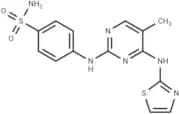
CAS:<p>CDK2/9-IN-1 (compound 20a) is an orally active dual inhibitor of CDK2 and CDK9, with IC50 values of 0.004 μM and 0.009 μM for CDK2 and CDK9, respectively. It induces apoptosis by regulating G2/M cell cycle arrest and exhibits antitumor activity.</p>Fórmula:C14H14N6O2S2Cor e Forma:SolidPeso molecular:362.43TBC-1
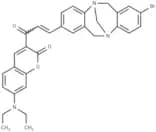
CAS:<p>TBC-1 is a chlorophyll-a derivative that acts as a photosensitizer for photodynamic therapy (PDT). It efficiently generates type I ROS and targets the endoplasmic reticulum. TBC-1 demonstrates in vitro biocompatibility and PDT effectiveness under both normoxic and hypoxic conditions.</p>Fórmula:C31H28BrN3O3Cor e Forma:SolidPeso molecular:570.476Antitumor agent-72
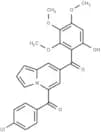
CAS:<p>Antitumor agent-72 (compound 6w) is a potent anticancer agent that exhibits its anticancer activity by inducing apoptosis via caspase-3 activation and PARP</p>Fórmula:C25H20ClNO6Cor e Forma:SolidPeso molecular:465.88T0080
CAS:<p>T0080 is an FPR-1 antagonist. It reduces apoptosis (Apoptosis) and inhibits the production of reactive oxygen species (ROS) and pro-inflammatory cytokines (TNF-α and IL-1β) in plaque macrophages within ApoE−/− mouse models, thereby slowing the progression of atherosclerosis.</p>Fórmula:C24H22F3N3O3Cor e Forma:SolidPeso molecular:457.45ZSH-512
CAS:<p>ZSH-512 is a potent inhibitor of RARγ with antiproliferative properties. It induces apoptosis and reduces the expression of CD133, NANOG, SOX2, and EPCAM proteins. ZSH-512 exhibits anticancer activity and shows potential for colorectal cancer research.</p>Fórmula:C20H21N3O3SCor e Forma:SolidPeso molecular:383.464p53-MDM2-IN-6
CAS:<p>p53-MDM2-IN-6, an LSM-83177 hydrazone analog, acts as an efficacious p53-MDM2 inhibitor with an IC50 of 11.08 µg/mL. This compound inhibits the p53-MDM2 interaction leading to an increase in p-53 levels while concurrently decreasing GST enzyme expression. It halts the cell cycle at the S phase and induces early and late apoptosis (Apoptosis), exhibiting antiproliferative activity against the HT29 cell line with an IC50 of 10.44 µg/mL. p53-MDM2-IN-6 holds promise for research in colorectal cancer.</p>Fórmula:C17H17N3O4Cor e Forma:SolidPeso molecular:327.33Minnelide
CAS:<p>Minnelide is a prodrug of triptolide,and shows potent antitumor activity in a number of tumor types.</p>Fórmula:C21H25Na2O10PPureza:98.49% - 99.59%Cor e Forma:SolidPeso molecular:514.37CDK2-IN-9
<p>CDK2-IN-9: potent CDK2 inhibitor (IC50: 0.63 μM), anti-proliferative, arrests S/G2M cell cycle, induces apoptosis, promising for melanoma study.</p>Fórmula:C21H16ClN3O4SCor e Forma:SolidPeso molecular:441.89SL-176
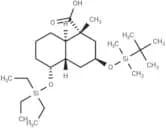
CAS:<p>SL-176, a WIP1 inhibitor, when combined with GSK-J4, can induce cell cycle arrest and apoptosis (apoptosis), thereby inhibiting tumor growth both in vitro and in vivo.</p>Fórmula:C24H48O4Si2Cor e Forma:SolidPeso molecular:456.806Microtubulin-IN-1
CAS:<p>Microtubulin-IN-1 (Compound 8g) is an inhibitor of microtubulin, targeting the colchicine-binding site to disrupt tubulin integrity and induce upregulation of p53 protein expression. It exhibits antiproliferative activity across various cancer cell lines, including NCI-H460, BxPC-3, and HT-29, with IC50 values of 2.4, 1.6, and 2.07 nM, respectively. Additionally, Microtubulin-IN-1 induces cell cycle arrest at the G2/M phase and apoptosis in NCI-H460 cells.</p>Fórmula:C25H21FN4O3Cor e Forma:SolidPeso molecular:444.458Ac-DMLD-CMK
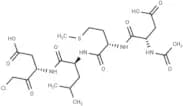
CAS:<p>Ac-DMLD-CMK is a peptide designed to target the caspase3-Gsdme signaling pathway in mice. It specifically inhibits the activation of caspase 3 and Gsdme, preventing the cleavage of Gsdme by caspase 3, which reduces pyroptosis. This process helps alleviate damage to renal tubular epithelial cells and decrease the secretion of inflammatory cytokines. Ac-DMLD-CMK can lower serum creatinine and blood urea nitrogen levels in mice induced by Cisplatin, thereby mitigating the progression of renal dysfunction. It holds potential for research into chemotherapy-induced nephrotoxicity.</p>Fórmula:C22H35ClN4O9SCor e Forma:SolidPeso molecular:567.053Siphonaxanthin
CAS:<p>Siphonaxanthin is a carotenoid found in green algae, known for targeting the death receptor 5 (DR5) on cancer cells to induce apoptosis. In human leukemia HL-60 cells, it increases DR5 expression, reduces Bcl-2 levels, and activates caspase-3. It also inhibits fibroblast growth factor receptor-1 (FGFR-1) signaling in endothelial cells. Siphonaxanthin suppresses the proliferation, migration, and tubular formation of human umbilical vein endothelial cells (HUVECs), as well as the growth of microvessels in rat aorta rings. Additionally, it has anti-inflammatory properties by blocking the translocation of high-affinity IgE receptors (FcεRI) to lipid rafts in mast cells. Siphonaxanthin shows potential for research into diseases such as cancer, diabetic retinopathy, and rheumatoid arthritis.</p>Fórmula:C40H56O4Cor e Forma:SolidPeso molecular:600.87DX3-234
CAS:<p>DX3-234 is a OXPHOS inhibitor that acts by inhibiting complex I in the mitochondrial ETC,for cancers dependent on aerobic metabolism, such as pancreatic cancer.</p>Fórmula:C25H35N5O6S2Pureza:98.96%Cor e Forma:SolidPeso molecular:565.71PLK1-IN-15
CAS:<p>PLK1-IN-15 is a PLK1 inhibitor with an IC50 of 38.5 nM. It exhibits antiproliferative effects on HepG2, Huh7, H1299, and A549 cells, with IC50 values of 2.03, 2.08, 4.79, and 17.11 μM, respectively. Additionally, PLK1-IN-15 can induce cell cycle arrest in the G2/M phase and trigger apoptosis (Apoptosis), demonstrating anticancer activity.</p>Fórmula:C25H29N7O4SCor e Forma:SolidPeso molecular:523.61LA-CB1
CAS:<p>LA-CB1 is a derivative of Abemaciclib that targets CDK4/6 and promotes their degradation via the ubiquitin-proteasome pathway, thereby blocking the CDK4/6-Cyclin D1-Rb-E2F axis and inducing G0/G1 cell cycle arrest and apoptosis (Apoptosis). It demonstrates antiproliferative activity against MDA-MB-231 cells with an IC50 of 0.27 µM and effectively inhibits epithelial-mesenchymal transition, cell migration, invasion, and angiogenesis. In highly invasive models like triple-negative breast cancer (TNBC), LA-CB1 significantly suppresses tumor growth, showing robust dose-dependent antitumor activity. This compound can be utilized in breast cancer research.</p>Fórmula:C28H23ClFN7OCor e Forma:SolidPeso molecular:527.98Tubulin polymerization-IN-9
CAS:<p>Tubulin-IN-9 inhibits tubulin (IC50: 1.82 μM), halts K562 cells in G2/M, induces apoptosis, and has anti-cancer effects.</p>Fórmula:C19H19NO5SeCor e Forma:SolidPeso molecular:420.32Soquelitinib
CAS:<p>Soquelitinib (CPI-818) is a selective ITK inhibitor, inhibits tumor growth,T-cell, up-regulatCXCR3, IFNγ, TNFα, and CD107a expression in normal CD8 cells.</p>Fórmula:C25H30N4O4S2Pureza:99.54%Cor e Forma:SolidPeso molecular:514.66(S)-JDQ-443
CAS:<p>(S)-JDQ-443, an isomer of JDQ-443, is a selective, potent oral KRAS G12C inhibitor with antitumor properties.</p>Fórmula:C29H28ClN7OCor e Forma:SolidPeso molecular:526.03(S)-Purvalanol B
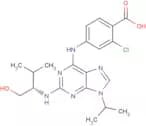
CAS:<p>(S)-Purvalanol B is the S enantiomer of Purvalanol B. Purvalanol B is an inhibitor of cyclin-dependent kinase(CDK) .</p>Fórmula:C20H25ClN6O3Pureza:98%Cor e Forma:SolidPeso molecular:432.9β-Carotene-13C10
CAS:<p>β-Carotene-13C10 (Provitamin A-13C10) is a form of β-Carotene labeled with 13C. It is a carotenoid compound and serves as a natural precursor to vitamin A. This compound acts as a regulator of reactive oxygen species (ROS), exhibiting both antioxidant and anti-inflammatory properties. Depending on its intrinsic characteristics and the redox potential of the biological environment, β-Carotene can function either as an antioxidant or a pro-oxidant. It also possesses anticancer activity, inducing apoptosis in breast cancer cells.</p>Fórmula:C40H56Cor e Forma:SolidPeso molecular:546.799Ferroptosis-IN-15
CAS:<p>Ferroptosis-IN-15 (compound 12) serves as an effective inhibitor of ferroptosis, exhibiting EC50 values of 0.76 μM and 0.67 μM in A375 cells and 786-O cells, respectively. It acts as a potential iron chelator and radical-scavenging antioxidant.</p>Fórmula:C17H14O5Cor e Forma:SolidPeso molecular:298.29Coprostanone
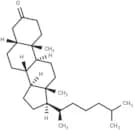
CAS:<p>Coprostanone (5β-cholestan-3-one) is an active metabolite of hydroxycholesterol and cholesterol. It induces apoptosis in primary gallbladder epithelial cells in dogs. Coprostanone holds potential for research into colon cancer or adenomatous polyps.</p>Fórmula:C27H46OCor e Forma:SolidPeso molecular:386.654SMIP34
CAS:<p>SMIP34 is an inhibitor of PELP1, binding to this target with a dissociation constant (Kd) of 37.4 μM. It demonstrates efficacy in inhibiting the proliferation of cancer cells and tumor progression. Specifically, SMIP34 is effective in breast cancer research, showing activity against wild-type (WT), mutant (MT) estrogen receptor-positive (ER+), and treatment-resistant (TR)-ER+ breast cancers.</p>Fórmula:C25H32ClN5O3Cor e Forma:SolidPeso molecular:486.01PI3K-IN-58
CAS:<p>PI3K-IN-58 (Compound 17f) is an inhibitor of PI3Kα with an IC50 value of 0.039 μM. It shows significant antiproliferative effects on PC-3, 22RV1, MDA-MB-231, and MDA-MB-453 cell lines with IC50 values of 3.48 μM, 1.06 μM, 2.21 μM, and 0.93 μM, respectively. PI3K-IN-58 induces apoptosis by downregulating the expression of anti-apoptotic proteins Bcl-XL and Bcl-2 while upregulating the expression of the pro-apoptotic protein BAX. This compound is applicable for research in cancer targeting through PI3K pathways.</p>Fórmula:C22H22N6O3SCor e Forma:SolidPeso molecular:450.51Etalocib sodium
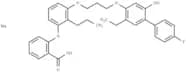
CAS:Etalocib (LY293111) sodium is an orally active leukotriene B4 (LTB4) receptor antagonist with a Ki value of 25 nM for inhibiting [3H]LTB4 binding. It exhibits an IC50 of 20 nM against LTB4-induced calcium mobilization. Additionally, Etalocib sodium can induce apoptosis.Fórmula:C33H32FNaO6Cor e Forma:SolidPeso molecular:566.59DL-Buthionine-(S,R)-sulfoximine hydrochloride
<p>DL-Buthionine-(S,R)-sulfoximine hydrochloride (Buthionine sulfoximine hydrochloride) is a potent and specific glutamylcysteine synthetase biosynthesis inhibitor</p>Fórmula:C8H19ClN2O3SCor e Forma:SolidPeso molecular:258.77BRD-K44839765
CAS:<p>BRD-K44839765 selectively targets Bcl-2, exhibiting an IC50 of 5.6 μM in IMR-90 cells. This compound is also orally active.</p>Fórmula:C23H19N3O2S2Cor e Forma:SolidPeso molecular:433.55BRD-K20733377
CAS:<p>BRD-K20733377 is a Bcl-2 inhibitor that exhibits selective cytotoxicity toward senescent cells, specifically inhibiting the activity of etoposide-induced senescent IMR-90 cells with an IC50 of 10.7 μM. Additionally, BRD-K20733377 reduces the mRNA expression of aging-related genes p16, p21, and KI67 in aged mouse models.</p>Fórmula:C23H18N4O3SCor e Forma:SolidPeso molecular:430.48HDAC-IN-81
CAS:<p>HDAC-IN-81 (Compound 11g) is an HDAC inhibitor capable of effectively inhibiting HDAC1 with an IC50 value of 4.5 nM. Additionally, it exhibits anticancer activity by inhibiting cell proliferation and can induce cell apoptosis (apoptosis).</p>Fórmula:C20H27N3O3Cor e Forma:SolidPeso molecular:357.45Flonoltinib sulfate
CAS:<p>Flonoltinib maleate is an orally active dual inhibitor of JAK2/FLT3, with IC50 values of 0.7 nM for JAK2, 4 nM for FLT3, 26 nM for JAK1, and 39 nM for JAK3. It exhibits anticancer properties.</p>Fórmula:C25H36FN7O5SCor e Forma:SolidPeso molecular:565.661AQX-435
CAS:<p>AQX-435 activates SHIP1, inhibits PI3K in BCR signaling, induces apoptosis in B cells, and slows lymphoma growth.</p>Fórmula:C27H34N2O4Cor e Forma:SolidPeso molecular:450.57Bcl-2-IN-3
CAS:<p>Bcl-2-IN-3 (Compound 10) is an inhibitor of Bcl-2, utilized in cancer research.</p>Fórmula:C16H16N2O4Cor e Forma:SolidPeso molecular:300.31BRD-K56819078
CAS:<p>BRD-K56819078, a Bcl-2 inhibitor, significantly reduces the burden of senescent cells and the mRNA expression of aging-related genes in the kidneys. It exerts its anti-aging effects by inhibiting cell apoptosis (apoptosis).</p>Fórmula:C24H20FN3O4S2Cor e Forma:SolidPeso molecular:497.56TLBC
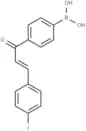
CAS:<p>TLBC, a borane-chalcone derivative, exhibits dose-dependent inhibitory effects across various glioma cell lines with IC50 values ranging from 5.5 to 25.5 μM. TLBC induces apoptosis independently of alterations in the tumor suppressor factor p53.</p>Fórmula:C15H12BIO3Cor e Forma:SolidPeso molecular:377.97Antiproliferative agent-63
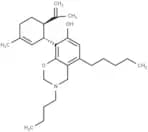
CAS:<p>Antiproliferative agent-63 (compound 4d) is a cyclic analog of cannabidiol that acts as an anticancer agent. It demonstrates favorable activity against breast and colorectal cancer. Moreover, this compound can arrest the cell cycle in the G1 phase and induce apoptosis through the mitochondrial pathway in breast cancer cell lines.</p>Fórmula:C27H41NO2Cor e Forma:SolidPeso molecular:411.62Nitrovin
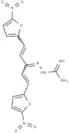
CAS:<p>Nitrovin is an antimicrobial growth promoter that induces ROS-mediated non-apoptotic and quasi-apoptotic cell death by targeting TrxR1. It exhibits anticancer activity with IC50 values ranging from 1.31 to 6.60 μM for both tumor and normal cells.</p>Fórmula:C14H12N6O6Cor e Forma:SolidPeso molecular:360.28Caspase-3-IN-2
CAS:<p>Caspase-3-IN-2 (Compound 4d) acts as an inhibitor of α-Chymotrypsin. It also exhibits inhibitory activity against HIV protease and caspase 3, with inhibition rates of 57% and 51% respectively at a concentration of 100 μM.</p>Fórmula:C10H6ClNO5Cor e Forma:SolidPeso molecular:255.611Anticancer agent 54
<p>Anticancer agent 54 blocks cell cycle in G0/G1, induces apoptosis, and fights cancer via DNA embedding and ROS.</p>Fórmula:C33H36N6Cor e Forma:SolidPeso molecular:516.68S100A2-p53-IN-1
CAS:<p>S100A2-p53-IN-1 inhibits S100A2-p53 in pancreatic cancer, stunting MiaPaCa-2 cell growth at 1.2-3.4 μM.</p>Fórmula:C20H20F6N2O4SCor e Forma:SolidPeso molecular:498.44Pim-1 kinase inhibitor 2
CAS:<p>Compound 13, a potent Pim-1 inhibitor, induces apoptosis with potential for cancer research.</p>Fórmula:C24H14N4O3Cor e Forma:SolidPeso molecular:406.39ASP9831
CAS:<p>ASP9831 is an orally active PDE4 inhibitor. It suppresses LPS-induced TNF-α production and exhibits anti-inflammatory properties. ASP9831 is useful in the study of steatohepatitis.</p>Fórmula:C20H23N3O3Cor e Forma:SolidPeso molecular:353.42Casein kinase 1δ-IN-29
CAS:<p>Casein kinase1δ-IN-29 (Compound 18) is an inhibitor that targets p38α and casein kinase 1 (CK1), exhibiting inhibitory effects on p38α, CK1δ, and CK1ε with IC50 values of 0.041 µM, 0.005 µM, and 0.447 µM, respectively. This compound causes cell cycle arrest at the subG1 phase and induces apoptosis in AC1-M88 cells.</p>Fórmula:C26H23FN4O4SCor e Forma:SolidPeso molecular:506.549Antitumor agent-54
<p>Compound C11 inhibits 14-3-3η protein (KD: 35 μM), targets liver cancer cells, blocks G1-S phase, and induces apoptosis.</p>Fórmula:C29H32N2O3Cor e Forma:SolidPeso molecular:456.58DNMT1-IN-5
CAS:<p>DNMT1-IN-5 (Compound 55) is an inhibitor of DNMT, specifically targeting DNMT1 and DNMT3A, with IC50 values of 2.42 μM and 14.4 μM, respectively. It demonstrates antiproliferative effects across various cancer cell lines (TMD-8, DOHH2, MOLM-13, THP-1, RPIM-8226, and HCT116) with IC50 values ranging from 0.19 to 2.37 μM. The compound induces G2/M phase cell cycle arrest and apoptosis in TMD-8 and DOHH2 cells. Additionally, DNMT1-IN-5 exhibits antitumor efficacy in a TMD-8 xenograft mouse model.</p>Fórmula:C24H32FN7Cor e Forma:SolidPeso molecular:437.556TNF-α-IN-2
CAS:<p>TNF-α-IN-2 is orally active TNFα inhibitor that distorts the TNFα trimer, causing abnormal signal transduction when it binds to TNFR1, rheumatoid arthritis.</p>Fórmula:C25H21ClF2N6OPureza:99.92%Cor e Forma:SolidPeso molecular:494.92YL-1-9
CAS:<p>YL-1-9 is an inhibitor that prevents the degradation of p53 by MDM2 through tight binding to the crucial hydrophobic pocket of MDM2. It can induce cell cycle arrest and apoptosis in breast cancer cells [1].</p>Fórmula:C22H23F3N2O3Cor e Forma:SolidPeso molecular:420.425ZIF-8
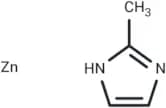
CAS:<p>ZIF-8 is an anticancer agent that can inherently trigger pyroptosis through a caspase-1/gasdermin D (GSDMD)-dependent pathway.</p>Fórmula:C4H6N2ZnCor e Forma:SolidPeso molecular:147.5134-Hydroxyresveratrol
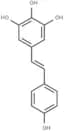
CAS:<p>4-Hydroxyresveratrol (3,4,5,4'-Tetrahydroxystibene) is a resveratrol analog that variably induces the expression of pro-apoptotic genes such as p53 and Bax. It triggers apoptosis in SV40 virus-transformed WI38 cells (WI38VA), but not in WI38 cells. Additionally, 4-Hydroxyresveratrol significantly increases the expression of p53, GADD45, and Bax genes in WI38VA cells, while suppressing the expression of the bcl-2 gene.</p>Fórmula:C14H12O4Cor e Forma:SolidPeso molecular:244.243