Apoptose
Os inibidores da apoptose são compostos que previnem ou retardam o processo de morte celular programada, conhecido como apoptose. Esses inibidores são vitais no estudo dos mecanismos de sobrevivência celular e são usados para investigar doenças onde a apoptose é desregulada, como câncer, distúrbios neurodegenerativos e doenças autoimunes. Ao modular a apoptose, esses inibidores podem ajudar no desenvolvimento de terapias destinadas a controlar a morte celular. Na CymitQuimica, oferecemos uma ampla seleção de inibidores da apoptose de alta qualidade para apoiar sua pesquisa em biologia celular, oncologia e áreas relacionadas.
Subcategorias de "Apoptose"
- ASK(6 produtos)
- BCL(11 produtos)
- Caspase(125 produtos)
- FOXO1(3 produtos)
- IAP(66 produtos)
- Mdm2(12 produtos)
- PD-1/PD-L1(125 produtos)
- PDK(9 produtos)
- PERK(25 produtos)
- Serina/treonina quinase(15 produtos)
- Survivina(13 produtos)
- TNF(92 produtos)
- c-RET(51 produtos)
- p53(62 produtos)
Exibir 6 mais subcategorias
Foram encontrados 5592 produtos de "Apoptose"
Ordenar por
Pureza (%)
0
100
|
0
|
50
|
90
|
95
|
100
eIF4A3-IN-4
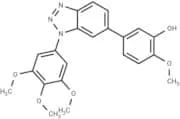
<p>eIF4A3-IN-4 is a novel inhibitor of eIF4A (IC50: 8.6 μM).</p>Fórmula:C24H20N2O5Cor e Forma:SolidPeso molecular:416.43MC3629
CAS:<p>MC3629, an inhibitor of the histone methyltransferase (EZH2), exhibits antitumor activity. This compound effectively inhibits the proliferation and self-renewal of SHH MB cancer cells while inducing cell apoptosis (apoptosis). MC3629 is also useful in research on tumor aggressiveness and resistance.</p>Fórmula:C19H20N4O2Cor e Forma:SolidPeso molecular:336.39PF-7006
CAS:<p>PF-7006, an Mps1 kinase inhibitor, exhibits a Ki value of 0.27 nM and an IC50 value of 2.5 nM. It disrupts cell cycle checkpoints by inhibiting the catalytic activity of Mps1, reduces histone H3 levels, and shortens the duration of mitosis, thereby inducing apoptosis (Apoptosis) in cancer cells. When used in combination with Palbociclib, the tolerance of cancer cells to PF-7006 is enhanced. PF-7006 is applicable for research on breast cancer.</p>Fórmula:C22H26N8O2Cor e Forma:SolidPeso molecular:434.49HDAC-IN-37
<p>HDAC-IN-37 inhibits HDACs 1, 3, 8, & 6, induces histone acetylation, halts G1 to S phase, and triggers early apoptosis.</p>Fórmula:C23H24ClN7OCor e Forma:SolidPeso molecular:449.94GPX4 activator 2
CAS:<p>GPX4 Activator 2 (Compound C3) serves as an activator of GPX4 and exhibits cardioprotective effects by inhibiting cellular iron death (ferroptosis) with an efficacy concentration (EC50) of 7.8 μM. It is used in the study of myocardial damage.</p>Fórmula:C20H26N6O2SCor e Forma:SolidPeso molecular:414.52D18
CAS:<p>D18: Dual agonist for TLR7/8, boosts PD-L1, aids tumor sensitivity to PD-1/PD-L1 inhibitors, and is a cytotoxin for ADC HE-S2.</p>Fórmula:C21H28N6Cor e Forma:SolidPeso molecular:364.49WB436B
CAS:<p>WB436B, a highly selective STAT3 inhibitor, effectively targets and inhibits STAT3-Tyr705 phosphorylation along with the expression of STAT3 target genes. It exhibits cytotoxic effects on pancreatic cancer cells by inducing apoptosis. Furthermore, WB436B suppresses tumor growth and metastasis in pancreatic cancer mouse models, thereby prolonging the survival of tumor-bearing mice.</p>Fórmula:C21H20N6O3SCor e Forma:SolidPeso molecular:436.49Tubulin inhibitor 43
CAS:<p>Tubulin inhibitor 43 exhibits significant antitumor activity by impeding the proliferation and growth of cancer cells through the inhibition of β-microtubulin activity, ultimately inducing apoptosis [1].</p>Fórmula:C20H21NO6Cor e Forma:SolidPeso molecular:371.38HC-5404-Fu
CAS:<p>HC-5404-Fu is an inhibitor of PERK with anti-tumor activity. This compound inhibits the signaling pathway of the endoplasmic reticulum stress response. Additionally, HC-5404-Fu increases the sensitivity of renal cell carcinoma cells to vascular endothelial growth factor (VEGF) receptor tyrosine kinase inhibitors (TKIs). It holds potential for research into renal cell carcinoma, stomach cancer, metastatic breast cancer, small cell lung cancer, and other solid tumors.</p>Fórmula:C28H28F2N4O7Cor e Forma:SolidPeso molecular:570.54HBV/HDV-IN-2
CAS:<p>HBV/HDV-IN-2 (Compd 143) functions as an inhibitor for HBV, HDV, and PD-1/PD-L1, demonstrating an EC 50 of 35 nM in T cell activation.</p>Fórmula:C38H44ClN7O5Cor e Forma:SolidPeso molecular:714.25SIJ1777
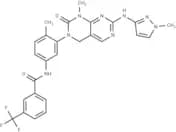
CAS:<p>SIJ1777, a derivative of GNF-7, exhibits potent anticancer effects against melanoma cells harboring BRAFI/II/III mutations. The compound significantly inhibits the activation of MEK, ERK, and AKT. Furthermore, SIJ1777 notably induces apoptosis (cell death) and effectively prevents migration, invasion, and anchorage-independent growth of melanoma cells with BRAFI/II/III mutations.</p>Fórmula:C26H23F3N8O2Cor e Forma:SolidPeso molecular:536.51pan-KRAS-IN-5
CAS:<p>Pan-KRAS-IN-5 (compound 15a) is a pan-KRAS translation inhibitor targeting 5′-UTR RNA G-quadruplexes (rG4s). It induces cell cycle arrest and promotes apoptosis in KRAS-driven cancer cells [1].</p>Fórmula:C31H36FIN4O2Cor e Forma:SolidPeso molecular:642.55SC428
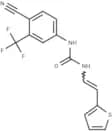
CAS:<p>SC428 acts as an inhibitor of the androgen receptor (AR), specifically targeting the N-terminal domain of AR. This compound effectively diminishes the transactivation of various AR forms, including AR-V7, ARv567es, full-length AR (AR-FL), and its LBD mutants. Additionally, SC428 significantly inhibits AR-FL nuclear translocation, chromatin binding, and AR-regulated gene transcription under androgen stimulation. In vitro, SC428 suppresses the proliferation of tumor cells. In vivo, it inhibits tumor growth in mice transplanted with 22Rv1 cells by inducing apoptosis.</p>Fórmula:C15H10F3N3OSCor e Forma:SolidPeso molecular:337.32VDX-111
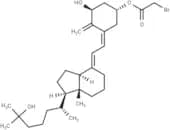
CAS:<p>VDX-111, an analog of vitamin D, exhibits cytotoxicity in ovarian cancer cells by upregulating the RIPK1/RIPK3 pathway and inducing necroptosis. It also promotes the expression of cytokines and demonstrates antitumor activity in a mouse model [1].</p>Fórmula:C29H45BrO4Cor e Forma:SolidPeso molecular:537.57Tubulin polymerization-IN-61
CAS:<p>Tubulin polymerization-IN-61 (Compound 9a), a tubulin polymerization inhibitor, disrupts the microtubule skeleton, arrests the cell cycle at the G2/M phase, induces Apoptosis, and impedes cancer cell migration and colony formation. This compound demonstrates antitumor efficacy in vivo within the 4T1 xenograft model [1].</p>Fórmula:C22H21N3O5Cor e Forma:SolidPeso molecular:407.42Anticancer agent 64
CAS:<p>Anticancer agent 64 (5m) induces apoptosis, has IC50 2.4μM in CCRF-CEM, activates caspases, cleaves PARP, affects mitochondria.</p>Fórmula:C31H46N2O2SCor e Forma:SolidPeso molecular:510.77NF-κB-IN-4
<p>NF-κB-IN-4 (compound 17) is a potent inhibitor of NF-κB pathway which can cross blood brain barrier (BBB).</p>Fórmula:C18H15FN4OCor e Forma:SolidPeso molecular:322.34OICR12694
CAS:<p>OICR12694 (JNJ-65234637) is an orally active inhibitor of B cell lymphoma 6 (BCL6) .</p>Fórmula:C29H28ClF3N8O4Cor e Forma:SolidPeso molecular:645.03CDK-IN-9
<p>CDK-IN-9: A potent CDK inhibitor, gels to enhance CDK12/DDB1 binding, targets CDK2/E (IC50: 4 nM), induces apoptosis via dephosphorylation.</p>Fórmula:C21H24N8SCor e Forma:SolidPeso molecular:420.53Pan-Trk-IN-3
<p>Pan-Trk-IN-3: potent Trk inhibitor (IC50: 2-26 nM), effective against drug-resistant mutants, induces apoptosis, anti-tumor effects.</p>Fórmula:C29H31ClN8O3Cor e Forma:SolidPeso molecular:575.06Topo II/HDAC-IN-1
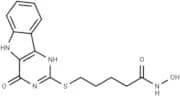
CAS:<p>Topo II/HDAC-IN-1 (7d) demonstrates potent dual inhibitory effects on Topo II and HDAC, while Topo II/HDAC-IN-1 (8d) effectively induces apoptosis [1].</p>Fórmula:C15H16N4O3SCor e Forma:SolidPeso molecular:332.38Isoforretin A
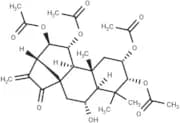
CAS:<p>Isoforretin A is a potent inhibitor of thioredoxin-1 (Trx1) with significant biological activity, inducing anti-tumor effects mediated by reactive oxygen species (ROS). The compound inhibits Trx1 activity by covalently binding to the activation site residues Cys32/Cys35, which triggers ROS accumulation, leading to DNA damage and apoptosis (Apoptosis) in cancer cells. Additionally, Isoforretin A has demonstrated the ability to suppress the growth of HepG2 tumors in a mouse hepatic cell carcinoma xenograft model.</p>Fórmula:C28H38O10Cor e Forma:SolidPeso molecular:534.6[D-Leu-4]-OB3
CAS:<p>[D-Leu-4]-OB3 suppresses the expression of genes associated with inflammation, proliferation, and metastasis, as well as the expression of PD-L1.</p>Fórmula:C29H50N8O12SCor e Forma:SolidPeso molecular:734.82ASK1-IN-7
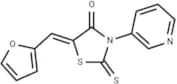
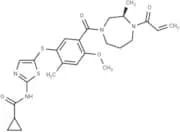
CAS:<p>ASK1-IN-7 (Compound 4c) is an ASK1 inhibitor and a derivative of the ASK1 inhibitor scaffold 5-(5-Phenyl-furan-2-ylmethylene)-2-thioxo-thiazolidin-4-one. This compound is potentially applicable in research involving ASK1 signaling pathways, including studies on cellular stress response, inflammatory response, neurodegenerative diseases, and cardiovascular diseases.</p>Fórmula:C13H8N2O2S2Cor e Forma:SolidPeso molecular:288.345TNF-α-IN-2
CAS:<p>TNF-α-IN-2 is orally active TNFα inhibitor that distorts the TNFα trimer, causing abnormal signal transduction when it binds to TNFR1, rheumatoid arthritis.</p>Fórmula:C25H21ClF2N6OPureza:99.92%Cor e Forma:SolidPeso molecular:494.92MD102
CAS:<p>MD102, with an IC50 value of 0.35 μM, is a potent TG2 inhibitor that stabilizes p53 by inhibiting TG2. This results in a decrease in p-AKT and p-mTOR downstream signaling, ultimately inducing tumor cell apoptosis [1].</p>Fórmula:C13H4BrCl2FN2O2Cor e Forma:SolidPeso molecular:389.99KMUP-1
CAS:<p>KMUP-1 is a xanthine derivative known for its vasodilatory properties. It functions as a phosphodiesterase (PDE) inhibitor and an activator of soluble guanylate cyclase (sGC), engaging the NO/sGC/cyclic guanosine monophosphate pathway. Additionally, KMUP-1 can open K+ channels and has the potential to alleviate ischemia-induced cardiac myocyte apoptosis (apoptosis). This compound is useful in cardiovascular and anti-inflammatory research.</p>Fórmula:C19H23ClN6O2Cor e Forma:SolidPeso molecular:402.878Nur77 agonist-1
CAS:<p>Nur77 agonist-1 (Compound 8f) is an orally active Nur77 agonist. It induces ferroptosis by upregulating Nur77 protein expression, increasing reactive oxygen species (ROS) and lipid peroxidation levels, while decreasing GPX4 protein expression. Nur77 agonist-1 binds with affinity to the ligand binding domain of Nur77, with a KD of 13.80 μM. It demonstrates significant antiproliferative activity against various breast cancer cells (IC50: 2.15-3.26 μM) and exhibits low cytotoxicity towards normal cells. This compound is useful for breast cancer research.</p>Fórmula:C24H18ClN5O2Cor e Forma:SolidPeso molecular:443.885Tubulin inhibitor 41
CAS:<p>Tubulin inhibitor 41 (Compd D19) is a promising lead compound for glioblastoma treatment, known for its ability to penetrate the blood-brain barrier (BBB). It functions as a tubulin inhibitor, inducing G2/M phase arrest, leading to cell apoptosis, and inhibiting the migration of U87 cells [1].</p>Fórmula:C20H15N3OCor e Forma:SolidPeso molecular:313.35YK5
CAS:<p>YK5 is an allosteric inhibitor pocket of Hsp70 and represents a previously unknown chemical tool to investigate cellular mechanisms associated with Hsp70.</p>Fórmula:C18H24N8O3SPureza:98%Cor e Forma:SolidPeso molecular:432.50VEGFR-2-IN-14
<p>VEGFR-2-IN-14 (Compound 5) is a potent inhibitor of VEGFR-2, which inhibits the growth of HepG2 cells in the Pre-G1 phase and induces apoptosis.</p>Fórmula:C24H23N3O3SCor e Forma:SolidPeso molecular:433.52AKN-028 acetate
<p>AKN-028 acetate: an oral TK inhibitor for AML research, targets FLT3 with IC50 of 6 nM, inhibits autophosphorylation, and induces apoptosis.</p>Fórmula:C19H18N6O2Cor e Forma:SolidPeso molecular:362.39Soquelitinib
CAS:<p>Soquelitinib (CPI-818) is a selective ITK inhibitor, inhibits tumor growth,T-cell, up-regulatCXCR3, IFNγ, TNFα, and CD107a expression in normal CD8 cells.</p>Fórmula:C25H30N4O4S2Pureza:99.54%Cor e Forma:SolidPeso molecular:514.66HDL-16
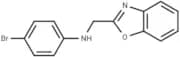
CAS:<p>HDL-16 is a highly effective P2Y14R antagonist with anti-colitis effects, targeting P2Y14R in intestinal epithelial cells to alleviate ulcerative colitis.</p>Fórmula:C14H11BrN2OPureza:97.58%Cor e Forma:SolidPeso molecular:303.15KDM1/CDK1-IN-1
<p>KDM1/CDK1-IN-1 inhibits KDM1 (IC50: 0.096 μM) & CDK1 (IC50: 0.078 μM), blocks HOP-92 G2/M phase, induces apoptosis, toxic to cancer cells.</p>Fórmula:C22H17N5O3SCor e Forma:SolidPeso molecular:431.47FLT3/TrKA-IN-1
<p>FLT3/TrKA-IN-1: Potent dual kinase inhibitor for FLT3 & TrKA, promising for AML research.</p>Fórmula:C28H30N4O2Cor e Forma:SolidPeso molecular:454.56PD-1-IN-17 TFA
<p>PD-1-IN-17 TFA is a potent PD-1 inhibitor, blocking 92% of splenocyte growth at 100 nM.</p>Fórmula:C15H23F3N6O9Cor e Forma:SolidPeso molecular:488.37Etalocib sodium
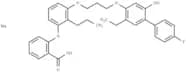
CAS:<p>Etalocib (LY293111) sodium is an orally active leukotriene B4 (LTB4) receptor antagonist with a Ki value of 25 nM for inhibiting [3H]LTB4 binding. It exhibits an IC50 of 20 nM against LTB4-induced calcium mobilization. Additionally, Etalocib sodium can induce apoptosis.</p>Fórmula:C33H32FNaO6Cor e Forma:SolidPeso molecular:566.59XIAP degrader-1
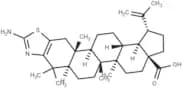
<p>XIAP degrader-1 is a small primary amine molecule that promotes the degradation of X-linked apoptosis inhibitory protein (XIAP).</p>Fórmula:C34H45N5O4Cor e Forma:SolidPeso molecular:587.75TLBC
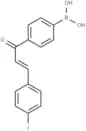
CAS:<p>TLBC, a borane-chalcone derivative, exhibits dose-dependent inhibitory effects across various glioma cell lines with IC50 values ranging from 5.5 to 25.5 μM. TLBC induces apoptosis independently of alterations in the tumor suppressor factor p53.</p>Fórmula:C15H12BIO3Cor e Forma:SolidPeso molecular:377.97Antiproliferative agent-63
CAS:<p>Antiproliferative agent-63 (compound 4d) is a cyclic analog of cannabidiol that acts as an anticancer agent. It demonstrates favorable activity against breast and colorectal cancer. Moreover, this compound can arrest the cell cycle in the G1 phase and induce apoptosis through the mitochondrial pathway in breast cancer cell lines.</p>Fórmula:C27H41NO2Cor e Forma:SolidPeso molecular:411.62ZLMT-12
<p>ZLMT-12: tacrine derivative, inhibits CDK2/CDK9, weak on AChE/BuChE, anti-proliferative, low toxicity, blocks S/G2/M phase, induces apoptosis.</p>Fórmula:C26H31ClN6OCor e Forma:SolidPeso molecular:479.02PARP1/BRD4-IN-2
<p>PARP1/BRD4-IN-2, a potent inhibitor of PARP1 and BRD4, halts cell cycle, triggers apoptosis, and has antitumor effects on TNBC.</p>Fórmula:C25H20N4O4Cor e Forma:SolidPeso molecular:440.45Antiproliferative agent-8
<p>Compound 5a, an anticancer agent, enhances P53 and has antiproliferative effects.</p>Fórmula:C22H16ClN3O3Cor e Forma:SolidPeso molecular:405.83Anticancer agent 44
<p>Anticancer agent 44 induces apoptosis, is selective, cytotoxic to cancer cells, and minimally toxic to human lymphocytes.</p>Fórmula:C22H13Cl2N3O5S2Cor e Forma:SolidPeso molecular:534.39Ferroptosis-IN-6
CAS:<p>Ferroptosis-IN-6 is an efficient ferroptosis inhibitor, protecting cells from cell death induced by ferroptosis inducers, and inhibiting STY-BODIPY oxidation.</p>Fórmula:C15H17NOPureza:99.84%Cor e Forma:SolidPeso molecular:227.3EGFR-IN-3
<p>EGFR-IN-3 is an EGFR inhibitor with antitumor activity.EGFR-IN-3 inhibits EGFRwt-TK, induces apoptosis (cell death), and can block cells in the G2/M phase.</p>Fórmula:C24H18F4N6O2SPureza:98.1%Cor e Forma:SolidPeso molecular:530.5Laulimalide
CAS:<p>Microtubule stabilizer; halts cancer cell growth (IC50: 3-30 nM); arrests cells in prometaphase; prevents bipolar spindle formation.</p>Fórmula:C30H42O7Cor e Forma:SolidPeso molecular:514.65TAI-95
CAS:<p>TAI-95 is an inhibitor of highly expressed cancer protein 1 (Hec1).</p>Fórmula:C24H23N5O3S2Cor e Forma:SolidPeso molecular:493.60Spicamycin
CAS:<p>Spicamycin can be used as a potent inducer of differentiation of human myeloid leukemia cells (HL-60) and murine myeloid leukemia cells (M1).</p>Fórmula:C30H51N7O7Cor e Forma:SolidPeso molecular:621.77




![[D-Leu-4]-OB3](/_next/image/?url=https%3A%2Fstatic.cymitquimica.com%2Fproducts%2FTM%2Fthumb-webp%2FT72906.webp&w=3840&q=75)