Apoptose
Os inibidores da apoptose são compostos que previnem ou retardam o processo de morte celular programada, conhecido como apoptose. Esses inibidores são vitais no estudo dos mecanismos de sobrevivência celular e são usados para investigar doenças onde a apoptose é desregulada, como câncer, distúrbios neurodegenerativos e doenças autoimunes. Ao modular a apoptose, esses inibidores podem ajudar no desenvolvimento de terapias destinadas a controlar a morte celular. Na CymitQuimica, oferecemos uma ampla seleção de inibidores da apoptose de alta qualidade para apoiar sua pesquisa em biologia celular, oncologia e áreas relacionadas.
Subcategorias de "Apoptose"
- ASK(9 produtos)
- BCL(11 produtos)
- Caspase(144 produtos)
- FOXO1(3 produtos)
- IAP(67 produtos)
- Mdm2(12 produtos)
- PD-1/PD-L1(139 produtos)
- PDK(9 produtos)
- PERK(26 produtos)
- Serina/treonina quinase(19 produtos)
- Survivina(14 produtos)
- TNF(92 produtos)
- c-RET(59 produtos)
- p53(63 produtos)
Exibir 6 mais subcategorias
Foram encontrados 6022 produtos de "Apoptose"
Ordenar por
Pureza (%)
0
100
|
0
|
50
|
90
|
95
|
100
RIPK2-IN-6
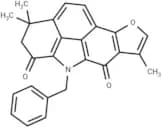
CAS:RIPK2-IN-6 (Compound 15a) is an inhibitor of RIPK that specifically targets the phosphorylation of RIPK2, thereby suppressing the NF-κB and MAPK signaling pathways. It has demonstrated anti-inflammatory and anti-fibrotic activities in a mouse model of colitis induced by Dextran sodium sulfate.Fórmula:C26H21NO3Cor e Forma:SolidPeso molecular:395.45SF-9-2
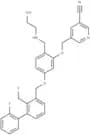
CAS:SF-9-2 is a PD-L1/PD-1 binding inhibitor with an IC50 of 24.9 nM. It suppresses epithelial-mesenchymal transition, migration, invasion, and proliferation of SK-N-SH cells, while also inducing apoptosis and causing cell cycle arrest. SF-9-2 blocks PD-L1-induced growth of SK-N-SH cells via the MAPK signaling pathway. It restores GSK-3β activity and enhances PD-L1 degradation through the ubiquitin-proteasome pathway. In the SK-N-SH NOG mouse model, SF-9-2 inhibits tumor growth without notable toxicity. Additionally, SF-9-2 acts as an immune checkpoint inhibitor, blocking PD-L1 to restore T cell function and is applicable to neuroblastoma research.Fórmula:C30H27F2N3O3Cor e Forma:SolidPeso molecular:515.55MAO-B-IN-45
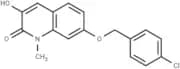
CAS:MAO-B-IN-45 is a dual inhibitor of ferroptosis and MAO-B. It selectively inhibits MAO-B with an IC50 of 87.47 nM, demonstrating a selectivity over MAO-A by more than 229 times. In vitro, MAO-B-IN-45 exhibits significant anti-ferroptosis activity by modulating iron metabolism pathways and the GSH-GPX4 axis. Additionally, it improves cognitive and behavioral deficits in 3×Tg (APP/Tau/Ps1) Alzheimer's disease mice and significantly reduces levels of ferritin heavy chain 1 (FTH1), β-amyloid protein (APP), and Tau protein phosphorylation (p-Tau) in their brains.Fórmula:C17H14ClNO3Cor e Forma:SolidPeso molecular:315.75eIF4A-IN-3
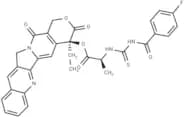
CAS:eIF4A-IN-3 (Compound 71E) is an inhibitor of the eukaryotic translation initiation factor 4A (eIF4A). This compound can be utilized as a cytotoxic payload for antibody-drug conjugates (ADCs).Fórmula:C34H37N3O7Cor e Forma:SolidPeso molecular:599.67EGFR-IN-45
EGFR-IN-45: Strong EGFR/CDK2 inhibitor (IC50s: 0.4 & 1.6 μM), halts cancer cell cycle pre-G1, prompts apoptosis, also targets Topo I/II.Fórmula:C28H23N7OCor e Forma:SolidPeso molecular:473.53GL0388
GL0388, a Bax activator, induces apoptosis, hinders breast cancer growth, and has IC50 of 0.299-1.57 μM.Fórmula:C21H17FN2OCor e Forma:SolidPeso molecular:332.37Anticancer agent 53
CAS:Anticancer agent 53 exhibits potent in vitro cytotoxicity, triggers apoptosis, halts S/G2/M cycle, and has antitumor effects without toxicity.Fórmula:C31H25FN4O6SCor e Forma:SolidPeso molecular:600.62D-Cl-amidine hydrochloride
D-Cl-amidine hydrochloride is a potent and highly selective inhibitor of PAD1. It exhibits excellent tolerance and does not induce significant toxicity [1].Fórmula:C14H20Cl2N4O2Cor e Forma:SolidPeso molecular:347.24HI042
CAS:HI042 is an FMS-like tyrosine kinase 3 (FLT3) inhibitor, showing an IC50 value of 0.62 μM for MOLM-13 cells, 0.33 μM for MV4-11 cells, and 0.89 μM for OCI-AML3 cells. It selectively reduces the survival rate of FLT3-internal tandem duplication (FLT3-ITD) positive cell lines, induces apoptosis, disrupts cell cycle progression, and diminishes colony-forming ability. HI042 is applicable for acute myeloid leukemia (AML) research.Fórmula:C14H11N3O3SCor e Forma:SolidPeso molecular:301.32Nampt-IN-16
CAS:Nampt-IN-16 (Compound 9a) is an orally active NAMPT inhibitor with an IC50 of 0.15 μM. It reduces intracellular NAD+ and ATP levels. Nampt-IN-16 inhibits the proliferation, migration, and invasion of gastric cancer cells, induces cell cycle arrest and apoptosis, and alters cellular metabolism. This compound is applicable for research in tumors such as gastric cancer.Fórmula:C25H25FN4O3Cor e Forma:SolidPeso molecular:448.49NPB-1575
CAS:NPB-1575 is a potent, orally active anti-inflammatory agent capable of crossing the blood-brain barrier. It mitigates neuroinflammation and resists ferroptosis by activating IRS2/Nrf2/NF-κB. NPB-1575 protects against cerebral ischemic injury and improves neurological function outcomes, making it suitable for research in focal ischemic stroke.Fórmula:C19H22O4Cor e Forma:SolidPeso molecular:314.38t9,t11,c15-CLNA
CAS:t9,t11,c15-CLNA is an isomer of conjugated linolenic acid (CLNA) produced by Lactobacillus plantarum ZS2058. It exhibits key activities including anti-inflammatory and antioxidant effects, as well as enhancement of intestinal barrier function. The regulatory mechanisms of t9,t11,c15-CLNA involve the upregulation of tight junction proteins, the inhibition of pro-inflammatory cytokines (such as TNF-α, IL-6), and the activation of antioxidant enzymes (such as SOD, CAT). t9,t11,c15-CLNA can be utilized in research on inflammatory bowel disease (like colitis).Fórmula:C18H30O2Cor e Forma:SolidPeso molecular:278.43Multi-kinase-IN-1
CAS:Multi-kinase-IN-1, a powerful kinase inhibitor, exhibits antitumor properties by inducing cell apoptosis.Fórmula:C35H36F2N6O6SCor e Forma:SolidPeso molecular:706.76Antitumor agent-76
CAS:Antitumor agent-76 is a water-soluble, orally active, rapid-release prodrug of Triptolide that exhibits anticancer effects.Fórmula:C28H36ClNO10Cor e Forma:SolidPeso molecular:582.04FHND5071 (1H)
CAS:FHND5071 (1H) is a selective inhibitor of RET (rearranged during transfection) tyrosine kinase. It shows potential for research applications in RET-driven cancers, such as thyroid and lung cancer.Fórmula:C30H33N9OCor e Forma:SolidPeso molecular:535.64Anticancer agent 69
Anticancer agent 69 targets PC3 cells (IC50=26 nM), raises ROS, lowers EGFR, and induces apoptosis.Fórmula:C19H26N8SCor e Forma:SolidPeso molecular:398.53NA-17
CAS:<p>NA-17 is a naphthalimide compound with antitumor activity and exhibits lower toxicity to normal cells such as HL-7702 and WI-38. It demonstrates p53-dependent inhibition selectivity in various NSCLC cells, inducing the accumulation of active p53 in the mitochondria and nuclei of these cells. NA-17 causes cell cycle arrest in the G1 phase and promotes apoptosis and cell death.</p>Fórmula:C26H27N3O4Cor e Forma:SolidPeso molecular:445.51p53 Activator 12
CAS:Compound 510B, also known as p53 Activator 12, is a powerful activator of p53. This compound specifically interacts with mutant p53 to restore its DNA-binding function.Fórmula:C28H35F3N8O2Peso molecular:572.63Antitumor agent-100
CAS:Antitumor Agent-100 (compound A6) is a molecular gel and apoptosis inducer targeting PDE3A-SLFN12 with an IC50 of 0.3 μM, demonstrating potent antitumor activity. This orally available agent binds to the PDE3A enzyme pocket, recruiting and stabilizing SLFN12 which disrupts protein translation and induces apoptosis [1].Fórmula:C17H14ClN3OPeso molecular:311.77PKM2-IN-6
CAS:PKM2-IN-6 (compound 7d) is an orally active PKM2 inhibitor (IC50=23 nM) capable of inducing apoptosis and G2 cell cycle arrest. It reduces PKM1 and PKM2 expression at the mRNA level, exhibits antitumour activity, and is suitable for investigating triple-negative breast cancer (TNBC).Fórmula:C17H14N4OSPureza:99.83%Peso molecular:322.38