Álcoois
Subcategorias de "Álcoois"
Foram encontrados 5818 produtos de "Álcoois"
5-Bromo-2-nitrophenol
CAS:5-Bromo-2-nitrophenol is an organic compound that is used in the industrial production of drugs and dyes. It is soluble in ethanol, but insoluble in water. 5-Bromo-2-nitrophenol can be obtained by extracting it from the filtrate of a solution of potassium tert-butyl ether with aqueous ethanol. The extraction process involves adding morpholine to the solution, which is then heated and refluxed. This process yields high yields of 5-bromo-2-nitrophenol.Fórmula:C6H4BrNO3Pureza:Min. 95%Cor e Forma:Yellow solid.Peso molecular:218 g/mol2-Pyrimidinol
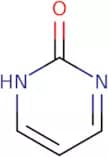
CAS:2-Pyrimidinol is a sodium salt that is used as an antimicrobial agent. It has significant cytotoxicity against skin cancer cells and is also used to treat HIV infection. 2-Pyrimidinol inhibits the activity of inhibitor molecules, which are small molecules that inhibit the activity of important enzymes in cells. This inhibition results in increased production of ATP, which leads to cell death. 2-Pyrimidinol also binds to dna duplexes and prevents them from being opened by helicase, thus inhibiting cellular replication. The molecular structure of 2-pyrimidinol was determined using X-ray crystallography and molecular docking analysis. This compound has been shown to have a potential use in treating metabolic disorders due to its ability to inhibit glycolysis, or the breakdown of glucose, through competitive inhibition with phosphofructokinase (PFK).
Fórmula:C4H4N2OPureza:(%) Min. 98%Cor e Forma:PowderPeso molecular:96.09 g/mol2,4-Dichloroquinoline
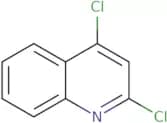
CAS:2,4-Dichloroquinoline is a chlorinated heterocyclic chemical compound. This drug is used as a monosubstituted palladium complex in organic synthesis. It can be obtained by refluxing 2,4-dichloroquinoline with hydrochloric acid, phosphorus oxychloride, and a terminal alkene in the presence of an excess of dichloromethane. The resulting chloroquine can be converted to the corresponding dichloroquinolines by treatment with acetonitrile in the presence of malonic acid. The final step is the demethylation of the quinoline ring using sodium methoxide in methanol. 2,4-Dichloroquinoline has been shown to exhibit antibacterial activity against gram-negative organisms such as Escherichia coli and Pseudomonas aeruginosa. Magnetic resonance analysis (NMR) has also been used to study its properties.Fórmula:C9H5Cl2NPureza:Min. 95%Cor e Forma:SolidPeso molecular:198.05 g/mol(1S,2R,3S,5R)-2-((Benzyloxy)methyl)-6-oxabicyclo[3.1.0]hexan-3-ol
CAS:(1S,2R,3S,5R)-2-((Benzyloxy)methyl)-6-oxabicyclo[3.1.0]hexan-3-ol is a fine chemical with a CAS No. of 117641-39-1. It has been used as a versatile building block in the synthesis of complex compounds, and has also been used as a useful intermediate in the production of specialty chemicals. This compound is useful for research purposes and can be used as a reaction component in the synthesis of new compounds.Fórmula:C13H16O3Pureza:Min. 95%Cor e Forma:Clear LiquidPeso molecular:220.26 g/mol2-Bromoquinoline
CAS:2-Bromoquinoline is an antimicrobial agent that binds to bacterial receptors. It is a bifunctional molecule with two reactive groups: a hydroxyl group and a nitrogen atom. 2-Bromoquinoline has been shown to inhibit the growth of various bacteria, including Mycobacterium tuberculosis, Staphylococcus epidermidis and Streptococcus pyogenes, by preventing the formation of a proton gradient across the bacterial membrane. 2-Bromoquinoline also inhibits hyperproliferative diseases such as amyloidosis in mice by binding to amyloid fibrils. This drug has been shown to cause DNA damage in mammalian cells, which may be due to its ability to form hydrogen bonds with methyl ethyl groups on DNA bases.Fórmula:C9H6BrNPureza:Min. 95%Cor e Forma:White To Yellow To Pink SolidPeso molecular:208.05 g/mol(1S,2R)-(+)-2-Amino-1,2-diphenylethanol
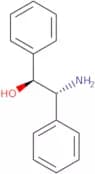
CAS:Produto Controlado(1S,2R)-(+)-2-Amino-1,2-diphenylethanol is an enantiopure amine that has been used as a ligand in supramolecular chemistry. It can be prepared by reacting 2-chloropropane with thionyl chloride and primary alcohols. The chloride group facilitates the reaction rate and can be replaced by nitro groups to immobilize the product on a solid substrate. (1S,2R)-(+)-2-Amino-1,2-diphenylethanol has optical properties that are dependent on its environment. It can be used to label cells for studies of cell differentiation or cell migration. This compound also reacts with cyclohexane rings to form cyclic products with different optical properties than those of the reactants. The reaction yield is high in this process.Fórmula:C14H15NOPureza:Min. 95%Cor e Forma:White To Beige SolidPeso molecular:213.28 g/mol2-Bromo-4-methylphenol
CAS:2-Bromo-4-methylphenol is an organic compound that has interactive effects with hydrochloric acid, molybdenum, and trifluoromethanesulfonic acid. It is soluble in water vapor, but insoluble in polyvinyl. 2-Bromo-4-methylphenol reacts with sodium hydroxide solution to form a hydroxide solution and sodium carbonate. The reaction product of 2-bromo-4-methylphenol with triterpenoid saponin produces fatty acids. This reaction occurs because the hydroxide ion from the sodium hydroxide solution attacks the ester group of the saponin, forming an alcohol group on one end and a carboxylic acid group on the other end. The benzyl groups are removed by hydrogenation to produce phenol.
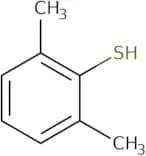
Fórmula:C7H7BrOPureza:Min. 95%Peso molecular:187.03 g/mol2,6-Dimethylthiophenol
CAS:2,6-Dimethylthiophenol is a structural analog of the natural product sumatrana. It has been shown to be an effective catalyst for the cleavage of carbon-carbon bonds in organic molecules and fatty acids. 2,6-Dimethylthiophenol is unique because it contains two sulfur atoms that are part of a thiolate group, which can easily be oxidized to a sulfoxide or sulfone. This property makes 2,6-dimethylthiophenol an excellent reductant in reactions that require a metallacycle intermediate. The reactivity of this molecule is also influenced by its redox potential and the presence of nitrogen atoms. 2,6-Dimethylthiophenol was synthesized and studied using model compounds, yielding reaction yields as high as 98%.
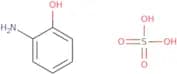
Fórmula:C8H10SPureza:Min. 95 Area-%Cor e Forma:Clear LiquidPeso molecular:138.23 g/molO-Aminophenol sulfate
CAS:O-Aminophenol sulfate is a reagent that is used in research and synthesis of complex compounds. It has a variety of applications, such as use as a building block for speciality chemicals, as a reaction component in reactions, and to prepare fine chemicals. O-Aminophenol sulfate is soluble in water and can be used as an intermediate for other products.Fórmula:C12H16N2O6SPureza:Min. 95 Area-%Cor e Forma:PowderPeso molecular:316.33 g/mol[5-(4-Aminophenyl)-2-furyl]methanol
CAS:Please enquire for more information about [5-(4-Aminophenyl)-2-furyl]methanol including the price, delivery time and more detailed product information at the technical inquiry form on this page
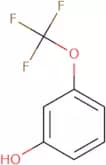
Fórmula:C11H11NO2Pureza:Min. 95%Cor e Forma:Brown PowderPeso molecular:189.21 g/mol3-(Trifluoromethoxy)phenol
CAS:3-(Trifluoromethoxy)phenol is a drug that has been shown to function as an amide and a biomolecular. It has also been used in the development of drugs for depression, but it is not known whether it is effective in humans. 3-(Trifluoromethoxy)phenol binds to the cation channel of the NMDA receptor, which may be related to its antidepressant properties. The compound has been shown to have a radiotracer effect on positron emission tomography (PET). 3-(Trifluoromethoxy)phenol yields positrons when it undergoes deamination. This reaction is catalyzed by enzymes such as acetylcholine esterase, choline oxidase, and monoamine oxidases.
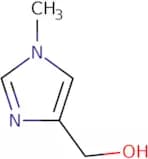
Fórmula:C7H5F3O2Pureza:Min. 95%Cor e Forma:Clear LiquidPeso molecular:178.11 g/mol(1-Methyl-1H-imidazol-4-yl)methanol
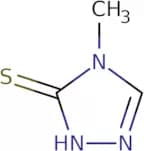
CAS:(1-Methyl-1H-imidazol-4-yl)methanol is a chemical that can be used as a building block for the synthesis of complex compounds. It is an intermediate in organic synthesis, and has been used as a reagent for research and as a speciality chemical. (1-Methyl-1H-imidazol-4-yl)methanol is also a versatile building block for the construction of complex molecules. This compound has been used in the manufacture of pesticides, pharmaceuticals, and dyes. The CAS number for (1-methyl-1H-imidazol-4-yl)methanol is 172892577.Fórmula:C5H8N2OPureza:Min. 95%Cor e Forma:SolidPeso molecular:112.13 g/mol4-Methyl-4H-1,2,4-triazole-3-thiol
CAS:4-Methyl-4H-1,2,4-triazole-3-thiol is a corrosion inhibitor that has been used in the production of polyurethane foam. It is synthesized by the reaction of ethylene diamine with sulfur trioxide and water. This compound has a molecular weight of 184.14 g/mol and an acidic nature due to the presence of four protonated amines on its structure. The compound can be characterized by gravimetric analysis, structural analysis, and FTIR spectroscopy. 4-Methyl-4H-1,2,4-triazole-3-thiol is toxic to rats when administered orally at 2000 mg/kg and also causes irritation to rabbits when applied topically at 200 µg/ear. !--Fórmula:C3H5N3SPureza:Min. 97 Area-%Cor e Forma:White PowderPeso molecular:115.16 g/molPiperonyl alcohol
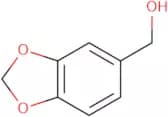
CAS:Produto ControladoPiperonyl alcohol is an enzyme inhibitor that blocks the oxidation of piperonal, a chemical found in many plants and fruits. It has been used as a pharmaceutical preparation to treat skin conditions such as acne and psoriasis. Piperonyl alcohol can be used in food composition as a preservative and antioxidant. This compound is also used in the production of polymers for paints, plastics, and rubber. Piperonyl alcohol inhibits melanogenesis by inhibiting tyrosinase activity and interrupting the synthesis of melanin. The use of this compound to inhibit melanin synthesis has been approved for cosmetic use in Europe. Piperonyl alcohol was first synthesized by Ludwig Knorr in 1885 from piperonal, an aromatic organic compound found in many plants and fruits. The reaction solution obtained from the hydrolysis of piperonyl acetate with hydrochloric acid is reacted with cationic polymerization using sodium carbonate (NaCO) as a catalyst to produceFórmula:C8H8O3Pureza:Min. 95%Cor e Forma:PowderPeso molecular:152.15 g/mol2-Bromo-5-fluorobenzyl alcohol
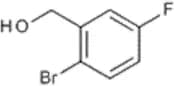
CAS:2-Bromo-5-fluorobenzyl alcohol is a synthetic organoboron compound that can be used in the synthesis of other compounds. It has been shown to have a thermal expansion coefficient of 0.038 x 10^-6 K, which is an intermediate value for organic materials. The two polymorphic forms are monoclinic (space group P2/c) and hexagonal (P63). When 2-bromo-5-fluorobenzyl alcohol is irradiated with microwaves and magnetic fields, it undergoes anisotropic expansion, which suggests that intermolecular interactions are important in this phenomenon. This material has been shown to exhibit antifungal properties.
Fórmula:C7H6BrFOPureza:Min. 95%Cor e Forma:PowderPeso molecular:205.02 g/mol1H,1H,2H,2H-Tridecafluoro-1-n-octanol
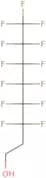
CAS:1H,1H,2H,2H-Tridecafluoro-1-n-octanol is a potent and selective halogenated hydrocarbon. It binds to DNA at the dinucleotide phosphate site, which is an important site for polymerase chain reaction (PCR) activation. 1HFN has been shown to be more effective than other halogenated hydrocarbons in vitro assays on rat liver microsomes. It has been used as an additive in wastewater treatment to remove organic contaminants and metal ions. In vivo studies have been carried out in CD-1 mice to determine the effects of 1HFN on the liver and kidneys; these studies showed no toxicological effects on these organs. 1HFN also has been shown to inhibit enzymes such as cytochrome P450 and monoamine oxidase B that are involved in drug metabolism and may lead to adverse reactions with drugs metabolized by these enzymes.Fórmula:C8H5F13OPureza:Min. 95%Peso molecular:364.1 g/mol1,3-Benzenedimethanol
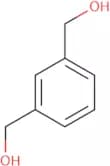
CAS:1,3-Benzenedimethanol is a diphenyl ether with the chemical formula C6H6O. It has been shown to be a good nucleophile and undergoes nucleophilic attack on a variety of substrates. The hydroxyl group in the molecule can be protonated to form the corresponding carboxylic acid or an alcohol. This compound has been shown to react with aluminium, magnesium oxide and trifluoroacetic acid in an acidic environment and undergo carbonyl reduction to form ethyl esters. 1,3-Benzenedimethanol is also soluble in water and can be extracted by gravimetric analysis.Fórmula:C8H10O2Pureza:Min. 95%Cor e Forma:PowderPeso molecular:138.16 g/mol3-Methyl-2-hydroxy-3H-imidazo[4,5-f]quinoline
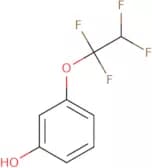
CAS:3-Methyl-2-hydroxy-3H-imidazo[4,5-f]quinoline is a high quality reagent that can be used as an intermediate or building block in the synthesis of other compounds. It is a fine chemical with CAS No. 144486-08-8 and can be used as a speciality chemical in research. This compound has versatile building blocks that are useful in reactions and have been shown to be a reaction component in the synthesis of various compounds.Fórmula:C11H9N3OPureza:Min. 95%Cor e Forma:Yellow PowderPeso molecular:199.21 g/mol3-(1,1,2,2-Tetrafluoroethoxy)phenol
CAS:3-(1,1,2,2-Tetrafluoroethoxy)phenol is a versatile building block that can be used in the synthesis of complex compounds. It is also a reagent and speciality chemical and has CAS No. 53997-99-2. 3-(1,1,2,2-Tetrafluoroethoxy)phenol is a useful building block for organic synthesis and has been used as a reaction component or scaffold.
Fórmula:C8H6F4O2Pureza:Min. 95%Peso molecular:210.13 g/molPhloroglucinol dihydrate
CAS:Phloroglucinol dihydrate is a chemical substance that can be used as a denaturant, conditioner and deodorant. It is soluble in water and has been shown to have enzyme-inhibiting properties. Phloroglucinol dihydrate has been shown to have anti-inflammatory properties by inhibiting the production of prostaglandins. This compound also has optical properties, which are determined by its chromene structure. There is no phase transition temperature for this compound because it does not melt or freeze.
Fórmula:C6H6O3•(H2O)2Pureza:Min. 95%Cor e Forma:PowderPeso molecular:162.14 g/mol


![(1S,2R,3S,5R)-2-((Benzyloxy)methyl)-6-oxabicyclo[3.1.0]hexan-3-ol](/_next/image/?url=https%3A%2Fstatic.cymitquimica.com%2Fproducts%2F3D%2Fthumb-webp%2FFB167338.webp&w=3840&q=75)


![[5-(4-Aminophenyl)-2-furyl]methanol](/_next/image/?url=https%3A%2Fstatic.cymitquimica.com%2Fproducts%2F3D%2Fthumb-webp%2FFA134137.webp&w=3840&q=75)
![3-Methyl-2-hydroxy-3H-imidazo[4,5-f]quinoline](/_next/image/?url=https%3A%2Fstatic.cymitquimica.com%2Fproducts%2F3D%2Fthumb-webp%2FFM25639.webp&w=3840&q=75)