Nucleotídeos
Subcategorias de "Nucleotídeos"
Foram encontrados 2637 produtos de "Nucleotídeos"
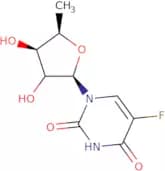
5'-Deoxy-5-fluorouridine
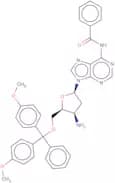
CAS:5'-Deoxy-5-fluorouridine (5FU) is a nucleoside that is used in the treatment of cancer. It is an antimetabolite that inhibits the synthesis of DNA, RNA, and proteins by reversibly inhibiting ribonucleotide reductase. 5FU also inhibits epidermal growth factor receptor (EGFR), which leads to apoptosis in cancerous cells. The concentration–time curve for 5FU has been determined using tissue culture and hl-60 cells as biological samples. This drug has been shown to be effective against metastatic colorectal cancer when administered with other chemotherapeutic drugs.Fórmula:C9H11FN2O5Pureza:Min. 98 Area-%Cor e Forma:White PowderPeso molecular:246.2 g/mol3'-Amino-N6-benzoyl-2',3'-dideoxy-5'-O-DMT-adenosine
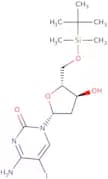
A valuable chemical tool for synthesizing modified oligonucleotides with specific functionalities at the 3' end, primarily used in oligonucleotide synthesis.Fórmula:C38H36N6O5Pureza:Min. 95%Peso molecular:656.73 g/mol5'-O-tert-Butyldimethylsilyl-2'-deoxy-5-iodocytidine
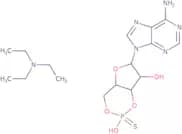
CAS:5'-O-tert-Butyldimethylsilyl-2'-deoxy-5-iodocytidine is a nucleoside that can be used as an activator for ribonucleosides. It has been shown to have anticancer, antiviral and antiviral activities. 5'-O-tert-Butyldimethylsilyl-2'-deoxy-5-iodocytidine is synthesized by the reaction of 2'-deoxycytidine with tertbutyldimethylchlorosilane in the presence of triethylamine. The product may be purified by crystallization or chromatography.Fórmula:C15H26IN3O4SiPureza:Min. 95%Cor e Forma:White Off-White PowderPeso molecular:467.38 g/molAdenosine 3',5'-cyclic monophosphothioate Sp-isomer sodium salt
CAS:Adenosine 3',5'-cyclic monophosphothioate Sp-isomer sodium salt (CMPT) is a neurotrophic factor that belongs to the class of adenosine 3',5'-cyclic monophosphates. It has been shown to induce neuronal differentiation and neurite outgrowth in a model system. CMPT has also been shown to have neuroprotective effects by ameliorating the severity of Parkinson's disease symptoms. This drug has been shown to increase body mass index and IGF-I levels in vivo. CMPT has been demonstrated to inhibit tumor growth through upregulation of the cytosolic Ca2+ level, which leads to apoptosis. CMPT can be used as a pharmacological treatment for Alzheimer's disease, Parkinson's disease, and other neurodegenerative disorders.
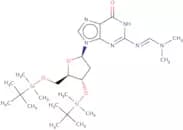
Fórmula:C10H11N5O5PS·NaPureza:Min. 95%Cor e Forma:White PowderPeso molecular:367.25 g/mol3',5'-Di-O-(tert-butyldimethylsilyl)-2'-deoxy-N2-DMF-guanosine
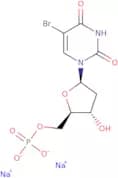
CAS:3',5'-Di-O-(tert-butyldimethylsilyl)-2'-deoxy-N2-DMF-guanosine is a phosphoramidite nucleoside that is synthesized by the reaction of 2'-deoxyguanosine and dimethyldichlorosilane. This product has anticancer activity, as it inhibits DNA synthesis and topoisomerase II activity. It also has antiviral effects, as it inhibits viral RNA synthesis. 3',5'-Di-O-(tert-butyldimethylsilyl)-2'-deoxy-N2-DMF-guanosine has been shown to be more stable than its corresponding 5'-di-O-(tert-butyldimethylsilyl) analogue, with a half life of greater than 10 hours in phosphate buffered saline at 37°C.Fórmula:C25H46N6O4Si2Pureza:Min. 95%Cor e Forma:PowderPeso molecular:550.84 g/mol5-Bromo-2'-deoxyuridine-5'-monophosphate sodium salt
CAS:5-Bromo-2'-deoxyuridine-5'-monophosphate sodium salt (BrdUMP) is an antiviral agent that inhibits the synthesis of DNA. It has shown activity against herpes simplex virus and cytomegalovirus, and has been used in the treatment of Kaposi's sarcoma. BrdUMP is a monophosphate prodrug that is activated by ribonucleoside diphosphates to inhibit the production of viral DNA and RNA. This drug has anticancer properties due to its ability to inhibit cell division. BrdUMP is synthesized from 2'-deoxyuridine-5'-monophosphate, which is obtained from uracil or thymine. The CAS number for this compound is 51432-32-7, and it can be used as a phosphoramidite for the preparation of DNA, RNA, or oligonucleotide analogues.Fórmula:C9H12BrN2O8PNa2Pureza:Min. 97 Area-%Cor e Forma:PowderPeso molecular:433.06 g/molAdenosine 5'-diphosphate magnesium salt
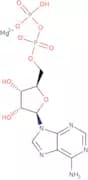
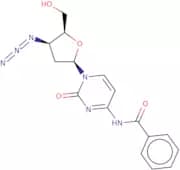
CAS:Adenosine 5'-diphosphate magnesium salt (ADP-Mg) is a pharmacological agent that has inhibitory properties. It is used as a model system to study platelet function and the effect of adenosine on platelet aggregation. ADP-Mg is also used as a reagent in the study of protein synthesis and regulation. This chemical has been shown to potentiate the activity of serotonin receptors, which may contribute to its anti-inflammatory effects. Adenosine 5'-diphosphate magnesium salt also inhibits papillary muscle contractions by inhibiting Ca2+ currents, leading to an improved ejection fraction in patients with congestive heart failure.Fórmula:C10H13N5O10P2·MgPureza:Min. 95%Cor e Forma:PowderPeso molecular:449.49 g/mol3'-Azido-N4-benzoyl-2',3'-dideoxycytidine
CAS:3'-Azido-N4-benzoyl-2',3'-dideoxycytidine is a novel nucleoside analog with antiviral and anticancer activities. It is used for the treatment of HIV, hepatitis B and C, herpes, and influenza. 3'-Azido-N4-benzoyl-2',3'-dideoxycytidine has been shown to inhibit the proliferation of cells in culture and to induce apoptosis in various cancer cell lines.
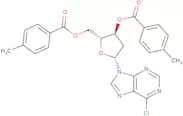
The synthesis of 3'-azido-N4-benzoyl-2',3'-dideoxycytidine starts with the condensation of 4-(hydroxymethyl)phenylacetic acid (1) with 2,6-dichloroisonicotinic acid chloride (2) in the presence of triethylamine to give 4-(hydroxymethyl)phenylacetic acid chloride (3). The N4 benzoylFórmula:C16H16N6O4Pureza:Min. 95%Cor e Forma:Off-White PowderPeso molecular:356.34 g/mol6-Chloro-9-(2'-deoxy-3',5'-di-O-toluoyl-b-ribofuranosyl)purine
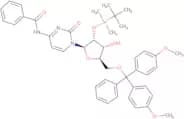
CAS:6-Chloro-9-(2'-deoxy-3',5'-di-O-toluoyl-b-ribofuranosyl)purine is a synthetic nucleoside with antiviral and anticancer activity. It is an activator of the DNA polymerase, which is involved in the synthesis of DNA. The high purity of this product makes it a good choice for use in research or as a starting material for further chemical modification. 6-Chloro-9-(2'-deoxy-3',5'-di-O-toluoyl-b-ribofuranosyl)purine has been shown to inhibit the growth of cancer cells, including breast, lung and colon carcinoma cells.Fórmula:C26H23ClN4O5Pureza:Min. 95%Cor e Forma:White Off-White PowderPeso molecular:506.95 g/molN4-Benzoyl-2'-O-tert-butyldimethylsilyl-5'-O-DMT-cytidine
CAS:N4-Benzoyl-2'-O-tert-butyldimethylsilyl-5'-O-DMT-cytidine is a modified nucleoside with anticancer and antiviral properties. It is used in the synthesis of oligonucleotides as an activator, DNA or RNA. This product is also used as a phosphoramidite for the preparation of oligonucleotides. N4-Benzoyl-2'-O-tert-butyldimethylsilyl-5'-O-DMT cytidine has a CAS Number of 8125687.
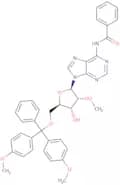
Fórmula:C43H49N3O8SiPureza:Min. 95 Area-%Cor e Forma:White PowderPeso molecular:763.95 g/molN6-Benzoyl-5'-O-DMT-2'-O-methyladenosine
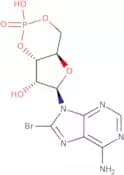
CAS:N6-Benzoyl-5'-O-DMT-2'-O-methyladenosine is a novel nucleoside that is structurally related to adenosine. It is synthesized through the reaction of N6-benzoyladenine with 2'-O-methyladenosine. This nucleoside has been shown to be an effective antiviral and anticancer agent.Fórmula:C39H37N5O7Pureza:Min. 95%Cor e Forma:White PowderPeso molecular:687.76 g/mol8-Bromoadenosine 3',5'-cyclic monophosphate
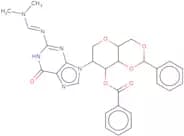
CAS:8-Bromoadenosine 3',5'-cyclic monophosphate (8-Br-cAMP) is a cyclic nucleotide that is involved in the regulation of energy metabolism. It is a pharmacological agent that regulates the intracellular levels of cAMP and plays an important role in regulating cell proliferation, differentiation, and survival. 8-Br-cAMP binds to specific protein kinases and alters their activity. It also inhibits the enzymatic activity of DNA polymerase II. 8-Br-cAMP has been shown to inhibit tumor growth in mice with bone cancer. The mechanism by which this drug exerts its antitumor effect appears to be related to increased expression of basic proteins and decreased expression of phosphatase 2A, leading to increased activation of protein kinase A. 8-Br-cAMP also causes cellular accumulation of Ca2+ ions by stimulating an increase in the activity of phospholipase C, which hydrolyzes phosphatFórmula:C10H11BrN5O6PPureza:Min. 98 Area-%Cor e Forma:Beige PowderPeso molecular:408.11 g/mol1,5-Anhydro-3-O-benzoyl-4,6-O-benzylidene-2-deoxy-2-(N8-(dimethylamino)methyleneguanidin-1-yl)-D-altro-hexitol
CAS:1,5-Anhydro-3-O-benzoyl-4,6-O-benzylidene-2-deoxy-2-(N8-(dimethylamino)methyleneguanidin-1-yl)-D-altro-hexitol is a synthetic, protected nucleoside analog built on a D-altro-hexitol backbone — which is a six-carbon sugar alcohol structure — and it includes a highly modified guanidine-like base at the 2-position. It has possible applications in synthetic nucleic acid chemistryFórmula:C28H28N6O6Pureza:Min. 95%Cor e Forma:White To Off-White SolidPeso molecular:544.57 g/molP1-(5'-Adenosyl) P3-(5'-adenosyl) triphosphate sodium salt
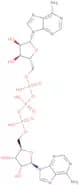
CAS:P1-(5'-Adenosyl) P3-(5'-adenosyl) triphosphate sodium salt is an intermediate in the biosynthesis of ATP. It is also a cofactor for adenylate kinase and pyruvate kinase. The synthesis of this compound takes place in human serum and requires the enzyme synthetase as well as sephadex g-100. Synthetase catalyzes the condensation of ATP with 5-AMP to yield P1-(5'-adenosyl) P3-(5'-adenosyl) triphosphate sodium salt. This reaction is reversible, and can be catalyzed by phosphohydrolases that hydrolyze ATP to AMP and inorganic phosphate. The physiological function of this compound is not yet clear, but it has been shown to increase intracellular Ca2+ levels in cardiac cells, leading to congestive heart failure. This compound has low potency, so it does not have anyFórmula:C20H27N10O16P3•(Na)xPureza:Min. 95 Area-%Cor e Forma:PowderPeso molecular:756.41 g/mol3',5'-Di-O-acetyl-2'-deoxy-2'-fluorouridine
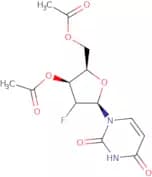
CAS:3',5'-Di-O-acetyl-2'-deoxy-2'-fluorouridine is a nucleoside monophosphate with antiviral activity. It is a synthetic nucleoside that has been modified to be resistant to degradation by ribonucleases. 3',5'-Di-O-acetyl-2'-deoxy-2'-fluorouridine inhibits the synthesis of DNA, RNA and protein and is used for treatment of cancer. This drug is not active against other types of viruses such as herpes simplex virus or cytomegalovirus.
Fórmula:C13H15FN2O7Pureza:Min. 95%Cor e Forma:White PowderPeso molecular:330.27 g/mol5'-Amino-5'-deoxyadenosine hydrochloride
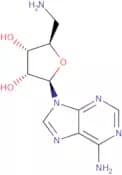
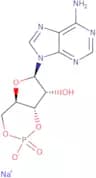
CAS:5'-Amino-5'-deoxyadenosine hydrochloride (5'-ADeA) is a nucleotide that is synthesized from ribose 5-phosphate and adenosine monophosphate. It has been shown to have potential as a biomarker for skin cancer. The synthesis of 5'-ADeA is catalyzed by the enzyme caffeic acid 4-monooxygenase, which converts caffeic acid into 5'-ADeA. This reaction requires molecular oxygen, NADPH, and iron ions. The activity of this enzyme can be inhibited by sodium carbonate or basic fibroblast growth factor (bFGF). This drug has been shown to have anti-inflammatory effects in vivo.Fórmula:C10H14N6O3Pureza:Min. 95 Area-%Cor e Forma:PowderPeso molecular:266.26 g/molAdenosine 3',5'-cyclic monophosphate sodium salt
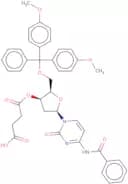
CAS:Second messenger in intracellular signal transductionFórmula:C10H11N5NaO6PPureza:Min. 97 Area-%Cor e Forma:White PowderPeso molecular:351.19 g/molN4-Benzoyl-2'-deoxy-5'-O-DMT-cytidine 3'-O-succinate triethylamine salt
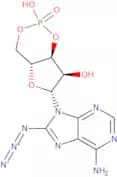
CAS:N4-Benzoyl-2'-deoxy-5'-O-DMT-cytidine 3'-O-succinate triethylamine salt is a synthetic antiviral agent that can be used in the treatment of HIV. This drug inhibits the viral DNA polymerase and prevents virus replication. N4-Benzoyl-2'-deoxy-5'-O-DMT cytidine 3'-O succinate triethylamine salt is a novel nucleoside analogue with a monophosphate group at the 5' position and an N4 benzoyl group at the 2' position. It is an activator of DNA synthesis, which can be used for cancer chemotherapy. The chemical name for this drug is CAS No. 74405-44-0 (free base).Fórmula:C41H39N3O10·C6H15NPureza:Min. 95%Cor e Forma:White Off-White PowderPeso molecular:834.95 g/mol8-Azidoadenosine 3',5'-cyclic monophosphosphate free acid
CAS:8-Azidoadenosine 3',5'-cyclic monophosphosphate is used for nucleotide labelling via a click reaction involving the azide moiety and a terminal alkyne conjugated to a label. The reaction generates a stable nucleotide labelled adduct containing a triazole link.Fórmula:C10H11N8O6PPureza:Min. 95%Cor e Forma:White to pale yellow solid.Peso molecular:370.22 g/molXanthosine
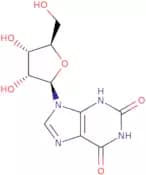
CAS:Produto ControladoXanthosine is a purine nucleoside that is formed from the metabolism of adenosine. Xanthosine can be phosphorylated to form xanthosine 5'-monophosphate (XMP), which has been shown to have biochemical properties and metabolic responses in vitro. The p-hydroxybenzoic acid moiety of xanthosine has been shown to have therapeutic potential for the treatment of inflammatory diseases, such as rheumatoid arthritis. It also has a role in the regulation of disease activity, as it is found at high concentrations in human serum, and regulates the proliferation of cells through its binding to nuclear proteins. Xanthosine is an important component of dinucleotide phosphate (NDP) pools that are essential for cell nuclei function. NDPs are also important for DNA synthesis and repair, as well as protein synthesis. Xanthosine 5'-monophosphate can act as a metal chelate and is used in
Fórmula:C10H12N4O6Pureza:Min. 98 Area-%Cor e Forma:White Off-White PowderPeso molecular:284.23 g/mol