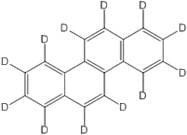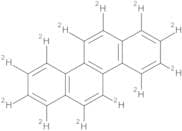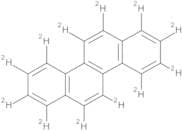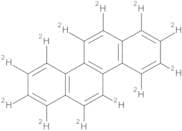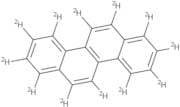
CAS 1719-03-5
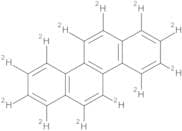
:Chrysene-d12
Reagecon Polycyclic Aromatic Hydrocarbon (PAH) Standard (5 Compound Mix) in Hexane: Acetone
CAS:This Reagecon Polycyclic Aromatic Hydrocarbon (PAH) Standard 5 Compound Mix is a ready to use product that is used either as a calibrant or analytical control solution for a variety of gas and liquid chromatography methods that include GC, GC-MS, HPLC and LC-MS. This product can also be used to validate appropriate test methods or qualify an instrument in a regulated industry. - The identity of each standard is verified using a high performance calibrated Gas Chromatograph Mass Spectrometer (GC-MS Instrument). The mass spectrum of each of the analytes is confirmed by comparison with the National Institute of Standards and Technology (NIST) mass spectral library. - Ready to use (dilute for use as calibration and/or quality control standards). - Can be used with a variety of instruments including GC; GC-MS; HPLC and LC-MS. - Produced in accordance with EPA methods. - Designed for use in EPA or EU analytical methods. - Ideal for use in EPA 500; 600 and 8000 series methods. - Consistency of product - Independent; Traceable; Tested. Description | Concentration: - acenaphthene-d10: 1000 µg/mL. - phenanthrene-d10: 1000 µg/mL. - chrysene-d12: 1000 µg/mL. - perylene-d12: 1000 µg/mL. - naphthalene-d8: 1000 µg/mL.Color and Shape:LiquidHJ 834-2017, HJ 951-2018 VOC & SVOCs Internal Standards Mixture 174 1000 µg/mL in Acetone/Dichloromethane
CAS:Controlled ProductColor and Shape:MixtureChrysene D12 1000 µg/mL in Dichloromethane
CAS:Controlled ProductFormula:C18H12Color and Shape:ColourlessMolecular weight:240.36Chrysene D12 10 µg/mL in Acetonitrile
CAS:Controlled ProductFormula:C18H12Color and Shape:Single SolutionMolecular weight:240.36PAH-Mix 9 deuterated 100 µg/mL in Cyclohexane
CAS:Controlled Product- 1146-65-2
- 13250-98-1
- 15067-26-2
- 1517-22-2
- 1718-52-1
- 1718-53-2
- 1719-03-5
- 1719-06-8
- 203578-33-0
- 63466-71-7
- 81103-79-9
- 93951-66-7
- 93951-69-0
- 93951-97-4
- 93951-98-5
- 93952-01-3
Formula:C12H10Color and Shape:MixtureMolecular weight:164.27Chrysene D12 10 µg/mL in Cyclohexane
CAS:Controlled ProductFormula:C18H12Color and Shape:Single SolutionMolecular weight:240.36EPA Method 8270 Internal Standard Mixture 4000 µg/mL in Dichloromethane
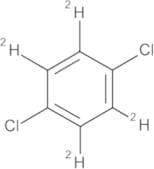
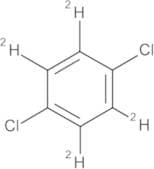
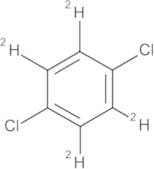
CAS:Controlled ProductFormula:C6D4Cl2Color and Shape:MixtureMolecular weight:151.027EPA Method 8270 Internal Standard Mixture 2000 µg/mL in Dichloromethane
CAS:Controlled ProductFormula:C6D4Cl2Color and Shape:MixtureMolecular weight:151.027HJ 646-2013,HJ 805-2016,HJ 950-2018 Internal Standards Mixture 515 2000 µg/mL in Dichloromethane
CAS:Controlled ProductColor and Shape:MixturePAH-Mix 31 deuterated 1000 µg/mL in Toluene
CAS:Controlled ProductFormula:C12H10Color and Shape:MixtureMolecular weight:164.27EPA Method 8270 Internal Standard Mixture 4000 µg/mL in Dichloromethane
CAS:Controlled ProductFormula:C6D4Cl2Color and Shape:MixtureMolecular weight:151.027Internal Standards Mix 33 2000 µg/mL in Toluene
CAS:Controlled ProductFormula:C6D4Cl2Color and Shape:ColourlessMolecular weight:151.027Internal Standards Mix 25 500 µg/mL in Acetone
CAS:Controlled ProductFormula:C12H10Color and Shape:MixtureMolecular weight:164.27EPA Method 8270 Internal Standard Mixture 4000 µg/mL in Dichloromethane
CAS:Controlled ProductFormula:C6D4Cl2Color and Shape:MixtureMolecular weight:151.027EPA Method 8270 Internal Standard Mixture 2000 µg/mL in Dichloromethane
CAS:Controlled ProductFormula:C6D4Cl2Color and Shape:MixtureMolecular weight:151.027PAH-Mix 24 deuterated 10 µg/mL in Hexane
CAS:Controlled ProductFormula:C12H10Color and Shape:MixtureMolecular weight:164.27EPA Method 525.3 Internal Standard Mixture 500 µg/mL in Acetone
CAS:Controlled ProductFormula:C12H10Color and Shape:MixtureMolecular weight:164.27HJ 1189-2021 Labelled PAH Mixture 691 2000 µg/mL in Acetone
CAS:Controlled ProductColor and Shape:MixtureInternal Standards Mix 37 15 µg/mL in Isooctane
CAS:Controlled ProductFormula:C12H10Color and Shape:MixtureMolecular weight:164.27EPA 525.2, HJ 867-2017 Labelled PAH Mixture 158 2000 µg/mL in Dichloromethane
CAS:Controlled ProductColor and Shape:MixtureSVOC Internal Standard Mixture 917 2000 µg/mL in Dichloromethane
CAS:Controlled ProductFormula:C6D4Cl2Color and Shape:MixtureMolecular weight:151.027EPA Method 8270 Internal Standard Mixture 2000 µg/mL in Dichloromethane
CAS:Controlled ProductFormula:C6D4Cl2Color and Shape:MixtureMolecular weight:151.027EPA Method 8270 Internal Standard Mixture 4000 µg/mL in Dichloromethane
CAS:Controlled ProductFormula:C6D4Cl2Color and Shape:MixtureMolecular weight:151.027EPA Method 525.2 Internal Standard Mixture 1000 µg/mL in Acetone
CAS:Controlled ProductFormula:C12H10Color and Shape:MixtureMolecular weight:164.27PAH-Mix 9 deuterated 10 µg/mL in Cyclohexane
CAS:Controlled Product- 1146-65-2
- 13250-98-1
- 15067-26-2
- 1517-22-2
- 1718-52-1
- 1718-53-2
- 1719-03-5
- 1719-06-8
- 203578-33-0
- 63466-71-7
- 81103-79-9
- 93951-66-7
- 93951-69-0
- 93951-97-4
- 93951-98-5
- 93952-01-3
Formula:C12H10Color and Shape:MixtureMolecular weight:164.27Deuterated PAH Mixture 566 1000 µg/mL in Dichloromethane
CAS:Controlled ProductColor and Shape:MixtureInternal Standards Mix 33 2000 µg/mL in Toluene
CAS:Controlled ProductFormula:C6D4Cl2Color and Shape:MixtureMolecular weight:151.027Deuterated PAH Mixture 189 10 μg/mL in Toluene
CAS:Controlled ProductFormula:C20H12Color and Shape:MixtureMolecular weight:264.38HJ 805-2016 SVOC Internal Standard Mixture w/o 1,4-dichlorobenzene D4 4000 µg/mL in Dichloromethane
CAS:Controlled ProductColor and Shape:MixtureChrysene-d12
CAS:Controlled ProductApplications Labelled Chrysene (C428000). Chrysene occurs in coal tar. Is formed during distillation of coal, in very small amount during distillation or pyrolysis of many fats and oils. Chrysene is one of the basic polycyclic aromatic hydrocarbon (PAH) which is toxic environmental pollutant and consistently exposed to sunlight. However, little information is available on its photogenotoxicity. The objective of the present study was to analyze the effects of Chrysene, under environmental intensity of UVB (0.6 mW/cm2) in human skin epidermal cell line (HaCaT).
Not a dangerous good if item is equal to or less than 1g/ml and there is less than 100g/ml in the package
References Anderson, D., et al.: Mutat. Res., 307, 261 (1994), Diamond, S., et al.: Environ. Toxicol. Chem., 25, 3015 (2006), Fotakis, G., et al.: Toxicol. Lett., 160, 171 (2006),Formula:C182H12Color and Shape:White To Off-WhiteMolecular weight:240.36Chrysene-d12
CAS:Controlled ProductChrysene-d12 is a naturally occurring polycyclic aromatic hydrocarbon. It is used as a high-resolution analytical standard for the quantification of chrysene in environmental samples. Chrysene-d12 is prepared by reacting hexane with benzene to produce dihydrodibenzopyran and then reacting it with aqueous sodium nitrite, which produces the desired product as a yellow solid. The sample preparation step involves dissolution of the sample in acetone, followed by centrifugation to remove insoluble material. The matrix effect can be minimized by using an analytical method that does not require derivatization, such as laser ablation or GC/MS.
Formula:C18D12Purity:Min. 95%Molecular weight:240.36 g/molRef: IN-DA00AP02
Discontinued product