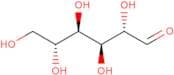
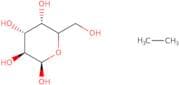
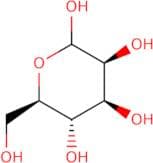
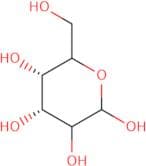
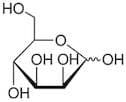
CAS 3458-28-4
:Mannose
- (+)-Mannose
- <span class="text-smallcaps">D</span>(+)-Mannose
- Anhydro-mannose
- Carubinose
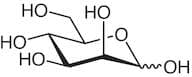
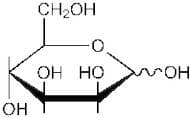
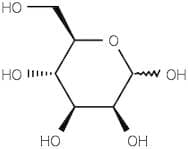
- D-mannopyranose
- D-mannose, mixture of anomers
- D-manosa
- L-glucopyranose
- Mannose, <span class="text-smallcaps">D</span>-
- Mannose, D-
- Mannose, Pure
- Nsc 26247
- Seminose
- alpha-D-mannopyranose
- beta-D-mannopyranose
- D-(+)-Mannose
- D-Mannose
- D-(+)Mannose
- D-Mannose
- D-MAN
- D(+)-MANNOSE SIGMAULTRA
- D-(+)-MANNOSE 99.5+% ULTRA PURE
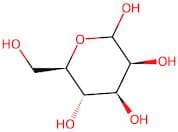
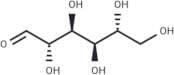
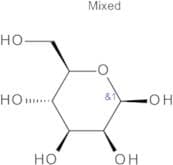
- (3S,4S,5R,6R)-6-(hydroxymethyl)oxane-2,3,4,5-tetrol
- D-MannoseForBiochemistry99%
- D-(+)-MANNOSE 99% CELL CUTLURE REAGENT
- D-MANNOSE,REAGENT
- D-(+)-Mannose,99%
- d-mannos
- D-MANNOSE, 99%, MIXTURE OF ANOMERS
- D-MANOSE
- D-MANNOSE FOR BIOCHEMISTRY 99%
- D(+)-MANNOSE MIXED ANOMERS*CELL CULTURE TESTED
- See more synonyms
D-(+)-Mannose
CAS:Formula:C6H12O6Purity:>98.0%(HPLC)Color and Shape:White to Almost white powder to crystalMolecular weight:180.16D-(+)-Mannose, 99%
CAS:D-mannose acts as an alternative energy source utilized by brain. It is used in the study of assessing the synthesis of amphiphilic glycopolymers and investigating early detection of bronchiolitis obliterans.It may be useful in the treatment of urinary tract infections (UTIs) and carbohydrate-defici
Formula:C6H12O6Purity:99%Color and Shape:White, PowderMolecular weight:180.16D-(+)-Mannose
CAS:D-(+)-Mannose analytical standardFormula:C6H12O6Purity:(HPLC) ≥95%Color and Shape:PowderMolecular weight:180.17Mannose
CAS:Sugars, chemically pure, other than sucrose, lactose, maltose, glucose and fructose; sugar ethers and sugar esters, and their salts, nesoiFormula:C6H12O6Color and Shape:White PowderMolecular weight:180.06339Ref: IN-DA0034OI
5g22.00€10g20.00€25g20.00€50g28.00€5kg357.00€100g28.00€250g57.00€25kgTo inquire500g67.00€D-(+)-Mannose
CAS:Formula:C6H12O6Purity:≥ 99.0% (dried basis)Color and Shape:White crystalline powderMolecular weight:180.16D-(+)-Mannose
CAS:D-(+)-MannoseFormula:C6H12O6Purity:99.5%Color and Shape: white solidMolecular weight:180.16g/molD-(+)-Mannose, 99%, from wood
CAS:Formula:C6H12O6Purity:≥ 99.0%Color and Shape:White or almost white crystalline powderMolecular weight:180.16D-Mannose
CAS:D-Mannose (D-(+)-Mannose) is a carbohydrate. D-Mannose plays an important role in human metabolism, especially in the glycosylation of specific proteins.Formula:C6H12O6Purity:99.21% - 99.68%Color and Shape:Colorless Crystals Or White Granular Powder With Water (Uscg 1999)Molecular weight:180.16D-Mannose
CAS:Controlled ProductApplications D-Mannose is a carbohydrate that is important in the glycosylation of molecules in a variety of cellular processes. It is involved in N and O glycosylation of bovine why protein products, used in infant formulas. It is also responsible for the O-glycosylation of the T helper cell-derived cytokine interlukin-17A, an important cell-signaling molecule.
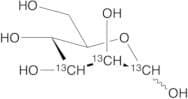
References van Leeuwen, S. et al.: J. Agri. Food Chem., 60, 12553 (2012); Geoghegan, K. et al.: Prot. Express. Purif., 87, 27 (2013);Formula:C6H12O6Color and Shape:NeatMolecular weight:180.16D-Mannose-1,2,3-13C3
CAS:Controlled ProductApplications D-Mannose is a carbohydrate that is important in the glycosylation of molecules in a variety of cellular processes. It is involved in N and O glycosylation of bovine why protein products, used in infant formulas. It is also responsible for the O-glycosylation of the T helper cell-derived cytokine interlukin-17A, an important cell-signaling molecule. This is the labeled analog.
References Van Leeuwen, S. et al.: J. Agri. Food Chem., 60, 12553 (2012); Geoghegan, K. et al.: Prot. Express. Purif., 87, 27 (2013);Formula:C3C3H12O6Color and Shape:NeatMolecular weight:183.13D-Mannose - F (from birch)
CAS:Abundant and critical component of natural glycans and glycoproteinsFormula:C6H12O6Purity:Min. 98 Area-%Color and Shape:White PowderMolecular weight:180.16 g/molD-Mannose - F
CAS:Abundant and critical component of natural glycans and glycoproteinsFormula:C6H12O6Purity:Min. 98 Area-%Color and Shape:PowderMolecular weight:180.16 g/molD-Mannose
CAS:D-mannose is an organic compound and a naturally occurring sugar that is found in many plants. It has been shown to inhibit the growth of bacteria such as Escherichia coli, Staphylococcus aureus, and Klebsiella pneumoniae by binding to bacterial cells. D-mannose inhibits bacterial cell wall synthesis by acting as an alternative substrate for glycolysis, which leads to inhibition of protein synthesis. D-mannose may also act as a competitive inhibitor of certain enzymes such as proteases. This product has been shown to be effective against drug-resistant strains of bacteria by inhibiting the production of fatty acid synthase and other proteins involved in the synthesis of antimicrobial resistance.Formula:C6H12O6Purity:Min. 99 Area-%Molecular weight:180.16 g/molRef: 3D-M-1001
1kgTo inquire5kgTo inquire250gTo inquire500gTo inquire2500gTo inquire-Unit-kgkgTo inquireD-Mannose
CAS:Used to differentiate microorganisms based on their metabolic properties.Formula:C6H12O6Purity:Min. 99.5 Area-%Molecular weight:180.16 g/molRef: 3D-M-1000
1kgTo inquire50gTo inquire5kgTo inquire500gTo inquire2500gTo inquire-Unit-kgkgTo inquireD-Mannose
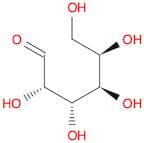
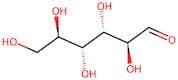
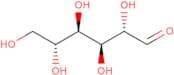
CAS:Mannose (Man) is the C2 epimer of glucose with one hydroxyl group axial which by Hudsons rules makes it slightly less stable than glucose (Hudson, 1948). However, mannose is very common in plants and animals, and occurs in many polysaccharides, such as, galactomannans (e.g. Guar, Locust Bean Gum), mananns (e.g. Ivory Nut Mannan), Spruce Galactoglucomannan, Gum Ghatti (Whistler, 1993) and bakerâs yeast (Saccharomyces cerevisiae) (Manners, 1973). Mannose is one of the key mammalian monosaccharides (Glucose, Galactose, Mannose, Fucose, N-Acetyl Glucosamine, N-Acetyl galactosamine and Sialic acid) and occurs in N-linked glycans where it is a core oligosaccharide (Gabius, 2009).Formula:C6H12O6Purity:Min. 98 Area-%Color and Shape:White PowderMolecular weight:180.16 g/mol(2S,3S,4R,5R)-2,3,4,5,6-Pentahydroxyhexanal
CAS:Formula:C6H12O6Purity:97%Color and Shape:Solid, Crystalline PowderMolecular weight:180.156D-Mannose extrapure AR, ExiPlus, Multi-Compendial, 99%
CAS:Formula:C6H12O6Purity:min. 99%Color and Shape:White, Hygroscopic crystalline powder, Clear, ColourlessMolecular weight:180.16