Angiogenesis
Angiogenesis inhibitors are compounds that interfere with the formation of new blood vessels, a process critical in cancer growth and metastasis. By inhibiting angiogenesis, these compounds can restrict the blood supply to tumors, slowing or halting their growth. Angiogenesis inhibitors are essential in cancer research and therapeutic development, providing insights into the mechanisms of tumor progression and offering potential treatments for cancer and other angiogenesis-related diseases. At CymitQuimica, we offer a wide range of high-quality angiogenesis inhibitors to support your research in oncology and vascular biology.
Subcategories of "Angiogenesis"
- BTK(166 products)
- Bcr-Abl(118 products)
- EGFR(582 products)
- FAK(72 products)
- FLT(86 products)
- Fibroblast Growth Factor Receptor (FGFR)(180 products)
- JAK(243 products)
- PDGFR(129 products)
- RAAS(89 products)
- Src(82 products)
- Syk(37 products)
- Thrombin(57 products)
- VDA(2 products)
- VEGFR(242 products)
Show 6 more subcategories
Found 2382 products of "Angiogenesis"
Sort by
Purity (%)
0
100
|
0
|
50
|
90
|
95
|
100
DD0-2363
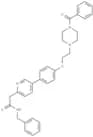
DD0-2363 (Compound 32d) is a dual-target inhibitor of WDR5-MLL1/HDAC. It can suppress the proliferation of acute myeloid leukemia cells and induce apoptosis. With its antitumor properties, DD0-2363 is applicable for research on acute myeloid leukemia.Formula:C36H36ClFN6O4Color and Shape:SolidMolecular weight:671.16Src Inhibitor 4
Src Inhibitor4 (Compound 18) is a derivative of KX-01 and functions as a Src inhibitor. It effectively disrupts tumor cells, damages microtubules, and induces cell cycle arrest, apoptosis, and immunogenic cell death. After introducing phenol or aniline functional groups, Src Inhibitor4 serves as a payload conjugation site for antibody-drug conjugates, showcasing antitumor activity.Formula:C33H34N4O3Color and Shape:SolidMolecular weight:534.648EGFR-IN-78
EGFR-IN-78 (compound A5), a 2-aminopyrimidine derivative, serves as a reversible EGFR C797S-TK inhibitor and an apoptosis inducer.Formula:C23H32BrN7O2SPurity:98%Color and Shape:SolidMolecular weight:550.51MTX-241F
MTX-241F, a selective small molecule inhibitor, targets members of the EGFR and PI3 kinase families.Formula:C20H14ClFN6Purity:98%Color and Shape:SolidMolecular weight:392.82EGFR/COX-2-IN-1
EGFR/COX-2-IN-1 is an EGFR/COX-2 inhibitor that effectively targets EGFRWT, EGFRT790M, COX-1, and COX-2 with IC50 values of 0.12, 0.076, 20.1, and 1.52 μM, respectively. It inhibits MCF-7, HT-29, and A-549 cells with IC50 values of 1.20, 5.14, and 14.81 μM, respectively. The compound induces apoptosis by upregulating Bax protein and downregulating Bcl-2 protein levels. Additionally, EGFR/COX-2-IN-1 significantly increases the proportion of cells in the G2/M phase in MCF-7 cells, demonstrating a broad-spectrum antitumor effect.Formula:C20H17FN6O2S2Color and Shape:SolidMolecular weight:456.52JAK1/STAT3-IN-1
JAK1/STAT3-IN-1 (compound 4f) functions as an anti-atopic dermatitis (AD) agent by inhibiting the JAK1/STAT3 signaling pathway. It has an IC50 value of 2.17 μM for inhibiting NO production. Additionally, JAK1/STAT3-IN-1 improves skin conditions in AD-like mice by reducing inflammatory infiltration, suppressing the expression of p-JAK1/JAK1 and p-STAT3/STAT3, and alleviating the hyperimmune response induced by MC903 (Calcipotriol).Formula:C30H33FN4O3SColor and Shape:SolidMolecular weight:548.67MS9427
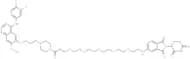
CAS:MS9427: PROTAC EGFR degrader, 7.1 nM (WT), 4.3 nM (L858R); targets mutant via UPS and autophagy; inhibits NSCLC cell growth; anticancer research.Formula:C48H58ClFN8O12Color and Shape:SolidMolecular weight:993.47Wu-5
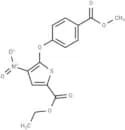
CAS:Wu-5 is a potent USP10 inhibitor that inhibits FLT3 and AMPK pathways, promoting the breakdown of FLT3-ITD and inducing apoptosis.Formula:C15H13NO7SPurity:99.65%Color and Shape:SoildMolecular weight:351.33Varlitinib
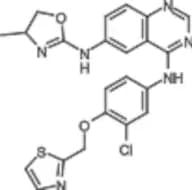
CAS:Varlitinib (ASLAN001) is a potent, reversible, small molecule pan-EGFR inhibitor with IC50s of 7, 2, 4 nM for HER1, HER2 and HER4, respectively.Formula:C22H19ClN6O2SPurity:99.7%Color and Shape:SolidMolecular weight:466.94EGFR/VEGFR2-IN-5
EGFR/VEGFR2-IN-5 (Compound 14) is an orally active dual inhibitor of EGFR and VEGFR2, exhibiting an IC50 value of 1.15 µM for VEGFR2 and 0.28 µM for EGFRT790M. This compound demonstrates significant anticancer activity.Formula:C17H15N7O5SColor and Shape:SolidMolecular weight:429.41EGFR/BRAFV600E-IN-4
EGFR/BRAFV600E-IN-4 (Compound 10f) is a dual inhibitor of EGFR and BRAFV600E, with IC50 values of 61 nM and 43 nM, respectively. It halts the cell cycle, induces apoptosis in both early and late stages, and inhibits cancer cell growth in vitro, showing broad-spectrum anticancer activity.Formula:C22H16N4OSColor and Shape:SolidMolecular weight:384.45FGFRs-IN-1
FGFRs-IN-1 (Compound A16) is an orally active inhibitor targeting FGFR1/2/3/4, with IC50 values of 2.3, 7, 11, and 163 nM respectively. It also inhibits VEGFR1/2/3, Abl, and Flt3, with IC50 values of 61, 176, 112, 26, and 353 nM. The compound shows weak inhibition of CYP enzymes. FGFRs-IN-1 reduces the expression of α-SMA and collagen I, and it inhibits epithelial-mesenchymal transition (EMT) in A549 cells stimulated by TGF-β1. Additionally, FGFRs-IN-1 demonstrates anti-inflammatory activity in mouse models of lung fibrosis induced by Bleomycin and liver fibrosis induced by CCl4.Formula:C28H26Cl2N4O3Color and Shape:SolidMolecular weight:537.44MY-1576
MY-1576 is a FAK inhibitor with an IC50 of 8 nM. It activates the Hippo pathway, thereby inhibiting YAP/TAZ regulation. Additionally, MY-1576 effectively suppresses tumor growth in the KYSE30 xenograft mouse model, demonstrates good safety, and efficiently downregulates FAK autophosphorylation and YAP/TAZ levels in vivo.Formula:C25H29ClN8O2Color and Shape:SolidMolecular weight:509Multi-kinase-IN-6
Multi-kinase-IN-6 (compound 10e) is a multikinase inhibitor that effectively impedes the activity of TrkA, ALK2, c-KIT, EGFR, PIM1, CK2α, CHK1, and CDK2.Purity:98%Color and Shape:Odour SolidAntifibrotic agent 1
Antifibrotic agent 1 is an orally active medication designed to treat idiopathic pulmonary fibrosis (IPF). It effectively mitigates IPF-related processes, including TGF-β-induced epithelial-mesenchymal transition (EMT) and fibroblast-to-myofibroblast transition (FMT), as well as profibrotic M2 polarization. Antifibrotic agent 1 selectively inhibits CSF-1R, PDGFR-α, and Src family kinases (SFKs), while sparing VEGFR, FGFR, and Abl to minimize off-target toxicity. In a bleomycin (BLM)-induced pulmonary fibrosis mouse model, it demonstrates strong antifibrotic activity.Formula:C27H23ClN6O2Color and Shape:SolidMolecular weight:498.1571Scr-IN-1
Scr-IN-1 (Compound 4e) is a tyrosine kinase inhibitor demonstrating inhibitory activity against HCT-116 and MIA-PaCa-2 cells, with IC50 values of 0.16 μM and 1.16 μM, respectively. It shows selectivity towards HCT-116 cells and MIA-PaCa-2 cells, with a selectivity index (SI) greater than 625 and 86. Scr-IN-1 induces apoptosis in HCT-116 colon cancer cells without altering the proportion of necrotic cells and is a potential novel SRC kinase inhibitor for HCT-116 cells. This compound is suitable for cancer research.Formula:C26H16ClF3N2O3Color and Shape:SolidMolecular weight:496.87Amuvatinib hydrochloride
CAS:Amuvatinib HCl (MP470 HCl) is a multi-targeted oral tyrosine kinase inhibitor and hinders RAD51-mediated DNA repair, exhibiting anticancer properties.Formula:C23H22ClN5O3SPurity:98%Color and Shape:SolidMolecular weight:483.97hCA/VEGFR-2-IN-2
Compound 8g (hCA/VEGFR-2-IN-2) is an indolinonylbenzenesulfonamide identified as a potential dual inhibitor targeting cancer-associated isozymes hCA IX/XII andFormula:C23H26N6O5SPurity:98%Color and Shape:SolidMolecular weight:498.55SIAIS178
CAS:SIAIS178 is a potent and selective degrader of BCR-ABL based on PROTAC technology (IC50 of 24 nM).Formula:C50H62ClN11O6S2Purity:98.07%Color and Shape:SolidMolecular weight:1012.68Ref: TM-T12907
1mg152.00€5mg356.00€10mg485.00€25mg888.00€50mg1,431.00€100mg2,052.00€200mg2,673.00€1mL*10mM (DMSO)393.00€PROTAC EGFR degrader 5
CAS:PROTAC EGFR degrader 5 effectively breaks down EGFR Del19 in HCC827 cells at 34.8 nM, inducing apoptosis and G1 arrest.Formula:C57H72FN13O5SColor and Shape:SolidMolecular weight:1070.33