ROCK
ROCK (Rho-associated protein kinase) inhibitors target ROCK kinases, which are involved in the regulation of the cytoskeleton, cell shape, and motility. ROCK plays a significant role in the control of cell division, particularly in processes such as cytokinesis. Inhibiting ROCK can lead to changes in cell cycle dynamics, cell motility, and apoptosis, making these inhibitors valuable in cancer research, neurobiology, and cardiovascular studies. At CymitQuimica, we provide a selection of high-quality ROCK inhibitors to support your research in cell biology, cytoskeletal dynamics, and disease mechanisms.
Found 66 products for "ROCK".
Filter by
Purity percentage
0
100
|
0
|
50
|
90
|
95
|
100
- Lower prices
- Higher prices
- Lower purities
- Higher purities
- Faster estimated delivery
ROCK2-IN-14
CAS:ROCK2-IN-14 is an orally bioavailable and selective ROCK2 inhibitor with an IC50 of 4.8 nM, and it is 212 times more selective for ROCK2 over ROCK1 (IC50=1.01 μM). By inhibiting the ROCK2/S100A9 signaling pathway, ROCK2-IN-14 reduces S100A9 expression, inhibits NM2 phosphorylation, and corrects cytoskeletal abnormalities. Consequently, it lowers levels of inflammatory cytokines, alleviates skin inflammation, and exhibits anti-inflammatory effects. In atopic dermatitis (AD) mouse models, ROCK2-IN-14 significantly reduces ear thickening and decreases IgE, TNF-α, IL-6, and TSLP levels. The compound demonstrates good safety, with a maximum tolerable oral dose exceeding 500 mg/kg, making it a potential candidate for atopic dermatitis research.Formula:C24H26N4O2SMolecular weight:434.55Rhodblock 1a
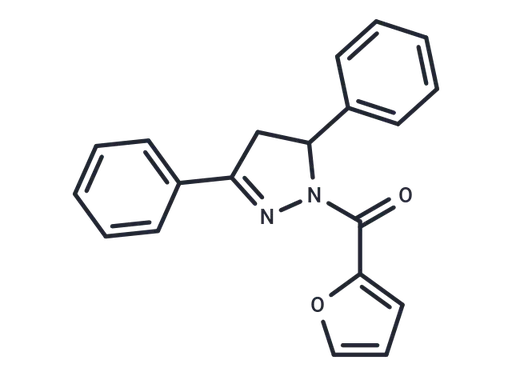
CAS:Rhodblock 1a is an inhibitor of the Rho kinase signaling pathway, which disrupts the localization and function of proteins within the Rho pathway. This interference hinders the proper formation of the cleavage furrow during cell division, leading to some cells either failing to form the cleavage furrow or forming a ruptured furrow, resulting in binucleated cells. Rhodblock 1a can be utilized for investigating cell division mechanisms and holds potential for research into cardiovascular diseases and cancer.Formula:C20H16N2O2Color and Shape:SolidMolecular weight:316.3532ROCK-IN-11
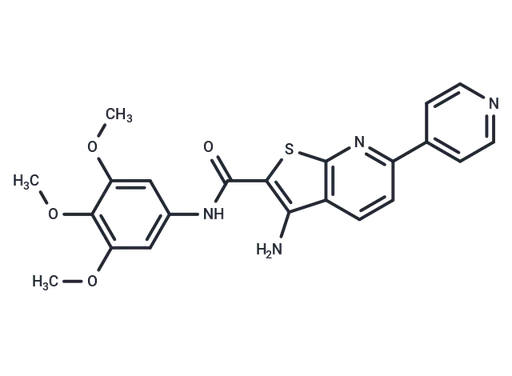
CAS:ROCK-IN-11 (example 94) is an effective inhibitor of ROCK1 and ROCK2, with an IC50 of ≤ 5 μM, and plays a significant role in cancer research.Formula:C22H20N4O4SColor and Shape:SolidMolecular weight:436.484NRL-1049 dihydrochloride
CAS:NRL-1049 dihydrochloride (BA-1049) is an orally active and selective inhibitor of Rho-associated protein kinase 2 (ROCK2) with an IC50 value of 0.59 μM. It demonstrates a 44-fold selectivity for ROCK2 over ROCK1, which has an IC50 value of 26 μM. NRL-1049 dihydrochloride can protect the blood-brain barrier following acute injury.Formula:C16H23Cl2N3O2SMolecular weight:392.34ROCK2-IN-12
CAS:ROCK2-IN-12 (Compound A25) is a selective inhibitor of ROCK2, exhibiting an IC50 of 7.0 nM for ROCK2, demonstrating greater efficacy compared to ROCK1 inhibition. It exerts potent anti-fibrotic effects via the TGF-β/Smad and ROCK2/STAT3 signaling pathways. In a Bleomycin-induced mouse pulmonary fibrosis (PF) model, ROCK2-IN-12 significantly reduces collagen deposition and reverses fibrosis progression. This compound is applicable in research on pulmonary diseases such as lung fibrosis.Formula:C23H18FN9OMolecular weight:455.46Zelasudil
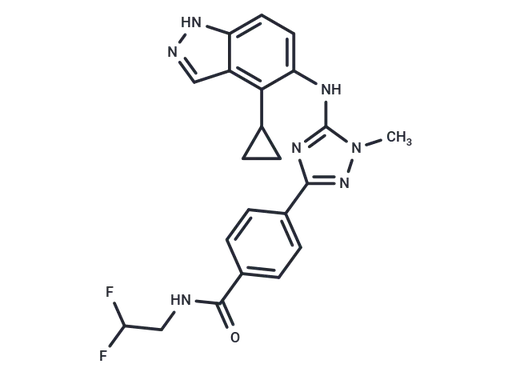
CAS:Zelasudil (RXC007) is a Rho-related (ROCK) kinase inhibitor for the study of idiopathic pulmonary fibrosis and inflammation.Formula:C22H21F2N7OPurity:99.86%Color and Shape:SolidMolecular weight:437.445