Endocrinology/Hormones
Subcategories of "Endocrinology/Hormones"
- Androgen Receptor(229 products)
- Annexin A(16 products)
- Aromatase(22 products)
- Estrogen/progestogen Receptor(64 products)
- GPR(1 products)
- Glucocorticoid Receptor(165 products)
- LHRH(2 products)
- Opioid Receptor(325 products)
- Prostaglandin Receptor(122 products)
- RAAS(86 products)
- Reductase(51 products)
- Somatostatin(57 products)
- Thyroid hormone receptor(THR)(32 products)
- Vasopressin Receptor(48 products)
Found 3369 products of "Endocrinology/Hormones"
5α-Tetrahydrocorticosterone
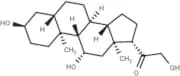
CAS:5α-Tetrahydrocorticosterone (5α-HB) is an endogenous steroid that acts as an agonist of the glucocorticoid receptor (GR) and a metabolite of corticosterone. It serves as an effective topical anti-inflammatory agent in vivo. In rat liver cells, it decreases the binding of metabolites to the glucocorticoid receptor-corticosterone and its 5α-reduced metabolites, with a Kd value of 268 nM. 5α-Tetrahydrocorticosterone is applicable in research on inflammatory skin diseases.Formula:C21H34O4Color and Shape:SolidMolecular weight:350.49Androgen receptor antagonist 13
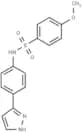
CAS:Androgen receptor antagonist 13 (compound 8a) is an orally active androgen receptor antagonist with an IC50 of 0.20 μM. It is used in prostate cancer research.Formula:C16H15N3O3SColor and Shape:SolidMolecular weight:329.37Ciprokiren
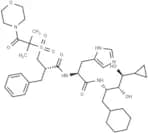
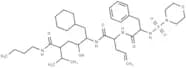
CAS:Ciprokiren, a renin inhibitor by Roche, halts human renin; IC50: 0.07/0.65 nmol/L. Lowers blood pressure in animals. Preclinical development ceased.Formula:C37H55N5O8SColor and Shape:SolidMolecular weight:729.93GNTI dihydrochloride
CAS:κ opioid receptor antagonistFormula:C27H30ClN5O3Purity:98%Color and Shape:SolidMolecular weight:508.01J-113397
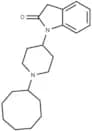
CAS:J-113397 is a potent and selective NOP receptor antagonist (IC50 = 2.3 nM).Formula:C24H37N3O2Purity:98%Color and Shape:SolidMolecular weight:399.57PD 134922
CAS:PD 134922 is a HIV-1 protease inhibitors. Inactivation of the protease prevents infectious virion formation.Formula:C37H61N5O7SPurity:98%Color and Shape:SolidMolecular weight:719.97(E/Z)-OT-R antagonist 1
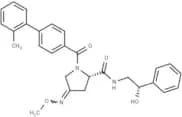
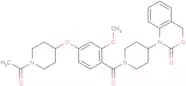
CAS:(E/Z)-OT-R antagonist 1 is a mixture of the E/Z configurations of OT-R antagonist 1. This compound is a novel, potent, selective, non-peptide OT-R antagonist that inhibits oxytocin-induced intracellular Ca2+ activity with an IC50 of 8 nM.Formula:C28H29N3O4Color and Shape:SolidMolecular weight:471.55KF-19418
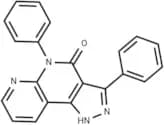
CAS:KF-19418 is a follicle stimulant that directly activates follicles in vitro and promotes hair growth in vivo.Formula:C21H14N4OColor and Shape:SolidMolecular weight:338.36SC13
CAS:SC13, a novel mitragynine analog, exhibits low-efficacy agonism at Mu opioid receptors and provides antinociception while minimizing adverse effects.Formula:C26H30N2O5Color and Shape:SolidMolecular weight:450.53THR-β agonist 5
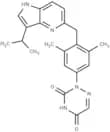
CAS:THR-β agonist 5 (compound 54) is a potent THR-β agonist, with an EC 50 of <50 nM [1].Formula:C22H23N5O2Color and Shape:SolidMolecular weight:389.45Glucocorticoid receptor activator 1
CAS:Glucocorticoid Receptor Activator 1, a phenyl nitrogen-heterocyclic precursor, acts as an activator of the glucocorticoid receptor (GR). By activating GR, it downregulates the expression of pro-inflammatory genes stimulated by TNF, making it useful for inflammation research.Formula:C11H15Cl2NO2Color and Shape:SolidMolecular weight:264.15THR-β agonist 4
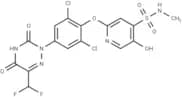
CAS:THR-β agonist 4 is a potent agonist of THR-β.Formula:C16H11Cl2F2N5O6SColor and Shape:SolidMolecular weight:510.26LXT34
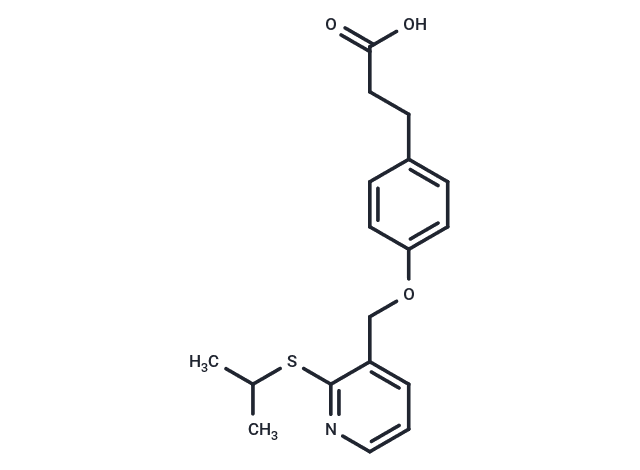
CAS:LXT34 (Example 2) is a GPR120 agonist with anti-inflammatory properties. This compound enhances GLP-1 formation in the gastrointestinal tract and improves insulin resistance in macrophages and pancreatic cells. LXT34 is applicable in studies related to inflammatory conditions, such as type 2 diabetes, obesity, and non-alcoholic fatty liver disease.Formula:C18H21NO3SColor and Shape:SolidMolecular weight:331.43Phenethyl 4-ANPP
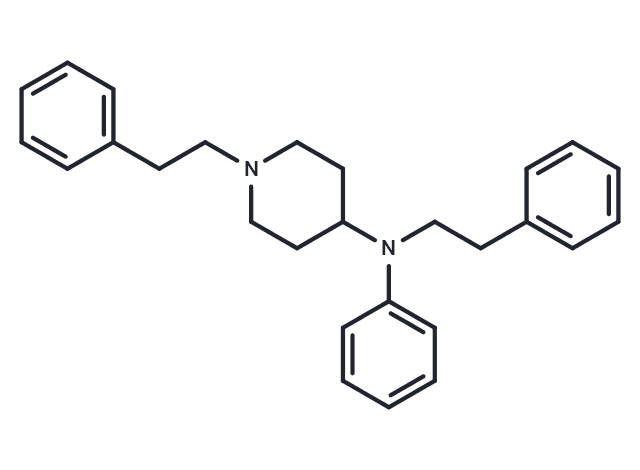
CAS:Phenethyl 4-ANPP is a MOR (μ-opioid receptor) agonist with a structure similar to known opioids.Formula:C27H32N2Color and Shape:SolidMolecular weight:384.56L 365209
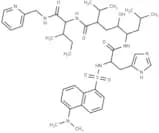
CAS:L 365209 is an oxytocin antagonist.Formula:C40H50N8O6Purity:98%Color and Shape:SolidMolecular weight:738.88Mu opioid receptor antagonist 3
Potent, selective MOR antagonist (compound 26); crosses blood-brain barrier. Ki: 0.24 nM, EC50: 0.54 nM; for studying OUD.Formula:C25H28N2O4SColor and Shape:SolidMolecular weight:452.57ErSO-DFP
ErSO-DFP activates a-UPR, targets ERα+ cancer cells with high selectivity, and effectively reduces MCF-7 tumours.Formula:C20H17F5N2O2Color and Shape:SolidMolecular weight:412.35Androgen receptor antagonist 12
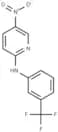
CAS:Compound EF2 (Androgen receptor antagonist 12) is an orally active antagonist of the androgen receptor (AR) with an IC50 of 0.30 µM. It inhibits the transcriptional activity of mutant AR and the proliferation of AR-positive PCa (prostate cancer) cell lines. Additionally, Compound EF2 blocks the nuclear translocation of AR and suppresses tumor growth in the C4-2B xenograft mouse model. This compound is used for research in prostate cancer.Formula:C12H8F3N3O2Color and Shape:SolidMolecular weight:283.21AKR1C3-IN-7
AKR1C3-IN-7 (Compound 13) is an effective and selective AKR1C3 inhibitor (IC50=0.19 μM). AKR1C3-IN-7 has antitumor activity.Formula:C24H20N2O4Color and Shape:SolidMolecular weight:400.43AT1R antagonist 2
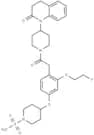
AT1R antagonist 2 is a potent AT1R selective ligand with good AT1R affinity (Ki: 26 nM).Formula:C29H37N5O4S2Color and Shape:SolidMolecular weight:583.77AR ligand-44
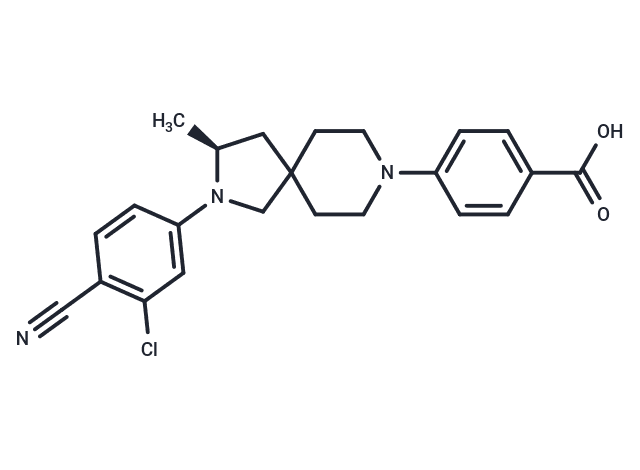
CAS:AR ligand-44 is an androgen receptor (androgen receptor) ligand that can be utilized in the synthesis of PROTACs such as [ARD-2051].Formula:C23H24ClN3O2Color and Shape:SolidMolecular weight:409.91A4B17
A4B17 is an inhibitor of androgen receptor N-terminal with potential for androgen-responsive prostate cancer treatment.Formula:C14H7F4NSColor and Shape:SolidMolecular weight:297.27Win 45164
CAS:Win 45164 is an orally active ligand for the glucocorticoid receptor (Glucocorticoid Receptor), exhibiting activity that inhibits the pituitary-adrenal axis. It enhances liver glycogen deposition and thymolysis in adrenalectomized male rats. Additionally, Win 45164 possesses anti-inflammatory properties and is applicable in research related to inflammation and neurological disorders.Formula:C26H27FN2O2Molecular weight:418.503ER degrader 10
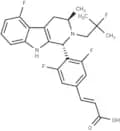
CAS:ER degrader 10 (Compound 51) is an orally active estrogen receptor (ER) selective degrader and antagonist, with a DC50 of 0.43 nM and an IC50 of 0.56 nM. It inhibits the proliferation of ER-positive cells, with an IC50 ranging from 0 to 15 nM. ER degrader 10 exhibits weak inhibitory activity on the hERG channel, with an IC50 greater than 40 μM. It has blood-brain barrier permeability, with a brain/plasma ratio (Kp) of 3.05. In mouse models, ER degrader 10 demonstrates antitumor activity.
Formula:C28H29F2NO3SColor and Shape:SolidMolecular weight:497.597NOP agonist-1
CAS:NOP agonist-1 (compound 4) is a nociceptin opioid receptor (NOP) partial agonist that attenuates Parkinsonian disabilities in 6-OHDA hemilesioned rats [1].Formula:C22H34N2Molecular weight:326.52Saprisartan potassium
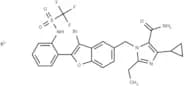
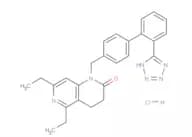
CAS:Saprisartan potassium is an Angiotensin II Type 1 receptor antagonist and antihypertensive agent.Formula:C25H21BrF3KN4O4SColor and Shape:SolidMolecular weight:649.52U 80215
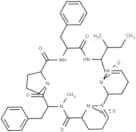
CAS:U 80215 is an enzyme-competitive inhibitor.Formula:C42H60N8O6SColor and Shape:SolidMolecular weight:805.04Allyphenyline oxalate
CAS:The pKi values of Allyphenyline oxalate (compound 9) for the α2-adrenergic receptor subtypes α2A, α2B, and α2C are 7.24, 6.47, and 7.07, respectively.Formula:C16H20N2O5Color and Shape:SolidMolecular weight:320.34Cort108297
CAS:Cort108297: selective GR modulator/antagonist, high GR affinity (Ki: 0.45nM), no other steroid receptor affinity.Formula:C26H25F4N3O3SPurity:98.36% - 99.94%Color and Shape:SolidMolecular weight:535.55Ref: TM-T15000
1mg274.00€5mg622.00€10mg908.00€25mg1,415.00€50mg1,882.00€100mg2,745.00€1mL*10mM (DMSO)747.00€ZD 7155 hydrochloride
CAS:ZD 7155 hydrochloride is an angiotensin II receptor type 1 (AT1 receptor) antagonist.Formula:C26H27ClN6OPurity:99.8%Color and Shape:SolidMolecular weight:474.98Ref: TM-T13390
1mg42.00€5mg88.00€10mg135.00€25mg235.00€50mg396.00€100mg635.00€200mg887.00€1mL*10mM (DMSO)90.00€L-371,257
CAS:L-371,257 is a competitive antagonist of oxytocin receptor with pA2 of 8.4 and Ki of 19 nM. L-371,257 shows a Ki of 3.7 nM for vasopressin receptor 1a.Formula:C28H33N3O6Purity:99.79%Color and Shape:SolidMolecular weight:507.58GLPG0974
CAS:GLPG0974 is an antagonist of FFA2/GPR43 with IC50 of 9 nM.Formula:C25H25ClN2O4SPurity:99.8%Color and Shape:SolidMolecular weight:484.99(E/Z)-GSK5182
CAS:GSK5182 is a racemic mix of (E/Z) isomers, a selective ERRγ inverse agonist (IC50: 79 nM), and induces ROS in liver cancer.Formula:C27H31NO3Purity:97.58%Color and Shape:SolidMolecular weight:417.54Ref: TM-T7709
1mg77.00€5mg167.00€10mg260.00€25mg477.00€50mg707.00€100mg1,063.00€1mL*10mM (DMSO)177.00€LSZ-102
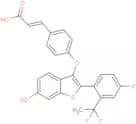
CAS:LSZ-102 is an effective and selective degrader of estrogen receptor (IC50 = 0.2 nM) and can be used in studies about ERα positive breast cancer.Formula:C25H17F3O4SPurity:98.56%Color and Shape:SolidMolecular weight:470.46(S)-Mapracorat
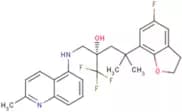
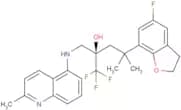
CAS:(S)-Mapracorat is a selective and less active agonist of the glucocorticoid receptor.Formula:C25H26F4N2O2Color and Shape:SolidMolecular weight:462.48PSN632408
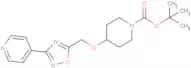
CAS:PSN632408 is an optimized agonist of GPR119 receptors that display similar potency to OEA at both recombinant mouse and human GPR119 receptors (EC50: 5.6 and 7.9 uM, respectively).Formula:C18H24N4O4Purity:98%Color and Shape:SolidMolecular weight:360.41Mapracorat
CAS:Mapracorat (ZK-245186, BOL-303242X) is a selective glucocorticoid receptor agonist,anti-inflammatory agent for atopic dermatitis and allergic conjunctivitis.Formula:C25H26F4N2O2Color and Shape:SolidMolecular weight:462.48ML314
CAS:ML314 is a brain-permeable nonpeptide β-inhibin-biased neurotensin NTR1 receptor agonist (EC50: 1.9 μM), a biased neurotensin receptor ligand for methamphetamine abuse that inhibits NTR2 and GPR35.Formula:C24H28N4O3Purity:99.52%Color and Shape:SolidMolecular weight:420.504Relacorilant
CAS:Relacorilant is an oral glucocorticoid receptor antagonist with Ki of 7.2 nM, potential for treating Cushing's syndrome.
Formula:C27H22F4N6O3SPurity:98.53% - 99%Color and Shape:SolidMolecular weight:586.56Mouse MDA(Malondialdehyde) ELISA Kit
This assay employs the competitive inhibition enzyme immunoassay technique. The microtiter plate provided in this kit has been pre-coated with Mouse MDA protein. Standards or samples are added to the appropriate microtiter plate wells then with a biotin-conjugated antibody specific to Mouse MDA. Next, Avidin conjugated to Horseradish Peroxidase (HRP) is added to each microplate well and incubated. After TMB substrate solution is added. The enzyme-substrate reaction is terminated by the addition of sulphuric acid solution and the color change is measured spectrophotometrically at a wavelength of 450nm ± 10nm. The concentration of Mouse MDA in the samples is then determined by comparing the OD of the samples to the standard curve.
Rat VLDL(Very Low Density Lipoprotein) ELISA Kit
The test principle applied in this kit is Sandwich enzyme immunoassay. The microtiter plate provided in this kit has been pre-coated with an antibody specific to Rat VLDL. Standards or samples are added to the appropriate microtiter plate wells then with a biotin-conjugated antibody specific to Rat VLDL. Next, Avidin conjugated to Horseradish Peroxidase (HRP) is added to each microplate well and incubated. After TMB substrate solution is added, only those wells that contain Rat VLDL, biotin-conjugated antibody and enzyme-conjugated Avidin will exhibit a change in color. The enzyme-substrate reaction is terminated by the addition of sulphuric acid solution and the color change is measured spectrophotometrically at a wavelength of 450nm ± 10nm. The concentration of Rat VLDL in the samples is then determined by comparing the OD of the samples to the standard curve.
Horse IGF1(Insulin Like Growth Factor 1) ELISA Kit
The test principle applied in this kit is Sandwich enzyme immunoassay. The microtiter plate provided in this kit has been pre-coated with an antibody specific to Horse IGF1. Standards or samples are added to the appropriate microtiter plate wells then with a biotin-conjugated antibody specific to Horse IGF1. Next, Avidin conjugated to Horseradish Peroxidase (HRP) is added to each microplate well and incubated. After TMB substrate solution is added, only those wells that contain Horse IGF1, biotin-conjugated antibody and enzyme-conjugated Avidin will exhibit a change in color. The enzyme-substrate reaction is terminated by the addition of sulphuric acid solution and the color change is measured spectrophotometrically at a wavelength of 450nm ± 10nm. The concentration of Horse IGF1 in the samples is then determined by comparing the OD of the samples to the standard curve.
Omzotirome
CAS:Omzotirome (TRC150094) is a functional analog of iodothyronines and holds potential for research on hyperlipidemia (WO2008149379).Formula:C19H24N2O3Color and Shape:SolidMolecular weight:328.412GPR109 receptor agonist-2
CAS:Compound 5, a selective GPR109a agonist, exhibits a pEC50 value of 5.53 [1].Formula:C7H10N2O2Color and Shape:SolidMolecular weight:154.17AZD9496 maleate
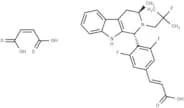
CAS:AZD9496 maleate is a highly potent and selective antagonist of the estrogen receptor alpha (ERα), exhibiting an IC50 value of 0.28 nM. This compound, AZD9496 maleate, is an orally bioavailable selective estrogen receptor degrader (SERD).Formula:C29H29F3N2O6Color and Shape:SolidMolecular weight:558.554PF-998425
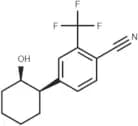
CAS:non-steroidal androgen receptor (AR) antagonistFormula:C14H14F3NOPurity:98%Color and Shape:SolidMolecular weight:269.26L-372662
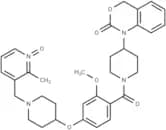
CAS:L-372662 is bioactive chemical.Formula:C33H38N4O6Color and Shape:SolidMolecular weight:586.68Phosphoramidon Disodium
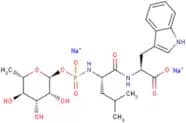
CAS:Phosphoramidon Disodium (Phosphoramidon Disodium Salt) Salt is a metalloendopeptidase inhibitor, widely used as a biochemical tool.Formula:C23H34N3Na2O10PPurity:98%Color and Shape:SolidMolecular weight:588.4821-Acetoxypregna-1,4,9(11),16-tetraene-3,20-dione
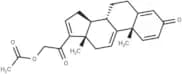
21-Acetoxypregna-1,4,9(11),16-tetraene-3,20-dione is a valuable organic compound for life sciences research [Catalog No.: T67476, CAS No.: 37413-91-5].Formula:C23H26O4Color and Shape:SolidMolecular weight:366.457ERB-196
CAS:Erb-196 is an estrogen receptor-receptor agonist with non-steroidal selectivity.Formula:C17H10FNO2Purity:98%Color and Shape:SolidMolecular weight:279.27Cebranopadol
CAS:Cebranopadol (GRT6005) is an analgesic NOP and opioid receptor agonist with Kis of 0.9 nM, 0.7 nM, 2.6 nM, 18 nM for human NOP, μ-opioid (MOP), κ-opioid (KOP)
Formula:C24H27FN2OPurity:98.32% - 99.78%Color and Shape:SolidMolecular weight:378.48Pamoic acid
CAS:Pamoic acid is the orphan G protein-coupled receptor GPR35 agonist. Pamoic acid activates ERK and beta-arrestin2 and causes antinociceptive activity.
Formula:C23H16O6Purity:99.99%Color and Shape:Fine Yellow PowderMolecular weight:388.37SR17018
CAS:SR17018 is an mu-opioid-receptor (MOR) agonist, binding with GTPγS, with an EC50 of 97 nM.
Formula:C19H18Cl3N3OPurity:99.89%Color and Shape:SolidMolecular weight:410.72Glucagon (3-29)
The cleavage of proglucagon forms glucagon. Increased levels of glucagon that can't be regulated are linked to diabetic hyperglycaemia and other pathologies. Typically, glucagon levels should be suppressed as glucose levels rise. However, the opposite has generally been found to be accurate, and the nature of this elevated immunoreactive glucagon has led to more research. Hyperglucagonaemia is a characteristic of several pathologies, but the detection of immunoreactive glucagon has yet to be fully verified due to the nature of available detection.Glucagon can be hydrolysed by dipeptidyl peptidase IV (DPIV) to products such as (18-29) and (3-29). Current methods for detecting glucagon rely on antibodies to the N terminus or C-terminus to detect pancreatic glucagon. However, these antibodies may also detect truncated forms due to a pathology affecting the secretion, clearance or processing of proglucagon-derived peptides. Theoretically, these can be used in a sandwich process to detect only full-length glucagon. Therefore, the availability of the truncated glucagon (3-29) as a control to test the sensitivity of the available antibodies and the ELISAs is useful. Plasma levels from hyperglucagonaemic patients and healthy counterparts were used as a control to test the commercial glucagon assays and ELISAs. The truncated glucagon (3-29) provided valuable information about the sensitivity and specificity of the antibodies that have been used as an industry standard for glucagon measurement. This truncated glucagon is vital in ensuring our research moves forward with more controls and fewer assumptions.
Color and Shape:PowderMolecular weight:3,298.5 g/molGRP (14-27), human, porcine
Mammalian bombesin-like neuropeptide- first isolated from pig spinal cord, which can stimulate rat uterine smooth muscle contraction and gastrin and somatostatin secretion in vitro. Increases blood pressure and pancreatic exocrine secretion in dogs.
Color and Shape:PowderMolecular weight:1,666.8 g/molGIP (1-42)-[C] human
Peptide derived from the Gastric inhibitory polypeptide (GIP), an inhibiting hormone of the secretin family of hormones. While GIP is a weak inhibitor of gastric acid secretion, its main role is to stimulate insulin secretion - in a glucose-dependent mechanism. Therefore, GIP is referred to as a glucose-dependent insulinotropic peptide.GIP is derived from a 153-amino acid pro-protein encoded by the GIP gene and circulates as a biologically active 42-amino acid peptide. It is synthesised by K cells, which are found in the mucosa of the duodenum and the jejunum of the gastrointestinal tract. GIP receptors are seven-transmembrane proteins found on β-cells in the pancreas. These β-cells are those that are able to simultaneously detect glucose and release insulin as a result to GIP binding.The clinical relevance of GIP is related to type 2 diabetes mellitus (T2DM)- studies have found that T2DM diabetics are unresponsive to GIP and have lower levels of GIP secretion after a meal when compared to non-diabetics. In research involving knockout mice, it was found that absence of the GIP receptors correlates with resistance to obesity.
Molecular weight:1,234.5 g/molAlexamorelin
The heptapeptide Alexamorelin is a member of the Growth Hormone secretagogues (GHS) family. These are synthetic molecules which act through the central nervous system to stimulate the secretion of somatotrophs, prolactin, adrenocorticotrophin and cortisol. Alexamorelin has also been shown to inhibit 125I-Tyr-Ala-HEX binding in tissues. Due to their stimulation of growth hormone release, they are known as non-approved pharmaceuticals and are a concern to sport's drug testing organisations.
Molecular weight:957.5 g/molRef: 3D-CRB1001335
Discontinued productGastrin Releasing Peptide, human
CAS:Mammalian bombesin-like peptide neurotransmitter that is an agonist for the gastrin-releasing peptide receptor (GRPR). It exhibits physiological functions such as gastrin and somatostatin release and chemoattraction within the immune system.
Molecular weight:2,857.5 g/molInsulin beta Chain Peptide (15 - 23)
Insulin is a polypeptide composed of two peptide chains referred to as the alpha chain and β chain. These chains are linked by two disulphide bonds, and an additional disulphide is formed within the alpha chain. In most species, the alpha chain consists of 21 amino acids and the β chain of 30 amino acids. Insulin is normally secreted rapidly from the β-cells of the pancreatic islets in response to nutrients absorbed after a meal. In type 1 diabetes mellitus, there may be an absolute insulin deficiency as a consequence of autoimmune destruction of the β-cells. On the other hand, in type 2 diabetes mellitus, insulin secretion is impaired and is inadequate to overcome peripheral insulin resistance.
Color and Shape:PowderMolecular weight:1,008.5 g/molGLP-1 (9-36) amide
CAS:Natural cleavage product of GLP-1 which, unlike GLP-1, does not affect either insulin secretion or glucose homeostasis. GLP-1(9-36) has low affinity for, and acts as an antagonist to, the GLP-1 receptor.GLP-1 (9-36) does however display unique biological activities such as beneficial cardiovascular effects and reducing the production of reactive oxygen species (ROS). GLP-1 (9-36) also exerts important physiological effects on neuronal plasticity in the hippocampus, and inhibits chemokine-induced migration of human CD4-positive lymphocytes.GLP-1 (9-36) is formed from the breakdown of biologically active but highly unstable GLP-1 (7-36) amide by the ubiquitous serine protease, dipeptidyl peptidase-IV (DPP-IV).
Color and Shape:PowderMolecular weight:3,087.6 g/molRef: 3D-CRB1000982
Discontinued productANP (9-22)
ANP (9-22) is derived from the atrial natriuretic peptide (ANP) which is a cardiac hormone involved in maintaining cardio-renal homeostasis. This occurs through the activation of the guanylyl cyclase-coupled receptor, resulting in the increased concentration of cyclic guanylate monophosphate. Moreover its function in the processes of anti-proliferation and anti-angiogenesis allow it to take part in the cardiovascular remodelling process.ANP is a member of the natriuretic peptide family and it is encoded by the NPPA gene, located on chromosome 1. Once synthesized from the 151 amino acid pre-prohormone into its biologically active form, ANP is secreted by the atrial cardiomyocytes in the circulating forms: ANP (1-98) and ANP (99-126). This synthesis process involves the signal peptide being removed from the pre-prohormone resulting in proANP (1-126) which is converted into the circulating forms by the type II transmembrane serine protease Corin.
Color and Shape:PowderMolecular weight:1,373.7 g/molCalcitonin, Rat
The hormone Calcitonin, reduces the amount of serum calcium during hypercalcemia and is released from the C-cells of the thyroid gland. Within its structure it contains a disulphide bridge between cysteine 1 and 7 and a proline at its carboxy terminal.Calcitonin is used therapeutically in the treatment of hypercalcemia diseases such as Paget disease, Sudeck atrophy, bone metastases and vitamin-D intoxication.The level of calcitonin in the plasma can also be used as a marker for medullary thyroid carcinoma, while procalcitonin is used to diagnose sepsis.
Molecular weight:3,397.6 g/molGlucagon like-peptide-2 (GLP-2)
Glucagon like-peptide-2 (GLP-2) is a gut hormone produced in the enteroendocrine L cells of gastrointestinal tract by the cleavage of the 160-amino-acid proglucagon molecule. GLP-2 is secreted following the ingestion of food and carries out its activities via the GLP-2 G-protein coupled receptors (GLP-2Rs). GLP-2 has a range of roles within the cell, including: anti-inflammatory effects promoting the expansion of the intestinal mucosa, stimulating intestinal blood flow, inhibiting gastric acid secretion and gastric emptying, increasing intestinal barrier function and enhancing nutrient and fluid absorption.
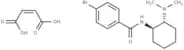
Molecular weight:3,555.7 g/molBromadoline maleate
CAS:Bromadoline is an opioid analgesic selective for the μ-opioid receptor.Formula:C19H25BrN2O5Purity:98%Color and Shape:SolidMolecular weight:441.322Ceronapril
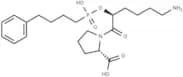
CAS:Ceronapril (SQ 29852) is an orally active and potent angiotensin-converting enzyme (ACE) inhibitor (IC50 : 36 nM) for the study of dementia and hypertension.Formula:C21H33N2O6PPurity:97.94%Color and Shape:SolidMolecular weight:440.47Ref: TM-T25226
Discontinued productSR14150
CAS:SR14150 is a partial agonist of high-affinity NOP receptor.Formula:C21H30N2OPurity:98%Color and Shape:SolidMolecular weight:326.48Estrogen receptor modulator 8
CAS:Estrogen Receptor Modulator 8 (compound 4) is an orally active inhibitor targeting Estrogen Receptor/ERR α with potent efficacy (IC50 = 0.437 nM in MCF-7 cells
Formula:C25H24F4N2O2Purity:98%Color and Shape:SolidMolecular weight:460.46MOR agonist-1
CAS:MOR Agonist-1 is a μ-opioid receptor (MOR) agonist noted for its potent analgesic properties and is utilized in research concerning pain and associated
Formula:C22H26ClFN2O2Purity:98%Color and Shape:SolidMolecular weight:404.91ALS-I-41
CAS:ALS-I-41 is a novel, potent and selective antagonist of oxytocin receptor.Formula:C30H38FN3O6SPurity:98%Color and Shape:SolidMolecular weight:587.7











![GIP (1-42)-[C] human](/_next/image/?url=https%3A%2Fstatic.cymitquimica.com%2Fproducts%2F3D%2Fthumb-webp%2FCRB1000509.webp&w=3840&q=75)