Enzyme
Subcategories of "Enzyme"
- Carbonic Anhydrase(196 products)
- Hydroxylase(36 products)
- MPO(2 products)
- Reductase(51 products)
- Tyrosinase(71 products)
Found 3619 products of "Enzyme"
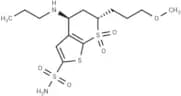
L-693612
CAS:L-693612 is an inhibitor of carbonic anhydrase.Formula:C14H24N2O5S3Purity:98%Color and Shape:SolidMolecular weight:396.55GV2-20
CAS:GV2-20 is an effective carbonic anhydrase 2 inhibitors.Formula:C15H13N3O6Purity:98%Color and Shape:SolidMolecular weight:331.28L 645151
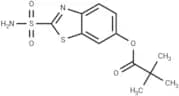
CAS:L 645151 is an inhibitor of lipophilic CA.Formula:C12H14N2O4S2Color and Shape:SolidMolecular weight:314.38hCAXII-IN-5
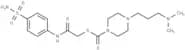
CAS:hCAXII-IN-5, or compound 6o, is a potent, selective hCAXII inhibitor with Ki values: hCAI & II >10000, hCAIX 286.1, hCAXII 1.0 nM.Formula:C23H22N2O4Color and Shape:SolidMolecular weight:390.43Carbonic anhydrase inhibitor 14
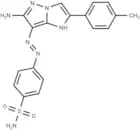
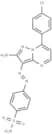
CAS:CA inhibitor 14 blocks hCA I/II/IX/XII (K i of 1203/99.7/9.4/27.7 nM) and CDK2 (IC50: 20.3 μM), showing antitumor effects.Formula:C18H17N7O2SColor and Shape:SolidMolecular weight:395.44hCAXII-IN-3
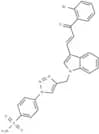
CAS:hCAXII-IN-3 (Compound 6o) is a selective inhibitor of human carbonic anhydrase XII (hCAXII) (Ki: 10.0 nM).Formula:C26H20BrN5O3SColor and Shape:SolidMolecular weight:562.44hCAIX/XII-IN-3
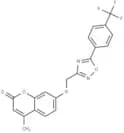
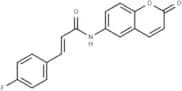
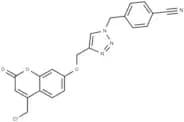
CAS:Compound 6q inhibits hCAIX/CAXII; K i : hCAI >10000 nM, hCAII >10000 nM, hCAIX 66.2 nM, hCAXII 4.4 nM.Formula:C20H13F3N2O4Color and Shape:SolidMolecular weight:402.32LP-533401
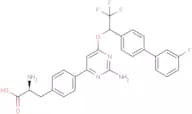
CAS:LP-533401 is an inhibitor of Tryptophan hydroxylase 1. It is used for regulates serotonin production in the gut.Formula:C27H22F4N4O3Purity:98%Color and Shape:SolidMolecular weight:526.48hCAII-IN-2
CAS:hCAII-IN-2 inhibits human carbonic anhydrases I, II, IX, XII with Ki values of 261.4, 3.8, 19.6, 45.2 nM respectively.Formula:C25H18ClN5O4SColor and Shape:SolidMolecular weight:519.96Clofenamide
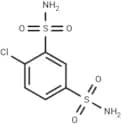
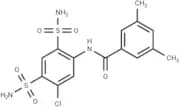
CAS:Clofenamide is a low-ceiling sulfonamide diuretic.Formula:C6H7ClN2O4S2Color and Shape:SolidMolecular weight:270.71hCA I-IN-1
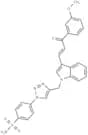
CAS:hCA I-IN-1 inhibits hCA I (Ki: 38.3 nM), II (Ki: 716.4 nM), IX (Ki: 940.1 nM), XII (Ki: 192.8 nM).Formula:C27H23N5O4SColor and Shape:SolidMolecular weight:513.57CDK2-IN-12
CAS:CDK2-IN-12 (10b), potent CDK2 inhibitor, IC50: 11.6 μM; inhibits hCA I/II/IX/XII, KI: 3534/638.4/44.3/48.8 nM; anti-cancer properties.Formula:C20H17N9O2SColor and Shape:SolidMolecular weight:447.47Fenprinast
CAS:Fenprinast is a tryptophan-like bronchodilator utilized in the study of allergic and exercise-induced asthma. It exhibits oral activity.Formula:C16H16ClN5OColor and Shape:SolidMolecular weight:329.783-Allylphenol
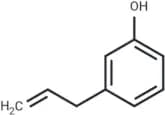
CAS:3-Allylphenol is an inhibitor of dopamine β-hydroxylase (DBH; Ki = 12 mM).Formula:C9H10OColor and Shape:SolidMolecular weight:134.18hCAIX/XII-IN-2
CAS:Compound 6a: Selective hCAIX/XII inhibitor; Ki: 30 nM (hCAIX), 3.6 nM (hCAXII); >10,000 nM (hCAI/II).Formula:C19H14N2O4Color and Shape:SolidMolecular weight:334.33Phenylthiazolylthiourea
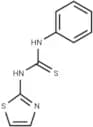
CAS:Phenylthiazolylthiourea ia a dopamine-beta-hydroxylase inhibitor.Formula:C10H9N3S2Color and Shape:SolidMolecular weight:235.33CDK2-IN-11
CAS:CDK2-IN-11 inhibits CDK2 (IC50: 6.4 μM) and targets hCA II, IX, XII (Ki: 23.4-56.3 nM); suited for cancer research.Formula:C18H14ClN7O2SColor and Shape:SolidMolecular weight:427.87JM6
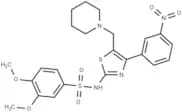
CAS:JM6 is a weak kynurenine 3-monooxygenase (KMO) inhibitor that acts on mouse KMO (IC50: 19.85 μM). JM6 can be used to study Alzheimer's disease.Formula:C23H26N4O6S2Color and Shape:SolidMolecular weight:518.61hCAIX-IN-5
CAS:hCAIX-IN-5 was a selective hCAIX inhibitor, inhibiting hCAI, hCAII, hCAIV, and hCAIX with Ki values of >10000, >10000, 130.7, and 829.1 nM, respectively.Formula:C18H12FNO3Purity:99.25%Color and Shape:SolidMolecular weight:309.29PGDS Protein, Human, Recombinant
Hematopoietic Prostaglandin D Synthase (HPGDS) belongs to the GST superfamily and Sigma family.Color and Shape:Lyophilized PowderMolecular weight:26 KDa (reducing condition)Ref: TM-TMPJ-00690
1mg2,758.00€5µg113.00€10µg178.00€20µg284.00€50µg523.00€100µg779.00€200µg1,142.00€500µg1,923.00€hCAI/II-IN-1
CAS:hCAI/II-IN-1 (Compound 3h) is a human carbonic anhydrase I and II (hCA I/II) inhibitor that acts on hCA I (IC50: 0.047 μM) and hCA II (IC50: 0.024 μM).Formula:C18H29N5O3S3Color and Shape:SolidMolecular weight:459.65hCAIX-IN-11
CAS:hCAIX-IN-11 inhibits carbonic anhydrases IX & XII with Ki of 32.7 nM & 623.5 nM, respectively.Formula:C21H15ClN4O3Color and Shape:SolidMolecular weight:406.82HCAIX-IN-2
CAS:HCAIX-IN-2 (compound 9d) is a selective inhibitor of carbonic anhydrase and acts on hCA IX (Ki: 24.6 nM) and hCA XII (Ki: 45.3 nM).Formula:C19H16N8O4SColor and Shape:SolidMolecular weight:452.45SU 10603
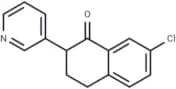
CAS:SU 10603 is a specific inhibitor of 17α-hydroxylase (also known as CYP17A1 and P450c17) used to study steroid hormone synthesis.Formula:C15H12ClNOPurity:99.93% - 99.96%Color and Shape:SolidMolecular weight:257.72L-693612 HCl
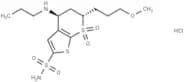
CAS:L-693612 HCl is an inhibitor of carbonic anhydrase.Formula:C14H25ClN2O5S3Purity:98%Color and Shape:SolidMolecular weight:433.01AHR-15010
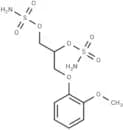
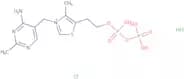
CAS:AHR-15010 is a novel anti-arthritic agent.Formula:C10H16N2O8S2Purity:98%Color and Shape:SolidMolecular weight:356.37Cocarboxylase hydrochloride
CAS:Cocarboxylase hydrochloride is a coenzyme derivative, which is primarily sourced from thiamine (vitamin B1). It plays a crucial role in biochemical processes by facilitating the enzymatic decarboxylation of alpha-keto acids within the cellular environment. This action is fundamental in energy production as it aids in the conversion of pyruvate to acetyl-CoA, subsequently entering the citric acid cycle. Cocarboxylase hydrochloride’s involvement in carbohydrate metabolism is especially vital for tissues with high metabolic rates, such as the heart and brain.
Formula:C12H19N4O7P2S·ClHClPurity:Min. 95%Molecular weight:497.23 g/molProtease - from bacillus licheniformis
CAS:Protease enzymes break down proteins and are essential for many biological processes, including digestion, cellular regulation and blood clotting. They are also used in many industrial and biotechnological applications for example in food processing and in detergents.
Color and Shape:PowderMyokinase (from Yeast)
CAS:Myokinase (Adenylate kinase, EC 2.7.4.3) catalyzes interconversion between ATP, ADP and AMP by catalyzing the following reaction:ATP + AMP ⇌ 2 ADPOne unit of Myokinase will convert 1.0 µmol ATP and 1.0 µmol AMP to 2.0 µmol ADP per min at 25°C and pH 7.5.D-Alanine Aminotransferase, Bacilus subtilis, Recombinant
D-Alanine aminotransferase (L-glutamic-pyruvic transaminase; EC 2.6.1.21) is an enzyme that catalyzes the following reaction: D-alanine + α-ketoglutarate ⇌ pyruvate + D-glutamate Please enquire for more information about D-Alanine Aminotransferase, Bacilus subtilis, Recombinant including the price, delivery time and more detailed product information at the technical inquiry form on this page
Purity:>90% By Sds-Page.Invertase
CAS:Invertase is an enzyme that catalyzes the hydrolysis of sucrose to glucose and fructose and can be found in plants and microorganisms
Color and Shape:Beige PowderhCAII-IN-9
CAS:hCAII-IN-9 inhibits hCA II/IX/XII with IC50s of 1.18, 0.17, 2.99 μM; not BBB permeable.
Formula:C15H16ClN3O5S2Purity:98.63%Color and Shape:SolidMolecular weight:417.89Glucose dehydrogenase
CAS:Glucose Dehydrogenase is an enzyme, which is typically derived from microbial sources such as bacteria and fungi. It functions by catalyzing the oxidation of glucose to gluconolactone, concurrently reducing a cofactor such as NAD⁺ or PQQ. This biochemical reaction is critical in various analytical applications due to its specificity and efficiency in glucose detection.Glucose Dehydrogenase is widely employed in the development of biosensors and diagnostic assays. Its primary application is in blood glucose monitoring devices, where its ability to accurately quantify glucose levels is crucial for managing diabetes. Additionally, it is utilized in research and development settings for biochemical assays that require precise glucose measurements. The enzyme's rapid and specific action on glucose molecules makes it an indispensable tool in both clinical and laboratory environments, contributing to advancements in biosensing technologies and metabolic studies.hCAI/II-IN-6
CAS:hCAI/II-IN-6 is a selective and orally active inhibitor of human carbonic anhydrase (CA).Formula:C19H24N4O3SPurity:98.49%Color and Shape:SolidMolecular weight:388.48Carboxypeptidase Y from baker's yeast
CAS:Carboxypeptidase Y (EC 3.4.16.1) is an exopeptidase enzyme. It hydrolyzes peptide bonds of C-terminal residues and it remains active in the presence of urea at low to moderate concentrations. One unit of the Carboxypeptidase Y will hydrolyze 1.0 μmole of a chromogenic peptide substrate, releasing C-terminal alanine and generating a light-absorbing product.Purity:Min. 95%Lyticase
CAS:Lyticase is a lysing enzyme that is designed to lyse cells in a biological sample. It contains an optimized wild-type guanine nucleotide-binding protein and has been shown to have high enzyme activities. Lyticase has also been shown to be active against opportunistic fungal strains, such as Candida glabrata, by disrupting their cell membranes. Lyticase is classified as a signal peptide with nuclear DNA, which allows it to be used in wastewater treatment applications. The enzyme can also be used for the analysis of the Toll-like receptor (TLR) response of microbes due to its electrochemical impedance spectroscopy properties.Purity:Min. 95%Maltose phosphorylase (from bacteria), ammonium sulphate suspension
CAS:Maltose phosphorylase (systematic name maltose:phosphate 1-beta-D-glucosyltransferase; EC 2.4.1.8) is an enzyme that catalyzes the following reaction: maltose + Pi ⇌ D-glucose + beta-D-glucose 1-phosphate One unit of maltose phosphorylase will produce 1.0 μmole of D-Glucose from maltose per minute at pH 7.0 and 30°C.Purity:Min. 95%Molecular weight:0 g/molSultiame
CAS:Sultiame is an inhibitor of carbonic anhydrase. Sultiame can be used in antiepileptic research.Formula:C10H14N2O4S2Purity:99.91%Color and Shape:SolidMolecular weight:290.36α-Glucosidase from bacillus stearothermophilus, lyophilized powder, 250 Units
CAS:α-Glucosidase is a glycoside hydrolase enzyme that hydrolyzes α-1,4-linked D-glucose residues to produce α-D-glucose. This enzyme has been isolated from Bacillus stearothermophilus and is used as an industrial catalyst in the production of glucose syrups. One Unit of α-Glucosidase will release 1.0 µmole of p-nitrophenol from the chromogenic substrate mimic 4-nitrophenyl α-D-glucopyranoside per minute under optimum conditions.Color and Shape:PowderCholine oxidase
CAS:Choline oxidase (EC 1.1.3.17) is an enzyme that catalyzes the following reaction: choline + O2 + H20 ⇌ betaine aldehyde + H2O2One unit of choline oxidase will form 1 μmole of H2O2 by oxidizing choline to betaine aldehyde per min at pH 8.0 and 37 °C. You can remove the build-up of hydrogen peroxide using catalase.
Purity:Min. 95%endo-β-1,4-Mannanase
CAS:Endo-β-1,4-Mannanase (other names Mannan endo-1,4-β-mannosidase, endo-β-1,4-mannase, β-mannanase B, β-1, 4-mannan 4-mannanohydrolase, endo-β-mannanase, β-D-mannanase, 1,4-β-D-mannan mannanohydrolase; EC 3.2.1.78) is an enzyme, catalyzing the hydrolysis of -1, 4-mannosidic linkages in mannans, glucomannans and galactomannans. One unit of Endo-β-1,4-Mannanase will release 1.0 µmole of mannose reducing-sugar per minute from a 3mg/ml mannan solution at pH 5.5 and 37degC. Expressed in U/g.Laccase from Trametes versicolor
CAS:Multi-copper oxidase from the family of polyphenol oxidades. It can be also found in many plants and bacteria. Laccase catalyses the oxidation of phenolic compounds such as lignin. It can oxidase non phenolic groups too with the use of mediators, chemical agents involved in the transfer of the electrons during the reaction. In some cases, laccase can also oxidise halogenated compounds. This enzyme is used for enzymatic assays, lignol screening tests and for waste water treatment to remove biodegrdable pollutants.
Color and Shape:PowderButyrylcholinesterase human
CAS:Butyrylcholinesterase is an enzyme made in the liver and found mainly in blood plasma. Butyrylcholinesterase (EC 3.1.1.8), also known as BChE or BuChE, is a nonspecific cholinesterase enzyme that hydrolyses choline-based esters. One unit of Butyrylcholinesterase will hydrolyze 1.0 μmole of butyrylcholine to choline and butyrate per minute at pH 8.0 and 37 °C.
Color and Shape:PowderBupicomide
CAS:Bupicomide is a dopamine β-hydroxylase inhibitor with antihypertensive and vasodilatory activity and may be used in the study of hypertension.Formula:C10H14N2OPurity:99.84% - >99.99%Color and Shape:SolidMolecular weight:178.23Carbonic anhydrase inhibitor 6
CAS:Carbonic anhydrase inhibitor 6 is an hCA inhibitor that inhibits hCA IX, hCA II, hCA XII, and hCA I. It is used in the study of lupus erythematosus.Formula:C26H25N3O5SPurity:98.81%Color and Shape:SolidMolecular weight:491.56Ref: TM-T63305
1mg164.00€2mg234.00€5mg389.00€10mg532.00€25mg820.00€50mg1,063.00€100mg1,350.00€200mg1,783.00€Glyceraldehyde-3-phosphate dehydrogenase
CAS:75u/mg - Glyceraldehyde 3-phosphate dehydrogenase (GAPDH; EC 1.2.1.12) is an enzyme that catalyzes the following reaction: glyceraldehyde 3-phosphate + NAD+ + Pi ⇌ glycerate 1,3-bisphosphate + NADH + H+ One unit of GAPDH will convert 1.0 μmole of glyceraldehyde 3-phosphate into glycerate 1,3-bisphosphate per minute at pH 8.5 and 37 °C in the presence of NAD+ and phosphate. NAD+ is available here.Formula:C3H7O6PPurity:Min. 95%Molecular weight:170.06 g/molTyrosinase-IN-2
CAS:Tyrosinase-IN-2, a potent tyrosinase inhibitor, may help in skin lightening and food preservation research.Formula:C8H8N4O2SPurity:99.78%Color and Shape:SolidMolecular weight:224.24Ref: TM-T60278
5mg48.00€10mg71.00€25mg135.00€50mg212.00€100mg340.00€200mg467.00€1mL*10mM (DMSO)49.00€Transglutaminase from streptoverticillium mobaraense
CAS:selectively deamidates gluten peptides, which results in strongly enhanced T cell-stimulatory activity. It has also been used in a study to improve quantifiable assays to fully characterize the role of transglutaminase in diseases such as Huntington′s disease and Alzheimer′s disease.Color and Shape:PowderProteinase K - from Tritirachium album
CAS:Proteinase K is used for the general digestion of proteins and removal of protein contamination in nucleic acids. Addition of Protease K also stabilizes nucleic acids by degrading any nucleases present. Proteinase K is active in wide range of pH range, in the presence of SDS, urea and Guanidinium chloride at low to moderate concentrations. Proteinase K is also known under names of protease K and endopeptidase K.Endoproteinase Glu-C
CAS:Endoproteinase Glu-C (Glutamyl endopeptidase, V8 protease, GluV8, EC 3.4.21.19) is a protease that hydrolyzes peptide bonds at the carboxylic side of either exclusively Glu, or Glu and Asp residues, depending on the buffer conditions. One unit of endoproteinase Glu-C will generate 1.0 μmole of p-nitroaniline from Z-Phe-Leu-Glu-pNA peptide mimic substrate per minute at pH 7.8 and 25 °C. Z-Phe-Leu-Glu-pNA substrate is available here.molecular weight ~ 27000.
Formula:C65H98N16O19Molecular weight:1,407.56 g/mol