Dyes, Stains and Tinctures
Subcategories of "Dyes, Stains and Tinctures"
- Acid Dyes(49 products)
- Azobenzenes(270 products)
- Azoic Dyes(7 products)
- Basic Dyes(27 products)
- Coumarin Dyes(71 products)
- Cyanine Dyes, Squarylium Dyes(53 products)
- DCM Dyes(4 products)
- Diarylethenes(12 products)
- Dipyrromethene Dyes(26 products)
- Direct Dyes(17 products)
- Disperse Dyes(2 products)
- Dye Sensitizers(12 products)
- Dyes(416 products)
- Dyes & Stains(911 products)
- Generating Insoluble Dyes(14 products)
- Generating Soluble Dyes(11 products)
- Hexaarylbiimidazole(4 products)
- Indicators(575 products)
- Mordant Dyes(10 products)
- Near-Infrared (NIR) Dyes(28 products)
- Oil Dyes(15 products)
- Other Stains and Dyes(2 products)
- Perylene Dyes(17 products)
- Photochromic Dyes(40 products)
- Phthalocyanine Dyes, Porphyrin Dyes(101 products)
- Quinacridone Dyes(8 products)
- Spiropyrans(16 products)
- Stains and Dyes(243 products)
- Stains and Dyes for Microscopy(5 products)
- Vat Dyes(5 products)
- Xanthene Dyes(66 products)
Found 758 products of "Dyes, Stains and Tinctures"
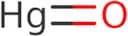
Mercuric oxide red
CAS:Controlled ProductMercuric oxide red is a dinucleotide phosphate that has been used as an oxidation catalyst in organic synthesis. Mercuric oxide red is also used as a reagent for the conversion of glycoside derivatives to their corresponding mercuric salts. It can be used in the determination of certain metabolites, such as amino acids and fatty acids, in biological samples. In addition, it can be used to detect lipid peroxidation and oxidative stress. For example, Mercuric oxide red has been shown to have the ability to bind to Toll-like receptor 4 (TLR4). This binding induces the production of pro-inflammatory cytokines, including IL-6. Mercuric oxide red also inhibits plasma mass spectrometry by suppressing ionization and reducing fragmentation.
Formula:HgOPurity:Min. 95%Color and Shape:PowderMolecular weight:216.60 g/molRef: 3D-FM44545
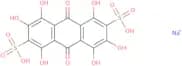
Discontinued productAcid alizarin blue 2b
CAS:For the identification of acidophilic cells, blue color
Formula:C14H8NaO14S2Purity:Min. 95%Molecular weight:487.3 g/molRef: 3D-KAA11440
Discontinued productReactive Blue 4
CAS:Reactive Blue 4 is a reactive dye that is used in the treatment of wastewater. It has been shown to be effective against microbial and fungal infections. Reactive Blue 4 binds to the cell membrane, preventing the transport of ions and other essential components into the cell, leading to its death. The binding mechanism is thought to involve steric interactions and hydrogen bonding. This dye also inhibits enzymes such as benzalkonium chloride and sodium carbonate, which are involved in bacterial processes such as photosynthesis or respiration.
Formula:C23H14Cl2N6O8S2Purity:Min. 95%Color and Shape:PowderMolecular weight:637.43 g/molRef: 3D-FR52632
Discontinued productSanodure fiery red ML
Please enquire for more information about Sanodure fiery red ML including the price, delivery time and more detailed product information at the technical inquiry form on this page
Purity:Min. 95%Ref: 3D-FS170827
Discontinued productIndigo
CAS:Indigo is a dye that has been used for centuries in the textile industry for its unique blue color.
Formula:C16H10N2O2Purity:Min. 95%Color and Shape:Blue PowderMolecular weight:262.26 g/molRef: 3D-FI39298
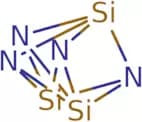
Discontinued productSilicon nitride - predominantly β-phase, -325 mesh
CAS:Silicon nitride is a compound of silicon and nitrogen. It is used in the preparation of high purity silicon, as well as in the production of semiconductors, electronic devices, and other products. Silicon nitride is also used to make parts for aircraft engines and turbines. The thermal expansion coefficient of silicon nitride is typically 5x10⁻⁶/°C, which makes it ideal for use in high-temperature environments. Silicon nitride has antimicrobial properties that may be due to its ability to release hydrogen fluoride and water vapor when heated. These compounds are toxic to bacteria and fungi, making silicon nitride a potential candidate for use in biomedical implants or medical devices such as catheters or prosthetic joints. Silicon nitride is chemically stable at temperatures up to 1000°C, making it an excellent material for high-temperature applications such as aerospace engine components. Silicon nitride can also be used as a sample preparation tool because it can remove impurities from samples without
Formula:N4Si3Purity:Min. 95%Color and Shape:PowderMolecular weight:140.28 g/molRef: 3D-FS168689
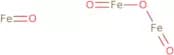
Discontinued productIron oxide black
CAS:Controlled ProductIron oxide black is a reactive dye that is used in wastewater treatment. It is an oxide of iron that can be synthesized from sodium carbonate and langmuir adsorption isotherm. Iron oxide black has been shown to have a colloidal gold-like color, chemical stability, and constant pressure. The particle size of this compound ranges from 10-1000 nm and it reacts with a solution containing anhydrous sodium carbonate to form magnetite nanoparticles. Iron oxide black also has an asymmetric synthesis reaction with ferric chloride and nitric acid, which produces magnetic nanoparticles.
Formula:Fe3O4Purity:Min. 95%Color and Shape:PowderMolecular weight:231.53 g/molRef: 3D-FI41084
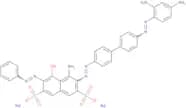
Discontinued productDirect black 38
CAS:Direct Black 38 (DB38) is a carbonate pigment with the chemical formula of Na2CO3. It has been used as a black pigment in paints, textiles, and plastics. DB38 has been shown to be genotoxic, meaning that it can cause mutations in cells by interacting with DNA. DB38 has also been shown to be toxic to animals and humans when ingested or inhaled at high concentrations. DB38 is not mutagenic, meaning that it does not cause genetic changes in cells or organisms. The toxicity of DB38 is dose-dependent: the higher the concentration of DB38, the more toxic it becomes.
Formula:C34H27N9O7S2·2NaPurity:Min. 95%Color and Shape:Brown PowderMolecular weight:783.75 g/molRef: 3D-FD32915
Discontinued product