Dyes, Stains and Tinctures
Subcategories of "Dyes, Stains and Tinctures"
- Acid Dyes(49 products)
- Azobenzenes(270 products)
- Azoic Dyes(7 products)
- Basic Dyes(27 products)
- Coumarin Dyes(71 products)
- Cyanine Dyes, Squarylium Dyes(53 products)
- DCM Dyes(4 products)
- Diarylethenes(12 products)
- Dipyrromethene Dyes(26 products)
- Direct Dyes(17 products)
- Disperse Dyes(2 products)
- Dye Sensitizers(12 products)
- Dyes(418 products)
- Dyes & Stains(911 products)
- Generating Insoluble Dyes(14 products)
- Generating Soluble Dyes(11 products)
- Hexaarylbiimidazole(4 products)
- Indicators(575 products)
- Mordant Dyes(10 products)
- Near-Infrared (NIR) Dyes(28 products)
- Oil Dyes(15 products)
- Other Stains and Dyes(2 products)
- Perylene Dyes(17 products)
- Photochromic Dyes(40 products)
- Phthalocyanine Dyes, Porphyrin Dyes(101 products)
- Quinacridone Dyes(8 products)
- Spiropyrans(16 products)
- Stains and Dyes(243 products)
- Stains and Dyes for Microscopy(5 products)
- Vat Dyes(5 products)
- Xanthene Dyes(66 products)
Found 758 products of "Dyes, Stains and Tinctures"
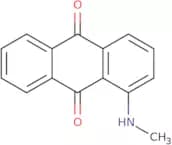
C.I.Solvent Red 109
CAS:6-Fluoro-3-indoxyl-beta-D-galactopyranoside, also known as Rifapentine, is a highly effective antituberculosis drug from the class of rifamycins. It is specifically designed to combat tuberculosis infections by targeting the active compounds in Mycobacterium tuberculosis strains. Rifapentine works by inhibiting bacterial growth through its bactericidal activity. By binding to DNA-dependent RNA polymerase, it prevents transcription and replication, effectively stopping the spread of the infection.Purity:Min. 95%Pigment yellow 126
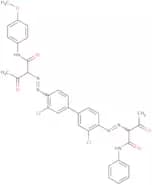
CAS:Pigment Yellow 126 is a nitro-fatty acid ester, which has an average particle diameter of 3.5 microns and a hydroxyl group at the terminal position of the molecule. This product can be used in coatings, plastics, paper, textiles, and paints. Pigment Yellow 126 is also used as a radiation absorber in x-ray films and fluorescent lamps. This product reacts with deionized water to form fatty acids and aliphatic hydrocarbons.
Purity:Min. 95%Color and Shape:PowderPigment Red 32
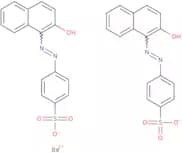
CAS:Pigment Red 32 is an organic pigment that is soluble in propylene glycol and surface-active agents. It has a particle diameter of about 0.1 microns and an average particle size of 0.2 microns, with a maximum of 100% dispersion in water. Pigment Red 32 has been shown to be acidic, fluorescent, thiophosphoric, non-polar, styrene-based, and organic solvent-soluble. This pigment is used in the production of plastics and paints for devices such as TV screens due to its ability to liquefy under radiation or heat. Pigment Red 32 also contains functional groups that impart both hydrophobic and hydrophilic properties to the molecule.br>br> Pigment Red 32 can be found in paint products including acrylics, alkyds, latexes, oil paints, and watercolors.br>br> Pigment Red 32 can be found in plastics products including ABS resPurity:Min. 95%Acridine orange 10-nonylbromide
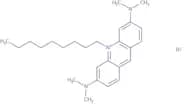
CAS:Acridine orange 10-nonylbromide is a fluorescent dye that binds to DNA and RNA. It is used in biochemistry to stain cells and tissues for examination under a microscope. Acridine orange 10-nonylbromide has been shown to bind to the mitochondria in human white blood cells, thereby inhibiting mitochondrial membrane potential, which leads to cell lysis. Acridine orange 10-nonylbromide also has an index of high values with water vapor, making it an ideal candidate for use as an indicator in ecological studies. Acridine orange 10-nonylbromide can be used as a probe for the study of biological samples because it binds reversibly to nucleic acids, giving it chemical stability. Acridine orange 10-nonylbromide also has monoclonal antibodies that are specific for the physiological function of proteins, which makes it useful as a probe for biochemical research involving protein synthesis or degradation.Formula:C26H38BrN3Purity:Min. 95%Color and Shape:SolidMolecular weight:472.5 g/molFast Sulphon Black F
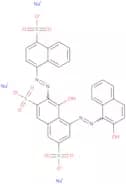
CAS:Fast Sulphon Black F is a stable, water-soluble dye that can be used for electrochemical measurements. It is an irreversible oxidation agent that has been shown to oxidize organic solvents and metal ions. The kinetic of the reaction with sodium salts was found to be first order in Fast Sulphon Black F and second order in sodium salt. This dye also has a potential use as a redox indicator in wastewater treatment systems. Fast Sulphon Black F is soluble in organic solvents, which may make it useful for optical sensors.
Formula:C30H20N4O11S3•Na3Purity:(%) Min. 95%Color and Shape:PowderMolecular weight:777.67 g/molC.I.Reactive violet 5
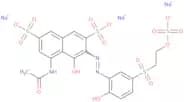
CAS:C.I. Reactive Violet 5 is a dye that is used in the textile industry and for the detection of bacterial strains in biological samples. The dye is a 4-hydroxycinnamic acid derivative that has been shown to have a hydrophobic effect on bacteria, which may be due to its chemical structure and ability to form hydrogen bonds with water molecules. C.I. Reactive Violet 5 also binds to colloidal gold particles, making it an excellent stain for biological samples such as activated sludge wastewater treatment samples where bacteria are abundant.Formula:C20H16N3Na3O15S4Purity:Min. 95%Color and Shape:PowderMolecular weight:735.6 g/molC.I.Reactive Red 111
CAS:C.I.Reactive Red 111 is a reactive dye that can be used in the manufacture of textile and paper products. It has been shown to have optimum reactivity with anionic groups, such as sulfonic acid and carboxylate, at pH levels between 2-11. This dye has a wide range of application parameters, including stability and color development time. C.I.Reactive Red 111 is also resistant to oxidation by sulfuric acid and other corrosive chemicals at high concentrations, which makes it suitable for use in industrial environments where strong oxidizing agents are present.Purity:Min. 95%Pigment Red 63:1, technical grade
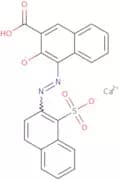
CAS:Pigment Red 63:1 is a synthetic colorant that absorbs ultraviolet light. It is typically used in paints, printing inks, and textile printing. Pigment Red 63:1 can be manufactured with low levels of impurities by following the appropriate manufacturing process. The physical properties of this pigment are best determined using analytical methods such as chromatographic and magnetic resonance spectroscopy. Regulatory bodies may require the use of validated test samples and validation to ensure that the product meets their requirements. Pigment Red 63:1 has a number of isomers that are difficult to distinguish from each other by chromatographic techniques alone. This pigment often has additives such as stabilizers, dispersants, and extenders that affect its performance in different applications. Hplc analysis is used to identify these additives.Formula:C21H14N2O6S•CaPurity:Min. 95%Color and Shape:PowderMolecular weight:462.49 g/molC.I.Food Red 7:1
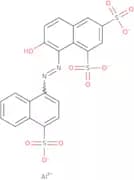
CAS:C.I.Food Red 7:1 is a copper salt pigment that is used as a food coloring agent. It has bactericidal activity and is known to be synergistic with famotidine, erythromycin, hydrochloric acid, and dry extract. C.I.Food Red 7:1 also has chemical stability and can be used as a cross-linking agent for chondroitin sulfate in the production of pharmaceuticals.Formula:C20H11AlN2O10S3Purity:Min. 95%Molecular weight:562.48 g/molC.I.Solubilised Sulphur Blue 7
CAS:C.I. Solubilised Sulphur Blue 7 is a research chemical that belongs to the group of copolymers. It is commonly used in the field of biomaterials and cellulose research. This compound has been found to have neuroprotective properties, making it potentially beneficial for the treatment of neurological disorders. C.I. Solubilised Sulphur Blue 7 has also been used in various applications such as dyeing, staining, and as an indicator or probe in scientific experiments. It can be dissolved in solvents like methanol or isooctane for ease of use. This compound has shown interactions with substances like buserelin, xylose, arachidonic acid, and aluminum, indicating its versatility and potential for further research.
Purity:Min. 95%Pigment orange 17
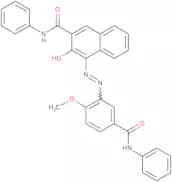
CAS:Pigment Orange 17 is a molecule that belongs to the group of quinoline derivatives. It has a skeleton made up of an inorganic and organic parts. The inorganic part is composed of a ring structure and hydroxyl groups, while the organic part is composed of an electrophotographic skeleton and functional groups. Pigment Orange 17 has been shown to have thermal expansion properties. It has been used in heat transfer fluids for industrial applications as well as in radiation-curable coatings for photoresists in the semiconductor industry.Purity:Min. 95%C.I.Disperse Blue 291:1
CAS:Please enquire for more information about C.I.Disperse Blue 291:1 including the price, delivery time and more detailed product information at the technical inquiry form on this pagePurity:Min. 95%Acid fuchsin calcium
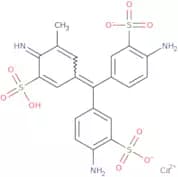
CAS:Acid fuchsin is a water-soluble, non-toxic, acidic dye that is used in histology to stain connective tissue and mucous membranes. It is used as an indicator for calcium in the presence of acid phosphatase. Acid fuchsin can be detected by light microscopy when it is stained on a section of tissue or cells. This dye can be used with immunocytochemistry or cytogenetics to assess the morphology of cells and tissues. The staining intensity varies according to the concentration of the acid fuchsin solution, which can be quantified by measuring the absorbance at 510 nm. A reference range for this measurement would be 0.1 - 1 μg/ml (10 - 100 μM).
Formula:C20H19N3O9S3·xCaColor and Shape:PowderMolecular weight:541.58 g/molC.I.Acid Orange 87
CAS:Please enquire for more information about C.I.Acid Orange 87 including the price, delivery time and more detailed product information at the technical inquiry form on this pagePurity:Min. 95%Catechol violet
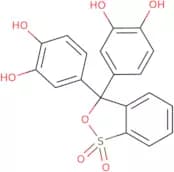
CAS:Catechol violet is a synthetic dye that is used as an optical sensor for the determination of disease activity. This dye has been shown to have synergistic effects with other dyes and a number of analytical methods, such as solid phase microextraction and kinetic energy spectroscopy. Catechol violet binds to covalently-linked proteins and nucleic acids, which can then be detected by a variety of analytical methods such as radiation or thermodynamic data. The kinetic energy of the bond between the dye and covalently-linked proteins can also be used to determine their concentration.Formula:C19H14O7SPurity:Min. 95%Color and Shape:Brown PowderMolecular weight:386.38 g/molPatent Blue V sodium salt
CAS:C.I. Acid Blue 3 is a synthetic, water-soluble dye that has been used in analytical chemistry for the detection of metal hydroxides and other metal ions. The dye can be activated by radiation or by heating to produce a bright blue color that is stable under acidic conditions. C.I. Acid Blue 3 has been shown to cause toxicity in animals, and may have potential carcinogenic effects in humans due to its ability to cross the blood-brain barrier and accumulate in the brain. The molecular weight of this compound is approximately 464 g/mol and it has a molecular formula of C 18 H 20 N 2 NaO 7 S 2 .
Formula:C27H32N2O7S2•xNaColor and Shape:Blue PowderMolecular weight:582.67 g/molDisperse Red 9
CAS:Disperse Red 9 is a dye that is used in analytical chemistry to measure the amount of hydrogen bonding interactions. It has a linear regression analysis and molecular modeling to determine its molecular structure. Disperse Red 9 is also used for toxicity studies and the determination of various chemical structures. The mechanism of the reaction between Disperse Red 9 and hydrogen is intramolecular hydrogen bonding, which can be seen by nmr spectra. Disperse Red 9 has been shown to have toxic effects on animals, as well as other side-effects such as skin irritation. This dye has an intramolecular hydrogen bond with a cationic surfactant, which makes it soluble in water.
Formula:C15H11NO2Purity:Min. 95%Color and Shape:Red PowderMolecular weight:237.25 g/molPigment Yellow 116
CAS:Pigment Yellow 116 is a yellow pigment that is used in the production of plastics and paints. It absorbs light in the blue region of the spectrum and has an average particle diameter of 3.5 nm. Pigment Yellow 116 is a polycarboxylic acid with a heterocycle, which allows it to be soluble in organic solvents. Pigment Yellow 116 has been shown to be photostable, meaning that it does not break down when exposed to ultraviolet radiation. This pigment can be polymerized by free radicals or radiation initiated polymerization, allowing for patterning applications such as printing on textiles, paper, or film.Purity:Min. 95%C.I.Acid green 54
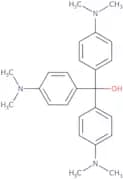
CAS:Please enquire for more information about C.I.Acid green 54 including the price, delivery time and more detailed product information at the technical inquiry form on this pagePurity:Min. 95%Solvent violet 9, technical grade dye contents
CAS:Solvent Violet 9 is a dye that has antimicrobial activity. It is used in diagnostic tests for infectious diseases and eye disorders. Solvent Violet 9 has shown to inhibit the growth of bacteria, fungi, and protozoa. This dye binds to fatty acids found on the surface of corneal endothelial cells and prevents bacterial attachment. Diazonium salt is used to synthesize this dye, which can be hydrolyzed by hydrochloric acid to form hydrogen bond with benzalkonium chloride. The absorption enhancer enhances the color of this dye when it is applied to clothing or other materials. The binding constants for this dye have been measured using an experimental technique called spectrophotometry. This dye also has anti-inflammatory properties due to its ability to bind with antimicrobial peptides and inhibit prostaglandin synthesis in inflammatory diseases such as rhizoma gastrodiae.Formula:C25H31N3OPurity:(%) Min. 80%Molecular weight:389.53 g/mol