Dyes, Stains and Tinctures
Subcategories of "Dyes, Stains and Tinctures"
- Acid Dyes(49 products)
- Azobenzenes(270 products)
- Azoic Dyes(7 products)
- Basic Dyes(27 products)
- Coumarin Dyes(72 products)
- Cyanine Dyes, Squarylium Dyes(53 products)
- DCM Dyes(4 products)
- Diarylethenes(12 products)
- Dipyrromethene Dyes(26 products)
- Direct Dyes(17 products)
- Disperse Dyes(2 products)
- Dye Sensitizers(12 products)
- Dyes(418 products)
- Dyes & Stains(911 products)
- Generating Insoluble Dyes(14 products)
- Generating Soluble Dyes(11 products)
- Hexaarylbiimidazole(4 products)
- Indicators(575 products)
- Mordant Dyes(10 products)
- Near-Infrared (NIR) Dyes(28 products)
- Oil Dyes(15 products)
- Other Stains and Dyes(2 products)
- Perylene Dyes(17 products)
- Photochromic Dyes(40 products)
- Phthalocyanine Dyes, Porphyrin Dyes(101 products)
- Quinacridone Dyes(8 products)
- Spiropyrans(16 products)
- Stains and Dyes(243 products)
- Stains and Dyes for Microscopy(5 products)
- Vat Dyes(5 products)
- Xanthene Dyes(67 products)
Found 758 products of "Dyes, Stains and Tinctures"
Direct Black 22
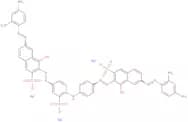
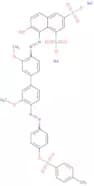
CAS:Direct Black 22 is a carbon-based nanomaterial that can be used for wastewater treatment. This material is photoelectrochemical and has been shown to have the ability to mineralize organic matter and other pollutants in wastewater. Direct Black 22 is biodegradable, which means it will break down into carbon dioxide and water. Direct Black 22 also has an affinity for estrogen and hydrogen peroxide, which makes it a good candidate for removing these substances from wastewater. Direct Black 22 has been shown to be efficient in treatments of high salinity wastewaters.Formula:C44H32N13Na3O11S3Color and Shape:Brown PowderMolecular weight:1,083.97 g/molPigment Yellow 14
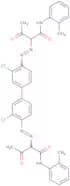
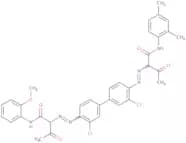
CAS:Pigment Yellow 14 is a yellow pigment that belongs to the group of polyaromatic hydrocarbons. It has a particle size of 0.1-0.5 microns and consists of nitrogen atoms, intramolecular hydrogen, and magnetic particles. Pigment Yellow 14 is insoluble in water but soluble in organic solvents such as glycol ethers, fatty acids, and polycarboxylic acids. It has been detected using analytical chemistry methods such as spectroscopy, X-ray diffraction, and electron microscopy (EM). Pigment Yellow 14 is used in paints for plastics and textiles because it does not fade or lose its color when exposed to radiation or light.
Formula:C34H30Cl2N6O4Purity:Min. 95%Color and Shape:PowderMolecular weight:657.55 g/molC.I.Disperse Orange 32
CAS:Please enquire for more information about C.I.Disperse Orange 32 including the price, delivery time and more detailed product information at the technical inquiry form on this pagePurity:Min. 95%Pigment Yellow 168
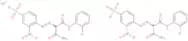
CAS:Pigment Yellow 168 is a synthetic organic pigment that is used in paints and varnishes. It is an oil-soluble, reactive dye that can be used as a colorant in plastics. Pigment Yellow 168 has been shown to be stable under UV radiation and light exposure, which makes it ideal for use in outdoor paints.Formula:C32H24CaCl2N8O14S2Purity:Min. 95%Molecular weight:919.69 g/molSolvent Red 149
CAS:Solvent Red 149 is an organic solvent that is used in the development of photographic emulsions. It has a low average particle diameter, high thermal expansion, and low volatility. Solvent Red 149 has been used as a sensor for environmental pollution. This compound has been shown to inhibit polymerization reactions by acting as an inhibitor of an essential step in the process. The hydroxyl group on the molecule can be used for authenticating purposes because it reacts with sulfuric acid to form a red dye.
Formula:C23H22N2O2Purity:Min. 95%Color and Shape:PowderMolecular weight:358.43 g/molAcid red 128
CAS:Acid Red 128 is a red dye that is used as a food colorant and as a pharmaceutical drug. Acid Red 128 is used in the diagnosis of bacterial strains, viruses, and human proteins. It has been shown to have antiviral activity against influenza virus and HIV. The hydroxyl group on the molecule reacts with the amino group of an amino acid or protein to form an ester bond, which links two molecules together. This reaction product is called a cross-link. Acid Red 128 can also be used as a growth factor by increasing cellular protein synthesis.Purity:Min. 95%Pigment Red 63:1, technical grade
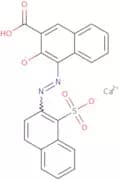
CAS:Pigment Red 63:1 is a synthetic colorant that absorbs ultraviolet light. It is typically used in paints, printing inks, and textile printing. Pigment Red 63:1 can be manufactured with low levels of impurities by following the appropriate manufacturing process. The physical properties of this pigment are best determined using analytical methods such as chromatographic and magnetic resonance spectroscopy. Regulatory bodies may require the use of validated test samples and validation to ensure that the product meets their requirements. Pigment Red 63:1 has a number of isomers that are difficult to distinguish from each other by chromatographic techniques alone. This pigment often has additives such as stabilizers, dispersants, and extenders that affect its performance in different applications. Hplc analysis is used to identify these additives.Formula:C21H14N2O6S•CaPurity:Min. 95%Color and Shape:PowderMolecular weight:462.49 g/molWeak Acid Yellow 3G
CAS:Weak Acid Yellow 3G is a benzyl ester of an aliphatic polyhydric alcohol. It is a clear, amber liquid with a pH of 6.5-7.5 and can be used in the production of microspheres and monomers for organic solvent extraction and surface treatment. When diluted with water, it has an alkaline reaction system. This product is soluble in aliphatic hydrocarbons, alcohols and ethers, but insoluble in water and most other common solvents. Weak Acid Yellow 3G can be used as a surfactant and surface active agent to simplify reactions systems by removing the need for additional reagents or solvents.Formula:C39H26Cl4N8Na2O8S2Purity:Min. 95%Molecular weight:986.6 g/molFuchsin, for flagella staining, certified
CAS:Please enquire for more information about Fuchsin, for flagella staining, certified including the price, delivery time and more detailed product information at the technical inquiry form on this pageFormula:C20H20ClN3Purity:Min. 95%Color and Shape:PowderMolecular weight:337.8 g/molC.I.Reactive Red 250
CAS:C.I. Reactive Red 250 is a versatile dye that has been widely used in various experiments. It belongs to the category of Other Dyes, Stains, Indicators & Probes. This dye has shown potential in inhibiting glycogen synthase kinase-3β (GSK-3β), an enzyme involved in various signaling pathways. Additionally, C.I. Reactive Red 250 has been studied for its effects on HIV infection and autoimmune diseases.
Purity:Min. 95%C.I.Vat Orange 16
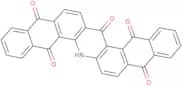
CAS:Please enquire for more information about C.I.Vat Orange 16 including the price, delivery time and more detailed product information at the technical inquiry form on this pagePurity:Min. 95%ICG-alkyne
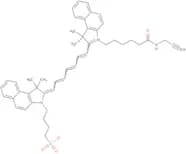
CAS:The non-invasive near-infrared fluorescence imaging dye ICG is used in ophthalmologic angiography to determine cardiac output and liver blood flow and function. The ICG alkyne can be used to label azido functionalised biomolecules eg glycans, lipids and peptides via click chemistry protocols.Formula:C48H53N3O4SPurity:Min. 95%Color and Shape:PowderMolecular weight:768 g/molC.I.Vat green 17
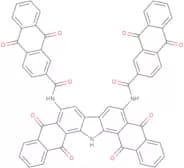
CAS:Please enquire for more information about C.I.Vat green 17 including the price, delivery time and more detailed product information at the technical inquiry form on this page
Purity:Min. 95%Coomassie brilliant blue G
CAS:Coomassie Brilliant Blue G is a dye that is used to stain proteins. This dye binds to proteins and can be detected by the use of a fluorescence probe. Coomassie Brilliant Blue G has been shown to have an inhibitory effect on methyltransferase, which is an enzyme that catalyzes the transfer of methyl groups from one molecule to another. It also inhibits ubiquitin ligases, which are enzymes that catalyze the addition of ubiquitin molecules to other proteins. Coomassie Brilliant Blue G has been shown to cause synchronous fluorescence in vivo models and in vitro cell lines.Formula:C47H49N3O7S2·NaColor and Shape:PowderMolecular weight:855.03 g/molNile red
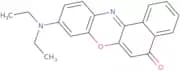
CAS:Fluorescent probe of intracellular lipids and hydrophobic domains of proteins
Formula:C20H18N2O2Color and Shape:PowderMolecular weight:318.37 g/molPigment Yellow 127
CAS:Please enquire for more information about Pigment Yellow 127 including the price, delivery time and more detailed product information at the technical inquiry form on this page
Purity:Min. 95%Solvent violet 9, technical grade dye contents
CAS:Solvent Violet 9 is a dye that has antimicrobial activity. It is used in diagnostic tests for infectious diseases and eye disorders. Solvent Violet 9 has shown to inhibit the growth of bacteria, fungi, and protozoa. This dye binds to fatty acids found on the surface of corneal endothelial cells and prevents bacterial attachment. Diazonium salt is used to synthesize this dye, which can be hydrolyzed by hydrochloric acid to form hydrogen bond with benzalkonium chloride. The absorption enhancer enhances the color of this dye when it is applied to clothing or other materials. The binding constants for this dye have been measured using an experimental technique called spectrophotometry. This dye also has anti-inflammatory properties due to its ability to bind with antimicrobial peptides and inhibit prostaglandin synthesis in inflammatory diseases such as rhizoma gastrodiae.Formula:C25H31N3OPurity:(%) Min. 80%Molecular weight:389.53 g/molMethylene Green zinc chloride double salt
CAS:Methylene green zinc chloride double salt is a reactive dye that is used in biological and analytical methods. It has a high affinity for proteins, which allows it to be used as a marker for protein-dye interactions. The methylene green zinc chloride double salt is an optical sensor that changes color when the dye interacts with other substances. It can be used to detect the presence of pathogens, such as bacteria or viruses, by determining the amount of dye remaining after exposure to the pathogen. Methylene green zinc chloride double salt also reacts with tetrazolium dye in biological samples, such as human serum or brain tissue, to produce a color change. This reaction mechanism can be used to measure metabolic activity in cells and tissues. In wastewater treatment, methylene green zinc chloride double salt can be used as an adsorbent for removal of organic pollutants from water. Methylene green zinc chloride double salt also has radiation-blocking properties and can be used as a protective agent against radiation exposure
Formula:C16H17ClN4O2S•(ZnCl2)0Purity:Min. 70 Area-%Color and Shape:PowderMolecular weight:432.99 g/molNinhydrin
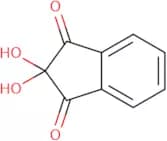
CAS:Reagent for quantification of amino acids and peptidesFormula:C9H6O4Purity:Min. 99.0%Color and Shape:Yellow PowderMolecular weight:178.14 g/molC.I.Solvent Blue 13
CAS:Please enquire for more information about C.I.Solvent Blue 13 including the price, delivery time and more detailed product information at the technical inquiry form on this pagePurity:Min. 95%