Dyes, Stains and Tinctures
Subcategories of "Dyes, Stains and Tinctures"
- Acid Dyes(49 products)
- Azobenzenes(270 products)
- Azoic Dyes(7 products)
- Basic Dyes(27 products)
- Coumarin Dyes(72 products)
- Cyanine Dyes, Squarylium Dyes(53 products)
- DCM Dyes(4 products)
- Diarylethenes(12 products)
- Dipyrromethene Dyes(26 products)
- Direct Dyes(17 products)
- Disperse Dyes(2 products)
- Dye Sensitizers(12 products)
- Dyes(417 products)
- Dyes & Stains(911 products)
- Generating Insoluble Dyes(14 products)
- Generating Soluble Dyes(11 products)
- Hexaarylbiimidazole(4 products)
- Indicators(575 products)
- Mordant Dyes(10 products)
- Near-Infrared (NIR) Dyes(28 products)
- Oil Dyes(15 products)
- Other Stains and Dyes(2 products)
- Perylene Dyes(17 products)
- Photochromic Dyes(40 products)
- Phthalocyanine Dyes, Porphyrin Dyes(101 products)
- Quinacridone Dyes(8 products)
- Spiropyrans(16 products)
- Stains and Dyes(243 products)
- Stains and Dyes for Microscopy(5 products)
- Vat Dyes(5 products)
- Xanthene Dyes(67 products)
Found 758 products of "Dyes, Stains and Tinctures"
6α-Fluoroprednisolone acetate
CAS:Controlled Product6alpha-Fluoroprednisolone acetate is a corticosteroid that is used for the treatment of inflammatory diseases. It has a high therapeutic index and does not bind to mineralocorticoid receptors in the body. 6alpha-Fluoroprednisolone acetate is administered as an aerosol or a microsphere. It can be used in cell culture because it does not inhibit protein synthesis or cause morphological changes to cells. The drug has been shown to have a low cytotoxicity profile, which may be due to its ability to suppress pd-l1 and Mcl-1 proteins, which are associated with cancer metastasis. Clinical data suggests that 6alpha-fluoroprednisolone acetate has no adverse effects on the liver, kidney, or bone marrow.Formula:C23H29FO6Purity:Min. 95%Molecular weight:420.47 g/molC.I.Disperse Yellow 134
CAS:Please enquire for more information about C.I.Disperse Yellow 134 including the price, delivery time and more detailed product information at the technical inquiry form on this pagePurity:Min. 95%Bis(5-bromo-4-chloro-3-indoxyl)pyrophosphoric acid disodium salt
Please enquire for more information about Bis(5-bromo-4-chloro-3-indoxyl)pyrophosphoric acid disodium salt including the price, delivery time and more detailed product information at the technical inquiry form on this pageFormula:C16H8Br2Cl2N2Na2O7P2Molecular weight:678.90 g/molBis(5-bromo-6-chloro-3-indoxyl)pyrophosphoric acid, disodium salt
Please enquire for more information about Bis(5-bromo-6-chloro-3-indoxyl)pyrophosphoric acid, disodium salt including the price, delivery time and more detailed product information at the technical inquiry form on this pagePurity:Min. 95%C.I.Reactive Orange 72
CAS:Please enquire for more information about C.I.Reactive Orange 72 including the price, delivery time and more detailed product information at the technical inquiry form on this page
Purity:Min. 95%Nitrazine Yellow
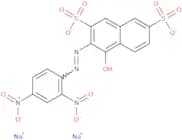
CAS:Nitrazine Yellow is a reversible, reusable, imine-based fluorescent dye that absorbs in the near-infrared region of the spectrum. This compound has been shown to be an acceptor and an inorganic amide. Nitrazine Yellow also has transition metal properties and is a heterocyclic ring. It can be used as a hydrogen bond donor or proton acceptor, depending on its environment. Nitrazine Yellow can react with hydroxylamine to form coupler products that are metastable and can be detected by fluorometric analysis.Formula:C16H8N4Na2O11S2Purity:Min. 95%Color and Shape:PowderMolecular weight:542.37 g/molAcridine orange base
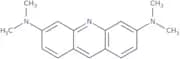
CAS:Acridine orange is a fluorescent dye that can pass through the cell membrane and bind to the cytoplasmic structures of cells. It can be used as a probe for determining the presence of cell nuclei, mitochondria, and other organelles. Acridine orange is also used in experiments to determine mitochondrial membrane potential. In this type of experiment, acridine orange is added to cells and its uptake into mitochondria is observed. The dye changes color from orange to green when it binds with the mitochondria because it emits green fluorescence at higher excitation wavelengths than red fluorescence. Acridine orange has been shown to increase fatty acid synthesis by binding with fatty acid synthase, which is an enzyme involved in fatty acid biosynthesis. Acridine orange also increases ATP levels by inhibiting oxidative phosphorylation in mitochondria.Formula:C17H19N3Color and Shape:Orange PowderMolecular weight:265.35 g/molReactive red 230
CAS:Please enquire for more information about Reactive red 230 including the price, delivery time and more detailed product information at the technical inquiry form on this pagePurity:Min. 95%C.I.Direct Blue 70
CAS:Please enquire for more information about C.I.Direct Blue 70 including the price, delivery time and more detailed product information at the technical inquiry form on this pagePurity:Min. 95%Direct blue 218
CAS:Direct blue 218 is a glycol ether dye that is used in the textile industry and as a food coloring agent. It has been shown to cause nephrotoxicity and hepatotoxicity as well as cancer in rats. Direct blue 218 is absorbed by the target tissues, which include the ovary cells, liver cells, and kidney cells. This dye has been shown to inhibit catecholamine release from the adrenal gland in vitro assays and increase the number of mitotic figures in rat liver cells chronically exposed to this dye. Direct blue 218 also contains nitrogen atoms that can form a copper complex with an electron-donating group (e.g., hydroxyl groups). The copper complex increases its stability, leading to increased genotoxic effects.Formula:C32H16Cu2N6Na4O16S4Color and Shape:Blue PowderMolecular weight:1,087.82 g/molC.I. Pigment Red 48:4
CAS:C.I. Pigment Red 48:4 is a synthetic red pigment with an anhydrous sodium chloride matrix that has been used in analytical methodology, and in the production of polyester and electro-luminescent materials. The pigment is soluble in organic solvents such as acetone, toluene, and ethyl acetate. C.I. Pigment Red 48:4 is stable at temperatures up to 130°C, but decomposes at higher temperatures. This pigment has a redox potential of -0.05 V vs Ag/AgCl (reference electrode). C.I. Pigment Red 48:4 is light resistant and has shown good resistance to fading due to weathering or UV radiation when used in printing ink or colorants for plastics such as polyesters or vinyls.BR> COLOR: PURITY: >99% MELTING POINT: >200°C SPECIFIC GRAVITY: 1.Formula:C18H11ClMnN2O6SPurity:Min. 95%Color and Shape:Red PowderMolecular weight:473.75 g/molAcid black 24, technical grade
CAS:Acid Black 24 is a hydroxylated fatty acid with the chemical name of 3-hydroxy-2,4,6-trimethylcyclohexanecarboxylic acid. It is a cross-linking agent for unsaturated polyester resins and an adsorbent for pollutants. The optimum concentration of Acid Black 24 varies depending on the type of polymerization and radiation used. For example, the optimum concentration for radiation at 25 degrees Celsius is 1.0%. The use of Acid Black 24 in wastewater treatment has been shown to reduce the amount of proton transport required by up to 50% and lower energy consumption by up to 80%.Formula:C36H25N5O6S2•Na2Purity:Min. 95%Color and Shape:Blue To Black SolidMolecular weight:733.73 g/molC.I.Reactive Orange 13
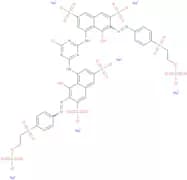
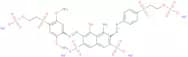
CAS:C.I.Reactive Orange 13 is a reactive dye that can be used for the detection of bacterial strains, including Legionella pneumophila and Pseudomonas aeruginosa. The dye reacts with metal ions to form a precipitate, which can be detected by measuring the viscosity or turbidity of the solution. C.I.Reactive Orange 13 has been shown to bind to biomass from fungi and bacteria, which is why it is often used for monitoring water quality in wastewater treatment plants and for detecting microbial contamination in food products. C.I.Reactive Orange 13 is also an effective metal chelator that can be used for kinetic studies on borohydride reduction reactions involving iron and other transition metals.
Formula:C24H15ClN7O10S3·3NaPurity:Min. 95%Molecular weight:762.04 g/molPigment red 49
CAS:Pigment Red 49 is a diazonium salt that has been used as a dye in many areas of industry. The red color can be obtained by reacting pigment red 49 with sodium salts, hydrochloric acid, and ethylene diamine. Pigment Red 49 is also used in clinical studies to detect the presence of nitrogen atoms. This substance can cause allergic reactions and is classified as a particle. It has also been found to have an effect on radiation and glycol esters. Pigment Red 49 interacts with cationic surfactants, which are compounds that have a cationic charge due to the presence of at least one quaternary ammonium group. Pigment Red 49 is soluble in fatty acids and glycol esters.Formula:C20H13N2NaO4SPurity:Min. 98%Color and Shape:PowderMolecular weight:400.38 g/molCI Reactive Blue 203
CAS:CI Reactive Blue 203 is a reactive dye that changes color from blue to purple when heated. It is used in forensics, where it can be used to detect the presence of alkali metal ions. CI Reactive Blue 203 has been shown to react with fungal cells and peroxidase enzymes, yielding a violet color. This dye is also used as a surfactant, thickener, and vinyl stabilizer in textile production. CI Reactive Blue 203 has been shown to bind to antibodies and can be used for staining purposes in histology. This dye binds to methoxy groups on proteins and can be used for detection purposes in ELISA tests.Formula:C28H29N5O21S6•Na4Purity:Min. 95%Color and Shape:PowderMolecular weight:1,055.91 g/molPigment red 166
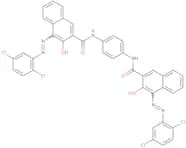
CAS:Pigment Red 166 is a hydroxyl group glycol ester. It is a mixture of red, orange and yellow pigments that are used in paints and coatings. Pigment Red 166 has a particle size of less than 1 micron and a thermal expansion coefficient of about 2.5 x 10⁻⁶ K-1. This pigment has an inorganic acid content of about 0.4%. The shape of the pigment is spherical, with a diameter of about 20 nm. Pigment Red 166 exhibits fluorescence when irradiated with radiation from the ultraviolet to the infrared region of the spectrum, which corresponds to its aliphatic hydrocarbon content.Formula:C40H24Cl4N6O4Color and Shape:PowderMolecular weight:794.47 g/molPergascript Red 16
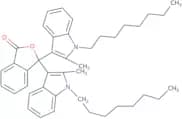
CAS:Pergascript Red 16 is a bright red pigment that has been used in ink, paint, and plastics. It has an optical density of 1.5 at 595 nanometers. Pergascript Red 16 is also used in imaging and recording applications.
Formula:C42H52N2O2Purity:Min. 98.0 Area-%Color and Shape:Off-White PowderMolecular weight:616.87 g/molC.I.Reactive orange 16
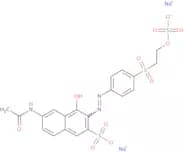
CAS:C.I.Reactive Orange 16 is a reactive dye with an orange hue. It is used in textile dyeing, paper, and leather industries. It is also used in toxicity studies to measure the effect of substances on living organisms. C.I.Reactive Orange 16 is not soluble in water and has a high resistance to acid and alkali; it has been shown that the optimum concentration for this dye is 0.1%. The mechanism of the reaction between C.I.Reactive Orange 16 and nitrogen atoms provides a basis for its use in wastewater treatment as well as its adsorption properties. Langmuir adsorption isotherms have shown that C.I.Reactive Orange 16 has an adsorption capacity of 1,812 g/g at 25°C and pH 6-7, which can be increased to 3,072 g/g at 40°C and pH 7-8 by adding sodium citrate to the solution (in order toFormula:C20H19N3O11S3•(Na)2Purity:Min. 95%Molecular weight:617.54 g/molC.I.Disperse Yellow 201
CAS:Please enquire for more information about C.I.Disperse Yellow 201 including the price, delivery time and more detailed product information at the technical inquiry form on this pagePurity:Min. 95%Pigment yellow 139
CAS:Pigment Yellow 139 is a colorant that is soluble in organic solvents and has a maximum absorption wavelength of 595 nm. It can be used as an optical system polarizer, and it is also used in liquid crystal compositions. Pigment Yellow 139 changes color depending on the pH of the environment, and it undergoes polymerization when irradiated with radiation or an acid complex. This pigment is also soluble in glycol esters and polycarboxylic acids. Pigment Yellow 139 is produced by reacting hydroxyl groups with polycarboxylic acid products. The pigments are then converted to particles by crystallizing them using a reaction product of particle emission.
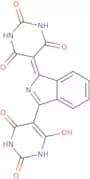
Pigment Yellow 139 has a crystalline structure composed of irregularly shaped particles that are about 0.2-0.4 micrometers in diameter.Formula:C16H9N5O6Purity:Min. 95%Color and Shape:Yellow PowderMolecular weight:367.27 g/mol