Dyes, Stains and Tinctures
Subcategories of "Dyes, Stains and Tinctures"
- Acid Dyes(49 products)
- Azobenzenes(270 products)
- Azoic Dyes(7 products)
- Basic Dyes(27 products)
- Coumarin Dyes(72 products)
- Cyanine Dyes, Squarylium Dyes(53 products)
- DCM Dyes(4 products)
- Diarylethenes(12 products)
- Dipyrromethene Dyes(26 products)
- Direct Dyes(17 products)
- Disperse Dyes(2 products)
- Dye Sensitizers(12 products)
- Dyes(417 products)
- Dyes & Stains(911 products)
- Generating Insoluble Dyes(14 products)
- Generating Soluble Dyes(11 products)
- Hexaarylbiimidazole(4 products)
- Indicators(575 products)
- Mordant Dyes(10 products)
- Near-Infrared (NIR) Dyes(28 products)
- Oil Dyes(15 products)
- Other Stains and Dyes(2 products)
- Perylene Dyes(17 products)
- Photochromic Dyes(40 products)
- Phthalocyanine Dyes, Porphyrin Dyes(101 products)
- Quinacridone Dyes(8 products)
- Spiropyrans(16 products)
- Stains and Dyes(243 products)
- Stains and Dyes for Microscopy(5 products)
- Vat Dyes(5 products)
- Xanthene Dyes(67 products)
Found 758 products of "Dyes, Stains and Tinctures"
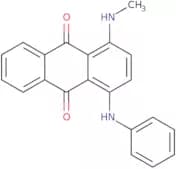
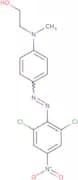
C.I.Disperse Orange 32
CAS:Please enquire for more information about C.I.Disperse Orange 32 including the price, delivery time and more detailed product information at the technical inquiry form on this pagePurity:Min. 95%Pigment Blue 10
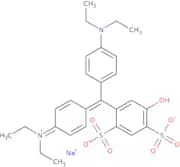
CAS:Pigment Blue 10 is a cationic dye that belongs to the class of quaternary ammonium compounds. It is often used in textile and leather processing as a cross-linking agent and as an auxiliary agent for pigmenting. Pigment Blue 10 has good light resistance, high solubility in organic solvents, and low toxicity. It is also used in radiation curing processes, such as epoxy resin, acrylate resin, polyester resin, and silicone rubber. Pigment Blue 10 can be used with salt compounds or aliphatic hydrocarbons to form a film on surfaces or objects. It has been shown to have biodegradable properties when mixed with other substances.Purity:Min. 95%C.I.Acid green 54
CAS:Please enquire for more information about C.I.Acid green 54 including the price, delivery time and more detailed product information at the technical inquiry form on this pagePurity:Min. 95%Disperse Red 9
CAS:Disperse Red 9 is a dye that is used in analytical chemistry to measure the amount of hydrogen bonding interactions. It has a linear regression analysis and molecular modeling to determine its molecular structure. Disperse Red 9 is also used for toxicity studies and the determination of various chemical structures. The mechanism of the reaction between Disperse Red 9 and hydrogen is intramolecular hydrogen bonding, which can be seen by nmr spectra. Disperse Red 9 has been shown to have toxic effects on animals, as well as other side-effects such as skin irritation. This dye has an intramolecular hydrogen bond with a cationic surfactant, which makes it soluble in water.
Formula:C15H11NO2Purity:Min. 95%Color and Shape:Red PowderMolecular weight:237.25 g/molPatent Blue V sodium salt
CAS:C.I. Acid Blue 3 is a synthetic, water-soluble dye that has been used in analytical chemistry for the detection of metal hydroxides and other metal ions. The dye can be activated by radiation or by heating to produce a bright blue color that is stable under acidic conditions. C.I. Acid Blue 3 has been shown to cause toxicity in animals, and may have potential carcinogenic effects in humans due to its ability to cross the blood-brain barrier and accumulate in the brain. The molecular weight of this compound is approximately 464 g/mol and it has a molecular formula of C 18 H 20 N 2 NaO 7 S 2 .
Formula:C27H32N2O7S2•xNaColor and Shape:Blue PowderMolecular weight:582.67 g/molC.I.Food Red 7:1
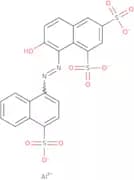
CAS:C.I.Food Red 7:1 is a copper salt pigment that is used as a food coloring agent. It has bactericidal activity and is known to be synergistic with famotidine, erythromycin, hydrochloric acid, and dry extract. C.I.Food Red 7:1 also has chemical stability and can be used as a cross-linking agent for chondroitin sulfate in the production of pharmaceuticals.Formula:C20H11AlN2O10S3Purity:Min. 95%Molecular weight:562.48 g/molC.I.Reactive violet 5
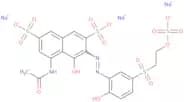
CAS:C.I. Reactive Violet 5 is a dye that is used in the textile industry and for the detection of bacterial strains in biological samples. The dye is a 4-hydroxycinnamic acid derivative that has been shown to have a hydrophobic effect on bacteria, which may be due to its chemical structure and ability to form hydrogen bonds with water molecules. C.I. Reactive Violet 5 also binds to colloidal gold particles, making it an excellent stain for biological samples such as activated sludge wastewater treatment samples where bacteria are abundant.Formula:C20H16N3Na3O15S4Purity:Min. 95%Color and Shape:PowderMolecular weight:735.6 g/molFast Sulphon Black F
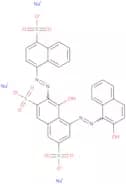
CAS:Fast Sulphon Black F is a stable, water-soluble dye that can be used for electrochemical measurements. It is an irreversible oxidation agent that has been shown to oxidize organic solvents and metal ions. The kinetic of the reaction with sodium salts was found to be first order in Fast Sulphon Black F and second order in sodium salt. This dye also has a potential use as a redox indicator in wastewater treatment systems. Fast Sulphon Black F is soluble in organic solvents, which may make it useful for optical sensors.
Formula:C30H20N4O11S3•Na3Purity:(%) Min. 95%Color and Shape:PowderMolecular weight:777.67 g/molC.I.Basic Yellow 21
CAS:Basic Yellow 21 is a dye that belongs to the class of phthalo-quinones. It is used in the manufacture of colored fabrics and various other products, such as paints and plastics. Basic Yellow 21 is also used in the treatment of bladder cancer. The dye reacts with DNA to form adducts that inhibit the transcription of DNA into RNA, which may lead to carcinogenesis.Purity:Min. 95%Direct black 168
CAS:Direct black 168 is a synthetic coal tar dye that is used in many industries, including the textile industry. It is used as a colorant and dyeing assistant in the production of textiles and paper. Direct black 168 is also used as an antifungal agent, light source, and optical brightener.Formula:C34H27N9Na3O11S3Color and Shape:Brown PowderMolecular weight:902.8 g/molC.I.Reactive Red 108
CAS:Please enquire for more information about C.I.Reactive Red 108 including the price, delivery time and more detailed product information at the technical inquiry form on this page
Purity:Min. 95%C.I.Acid Red 52
CAS:C.I.Acid Red 52 is a fluorescent dye that is used as a probe for the study of wastewater treatment processes. The fluorescence intensity of C.I. Acid Red 52 increases when it binds to an adsorbent material such as activated carbon, due to the adsorption process. It has also been used extensively in polymerase chain reaction (PCR) applications as a synchronous fluorescence quencher, and has been shown to inhibit ubiquitin ligases in biological samples with high specificity. In addition, this dye has been found to have carcinogenic potential in animal studies and may react with substances present in the matrix solution during analytical methods, leading to errors in the measured data.BR>
Formula:C27H29N2O7S2NaColor and Shape:Purple PowderMolecular weight:580.65 g/molC.I.Sulphur Blue 5
CAS:Please enquire for more information about C.I.Sulphur Blue 5 including the price, delivery time and more detailed product information at the technical inquiry form on this pageFormula:C12H9N3O5Purity:Min. 95%Molecular weight:275.22 g/molC.I. Solvent blue 19
CAS:C.I. Solvent blue 19 is an azo dye that is used as a colorant in analytical chemistry and as a sample preparation reagent for organic compounds. C.I. Solvent blue 19 is used to measure the thermal expansion of polymers, such as polyethylene, polypropylene, and polystyrene. It is also used in the determination of total nitrogen content in samples by combustion analysis or other methods. The carcinogenic potential of C.I. Solvent blue 19 has been studied using animal models and cellular cultures, but it has not been found to cause cancer under these conditions. Cationic surfactants are effective at removing this dye from wastewater treatment systems and may be used for bladder infections due to its antibacterial properties against E-coli bacteria. C.I. Solvent blue 19 is prepared by reacting p-hydroxybenzoic acid with aniline and nitrobenzene in the presence of hydrochloric acid or
Formula:C21H16N2O2Purity:Min. 95 Area-%Color and Shape:Blue PowderMolecular weight:328.36 g/molC.I.Disperse Orange 5
CAS:The regression method is used to remove the effects of an experimental variable on a response. The regression method is usually applied in cases where there are two variables, one of which is the independent variable and the other is the dependent variable. The independent variable may be a physical parameter that can be controlled by the experimenter, such as temperature or pressure. The dependent variable may be a physical property like viscosity or density. In this case, we are using supercritical CO2 as our independent variable and cellulose acetate as our dependent variable. Supercritical CO2 has been shown to have a very high solubility for cellulose acetate monomers, which makes it useful for polymerizing cellulose acetate into polyesters and polyamides. This technique has been used to make devices such as electrodes with good electrical conductivity, membranes with good permeability, and organic semiconductors with good electron transport properties.Purity:Min. 95%C.I.Direct Yellow 147
CAS:Please enquire for more information about C.I.Direct Yellow 147 including the price, delivery time and more detailed product information at the technical inquiry form on this pagePurity:Min. 95%C.I.Solvent Blue 24
CAS:Please enquire for more information about C.I.Solvent Blue 24 including the price, delivery time and more detailed product information at the technical inquiry form on this pagePurity:Min. 95%Reactive Blue 5
CAS:Reactive Blue 5 is a reactive dye that is used as a component in detergent compositions. It has shown to be effective in the removal of biological materials, such as bacteria, yeast and fungi. Reactive Blue 5 has also been shown to have an inhibitory effect on tumour necrosis factor-alpha (TNF-α). The kinetic data for the dye was determined by measuring its rate of reaction with polymer concentration and by gravimetric analysis. The transport rate of Reactive Blue 5 has been found to increase with increasing pH levels. This dye is also used as a conditioning agent for textile products, as well as an environmental pollutant indicator.
Formula:C29H20ClN7O11S3Purity:Min. 95%Color and Shape:PowderMolecular weight:774.16 g/molCarthamus yellow
CAS:Carthamus yellow is a colorant that is used as a food additive and in cosmetics. It has been shown to be nontoxic and nonirritating and is approved by the FDA for use in foods, drugs, and cosmetics. Carthamus yellow is extracted from the flowers of Carthamus tinctorius plants. It is an orange-yellow powder with a light odor that can be used as a coloring agent in food, drugs, and cosmetics.Formula:C14H16O7Purity:Min. 95%Color and Shape:SolidMolecular weight:296.27 g/molLeucomalachite Green
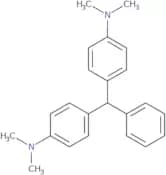
CAS:Leucomalachite Green is a green luminescent compound that exhibits significant cytotoxicity in vitro. This chemical can be used to measure the water vapor flow rate of a sample. The leucomalachite green assay can be performed using a liquid chromatography-mass spectrometry (LC-MS/MS) method with fluorescence detection. Leucomalachite Green has been used as an indicator for the presence of water vapor with a sensitivity range of 0.1% to 100%. It is also used in clinical pathology, toxicity studies, and cellular physiology research.
Formula:C23H26N2Purity:Min. 98 Area-%Color and Shape:PowderMolecular weight:330.47 g/mol