Dyes, Stains and Tinctures
Subcategories of "Dyes, Stains and Tinctures"
- Acid Dyes(49 products)
- Azobenzenes(270 products)
- Azoic Dyes(7 products)
- Basic Dyes(27 products)
- Coumarin Dyes(72 products)
- Cyanine Dyes, Squarylium Dyes(53 products)
- DCM Dyes(4 products)
- Diarylethenes(12 products)
- Dipyrromethene Dyes(26 products)
- Direct Dyes(17 products)
- Disperse Dyes(2 products)
- Dye Sensitizers(12 products)
- Dyes(417 products)
- Dyes & Stains(911 products)
- Generating Insoluble Dyes(14 products)
- Generating Soluble Dyes(11 products)
- Hexaarylbiimidazole(4 products)
- Indicators(575 products)
- Mordant Dyes(10 products)
- Near-Infrared (NIR) Dyes(28 products)
- Oil Dyes(15 products)
- Other Stains and Dyes(2 products)
- Perylene Dyes(17 products)
- Photochromic Dyes(40 products)
- Phthalocyanine Dyes, Porphyrin Dyes(101 products)
- Quinacridone Dyes(8 products)
- Spiropyrans(16 products)
- Stains and Dyes(243 products)
- Stains and Dyes for Microscopy(5 products)
- Vat Dyes(5 products)
- Xanthene Dyes(67 products)
Found 758 products of "Dyes, Stains and Tinctures"
Pigment red 170
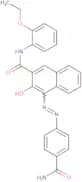
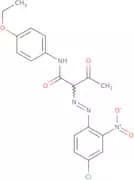
CAS:Pigment Red 170 is a mouse monoclonal antibody that binds to fatty acids. It has been shown to adsorb to the surface of cells and inhibit the growth of cells by interfering with their ability to take up fatty acids. Pigment Red 170 is used in a model system for studying the binding constants between antibodies and fatty acids. The glycol ester of pigment red 170 is hydrolyzed by hydrochloric acid to form an iron oxide, which can be used as a pigment in paints or dyes. Pigment Red 170 also has photochemical properties, with absorption peaks at 350 nm and 450 nm, making it useful for staining tissues and microorganisms such as gram-positive bacteria, fungi, protozoa, and erythrocytes.
Formula:C26H22N4O4Purity:Min. 95%Color and Shape:Red PowderMolecular weight:454.48 g/molPigment red 5
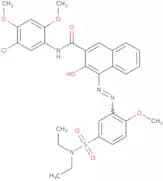
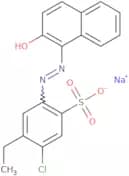
CAS:Pigment Red 5 is a red pigment that belongs to the group of diazonium salts. It is used in the production of detergent compositions and film-forming polymers. Pigment Red 5 is a skin cancer agent, which can be used as a sensitizing agent in photodynamic therapy. This compound has been shown to exhibit cytotoxic effects on human melanoma cells and other cancer cells by inhibiting glycol ester synthesis, glycol ether synthesis, and DNA synthesis. Pigment Red 5 has also been shown to inhibit malonic acid-induced erythrocyte hemolysis in mice.Formula:C30H31ClN4O7SPurity:Min. 95%Color and Shape:PowderMolecular weight:627.11 g/mol16a-Methyl-9,11-dehydro prednisolone
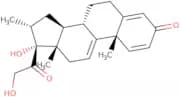
CAS:Controlled ProductPrednisolone is a steroid hormone that has been used for the treatment of inflammatory bowel disease. It has been shown to be effective in the treatment of bowel diseases and is also used as a replacement therapy for adrenal insufficiency. Prednisolone has an excellent safety profile and does not cause insulin resistance or weight gain, unlike some other steroids. It can be used to treat inflammatory diseases such as rheumatoid arthritis and psoriasis. The anti-inflammatory properties of prednisolone are due to its ability to bind to the mineralocorticoid receptor, which prevents the binding of cortisol. This blocks the conversion of cholesterol into pregnenolone, which is required for the production of glucocorticoids and mineralocorticoids. 16a-Methyl-9,11-dehydro prednisolone (16D) is a metabolite that can be found in blood plasma after oral administration of prednisolone. 16D bindsFormula:C22H28O4Purity:Min. 97 Area-%Color and Shape:PowderMolecular weight:356.46 g/molC.I.Reactive green 19
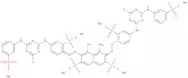
CAS:C.I.Reactive green 19 is a synthetic, reactive dye that has been shown to be an effective tyrosinase inhibitor. This dye binds to the active site of tyrosinase and inhibits its activity. It also inhibits the monophenolase activity of tyrosinase, which then prevents the conversion of tyrosine to melanin. C.I.Reactive green 19 has been shown to have toxicological effects on plant tissue and is not recommended for use on live plants or in gardens or nurseries.Purity:Min. 95%C.I.Basic Orange 33
CAS:C.I. Basic Orange 33 is a versatile dye that belongs to the class of dyes, stains, indicators, and probes. It is commonly used in research settings for its ability to detect and measure various biological processes. C.I. Basic Orange 33 has been shown to interact with ubiquitin proteasome systems, which play a crucial role in protein degradation and cellular regulation. This dye can be used in experiments involving electrode reactions, sorafenib studies, agrochemical research, and half-reaction analysis. Additionally, C.I. Basic Orange 33 has excellent solubility in isooctane and exhibits acidic properties. Its unique molecular structure makes it an ideal choice for researchers looking for a reliable and effective tool in their scientific investigations.Purity:Min. 95%Reactive black bis-vinyl
CAS:Please enquire for more information about Reactive black bis-vinyl including the price, delivery time and more detailed product information at the technical inquiry form on this page
Purity:Min. 95%C.I.Solubilised Vat Red 1
CAS:Sulfamic acid is a sulfonamide that can be used as an industrial coagulant. It is also used to stabilize metal ions and can be used in the treatment of wastewater. Sulfamic acid has a chelate ring structure, which binds to metals such as iron and aluminum, making them insoluble. This prevents the metals from entering the environment, which is why it is often used in environmental pollution control. The structural formula for sulfamic acid consists of a sulfur atom bonded to two nitrogen atoms, with three oxygen atoms as its side chains. The sulfur atom has two hydroxyl groups and one methyl group attached to it. Sulfamic acid contains one or more aliphatic hydrocarbon chains that are attached to the sulfur atom through an oxygen atom on each end of the chain. One oxygen atom has a hydrogen atom attached to it, while the other end of the chain is left uncharged due to a lack of electrons. Sulfamic acid contains a chlorine atom atPurity:Min. 95%C.I.Solvent green 28
CAS:C.I.Solvent green 28 is a fine chemical, useful building block, and research chemicals. It is a versatile building block for the synthesis of complex compounds with high quality and high purity. C.I.Solvent green 28 is a versatile intermediate for organic reactions, such as condensation reactions, cycloadditions, and polymerizations. It is also a useful scaffold for the preparation of complex molecules by its incorporation into other chemical structures.END>Formula:C34H34N2O4Purity:Min. 95%Color and Shape:PowderMolecular weight:534.64 g/molCresol red
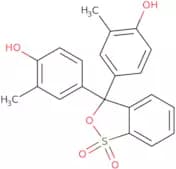
CAS:Cresol red is a weak diacidic molecule and an anionic dye largely used in genetic and biochemical studies. Cresol red is commonly used to measure the pH of aqueous solutions also from environmental samples, e.g. seawater (Byrne, 1989). Cresol red shows an increased protonation in acidic water-based solutions at low temperatures (Heger, 2006). Cresol red can be used to introduce pH-sensing features to sensing materials, such as, optical fibres or nanoparticles (Islam, 2021).Formula:C21H18O5SColor and Shape:Brown Red PowderMolecular weight:382.43 g/molC.I.Acid Red 141
CAS:Please enquire for more information about C.I.Acid Red 141 including the price, delivery time and more detailed product information at the technical inquiry form on this page
Purity:Min. 95%C.I.Food Red 9:1
CAS:C.I.Food Red 9:1 is a synthetic red colorant that is used in food and other products such as cosmetics and pharmaceuticals. It is a synthetic pigment that can be prepared by the condensation of anthraquinone with glyoxal or glutaraldehyde followed by acid hydrolysis. The average molecular weight of C.I.Food Red 9:1 is about 1,500 Daltons.Purity:Min. 95%C.I.Reactive Orange 84
CAS:C.I.Reactive Orange 84 is an amide, which is a molecule containing both an amine and a carboxylic acid functional group. This compound has been used in microscopy as a reactive dye to study surface methodology and the optimum concentration of potassium phosphate, which activated the dye. The compound has also been used to determine the activity test of wastewater, or the removal of metal hydroxides by means of photocatalytic activity. C.I.Reactive Orange 84 has shown efficient kinetic properties with respect to other dyes in that it can be used for kinetic studies at neutral pH and at low concentrations. C.I.Reactive Orange 84 has also been identified as being reactive with intermolecular hydrogen bonding, which gives it the ability to bind to metal ions such as zinc and copper; this property may have implications in the development of new methods for removing metals from wastewater streams using photocatalysis.br>br>Purity:Min. 95%C.I.Reactive Orange 1
CAS:Reactive Orange 1 is a synthetic dye that has been used as a colorant in laundry detergents and other household products. It is also used in wastewater treatment to remove organometallic compounds and metal ions. Reactive Orange 1 reacts with the wastewater, forming soluble complexes with the surfactant, phosphatase, and immobilized metal ions. The fluorescence lifetime of Reactive Orange 1 can be used to determine its interaction with the environment.Purity:Min. 95%Pigment orange 17
CAS:Pigment Orange 17 is a molecule that belongs to the group of quinoline derivatives. It has a skeleton made up of an inorganic and organic parts. The inorganic part is composed of a ring structure and hydroxyl groups, while the organic part is composed of an electrophotographic skeleton and functional groups. Pigment Orange 17 has been shown to have thermal expansion properties. It has been used in heat transfer fluids for industrial applications as well as in radiation-curable coatings for photoresists in the semiconductor industry.Purity:Min. 95%Transparent Red Fb
CAS:Transparent Red Fb is a hydrophobic, microsphere with a chloride-containing surface. It is made of a polyvinyl chloride (PVC) matrix containing a cationic dye and an anionic surfactant. The dye provides the color and the surfactant provides the fluorescence property. This product is used in surface active agent formulations, such as in laundry detergents.Purity:Min. 95%Pigment orange 46
CAS:Pigment orange 46 is a reactive dye with a chemical formula of C 17 H 12 O 7 that is used in photography and as a colorant. It has a cyclic structure with a hydroxyl group, carbonyl group, and one or more reactive carbon-carbon double bonds. Pigment orange 46 is classified as an aromatic compound and contains the fluorescing group, which makes it highly sensitive to radiation. Pigment orange 46 can be synthesized by reacting phenol with thioacetic acid. This product can be found as an ingredient in various insecticides and organic solvents.Purity:Min. 95%Direct blue 76
CAS:Direct blue 76 is a dye that is used in textile printing and other applications. Direct blue 76 is an organic solvent-based dye with a hydrocarbon group. It can be activated by acid, alkali, and heat. Direct blue 76 has been shown to be reactive with metal ions such as copper and zinc. The reaction solution for this dye consists of 2-methyl-4-isothiazolin-3-one, silicone, surfactant, and polymerization initiator. This dye has a viscosity of 0.2–0.6 mPa·s at 25 °C and an activation energy of 11–12 kJ/mol.Formula:C32H16Cu2N6Na4O16S4Color and Shape:PowderMolecular weight:1,087.82 g/molPigment YellOw 75
CAS:Pigment YellOw 75 is a polymerization initiator that has a hydroxyl group and contains functional groups such as an amide, carboxylic acid, or alcohol. The monomers are vinyl acetate, ethylene glycol, and butanediol. Pigment YellOw 75 is used in the production of polyvinyl chloride (PVC). It acts as a radical polymerization initiator by abstracting hydrogen atoms from the vinyl acetate monomer to form radicals that initiate polymerization. This pigment also serves as a particle in radiation-curable coatings. Pigment YellOw 75 is highly reactive and can be used in reactive electrophotography.Purity:Min. 95%C.I.Direct black 32
CAS:C.I.Direct Black 32 is a diazonium salt with an average particle diameter of about 10 nm and a dichroic ratio of about 1.5. It is used in the manufacture of organic colorants, such as black, brown, blue, and green pigments. C.I.Direct Black 32 has been used as a model species to study the chemical reaction rate of small particles in solution and the kinetics of thermal decomposition of intramolecular hydrogen bonds in polyphenols at various temperatures. The material can be recycled by dissolving it in an organic solvent and precipitating it out with water or uv irradiation.br> C.I.Direct Black 32 has strong absorption properties in the ultraviolet region (UV) and is used for coloring plastics, paper products, textiles, printing ink, leathers, etc.br>Formula:C48H40N13Na3O13S3Purity:Min. 95%Molecular weight:1,172.08 g/molPhenol red
CAS:Phenol red is a pH indicator that finds broad applications from chemistry to microbiology. Colour varies from yellow at pH<6.8 (lmax 443nm) through to light red/pink at 6.8<pH<8.2 (lmax 570 nm) to vivid purple/red at pH>8.2. It is widely used in cell culture to monitor pH and for colorimetric titration. For example, phenol red can be used to quantify Br- content in sea or fresh water. It is added to VTM as pH indicator, at the concentration of 10mg/ml, maintaining a pink colour at neutral pH.
Formula:C19H14O5SColor and Shape:PowderMolecular weight:354.38 g/mol