Dyes, Stains and Tinctures
Subcategories of "Dyes, Stains and Tinctures"
- Acid Dyes(49 products)
- Azobenzenes(270 products)
- Azoic Dyes(7 products)
- Basic Dyes(27 products)
- Coumarin Dyes(72 products)
- Cyanine Dyes, Squarylium Dyes(53 products)
- DCM Dyes(4 products)
- Diarylethenes(12 products)
- Dipyrromethene Dyes(26 products)
- Direct Dyes(17 products)
- Disperse Dyes(2 products)
- Dye Sensitizers(12 products)
- Dyes(418 products)
- Dyes & Stains(911 products)
- Generating Insoluble Dyes(14 products)
- Generating Soluble Dyes(11 products)
- Hexaarylbiimidazole(4 products)
- Indicators(575 products)
- Mordant Dyes(10 products)
- Near-Infrared (NIR) Dyes(28 products)
- Oil Dyes(15 products)
- Other Stains and Dyes(2 products)
- Perylene Dyes(17 products)
- Photochromic Dyes(40 products)
- Phthalocyanine Dyes, Porphyrin Dyes(101 products)
- Quinacridone Dyes(8 products)
- Spiropyrans(16 products)
- Stains and Dyes(243 products)
- Stains and Dyes for Microscopy(5 products)
- Vat Dyes(5 products)
- Xanthene Dyes(67 products)
Found 758 products of "Dyes, Stains and Tinctures"
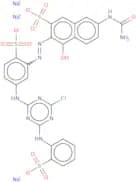
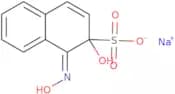
Hydroxy naphthol blue
CAS:Hydroxy naphtol blue is a synthetic azo dye, a chemical compound containing the functional group RN=N-R. The hydroxy naphtol blue trisodium and disodium salts are used as indicators to determine the content of alkaline earth and lanthanides spectrophotometrically, showing at maximum a wavelength of ~650 nm (λmax = 647.6 nm). An example of a common use of hydroxy naphtol blue sodium salt is to determine the hardness of water by measuring the concentration of calcium and magnesium. At alkaline or basic pH, the hydroxy naphtol blue forms a pink/red complex with the metal ions and, after titration with EDTA, hydroxy naphtol blue is liberated, turning the solution blue, indicating the endpoint.
Formula:C20H11N2O11S3·3NaColor and Shape:Black Blue PowderMolecular weight:620.48 g/molDisperse yellow 56, technical grade
CAS:Disperse yellow 56 is a high quality, useful intermediate that has been used in research chemicals and speciality chemical production. It is a versatile building block that can be used in the synthesis of complex compounds, and is often used as a reagent or reaction component. Disperse yellow 56 has also been shown to be a useful scaffold for organic synthesis.Formula:C21H15N5O2Purity:90%Color and Shape:Red PowderMolecular weight:369.38 g/molPigment YellOw 5;2-[(2-NitrOphenyl)azO]-3-OxO-N-phenylbutanamide
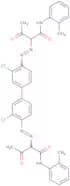
CAS:Please enquire for more information about Pigment YellOw 5;2-[(2-NitrOphenyl)azO]-3-OxO-N-phenylbutanamide including the price, delivery time and more detailed product information at the technical inquiry form on this pagePurity:Min. 95%Pigment Red 38;Diethyl 4,4'-[(3,3'-dichlOrO[1,1'-biphenyl]-4,4'-diyl)bis(azO)]bis[4,5-dihydrO-5-OxO-1-phenyl-1H-pyrazOle-3-carbOxyla te]
CAS:Pigment Red 38 is a red dye that is used in the production of magnetic particles, cross-linking agents, and fluorescent dyes. Pigment Red 38 has a hydroxyl group at the 4 position and a methyl ethyl group at the 2 position. It can be synthesized from diethyl 4,4'-(3,3'-dichlorobiphenyl)-4,4'-diylbisazolate. Pigment Red 38 is thermoreversible because it can be converted to its anhydrous form when heated or dissolved in water and then reconverted back to its original form when cooled or dried. The pigment was named for its ability to produce light emission when exposed to ultraviolet radiation. Pigment Red 38 has a diameter of 6 nm and reacts with coordination complexes to form particle clusters with diameters ranging from 10-200 nm.Purity:Min. 95%C.I.Reactive Red 152
CAS:C.I.Reactive Red 152 is a dye that is used to detect the presence of t-DNA in plant tissue and protoplasts. C.I.Reactive Red 152 has been shown to increase the frequency of germination in halophytes, such as Portulacastrum, when used at concentrations between 20 and 50 mg/l, and also has a stimulating effect on seed germination in Portulacastrum, which can be observed by an increased number of root cultures. It is extracted with an organic solvent such as dichloromethane or chloroform, and is then mixed with an equal volume of distilled water before use. The dye should be added to the culture medium just before the explants are placed into it so that it does not interfere with their metabolism. C.I.Reactive Red 152 has been found to amplify the number of rhizogenes when used at a concentration between 10 and 20 mg/l for 5 minutes, but
Purity:Min. 95%C.I.Reactive Orange 2
CAS:Please enquire for more information about C.I.Reactive Orange 2 including the price, delivery time and more detailed product information at the technical inquiry form on this pagePurity:Min. 95%Catechol violet
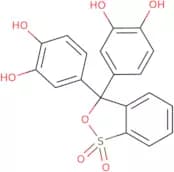
CAS:Catechol violet is a synthetic dye that is used as an optical sensor for the determination of disease activity. This dye has been shown to have synergistic effects with other dyes and a number of analytical methods, such as solid phase microextraction and kinetic energy spectroscopy. Catechol violet binds to covalently-linked proteins and nucleic acids, which can then be detected by a variety of analytical methods such as radiation or thermodynamic data. The kinetic energy of the bond between the dye and covalently-linked proteins can also be used to determine their concentration.Formula:C19H14O7SPurity:Min. 95%Color and Shape:Brown PowderMolecular weight:386.38 g/molBasic blue 9
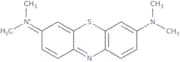
CAS:Basic blue 9 is a reactive dye that has been used in wastewater treatment and biological treatment. The adsorption of Basic blue 9 is based on the basicity of the dye, which causes it to have high resistance to degradation by light. It has also been shown to be effective for removal of organic contaminants from water, due to its strong affinity for particle surfaces. Basic blue 9 is an acrylic acid ester with a fatty acid group that can be removed by hydrolysis. The adsorption mechanism of Basic blue 9 is related to kinetic data, which can be obtained through FT-IR spectroscopy.Purity:Min. 95%C.I.Mordant green 4
CAS:C.I.Mordant green 4 is a dye that is used in the textile industry for dyeing wool and silk. It is an organic compound classified as an azo dye. C.I. Mordant green 4 is used to dye wool, cotton, and other natural fibers in shades of green or blue-green depending on the pH of the solution. The color can also be changed by adding different chemicals such as potassium bichromate or hydrogen peroxide. This product has a particle size of less than 0.1 microns and its color varies depending on the pH of the solution it is added to.br> br> C.I. Mordant green 4 may be absorbed through skin contact and may cause irritation, dermatitis, allergic reactions, or photosensitivity in some people.br>br> Coding: 1) Section 2) Plant diseases 3) Magnetic 4) Human immunodeficiencyFormula:C10H8NO2·HSO3Purity:Min. 95%Molecular weight:255.25 g/molC.I.Direct Blue 70
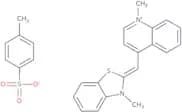
CAS:Please enquire for more information about C.I.Direct Blue 70 including the price, delivery time and more detailed product information at the technical inquiry form on this pagePurity:Min. 95%Thiazole orange
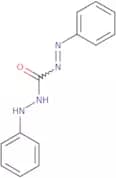
CAS:Thiazole orange is an organic compound that has been used to detect acid in various liquids. It is a stable complex that can be formed with thiazole-5-carboxylic acid and 4,4'-dimethoxybenzhydrol. Thiazole orange changes color from yellow to red at pH values less than 2.0. The detection of the red form of Thiazole orange can be used to identify samples containing low levels of acid. The molecule is also useful for determining the pH of blood samples. This can be done by adding it to a sample and measuring its absorbance at different wavelengths using a spectrophotometer or confocal microscope.Formula:C26H24N2O3S2Color and Shape:Orange PowderMolecular weight:476.61 g/molDiphenylcarbazone
CAS:DPC is a copper complex that is used as an analytical reagent. It has linear calibration curves with picolinic acid, and can be used as an electrochemical impedance spectroscopy probe in the presence of hydrochloric acid. DPC is used to measure the concentration of picolinic acid in urine or blood samples from diabetic patients. The analytical method for DPC uses optical sensors and automated flow systems.Formula:C13H12N4OPurity:Min. 60 Area-%Color and Shape:Red PowderMolecular weight:240.26 g/molDisperse Violet 27, Technical grade Dye content
CAS:Disperse Violet 27 is a sodium carbonate dye that is used as a colorant in detergent compositions. Disperse Violet 27 has excellent film-forming properties and can be used in powder, granular, liquid, or paste form. It is insoluble in water and soluble in organic solvents such as alcohols, ketones, esters, ethers, and chlorinated hydrocarbons. Disperse Violet 27 has a low thermal expansion coefficient and good stability to pH changes. This dye also has an excellent lightfastness rating of I. Disperse Violet 27 is available in the form of technical grade dye content with an approximate particle size of 0.1 microns. br>
Formula:C20H13NO3Purity:Min. 95%Molecular weight:315.32 g/molC.I.Direct Red 89
CAS:C.I. Direct Red 89 is a water-soluble dye that belongs to the group of organic compounds called sulfonated naphthol dyes. It has an absorption spectrum in the region of 540-580 nm and is used as a neutral red dye for inkjet and recording applications, as well as for textile printing. C.I. Direct Red 89 can be used with other dyes for pigments, especially blue, green, and violet dyes, to produce a wide range of colors from yellow through green to blue-green. The dye is also used in pharmaceuticals, cosmetics, food coloring agents, and industrial paints.Purity:Min. 95%Eriochrome Black A
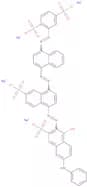
CAS:Eriochrome Black A is a dye that absorbs light in the near-infrared region. It is used as an indicator for thermal expansion and water vapor, and has been shown to be effective against infectious and inflammatory diseases. Eriochrome Black A forms a complex with metal ions such as iron or copper, which can be chelated by hydroxyl groups. This complex is then able to bind to cellular receptors, which causes an increase in oxidative stress, leading to cell death. Eriochrome Black A has also been shown to have antioxidant properties, which may be due to its ability to scavenge free radicals.Purity:Min. 95%Naphthol Green B
CAS:Naphthol Green B is a highly fluorescent dye that is used in organic light-emitting diodes. It can be synthesized to form nanosheets that are stable and of high quality. The sodium salt of Naphthol Green B has been shown to stabilize the structure of liposomes and increase their stability. This product is also able to cross-link collagen, which may have bifunctional properties. Naphthol Green B can be used as a surfactant or a membrane stabilizer, as well as for its coordination chemistry.Formula:C30H15FeN3O15S3·3NaPurity:Min. 95%Color and Shape:Dark Green To Black SolidMolecular weight:878.47 g/molPigment Blue 1
CAS:Pigment Blue 1 is a reactive dye that is used for optical sensing in biological samples. This dye changes its color depending on the redox potential of the environment. It has been shown to bind to amines, which can be useful in drug interactions. Pigment Blue 1 has also been shown as an optical sensor for choroidal neovascularization and synchronous fluorescence. !--Purity:Min. 95%Pigment Yellow 14
CAS:Pigment Yellow 14 is a yellow pigment that belongs to the group of polyaromatic hydrocarbons. It has a particle size of 0.1-0.5 microns and consists of nitrogen atoms, intramolecular hydrogen, and magnetic particles. Pigment Yellow 14 is insoluble in water but soluble in organic solvents such as glycol ethers, fatty acids, and polycarboxylic acids. It has been detected using analytical chemistry methods such as spectroscopy, X-ray diffraction, and electron microscopy (EM). Pigment Yellow 14 is used in paints for plastics and textiles because it does not fade or lose its color when exposed to radiation or light.
Formula:C34H30Cl2N6O4Purity:Min. 95%Color and Shape:PowderMolecular weight:657.55 g/molPigment Yellow 168
CAS:Pigment Yellow 168 is a synthetic organic pigment that is used in paints and varnishes. It is an oil-soluble, reactive dye that can be used as a colorant in plastics. Pigment Yellow 168 has been shown to be stable under UV radiation and light exposure, which makes it ideal for use in outdoor paints.Formula:C32H24CaCl2N8O14S2Purity:Min. 95%Molecular weight:919.69 g/molCoomassie brilliant blue G
CAS:Coomassie Brilliant Blue G is a dye that is used to stain proteins. This dye binds to proteins and can be detected by the use of a fluorescence probe. Coomassie Brilliant Blue G has been shown to have an inhibitory effect on methyltransferase, which is an enzyme that catalyzes the transfer of methyl groups from one molecule to another. It also inhibits ubiquitin ligases, which are enzymes that catalyze the addition of ubiquitin molecules to other proteins. Coomassie Brilliant Blue G has been shown to cause synchronous fluorescence in vivo models and in vitro cell lines.Formula:C47H49N3O7S2·NaColor and Shape:PowderMolecular weight:855.03 g/mol


![Pigment YellOw 5;2-[(2-NitrOphenyl)azO]-3-OxO-N-phenylbutanamide](/_next/image/?url=https%3A%2Fstatic.cymitquimica.com%2Fproducts%2F3D%2Fthumb-webp%2FFP40385.webp&w=3840&q=75)
![Pigment Red 38;Diethyl 4,4'-[(3,3'-dichlOrO[1,1'-biphenyl]-4,4'-diyl)bis(azO)]bis[4,5-dihydrO-5-Ox…](/_next/image/?url=https%3A%2Fstatic.cymitquimica.com%2Fproducts%2F3D%2Fthumb-webp%2FFP43985.webp&w=3840&q=75)