Organometallic Ligands
Subcategories of "Organometallic Ligands"
- Buchwald Ligands(22 products)
- DPEN(4 products)
- DPHEN(4 products)
- JOSIPHOS(4 products)
- Phosphine(497 products)
- Porphirines(75 products)
Found 2889 products of "Organometallic Ligands"
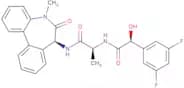
LY 411575
CAS:Potent inhibitor of γ-secretase. LY 411575 inhibited production of amyloid β (Aβ) peptides with IC50 of 0.078 nM in vitro as well as decreased levels of Aβ40 and Aβ42 amyloids in brain of a mouse model for Alzheimer’s disease. In vitro studies confirmed that LY 411575 inhibited cleavage of Notch receptor at S3 site with IC50 of 0.39 nM, which blocked Notch activation and downstream signalling, leading to apoptosis in primary and immortalized Kaposi's sarcoma cells.Formula:C26H23F2N3O4Purity:Min. 95%Color and Shape:SolidMolecular weight:479.48 g/molDapoxetine hydrochloride - Bio-X ™
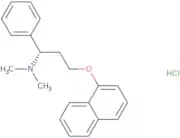
CAS:Controlled ProductDapoxetine is a drug that belongs to the group of selective serotonin reuptake inhibitors (SSRIs). It is used to treat premature ejaculation. This drug inhibits the serotonin transporter allowing for an increased action of serotonin at the postsynaptic cleft, thus promoting ejaculatory delay.Formula:C21H24ClNOPurity:Min. 98 Area-%Color and Shape:PowderMolecular weight:341.87 g/molMelitracen hydrochloride
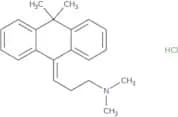
CAS:Tricyclic antidepressantFormula:C21H26NClPurity:Min. 95%Color and Shape:White PowderMolecular weight:327.89 g/molNilotinib HCl monohydrate - Bio-X ™
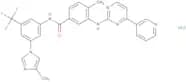
CAS:Nilotinib is a kinase inhibitor that is used for the treatment of Chronic Myeloid Leukemia (CML). This drug is also used for the treatment of CML that is resistant to imatinib. Nilotinib inhibits the tyrosine kinase activity of the BCR-ABL protein. It also inhibits PDGFR and c-kit.
Formula:C28H22F3N7O•HCl•H2OPurity:Min. 95%Color and Shape:PowderMolecular weight:583.99 g/molPonalrestat
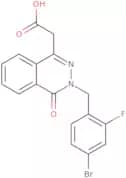
CAS:Ponalrestat is an aldose reductase inhibitor, which is a synthetic compound developed for pharmacological purposes. It originates from chemical synthesis designed to target and inhibit the enzyme aldose reductase effectively. The mode of action involves the competitive inhibition of aldose reductase, an enzyme involved in the polyol pathway of glucose metabolism. By preventing the reduction of glucose to sorbitol, it reduces sorbitol accumulation associated with diabetic complications.Formula:C17H12BrFN2O3Purity:Min. 98 Area-%Color and Shape:PowderMolecular weight:391.19 g/molPimasertib
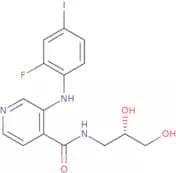
CAS:A selective inhibitor of MEK1/2 kinase. Anti-proliferative and pro-apoptotic in multiple myeloma (MM) cells via G0/G1 cell cycle arrest and caspase 3 and PARP cleavage, respectively. Synergistic with other anti-MM therapies. Has anti-tumor effects in some solid tumors, such as in K-ras mutated colorectal cancer.Formula:C15H15FIN3O3Purity:Min. 95%Color and Shape:White To Yellow SolidMolecular weight:431.2 g/molGC376 sodium
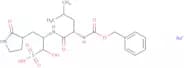
CAS:GC 376 is an inhibitor of the main protease Mpro (3CLpro) in coronaviruses as well as picornaviruses. This broad-spectrum antiviral compound has been used as investigational veterinary drug for treatment of feline infectious peritonitis virus (FIPV) infections. Recent studies also showed that GC 376 inhibits the main protease Mpro (3CLpro) from SARS-CoV-2 with IC50 of 0.03 μM and EC50 of 3.37 μM.
Formula:C21H30N3NaO8SPurity:Min. 95 Area-%Color and Shape:White PowderMolecular weight:507.53 g/molCandesartan - Bio-X ™
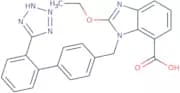
CAS:Candesartan is a drug that belongs to the class of angiotensin II receptor antagonists and is used to treat hypertension. It is used in combination therapy with other drugs, such as hydrochlorothiazide and amlodipine, to lower blood pressure. Candesartan inhibits the formation of angiotensin II, the receptor which causes vasoconstriction and increased blood pressure.
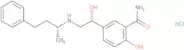
Formula:C24H20N6O3Purity:Min. 95%Color and Shape:PowderMolecular weight:440.45 g/molDilevalol hydrochloride
CAS:Controlled ProductBeta-adrenoceptor antagonist; anti-hypertensiveFormula:C19H24N2O3·HClPurity:Min. 95%Color and Shape:SolidMolecular weight:364.87Indomethacin - Bio-X ™
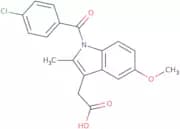
CAS:Indomethacin is a nonsteroidal anti-inflammatory drug that inhibits the production of prostaglandin PGE2. It is used to treat pain, fever, and inflammation. Indomethacin's mechanism of action is not well understood, but it may be due to interference with the ability of PMNs to bind to the surface of bacteria or to release reactive oxygen species. The drug has been shown to reduce mitochondrial membrane potential in mammalian cells, leading to apoptosis. This effect on mitochondria may also contribute to Indomethacin's anti-inflammatory effects. Indomethacin is part of our Bio-X ™ Range. These products are aimed at life science researchers who need high quality ready-to-use products for assay development, screening or other R&D work. With a solubility datasheet and convenient vials, all of our Bio-X ™ products are in stock across our global warehouses for rapid delivery and ease of use.Formula:C19H16ClNO4Purity:(%) Min. 95%Color and Shape:PowderMolecular weight:357.79 g/molIrsogladine maleate - Bio-X ™
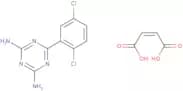
CAS:Irsogladine is a gastroprotective drug that is used for the treatment of GERD and gastric ulcers. This drug also has antioxidant properties. Irsogladine is a phosphodiesterase-4 inhibitor and increases levels of cAMP. It helps to prevent and heal damage to the stomach lining.Formula:C13H11Cl2N5O4Purity:Min. 95%Color and Shape:PowderMolecular weight:372.16 g/molValiglurax
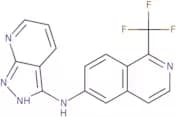
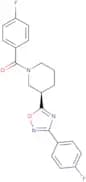
CAS:Potent and selective positive allosteric modulator (PAM) of metabotropic glutamate receptor mGlu4. Valiglurax is orally bioavailable and CNS-penetrant mGlu4 PAM in preclinical development for the Parkinson’s disease therapy and alleviation of the motor symptoms.Formula:C16H10F3N5Purity:Min. 95%Color and Shape:SolidMolecular weight:329.28 g/molCamostat mesylate - Bio-X ™
CAS:Camostat is a serine protease inhibitor that is used for the treatment of chronic pancreatitis. This drug has shown to reduce inflammation and pain. Studies have shown that Camostat has also inhibited the entry of SARS-CoV-2 in lung cells by inhibiting the priming process of S-protein, necessary for the viral entry into host cells.Formula:C20H22N4O5•CH4O3SPurity:Min. 95%Color and Shape:PowderMolecular weight:494.52 g/mol(R)-ADX 47273
CAS:Positive allosteric modulator of the metabotropic glutamate receptor mGluR5 with EC50 in submicromolar range. The compound is able to increase mGluR5 function in vitro and in vivo. A study showed that ADX-47273 enhanced fear extinction learning as well as improved reversal learning in experimental animals.
Formula:C20H17F2N3O2Purity:Min. 95%Color and Shape:SolidMolecular weight:369.36 g/molUNC 4203
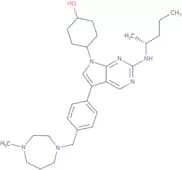
CAS:Potent and specific inhibitor of the tyrosine protein kinase Mer precursor (MERTK) with 38-fold selectivity over the FMS-like protein kinase FLT3. UNC 4203 inhibits MERTK with an IC50 value of 2.4 nM and shows favourable pharmacokinetic properties. In vivo experiments in mice showed that UNC 4203 dramatically decreased the phosphorylation of MERTK in bone marrow leukemia cells.Formula:C30H44N6OPurity:Min. 95%Color and Shape:Yellow PowderMolecular weight:504.71 g/molFG 7142
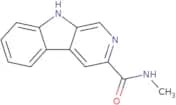
CAS:Partial inverse agonist of benzodiazepine sites of the GABAA receptors with anxiogenic properties. FG 7142 is a pharmacological stressor which generates anxiety in humans and in experimental animals such as rhesus monkeys and rodents. FG 7142 also reduces food intake and frequency of feeding in male and female rats.Formula:C13H11N3OPurity:Min. 95%Color and Shape:Yellow PowderMolecular weight:225.25 g/molRolapitant hydrochloride monohydrate
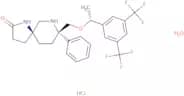
CAS:Neurokinin-1 (NK-1) receptor antagonistFormula:C25H27ClF6N2O2·H2OPurity:Min. 95%Color and Shape:White To Off-White SolidMolecular weight:554.95 g/molAzumolene
CAS:Azumolene is a muscle relaxant drug, which is a synthetic derivative of dantrolene originating from hydantoin. The mode of action of Azumolene involves the inhibition of calcium ion release from the sarcoplasmic reticulum of skeletal muscle fibers. By impeding this release, Azumolene effectively reduces muscle contraction, thereby acting as a potent muscle relaxant.Formula:C13H9BrN4O3Purity:Min. 95%Color and Shape:PowderMolecular weight:349.14 g/molS26131
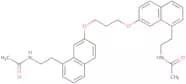
CAS:S26131 is an advanced glycation end product (AGE) inhibitor, which is a synthetic compound designed for laboratory research purposes. It is derived from chemical synthesis processes, offering a robust tool for investigating the biochemical pathways associated with glycation. Its mechanism of action involves the inhibition of AGE formation, which is a post-translational modification resulting from the non-enzymatic reaction between sugars and proteins or lipids. This biochemical modulation is vital for studying the implications of glycation in various physiological and pathological contexts.
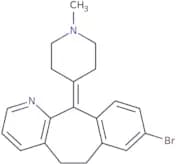
Formula:C31H34N2O4Purity:Min. 95%Molecular weight:498.6 g/mol8-Deschloro-8-bromo-N-methyl desloratadine
CAS:Antagonist of platelet activating factorFormula:C20H21BrN2Purity:Min. 95%Color and Shape:PowderMolecular weight:369.3 g/mol