Organic Halides
Subcategories of "Organic Halides"
Found 20443 products of "Organic Halides"
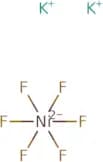
Potassium hexafluoronickelate(IV)
CAS:Potassium hexafluoronickelate is a chemical compound that is a versatile building block and can be used as a reagent in organic synthesis. It is also an important intermediate for the preparation of other chemicals, such as potassium hexafluoroarsenate, which is used to make perfluorocarbons. Potassium hexafluoronickelate has many uses as a research chemical and as an intermediate in the production of other compounds. The compound has been shown to be useful in reactions involving carbon-carbon bond formation, such as the synthesis of heterocycles. Potassium hexafluoronickelate can also be used to produce metal complexes for use in catalysis or polymerization reactions.
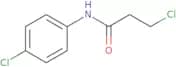
Formula:F6K2NiPurity:Min. 95%Color and Shape:PowderMolecular weight:250.88 g/mol3-Chloro-N-(4-chlorophenyl)propanamide
CAS:Please enquire for more information about 3-Chloro-N-(4-chlorophenyl)propanamide including the price, delivery time and more detailed product information at the technical inquiry form on this page
Formula:C9H9Cl2NOPurity:Min. 95%Color and Shape:PowderMolecular weight:218.08 g/molRef: 3D-FC125304
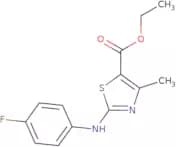
Discontinued productethyl 3-((4-fluorophenyl)amino)-5-methyl-2,4-thiazolecarboxylate
CAS:Please enquire for more information about ethyl 3-((4-fluorophenyl)amino)-5-methyl-2,4-thiazolecarboxylate including the price, delivery time and more detailed product information at the technical inquiry form on this page
Purity:Min. 95%Ref: 3D-FE169431
Discontinued productmethyl 5-(((4-bromophenyl)sulfonyl)methyl)furan-2-carboxylate
CAS:Please enquire for more information about methyl 5-(((4-bromophenyl)sulfonyl)methyl)furan-2-carboxylate including the price, delivery time and more detailed product information at the technical inquiry form on this page
Purity:Min. 95%Ref: 3D-FM169416
Discontinued product1-(3-Chlorophenyl) thiourea
CAS:1-(3-Chlorophenyl) thiourea is a curcumin analog that has been shown to inhibit the epidermal growth factor (EGF) receptor. It is synthesized from 1,2-dichlorobenzene and urea in a two-step process. The anhydrous potassium carbonate is first converted to the potassium salt with an acid chloride. The second step is the reaction of this salt with urea in the presence of excess anhydrous potassium carbonate. This product has been shown to be effective against cancer cells and may be used as a potential anticancer agent for treatment of skin cancer. 1-(3-Chlorophenyl) thiourea inhibits EGF receptor by binding to it and preventing its activation, which prevents cell proliferation and reduces tumor size.
Purity:Min. 95%Metazachlor 3-Mercaptolactic Acid Conjugate Sulfoxide
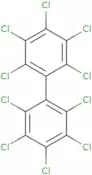
CAS:Controlled ProductFormula:C17H21N3O5SColor and Shape:Off-WhiteMolecular weight:379.43Decachlorobiphenyl
CAS:Controlled ProductDecachlorobiphenyl is a chemical that is produced by the reaction of chlorine with biphenyl or diphenyl ether. Decachlorobiphenyl has been shown to inhibit the enzyme activity of fatty acid synthase in liver cells, which is responsible for synthesizing fatty acids. It also inhibits the enzyme activity of acetyl-CoA carboxylase, which is involved in regulating the production of ketone bodies and fatty acids. The mechanism of action for decachlorobiphenyl inhibition of these enzymes is thought to be due to its ability to bind to the active site and interfere with the formation of an enzyme-substrate complex. Decachlorobiphenyl can be detected using chemical ionization mass spectrometry at m/z=313 and 314, corresponding to C13H9Cl10+ and C13H9Cl7+, respectively.
Formula:C12Cl10Purity:Min. 95%Color and Shape:PowderMolecular weight:498.66 g/molRef: 3D-FD166522
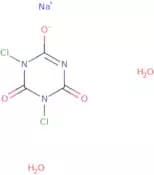
Discontinued productDichloroisocyanuric acid sodium dihydrate
CAS:Dichloroisocyanduric acid sodium salt (DCD) is a disinfectant that is used to control bacteria, fungi, and algae in wastewater treatment plants. DCD has been shown to be an effective antimicrobial agent against bacterial spores and the fungal plant pathogen "Botrytis cinerea" when used at concentrations of 0.1-0.3%. DCD also has a low toxicity for mammals, with LD50 values of 3.5g/kg for rats and 2g/kg for mice. The chemical stability of DCD can be increased by adding sodium carbonate or other alkaline substances in a neutral pH environment.
Formula:C3HCl2N3O3•(H2O)2•NaPurity:Min. 95%Color and Shape:PowderMolecular weight:256.98 g/molAmmonium tetrafluoroborate
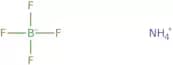
CAS:Ammonium tetrafluoroborate is a salt of the organic compound tetrafluoroborate and ammonium. It is a colorless solid that can be used as a chemical reagent. Ammonium tetrafluoroborate has a higher chemical stability than other salts of tetrafluoroborate, such as ammonium hexafluorophosphate and ammonium hexafluoroarsenate. Ammonium tetrafluoroborate is used to make the dinucleotide phosphate, which is an important component in DNA synthesis. In a redox potential test, ammonium tetrafluoroborate showed no electrochemical activity in water vapor at pH 7. Ammonium tetrafluoroborate reacts with trifluoroacetic acid to produce hydrogen fluoride and ammonium chloride. This reaction is reversible, which means that it can be used for the synthesis of ammonia gas from hydrogen and nitrogen gases or for the
Formula:NH4BF4Purity:Min. 98%Color and Shape:White PowderMolecular weight:104.84 g/molRef: 3D-FA55588
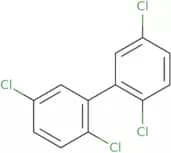
Discontinued product2,2',5,5'-Tetrachlorobiphenyl
CAS:Controlled Product2,2',5,5'-Tetrachlorobiphenyl (PCB) is a biphenyl that has been shown to cause toxicity and oxidative injury in liver cells. PCB interacts with mitochondrial membrane potential by binding to adenine nucleotide and dinucleotide phosphate. This interaction leads to the release of reactive oxygen species, which damages cells by causing oxidative injury. The mechanism of this interaction is not well understood, but it is hypothesized that PCB may bind to the electron transport chain. PCB may also be toxicologically active through its ability to induce cancer gene therapy by inhibiting the activity of a tumor suppressor protein called p53.
Formula:C12H6Cl4Purity:Min. 95%Molecular weight:291.99 g/molRef: 3D-FT170758
Discontinued productSilver fluoride
CAS:Silver fluoride is a chemical compound that consists of silver and fluoride. It is used in the form of a powder or a solution to sterilize surfaces, and can be applied to skin as an antiseptic. The chemical stability of silver fluoride has been studied using thermodynamic data and biological properties. Silver fluoride is able to inhibit the metabolism of some microorganisms, such as the growth of Staphylococcus aureus and Escherichia coli. Silver fluoride also inhibits the synthesis of DNA and RNA, which are important for cell division.
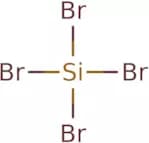
Formula:AgFPurity:Min. 95%Color and Shape:PowderMolecular weight:126.87 g/molSilicon tetrabromide
CAS:Silicon tetrabromide is a chemical compound that is reactive and has the chemical formula SiBr4. This compound is prepared by reacting ethylene diamine with water vapor over a solid catalyst such as phosphorus pentoxide. Silicon tetrabromide can be used as a catalyst in various organic reactions, such as the production of glycerin from the reaction of halides and glycerin. Silicon tetrabromide can also be used to produce low energy silicon radicals from aromatic hydrocarbons, which are useful for structural analysis.
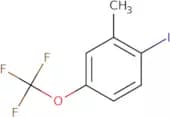
Formula:Br4SiPurity:Min. 95%Color and Shape:Clear LiquidMolecular weight:347.7 g/mol2-Methyl-4-(trifluoromethoxy)iodobenzene
CAS:Please enquire for more information about 2-Methyl-4-(trifluoromethoxy)iodobenzene including the price, delivery time and more detailed product information at the technical inquiry form on this page
Formula:C8H6F3IOPurity:Min. 95%Molecular weight:302.03 g/molRef: 3D-FM85964
Discontinued productHydrazine Monohydrobromide
CAS:Controlled ProductHydrazine monohydrobromide is a reactive chemical that is soluble in water and organic solvents. It is a white crystalline solid that exists as polymorphic forms, and has a molecular weight of 121.06. Hydrazine monohydrobromide is an important precursor for the production of other compounds, such as hydrazine sulfate and hydrazine nitrate. It also acts as a pharmacological agent, used to treat heart disease. Hydrazine monohydrobromide reacts with an inorganic acid to produce hydrogen gas and an organic solution containing the reaction products of nitrogen atoms and hydrogen atoms. These particles can be found on metal surfaces such as copper or silver, where they form morphogenetic proteins due to their ability to catalyze reactions.
Formula:H4N2·HBrPurity:Min. 95%Molecular weight:112.96 g/molRef: 3D-FH61154
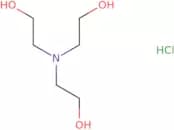
Discontinued productTriethanolamine hydrochloride
CAS:Controlled ProductTriethanolamine hydrochloride, widely known as TEA-HCl, is a buffer used in biochemistry to maintain a stable pH in the range of 7.3 to 8.3 during processes like protein extraction and purification. They are also used in enzyme assays.
Formula:C6H15NO3·HClPurity:Min. 95%Color and Shape:PowderMolecular weight:185.65 g/molRef: 3D-FT46965
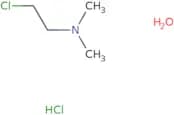
Discontinued product2-Chloro-N,N-dimethylethanamine hydrochloride hydrate
Controlled ProductPlease enquire for more information about 2-Chloro-N,N-dimethylethanamine hydrochloride hydrate including the price, delivery time and more detailed product information at the technical inquiry form on this page
Formula:C4H13Cl2NOPurity:Min. 95%Molecular weight:162.06 g/molRef: 3D-FC139987
Discontinued productBis-trifluoromethyl ethylphosphonate
CAS:Controlled ProductBis-trifluoromethyl ethylphosphonate is a trivalent, cyclic, scientific device that has been used as an additive to graphene oxide. Voltammetric studies have shown that this compound has a high flammability limit and can be used as a rechargeable battery electrode. The chemical's pentavalent form exhibits densities of 1.65 g/cm3 and 2.25 g/cm3 at 20 °C and 0 °C respectively. Bis-trifluoromethyl ethylphosphonate is used in research for its ability to form tervalent bonds with many other elements, including carbon, nitrogen, oxygen and sulfur.
Formula:C6H9F6O3PPurity:Min. 95%Molecular weight:274.1 g/molRef: 3D-FB18837
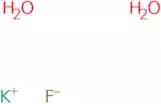
Discontinued productPotassium fluoride dihydrate
CAS:Controlled ProductPotassium fluoride is an inorganic chemical that is used in the water fluoridation process. It is also used as a source of fluoride ions for the synthesis of hydroxyapatite, a mineral found in teeth and bones. Fluoride ions are also used to treat certain infectious diseases, such as malaria. The asymmetric synthesis of potassium fluoride was first reported by M. S. Kharasch and J. A. Fink in 1943 using plasma mass spectrometry. This method has been widely adopted for commercial production of potassium fluoride because it can be scaled up easily and does not require specialized equipment.
Potassium fluoride has been shown to inhibit viral replication by hydrogen bonding with the guanine-cytosine base pairs on the viral dsDNA, which prevents the DNA from uncoiling and copying its genetic information into new viral particles. Potassium fluoride has also been shown to be effective against hepatitis B virus (HBV) and mammalian cells infected by HBFormula:KF·2H2OPurity:Min. 95%Molecular weight:94.13 g/molRef: 3D-FP34794
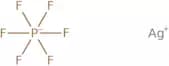
Discontinued productSilver hexafluorophosphate
CAS:Silver hexafluorophosphate (AgPF) is a silver salt of the inorganic acid hexafluoro-phosphoric acid. It has been shown to have a high reactivity with organic compounds and is insoluble in water. Silver hexafluorophosphate is used as an additive for certain polymers, such as PVC, to improve their insulating properties. In addition, AgPF has shown biological properties that may be due to its ability to act as a chelate ligand and bind metal ions. The reaction mechanism of AgPF involves the formation of hydrogen bonding interactions with nitrogen atoms, which are found in biological molecules such as proteins and nucleic acids.
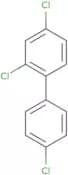
Formula:AgPF6Purity:Min. 95%Molecular weight:252.83 g/mol2,4,4’-Trichlorobiphenyl
CAS:Controlled Product2,4,4’-Trichlorobiphenyl is a polychlorinated biphenyl congener. It has been shown to have an adverse effect on the central nervous system, causing neurotoxicity. 2,4,4’-Trichlorobiphenyl has been used as a model system for the study of the effects of environmental toxins on mitochondrial membrane potential and lipid peroxidation. 2,4,4’-Trichlorobiphenyl binds to fatty acids in mitochondria and inhibits fatty acid β-oxidation. The inhibition of fatty acid oxidation leads to increased levels of protocatechuic acid in the serum and liver tissue. 2,4,4’-Trichlorobiphenyl has also been found to be toxic to aquatic organisms such as fish and shrimp at low concentrations.
Formula:C12H7Cl3Purity:Min. 95%Molecular weight:257.54 g/molRef: 3D-FT170755
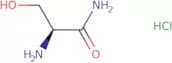
Discontinued productL-Serine amide hydrochloride
CAS:L-Serine amide hydrochloride is a synthetic, anti-HIV drug that is used as an antiviral agent. It inhibits the viral life cycle by inhibiting the activity of acyclic nucleoside phosphonates, which are vital to viral DNA synthesis. L-Serine amide hydrochloride binds to the cyclopentane ring of guanosine and prevents its interaction with the enzyme ribonucleotide reductase. This binding prevents the conversion of guanosine into GTP, thereby preventing HIV from using this molecule in their life cycle. L-Serine amide hydrochloride is not active against cellular proteins or prostaglandins.
Formula:C3H8N2O2·HClPurity:Min. 95%Molecular weight:140.57 g/molRef: 3D-FS49352
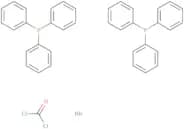
Discontinued productCarbonylbis(triphenylphosphine)rhodium(I) Chloride
CAS:Controlled ProductCarbonylbis(triphenylphosphine)rhodium(I) Chloride is a carbonyl compound that is prepared by reacting alcohols with diethyl ether in the presence of rhodium chloride. It is used as a reagent for alkylation, recrystallization, and purification of organic compounds. Carbonylbis(triphenylphosphine)rhodium(I) Chloride has been used to synthesize formaldehyde from ethylene glycol and formaldehyde-based resins. It also has been used as a catalyst in the conversion of aliphatic hydrocarbons to alcohols. This compound is insoluble in water and crystallizes yellow when dried.
Formula:C37H30ClOP2RhPurity:Min. 95%Molecular weight:690.94 g/molRef: 3D-FC60959
Discontinued productSilver hexafluoroantimonate(V)
CAS:Silver hexafluoroantimonate is a polymeric matrix that is used for its reaction mechanism. The hydroxyl group on the surface of the silver hexafluoroantimonate reacts with hydrochloric acid to produce hydrogen fluoride and an ionic silver chloride complex. Silver hexafluoroantimonate can also be synthesized by cationic polymerization, which involves a coordination complex between the metal and the nitrogen atoms. This coordination geometry allows for hydrogen bonding interactions.
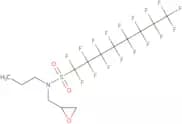
Formula:AgSbF6Purity:Min. 95%Color and Shape:White PowderMolecular weight:343.62 g/molN-Propyl-N-(2,3-epoxypropyl)perfluoro-n-octylsulfonamide
CAS:Controlled ProductPlease enquire for more information about N-Propyl-N-(2,3-epoxypropyl)perfluoro-n-octylsulfonamide including the price, delivery time and more detailed product information at the technical inquiry form on this page
Formula:C14H12F17NO3SPurity:Min. 95%Molecular weight:597.29 g/mol(2-Iodophenyl)(2,3,6,7-tetrahydro-1H,5H-benzo[ij]quinolizin-9-yl)methanone
2-Iodophenyl)(2,3,6,7-tetrahydro-1H,5H-benzo[ij]quinolizin-9-yl)methanone is a high quality reagent that can be used as a useful intermediate and building block in the synthesis of complex compounds.
Formula:C19H18INOPurity:Min. 95 Area-%Molecular weight:403.26 g/molRef: 3D-I-7660
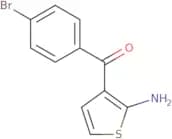
Discontinued product(2-Aminothiophen-3-yl)(4-bromophenyl)methanone
CAS:2-Aminothiophen-3-yl)(4-bromophenyl)methanone is a new compound that is being developed as a potential antiviral agent. Covid-19, the trade name for 2-aminothiophen-3-yl)(4-bromophenyl)methanone, prevents the replication of viruses by binding to their nucleic acids and blocking their ability to produce proteins. Covid-19 has been shown to be effective against both influenza A and B viruses in cellular and animal models. The antiviral activity of Covid-19 is due to its ability to bind to viral nucleic acid, preventing the production of proteins vital for viral replication. This compound has also been shown to have anti-inflammatory properties, which may be due to its ability to inhibit the production of amyloid plaques in mice with Alzheimer's disease.
Formula:C11H8BrNOSPurity:Min. 95%Molecular weight:282.16 g/molRef: 3D-FA54199
Discontinued productAmmonium Hexafluoroniobate
CAS:Ammonium hexafluoroniobate is an organosilicon compound that does not react with water and is used as a solvent for other organics. It can be activated to form a reactive surface by treatment with a metal such as copper or aluminum, which can then be used in the treatment of metals. Ammonium hexafluoroniobate has been used as a diagnostic agent and diagnostic reagent in various reactions at different temperatures. It has also been used as the photoreceptor in electrophotographic printing processes, where it is exposed to light-sensitive material and then developed using organic solvents.
Formula:F6H4NNbPurity:Min. 95%Molecular weight:224.94 g/mol2-Diethylamino)ethanol hydrochloride
CAS:Controlled Product2-Diethylamino)ethanol hydrochloride is a chemical compound that is used in analytical chemistry as a stationary phase for thin layer chromatography. Sephadex G-100 was developed by Pharmacia & Upjohn Company and marketed in the 1970s. It has been shown to be useful in plasma mass spectrometry experiments, which measure the molecular weight of proteins and other compounds. The solubility of 2-diethylamino)ethanol hydrochloride has been studied using experimental solubility data, electrochemical impedance spectroscopy, and amines. The reaction mechanism of 2-diethylamino)ethanol hydrochloride is not well understood but it appears to involve potassium dichromate, hydrochloric acid, fluoroacetic acid, benzalkonium chloride and other chemicals.
Formula:C6H16ClNOPurity:Min. 95%Molecular weight:153.65 g/molRef: 3D-FD21828
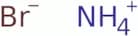
Discontinued productAmmonium bromide
CAS:Ammonium bromide is a chemical compound used in wastewater treatment. It is the active ingredient in a number of water purification methods, including those used to remove nitrates and heavy metals. Ammonium bromide also has inhibitory properties on the release of neurotransmitters from nerve cells. This inhibition of neurotransmitter release may be due to its ability to inhibit the action of neurokinin-1 receptor (NK-1) at the synapse. Ammonium bromide has been shown to have some toxic effects on the heart, although it does not appear to be toxic to other organs or tissues. Experimental solubility data shows that this solution is soluble in water, but insoluble in ethanol and ether. 4-Hydroxycinnamic acid, which can be found in coffee beans, has been shown to increase ammonium bromide solubility in water solutions by forming an inclusion complex with ammonium bromide.
Formula:H4BrNPurity:Min. 95%Color and Shape:White SolidMolecular weight:97.94 g/molRef: 3D-FA33731
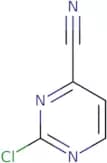
Discontinued product2-Chloro-4-pyrimidinecarbonitrile
CAS:2-Chloro-4-pyrimidinecarbonitrile is a synthetic compound that belongs to the group of phenylpyrimidines. It inhibits the tyrosine kinase activity and cytokine production in cells. 2-Chloro-4-pyrimidinecarbonitrile is used as an immunomodulatory agent in the treatment of cancer, autoimmune disorders and other immune dysfunctions. This drug also has anti-inflammatory properties and can be used for the treatment of inflammatory bowel diseases, such as ulcerative colitis or Crohn's disease. 2CPCN is metabolized by deamination and demethylation, which leads to the formation of nitrite ion, a reactive nitrogen species that can cause DNA damage.
Formula:C5H2ClN3Purity:Min. 95%Molecular weight:139.54 g/molRef: 3D-FC57397
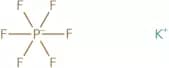
Discontinued productPotassium hexafluorophosphate
CAS:Potassium hexafluorophosphate is a chemical compound that is used as an antimicrobial agent in the laboratory. It reacts with hydroxyl groups on various surfaces to form potassium hexafluorophosphate and water. The reaction solution can be used to disinfect equipment and surfaces, and is stable at room temperature. Potassium hexafluorophosphate has been shown to have biological properties such as inhibiting the growth of bacteria and fungi, but not viruses. This chemical compound has been shown to be effective against E. coli, Klebsiella pneumoniae, Staphylococcus aureus, Proteus vulgaris, Bacillus subtilis, Pseudomonas aeruginosa, Aspergillus niger, Candida albicans, or Saccharomyces cerevisiae.
Formula:KPF6Purity:Min. 95%Color and Shape:PowderMolecular weight:184.06 g/mol1-(4,4'-Difluorobenzhydry)piperazine
CAS:1-(4,4'-Difluorobenzhydry)piperazine (1-DFBP) is a potential antitumor agent that has been shown to inhibit the growth of leukemia cells. It may be an inhibitor of apoptotic cell death, as it has been shown to induce hydrogen bond formation with coumarin derivatives. 1-DFBP has also been shown to have inhibitory activities against leukemia HL-60 cells, and is a competitive inhibitor of cinnarizine. The catalytic mechanism for 1-DFBP is not known, although kinetic data suggest that it involves hydrogen bonding and/or pi stacking interactions.
Formula:C17H18F2N2Purity:Min. 95%Molecular weight:288.34 g/molRef: 3D-FD55069
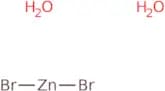
Discontinued productZinc bromide dihydrate
CAS:Zinc bromide dihydrate is a crystalline compound that is used as a catalyst for the conversion of metalloporphyrins to hydroporphyrins. This process is used in the production of vitamin B12. Zinc bromide dihydrate can also be used to inhibit the function of ion pumps, which are proteins that pump ions across membranes. The inhibition of these pumps may lead to a decrease in intracellular calcium levels and an increase in free radicals.
Zinc bromide dihydrate has been shown to react with chlorophylls, vinylated heterostructures, and polyvinyl nonmetals. These reactions produce morphology changes in zinc bromide dihydrate crystalsFormula:ZnBr2•2H2OPurity:Min. 95%Color and Shape:PowderMolecular weight:261.22 g/mol3-Amino-4-fluorobenzoic acid
CAS:3-Amino-4-fluorobenzoic acid is a hydrocarbon that is used as an analgesic. It has been shown to be nontoxic and has analgesic effects in the intestinal tract. 3-Amino-4-fluorobenzoic acid also has radiopaque properties, which makes it useful for diagnosis and treatment of certain types of cancer and other tumors. The analgesic effect of 3-amino-4-fluorobenzoic acid may be due to its ability to act as a competitive antagonist at the N -methyl--aspartate (NMDA) receptor, which is important in pain perception.
Formula:C7H6FNO2Purity:Min. 95%Molecular weight:155.13 g/molRef: 3D-FA64177
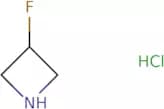
Discontinued product3-fluoroazetidine hydrochloride
CAS:3-fluoroazetidine hydrochloride is a chemical compound that can be used as a building block, intermediate or reagent in the synthesis of other compounds. It has been shown to be an effective substitute for 3-fluoropyridine in the synthesis of 1,2,4-triazoles. 3-fluoroazetidine hydrochloride is also used as a reaction component in the manufacture of pharmaceuticals, dyes and pesticides.
Formula:C3H7ClFNPurity:Min. 95%Color and Shape:White/Off-White SolidMolecular weight:111.55 g/molRef: 3D-FF104364
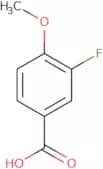
Discontinued product3-Fluoro-4-methoxybenzoic acid
CAS:3-Fluoro-4-methoxybenzoic acid is a dipolar molecule with a fluorine atom. It has been synthesized experimentally and the yields are determined by the experimental conditions. 3-Fluoro-4-methoxybenzoic acid has two isomers, which can be differentiated by their resonances. The molecule also has an asymmetric C3(CF)2Cl group in the middle of its structure that can rotate freely.
Formula:C8H7FO3Purity:Min. 95%Color and Shape:PowderMolecular weight:170.14 g/molRef: 3D-FF55157
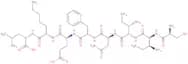
Discontinued productOvalbumin (257-264) (chicken) trifluoroacetate salt
CAS:Please enquire for more information about Ovalbumin (257-264) (chicken) trifluoroacetate salt including the price, delivery time and more detailed product information at the technical inquiry form on this page
Formula:C45H74N10O13·C2HF3O2Purity:Min. 95%Molecular weight:1,077.15 g/molRef: 3D-FO109383
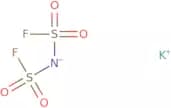
Discontinued productPotassium bis(fluorosulfonyl)imide
CAS:Potassium bis(fluorosulfonyl)imide (K2FSI) is a reactive chemical that can be used to remove sulfur from petroleum products. It is also used in the manufacturing of ethylene and perovskite solar cells. K2FSI reacts with potassium ions to form potassium hexafluorophosphate (KHF2). This reaction reduces the vapor pressure of KHF2 and increases its solubility in water. The use of K2FSI can reduce the amount of energy needed for desulfurization, as it does not require heating. The following are some uses for potassium bis(fluorosulfonyl)imide: - As a catalyst for production of ethylene - In organic solvent to produce perovskite solar cells - To remove sulfur from petroleum products - To make hydrogen fluoride - For desulfurization
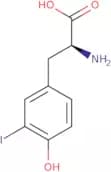
Formula:F2NO4S2•KPurity:Min. 95%Color and Shape:White PowderMolecular weight:219.23 g/mol3-Iodo-L-tyrosine
CAS:Please enquire for more information about 3-Iodo-L-tyrosine including the price, delivery time and more detailed product information at the technical inquiry form on this page
Formula:C9H10INO3Purity:Min. 96.0 Area-%Color and Shape:PowderMolecular weight:307.09 g/molRef: 3D-FI12110
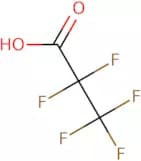
Discontinued productPentafluoropropionic acid
CAS:Pentafluoropropionic acid is a glycol ether that is used in the preparation of coumarin derivatives. It reacts with sodium carbonate and trifluoroacetic acid to form the corresponding acyl chloride, which then reacts with nitrogen atoms (e.g., ammonia) to form an amide or urea derivative. Pentafluoropropionic acid also reacts with hydrogen fluoride to form pentafluoropropane and hydrogen fluoride gas, which can be used as a propellant for aerosol sprays. Pentafluoropropionic acid binds to toll-like receptors on cancer cells and human serum, inhibiting their ability to synthesize DNA. The compound has been shown to inhibit tumor growth in mice by blocking the formation of cancer tissues.
Formula:C3HF5O2Purity:Min. 95%Color and Shape:Clear LiquidMolecular weight:164.03 g/molRef: 3D-FP32907
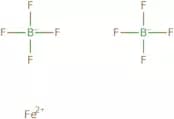
Discontinued productIron(II) tetrafluoroborate - 40-45% aqueous solution
CAS:Iron(II) tetrafluoroborate is a green-yellow crystalline solid that is soluble in water. It has been shown to have structural and optical properties that are similar to those of ferric chloride, but with the advantage of being less toxic. Iron(II) tetrafluoroborate is used as a homogeneous catalyst for organic reactions such as the hydrogenation of nitroarenes and the reduction of ketones. The catalytic activity of Iron(II) tetrafluoroborate arises from its ability to form hydrogen bonding interactions with other molecules and ions in solution.
Iron(II) tetrafluoroborate undergoes a number of reactions with other compounds, including cleavage products such as hydrogen sulfate and nitrogen atoms, which may be due to its chelate ligand. In coordination chemistry, Iron(II) tetrafluoroborate can form coordination complexes by reacting with potassium dichromate or calcium carbonate. These complexes areFormula:B2F8FePurity:About 45%Color and Shape:Slightly Green Clear LiquidMolecular weight:229.45 g/molRef: 3D-FI105721
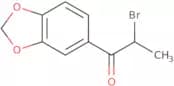
Discontinued product2-Bromo-3',4'-(methylenedioxy)propiophenone
CAS:Controlled ProductPlease enquire for more information about 2-Bromo-3',4'-(methylenedioxy)propiophenone including the price, delivery time and more detailed product information at the technical inquiry form on this page
Formula:C10H9BrO3Purity:Min. 95%Color and Shape:PowderMolecular weight:257.08 g/molPeptide YY (3-36) (human) trifluoroacetate salt
CAS:Peptide YY (3-36) (human) trifluoroacetate salt H-Ile-Lys-Pro-Glu-Ala-Pro-Gly-Glu-Asp-Ala-Ser-Pro-Glu-Glu-Leu-Asn -Arg -Tyr -Tyr -Ala -Ser -Leu -Arg
Peptide YY (3.36) is a peptide hormone that is secreted by L cells in the small intestine and colon. It has been shown to be an effective treatment for obesity, type 2 diabetes, and other metabolic disorders. Peptide YY (3.36) has been shown to increase insulin sensitivity, reduce food intake and body weight, increase metabolic rate, and improve glucose homeostasis in animal studies. In humans, it has been found to have similar effects on postprandial plasma levels of peptide YY (3.Formula:C180H279N53O54Purity:Min. 95%Molecular weight:4,049.47 g/molRef: 3D-FP110326
Discontinued product






![(2-Iodophenyl)(2,3,6,7-tetrahydro-1H,5H-benzo[ij]quinolizin-9-yl)methanone](/_next/image/?url=https%3A%2Fstatic.cymitquimica.com%2Fproducts%2F3D%2Fthumb-webp%2FI-7660.webp&w=3840&q=75)