Organic Halides
Subcategories of "Organic Halides"
Found 20442 products of "Organic Halides"
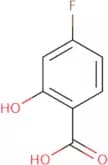
4-Fluoro-2-hydroxybenzoic acid
CAS:4-Fluoro-2-hydroxybenzoic acid is an organic compound that is a proton acceptor. It can be synthesized from 2,4-dichloroaniline and hydroxylamine. 4-Fluoro-2-hydroxybenzoic acid has two isomers, one with a fluorine atom and the other without. The fluorine atom makes it more acidic than the other isomer. It also has many functional groups attached to it, including hydrogen, chlorine, and fluorine. 4-Fluoro-2-hydroxybenzoic acid is used in pesticides because of its pesticidal activity. This compound binds to receptors on pests' cells and disrupts their function.
Formula:C7H5FO3Purity:90%Color and Shape:PowderMolecular weight:156.11 g/mol4-[(2-Chlorobenzyl)oxy]benzoic acid
CAS:4-[(2-Chlorobenzyl)oxy]benzoic acid is a chemical building block that has been used in the synthesis of organic compounds. It is an intermediate for the production of many different products, such as pharmaceuticals and pesticides. 4-[(2-Chlorobenzyl)oxy]benzoic acid is a versatile building block that can be used to synthesize a wide range of complex compounds. This compound is also useful as a reagent in research.Formula:C14H11ClO3Purity:Min. 95%Color and Shape:PowderMolecular weight:262.69 g/mol3-Chlorophenylhydrazine sulphate
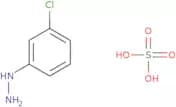
CAS:3-Chlorophenylhydrazine sulphate is a chemical compound that is made by the reaction of 3-chlorophenol and hydrazine. It has been shown to be stable when mixed with other compounds, such as acetone. 3-Chlorophenylhydrazine sulphate has a reaction time of one hour when it is reacted with sodium hydrogen sulfate and zinc powder in a liquid chromatography column. The final product is detected using chromatography detection, which can detect the presence of sulfates. This chemical compound can be used to make other chemicals, such as thiosulfate or hydrochloric acid.
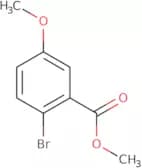
Formula:C12H14Cl2N4•H2O4SPurity:Min. 95%Color and Shape:PowderMolecular weight:383.25 g/mol2-Bromo-5-methoxybenzoic acid methyl ester
CAS:2-Bromo-5-methoxybenzoic acid methyl ester is an antibiotic with a broad spectrum of activity against bacteria, including Staphylococcus aureus and Pseudomonas aeruginosa. 2-Bromo-5-methoxybenzoic acid methyl ester is an inhibitor of the enzyme benzohydrazide, which is involved in the production of prostaglandins. This drug also has antioxidant activity and can inhibit the growth of Escherichia coli and Cereus. 2-Bromo-5-methoxybenzoic acid methyl ester has analgesic properties and was shown to have analgesic activities in animal tests.Formula:C9H9BrO3Purity:Min. 95%Color and Shape:Clear LiquidMolecular weight:245.07 g/mol5,7-Dichloro-1H-imidazo[4,5-b]pyridine
CAS:5,7-Dichloro-1H-imidazo[4,5-b]pyridine is a synthetic compound that has been shown to inhibit the replication of herpes simplex virus in cell culture. It is active against a broad range of viruses including HIV and influenza A. The antiviral potency of 5,7-dichloro-1H-imidazo[4,5-b]pyridine against herpes simplex virus may be due to its ability to act as an agonist on adenosine receptor subtypes such as A2aR. This drug also has immunosuppressive properties and can be used for the treatment of immunodeficiency disorders.
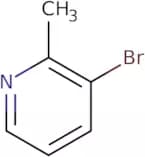
Formula:C6H3Cl2N3Purity:Min. 95%Color and Shape:PowderMolecular weight:188.01 g/mol3-Bromo-2-methylpyridine
CAS:3-Bromo-2-methylpyridine is a synthetic compound that has been shown to be an effective inhibitor of the cannabinoid receptor. It is used as a postprocessing agent in hydrogenation reduction reactions and can be used for the synthesis of pharmaceuticals. 3-Bromo-2-methylpyridine has been shown to bind to the cannabinoid type 1 receptor with high affinity, but it has not been determined whether this binding leads to inhibition. The chemical structure of 3-bromo-2-methylpyridine is similar to that of other cannabinoid type 1 receptor antagonists, such as SR141716A and AM251.
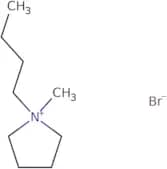
Formula:C6H6BrNPurity:Min. 96 Area-%Color and Shape:PowderMolecular weight:172.02 g/mol1-Butyl-1-methylpyrrolidinium bromide
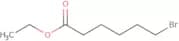
CAS:1-Butyl-1-methylpyrrolidinium bromide is a pyridinium salt with a pyrrolidinium moiety. It forms by the reaction of 1-butylpiperidine and 2 equivalents of Br2 in dichloromethane at -20 degrees Celsius. The formation rate can be determined by measuring the absorbance of the product at 227 nm. 1-Butyl-1-methylpyrrolidinium bromide is an analytical reagent that has been used to determine the viscosity and pH of organic solutions, as well as enzyme activities and kinetic parameters. It has also been used for chemical structures and chromatographic science studies, such as electrochemical impedance spectroscopy.Formula:C9H20BrNPurity:Min. 95%Color and Shape:White PowderMolecular weight:222.17 g/mol6-Bromohexanoic acid ethyl ester
CAS:6-Bromohexanoic acid ethyl ester is a fluorescent compound that has been used to assess the presence of azobenzene in urine samples. This product is also used as a marker for capsicum annuum, which is an edible plant. 6-Bromohexanoic acid ethyl ester has been shown to be effective in the diagnosis of cancer, especially carcinoma cells. Coumarin derivatives have been found to possess fluorescence properties similar to 6-bromohexanoic acid ethyl ester and are also used as markers for cancer cells. The use of polyclonal antibodies and hydrochloric acid for this product can lead to fluorescence properties that are specific for cancer cells.Formula:C8H15BrO2Purity:Min. 95%Color and Shape:Colourless To Pale Yellow LiquidMolecular weight:223.11 g/mol2-Nitro-4-ethylsulfonylchlorobenzene
CAS:2-Nitro-4-ethylsulfonylchlorobenzene is a high quality, versatile and useful chemical. It has been used as an intermediate in the synthesis of other compounds, such as pharmaceuticals. As a reagent, it has been used to form complex compounds and to produce fine chemicals. 2-Nitro-4-ethylsulfonylchlorobenzene is also a useful scaffold for the production of research chemicals. This compound has shown potential for use in the production of speciality chemicals or as a reaction component.
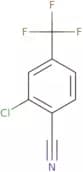
Formula:C8H8ClNO4SPurity:Min. 95%Color and Shape:PowderMolecular weight:249.67 g/mol2-Chloro-4-trifluoromethylbenzonitrile
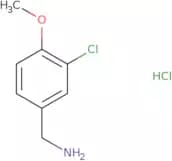
CAS:2-Chloro-4-trifluoromethylbenzonitrile is a fine chemical that belongs to the category of research chemicals, reagents and speciality chemicals. It is a versatile building block which can be used as a reaction component or useful intermediate in the synthesis of complex compounds. This compound also has many different uses, including as a useful scaffold for organic molecules.Formula:C8H3ClF3NPurity:Min. 95%Color and Shape:LiquidMolecular weight:205.57 g/mol3-Chloro-4-methoxybenzylamine hydrochloride
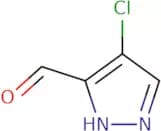
CAS:3-Chloro-4-methoxybenzylamine hydrochloride is a quinoline derivative that inhibits the activity of phosphodiesterase 5, an enzyme that breaks down cGMP in the brain. This drug has been shown to increase levels of cGMP and decrease levels of low energy (i.e., low ATP) in synaptosomes. 3-Chloro-4-methoxybenzylamine hydrochloride may be useful for the treatment of Alzheimer's disease, as it has been shown to improve cognitive function and memory in animal models. The mechanism of action is not fully understood but may involve inhibition of cholinergic neurotransmission or activation of nitric oxide synthase.Formula:C8H10ClNO•HClPurity:Min. 95%Color and Shape:PowderMolecular weight:208.08 g/mol4-Chloro-1H-pyrazole-3-carboxaldehyde
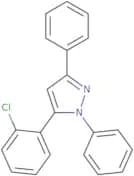
CAS:4-Chloro-1H-pyrazole-3-carboxaldehyde is a fine chemical that is used as a building block in research and development. The CAS number is 623570-54-7. This compound has been found to be useful in the synthesis of complex compounds and versatile scaffolds.Formula:C4H3ClN2OPurity:Min. 95%Color and Shape:SolidMolecular weight:130.53 g/mol1,3-Diphenyl-5-(2-chlorophenyl)pyrazole
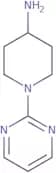
CAS:The title compound was obtained by reacting phenylhydrazine with 2-chloro-1,3-diphenylpyrazole. The reaction mixture was filtered, the solid was washed with water and dried to give 1,3-diphenyl-5-(2-chlorophenyl)pyrazole as a white powder.Formula:C21H15ClN2Purity:Min. 95%Molecular weight:330.81 g/mol1-Pyrimidin-2-ylpiperidin-4-amine dihydrochloride
CAS:1-Pyrimidin-2-ylpiperidin-4-amine dihydrochloride is a high quality, crystalline compound with a CAS number of 1179369-48-2. It is an intermediate in the synthesis of various fine chemicals, including pharmaceuticals and pesticides. 1-Pyrimidin-2-ylpiperidin-4-amine dihydrochloride also has applications as a versatile building block for the synthesis of other compounds and is used as a reaction component in organic chemistry. This reagent can be used to synthesize many different compounds for use in research or medical purposes.Formula:C9H14N4·2HClPurity:Min. 95%Color and Shape:PowderMolecular weight:251.16 g/mol[[(3,5-Dimethyl-1H-pyrrol-2-yl)(3,5-dimethyl-2H-pyrrol-2-ylidene)methyl]methane](difluoroborane)
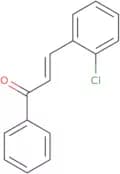
CAS:[[(3,5-Dimethyl-1H-pyrrol-2-yl)(3,5-dimethyl-2H-pyrrol-2-ylidene)methyl]methane](difluoroborane) is a compound that is used in photophysical studies. It has been shown to exhibit low energy levels and fluorescence properties. The chloro atom in this molecule has been shown to have a photostability of approximately 10 μs, which may be due to the lack of electron delocalization that would lead to a significant amount of excited state decay. This compound also exhibits fatty acid microcapsule formation and particle formation, which may be useful for confocal microscopy. [[(3,5-Dimethyl-1H-pyrrol-2-yl)(3,5-dimethyl-2H-pyrrol-2-ylidene)methyl]methane](difluorobFormula:C14H17BF2N2Purity:Min. 95%Color and Shape:Red PowderMolecular weight:262.11 g/mol3-(2-Chlorophenyl)-1-phenylpropene-1-one
CAS:3-(2-Chlorophenyl)-1-phenylpropene-1-one is an amide that is synthesized by the acylation of 3-phenylpropene-1-one with 2,3,5,6-tetrafluorobenzoyl chloride in the presence of a base. The proton transport mechanism is initiated by the addition of a proton to the carbonyl group and then proceeds through an intermediate called a chalcone. This reaction can be accomplished using biomimetic methods or by using chalcones and halides as intermediates.Formula:C15H11ClOPurity:Min. 95%Molecular weight:242.7 g/mol(5R)-5-(Chloromethyl)-3-[3-fluoro-4-(4-morpholinyl)phenyl]-2-oxazolidinone
CAS:(5R)-5-(Chloromethyl)-3-[3-fluoro-4-(4-morpholinyl)phenyl]-2-oxazolidinone is an enantiopure compound that is used in the synthesis of pharmaceuticals. It has been shown to be a very potent antibacterial agent that can be used to prevent bacterial infections. The (5R)-isomer has been found to have a higher potency than the (5S) isomer, but both are effective. This compound has a cyclopropane ring and a five-membered ring with an oxazolidinone functional group, which makes it structurally related to linezolid and carbonylation.Formula:C14H16ClFN2O3Purity:Min. 95%Color and Shape:White Off-White PowderMolecular weight:314.74 g/molNε-Methyl-L-lysine hydrochloride
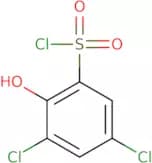
CAS:Ne-Methyl-L-lysine hydrochloride is an acetylated form of the amino acid L-lysine. It has shown to be effective in treating pernicious anemia, a condition in which the body lacks sufficient vitamin B12. Ne-Methyl-L-lysine hydrochloride inhibits the production of human vascular endothelial growth factor (VEGF) and can also be used as a diagnostic tool for pernicious anemia. This drug is expressed by genetically engineered cells and has been shown to inhibit acetylation reactions, leading to monoclonal antibodies with increased stability. Ne-Methyl-L-lysine hydrochloride also binds to vitamin B12 and prevents its catabolism, thereby increasing the levels of this essential nutrient.Formula:C7H16N2O2•HClPurity:Min. 95%Color and Shape:White PowderMolecular weight:196.67 g/mol2,4-Dichlorophenol-6-sulphonyl chloride
CAS:2,4-Dichlorophenol-6-sulphonyl chloride (2,4-DCP) is a molecule that has been shown to have antibacterial activity against Gram-positive and Gram-negative bacteria. It inhibits the growth of bacteria by binding to the cell wall and inhibiting enzyme activity. 2,4-DCP also has hemolytic activity in vitro. The mechanism of this effect is not well understood but may involve an interaction with membrane lipids or proteins in red blood cells. In addition, 2,4-DCP has been shown to inhibit the growth of staphylococcus and other bacterial strains in vitro. The inhibition of bacterial growth by 2,4-DCP is reversible with exposure to hydrated conditions.Formula:C6H3Cl3O3SPurity:Min. 95%Molecular weight:261.51 g/molTrans-diamminedichloropalladium(II)
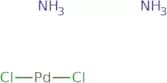
CAS:Trans-Diamminedichloropalladium is a particle with an average size of 0.5 microns. It is a metal carbonyl complex that belongs to the group of analytical methods. Trans-Diamminedichloropalladium can be used for the treatment of wastewater and oxidation catalysts. The electrochemical impedance spectroscopy (EIS) of the particles has been shown to be sensitive to changes in morphology, which may be due to the hydroxyl group on the surface or due to a change in oxidation state. Trans-Diamminedichloropalladium can also act as an oxidizing agent that converts hydrochloric acid into chlorine gas, which has been shown by solid catalyst experiments.
Formula:Pd(NH3)2Cl2Purity:Min. 95%Color and Shape:Yellow Clear LiquidMolecular weight:211.39 g/mol

![4-[(2-Chlorobenzyl)oxy]benzoic acid](/_next/image/?url=https%3A%2Fstatic.cymitquimica.com%2Fproducts%2F3D%2Fthumb-webp%2FFC119032.webp&w=3840&q=75)
![5,7-Dichloro-1H-imidazo[4,5-b]pyridine](/_next/image/?url=https%3A%2Fstatic.cymitquimica.com%2Fproducts%2F3D%2Fthumb-webp%2FFD139433.webp&w=3840&q=75)

![[[(3,5-Dimethyl-1H-pyrrol-2-yl)(3,5-dimethyl-2H-pyrrol-2-ylidene)methyl]methane](difluoroborane)](/_next/image/?url=https%3A%2Fstatic.cymitquimica.com%2Fproducts%2F3D%2Fthumb-webp%2FFD62165.webp&w=3840&q=75)
![(5R)-5-(Chloromethyl)-3-[3-fluoro-4-(4-morpholinyl)phenyl]-2-oxazolidinone](/_next/image/?url=https%3A%2Fstatic.cymitquimica.com%2Fproducts%2F3D%2Fthumb-webp%2FFC57969.webp&w=3840&q=75)