Organic Halides
In this category, you can find organic molecules containing one or more halogen atoms in their structure. These organic halides include brominated, iodinated, chlorinated, and cyclic halide compounds. Organic halides are widely used in organic synthesis, pharmaceuticals, agrochemicals, and materials science due to their reactivity and ability to undergo a variety of chemical transformations. At CymitQuimica, we offer a comprehensive selection of high-quality organic halides to support your research and industrial applications, ensuring reliable and effective performance in your synthetic and analytical projects.
Subcategories of "Organic Halides"
Found 20440 products of "Organic Halides"
Sort by
Purity (%)
0
100
|
0
|
50
|
90
|
95
|
100
N-Benzyltrifluoroacetamide
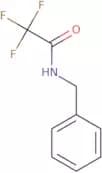
CAS:N-Benzyltrifluoroacetamide is an amide that inhibits the activity of the enzyme fatty acid synthase, which catalyzes the synthesis of fatty acids. It has been shown to be effective against a number of cancers and has been used in the treatment of patients infected with HIV. N-Benzyltrifluoroacetamide is active against a range of cancer cell lines, including breast, pancreatic, ovarian, prostate, and colorectal carcinomas. Its mechanism of action is not known but may involve inhibition of protein synthesis or induction of apoptosis.Formula:C9H8F3NOPurity:Min. 95%Color and Shape:White To Off-White SolidMolecular weight:203.16 g/mol2-Bromo-5-fluorobenzyl alcohol
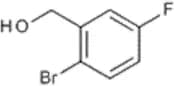
CAS:<p>2-Bromo-5-fluorobenzyl alcohol is a synthetic organoboron compound that can be used in the synthesis of other compounds. It has been shown to have a thermal expansion coefficient of 0.038 x 10^-6 K, which is an intermediate value for organic materials. The two polymorphic forms are monoclinic (space group P2/c) and hexagonal (P63). When 2-bromo-5-fluorobenzyl alcohol is irradiated with microwaves and magnetic fields, it undergoes anisotropic expansion, which suggests that intermolecular interactions are important in this phenomenon. This material has been shown to exhibit antifungal properties.</p>Formula:C7H6BrFOPurity:Min. 95%Color and Shape:PowderMolecular weight:205.02 g/mol4-Bromoisatin
CAS:4-Bromoisatin is a synthetic compound that reversibly inhibits the activity of telomerase and has been shown to be effective against a broad range of bacterial species. It binds to the catalytic site on telomerase and prevents the synthesis of ribonucleotides, which are necessary for DNA replication. 4-Bromoisatin is synthesized by humans, but can also be found in plants such as coffee beans and black tea leaves. The antibacterial properties of 4-bromoisatin may be due to its ability to inhibit the biosynthesis of purine, an essential component in bacterial DNA synthesis.Formula:C8H4BrNO2Purity:Min. 95%Color and Shape:Orange PowderMolecular weight:226.03 g/mol3-Chloro-2-fluoroaniline
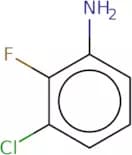
CAS:<p>3-Chloro-2-fluoroaniline is an industrial chemical, which is used to manufacture a variety of other chemicals. 3-Chloro-2-fluoroaniline is the product of the chlorinating reaction between 2-fluoroaniline and hydrochloric acid. It has been used in the synthesis of drugs such as probenecid and sulfinpyrazone, which are used for the treatment of cardiac disease. 3-Chloro-2-fluoroaniline also has chloride ion activity and can be used as a synthetic intermediate for other organic acids.</p>Formula:C6H5ClFNColor and Shape:Clear LiquidMolecular weight:145.56 g/mol(2-Fluoro-4-methylsulfonylphenyl)boronic acid
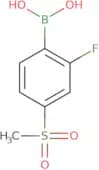
CAS:<p>2-Fluoro-4-methylsulfonylphenyl)boronic acid is a fine chemical that is useful as a scaffold for the production of other compounds. It can be used as a versatile building block in organic synthesis, and is often used as an intermediate or research chemical. 2-Fluoro-4-methylsulfonylphenyl)boronic acid has been shown to react with many different types of compounds, making it a valuable reagent. This compound is also known for its high quality, which makes it an excellent choice for use in reactions that require speciality chemicals.</p>Formula:C7H8BFO4SPurity:Min. 95%Color and Shape:White PowderMolecular weight:218.01 g/molIodomethylboronic acid, pinacol ester
CAS:Iodomethylboronic acid is a synthetic compound that contains a boron atom. Iodomethylboronic acid can be used to produce other compounds, such as dibutyl iodide and epoxides, by introducing an oxygenated linker. The properties of iodomethylboronic acid have been extensively studied using modelling and assays. It has been shown to form stable complexes with aromatic hydrocarbons and amines. Iodomethylboronic acid can also be used in the synthesis of radionuclides, which are radioactive isotopes of elements that emit radiation spontaneously or when they undergo radioactive decay. Iodomethylboronic acid is often used in chemical reactions as a quaternary ammonium salt, which is a positively charged ion (cation) with four groups attached to it. These groups may be either organic or inorganic in nature.Formula:C7H14BIO2Purity:Min. 95%Color and Shape:PowderMolecular weight:267.9 g/molGlycine t-butyl ester hydrochloride
CAS:<p>Glycine t-butyl ester hydrochloride is a glycine prodrug that is converted to the neurotransmitter, cinchonidine, by carboxylesterase. It has been shown to be effective in resistant cancer cells and has good bioavailability in humans. Glycine t-butyl ester hydrochloride is synthesized from glycine and butyric acid with sodium carbonate as a catalyst and then reacted with anhydrous hydrogen chloride to form the final product. This synthesis requires an asymmetric reaction solution, which can be achieved by using a chiral reactant such as potassium carbonate or magnesium chloride. The dehydration of the ester group can be performed by heating in vacuum at 120°C for 2 hours.</p>Formula:C6H14ClNO2Purity:Min. 95%Color and Shape:White PowderMolecular weight:167.63 g/mol1-(3-Chloropropyl)-pyrrolidine hydrochloride
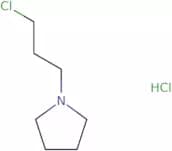
CAS:1-(3-Chloropropyl)-pyrrolidine hydrochloride is a high quality reagent that can be used as a building block for the synthesis of complex compounds. It is also useful as an intermediate for the production of 1,4-dihydropyridines and piperidones. 1-(3-Chloropropyl)-pyrrolidine hydrochloride is soluble in organic solvents and stable under normal storage conditions. This product can be used to manufacture many fine chemicals including speciality chemicals, research chemicals, and versatile building blocks.Formula:C7H14ClN·HClPurity:Min. 95%Color and Shape:Off-White PowderMolecular weight:184.11 g/mol1-Fluoro-3,5-dimethoxybenzene
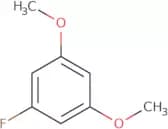
CAS:1-Fluoro-3,5-dimethoxybenzene has been shown to be a ferroelectric material with a dielectric constant of approximately 3000. It is soluble in organic solvents and can be isolated as an oil or solid. The crystalline form of 1-fluoro-3,5-dimethoxybenzene is obtained by sublimation at −20 °C. The compound has a molecular weight of 204.17 and melting point of 155 °C. This compound is used as a starting material for the synthesis of fluorotriphenylmethane analogs that are potential CB2 receptor agonists and other organic compounds, including tetrahydrocannabinol (THC) and its analogues. 1-Fluoro-3,5-dimethoxybenzene also reacts with chloride to form difluorobenzene (DFB). DFB's ability to bind aluminium ions allows it to catalyFormula:C8H9FO2Purity:Min. 98 Area-%Color and Shape:Clear LiquidMolecular weight:156.15 g/mol2-Chloro-5-propyl-1,3,4-thiadiazole
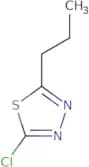
CAS:<p>2-Chloro-5-propyl-1,3,4-thiadiazole is a reagent that is useful in the synthesis of complex compounds. It has CAS No. 116035-47-3 and can be used as a fine chemical or speciality chemical for research purposes. It is also an intermediate for the production of other chemicals and can be used as a versatile building block in organic synthesis.</p>Formula:C5H7ClN2SPurity:Min. 95%Color and Shape:Colorless PowderMolecular weight:162.64 g/molRaloxifene hydrochloride
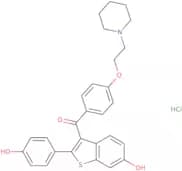
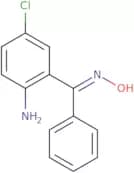
CAS:Controlled ProductEstrogen receptor modulatorFormula:C28H28ClNO4SPurity:Min. 95%Color and Shape:Off-White PowderMolecular weight:510.04 g/mol2-Amino-5-chlorobenzophenone oxime
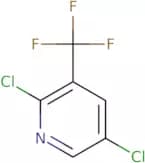
CAS:2-Amino-5-chlorobenzophenone oxime is a drug that belongs to the class of hydrazides. It was originally developed as an antidepressant and it has been shown in animal experiments to have antidepressant effects. 2-Amino-5-chlorobenzophenone oxime inhibits the enzyme monoamine oxidase, which is responsible for breaking down amines such as serotonin and norepinephrine. This inhibition leads to increased levels of these neurotransmitters in the brain, which may be responsible for its antidepressant effect. 2-Amino-5-chlorobenzophenone oxime also has analgesic properties, with yields of up to 86%.Formula:C13H11ClN2OPurity:Min. 85 Area-%Color and Shape:PowderMolecular weight:246.69 g/mol2,5-Dichloro-3-(trifluoromethyl)pyridine
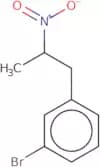
CAS:<p>2,5-Dichloro-3-(trifluoromethyl)pyridine is a hypochlorite that is produced by the reaction of hydrazine and fluoro with sodium hypochlorite. It is a colorless solid with a molecular weight of 180.2. The compound has been used in spectroscopy to study the reaction mechanism of hypochlorites with various substrates.</p>Formula:C6H2Cl2F3NPurity:Min. 95%Color and Shape:Slightly Yellow PowderMolecular weight:215.99 g/mol1-(3-Bromophenyl)-2-nitropropane
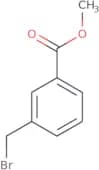
CAS:<p>1-(3-Bromophenyl)-2-nitropropane is a fine chemical that is used as a building block in the synthesis of complex organic compounds. It can be used as a reagent and speciality chemical with high quality. 1-(3-Bromophenyl)-2-nitropropane is versatile for use in reactions, such as coupling reactions, because it can be used as an intermediate or scaffold to create many different compounds. CAS No.: 155988-18-4</p>Formula:C9H10BrNO2Purity:Min. 95%Molecular weight:244.09 g/molMethyl 3-(bromomethyl)benzoate
CAS:<p>Methyl 3-(bromomethyl)benzoate is a hydroxamic acid that has been shown to have potent inhibitory activity against DPP-4, an enzyme that regulates the production of the incretin hormones, GLP-1 and GIP. The compound was also found to have a strong ability to form coordination complexes with palladium and metal ions. Methyl 3-(bromomethyl)benzoate is structurally similar to other hydroxamic acids such as Covid-19 pandemic, which is a drug used for the treatment of HIV infections.</p>Formula:C9H9BrO2Purity:Min. 95%Color and Shape:PowderMolecular weight:229.07 g/molEthyl 3-chloro-2,4,5-trifluorobenzoylacetate
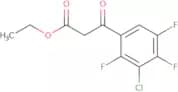
CAS:<p>Ethyl 3-chloro-2,4,5-trifluorobenzoylacetate is a high quality chemical that is used as an intermediate in the production of complex compounds. It is also a reagent that is used in fine chemical reactions. This compound has many uses, including being a useful scaffold for the production of new compounds and a versatile building block for reactions. Ethyl 3-chloro-2,4,5-trifluorobenzoylacetate is used in research as well as in the production of speciality chemicals.</p>Formula:C11H8ClF3O3Purity:Min. 95%Color and Shape:PowderMolecular weight:280.63 g/mol5-Bromo thiophene-2-aldehyde
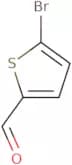
CAS:5-Bromo thiophene-2-aldehyde is a trifluoroacetic acid derivative used as an activatable probe for the study of biomolecular interactions. This compound has been shown to be biocompatible and has a low cytotoxicity. 5-Bromo thiophene-2-aldehyde binds to malonic acid in the presence of x-ray radiation and forms a complex that can be detected by electrochemical impedance spectroscopy. The structure of this complex was determined by x-ray crystal structures. This probe is also able to bind to nitrogen atoms in proteins, which can be used to diagnose cancer resistance through protease activity. 5-Bromo thiophene-2-aldehyde is isolated as its hydrochloride salt, which can be purified with a suzuki coupling reaction.Formula:C5H3BrOSPurity:Min. 95%Color and Shape:Yellow PowderMolecular weight:191.05 g/mol3-Bromoanisole
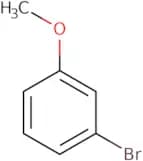
CAS:3-Bromoanisole is a chemical compound that is used as a solvent for organic reactions. It is typically used in Suzuki coupling reactions, which are employed to form carbon-carbon bonds between two organic molecules. 3-Bromoanisole has been shown to be more reactive than 2-bromoanisole and reacts with hydrogen chloride in hydrochloric acid to form the corresponding bromoalkane. 3-Bromoanisole also participates in molecular interactions by forming steric interactions with other molecules or atoms. This can be seen through molecular modeling studies, where it was observed that 3-bromoanisole interacts with the methoxy group of an adjacent molecule. The sterics of this interaction are illustrated by the increased distance between the two molecules when compared with those without bromoalkanes present.Formula:C7H7BrOPurity:Min. 95%Color and Shape:PowderMolecular weight:187.03 g/mol3',4'-Dichloroacetophenone
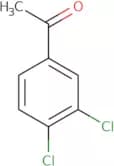
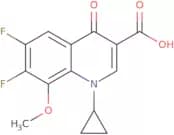
CAS:<p>3',4'-Dichloroacetophenone is a tetranuclear compound that is used in the synthesis of chromatographic assays. It has been shown to inhibit the growth of infectious diseases, cancer, and bacteria. 3',4'-Dichloroacetophenone inhibits trichomonas vaginalis and chlamydia by binding to imine nitrogen, which prevents the formation of an enzyme (NAD-dependent), which is required for bacterial DNA synthesis. 3',4'-Dichloroacetophenone also inhibits p. aeruginosa by binding with phosphane groups on this organism's cell wall, preventing bacterial cell division.</p>Formula:C8H6Cl2OPurity:Min. 95%Color and Shape:Off-White PowderMolecular weight:189.04 g/mol1-Cyclopropyl-6,7-difluoro-1,4-dihydro-8-methoxy-4-oxo-3-quinolinecarboxylic acid
CAS:<p>Moxifloxacin is an analog of the antibiotic quinolone. It is a prodrug that is hydrolyzed in vivo to its active form, moxifloxacin. Moxifloxacin has been shown to be effective against a variety of bacteria, including methicillin-resistant Staphylococcus aureus (MRSA), Mycobacterium tuberculosis and Mycobacterium avium complex. The reaction yield for the synthesis of moxifloxacin is very high, with an industrial production capacity in excess of 500 tons per year. Impurities are not usually found in the final product due to the use of methyl alcohol as a solvent during the reaction process. The drug has discoloring properties and deuterium atoms are often substituted for hydrogen atoms on the molecule to make it more stable. Deuterium atoms can be easily identified by mass spectrometry analysis. Moxifloxac</p>Formula:C14H11F2NO4Purity:Min. 95%Color and Shape:PowderMolecular weight:295.24 g/mol