Organic Halides
In this category, you can find organic molecules containing one or more halogen atoms in their structure. These organic halides include brominated, iodinated, chlorinated, and cyclic halide compounds. Organic halides are widely used in organic synthesis, pharmaceuticals, agrochemicals, and materials science due to their reactivity and ability to undergo a variety of chemical transformations. At CymitQuimica, we offer a comprehensive selection of high-quality organic halides to support your research and industrial applications, ensuring reliable and effective performance in your synthetic and analytical projects.
Subcategories of "Organic Halides"
Found 20440 products of "Organic Halides"
Sort by
Purity (%)
0
100
|
0
|
50
|
90
|
95
|
100
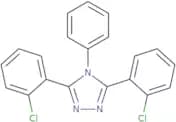
2,5-(2-Chlorophenyl)-phenyl-1,3,4-triazole
CAS:<p>2,5-(2-Chlorophenyl)-phenyl-1,3,4-triazole is a versatile building block that can be used as a reagent in organic synthesis. It is also a useful intermediate for the preparation of other compounds and an important reaction component for the synthesis of complex compounds. CAS No. 88032-13-7.</p>Formula:C20H13Cl2N3Purity:Min. 95%Molecular weight:366.24 g/mol7-Amino-3-chloro cephalosporanic acid
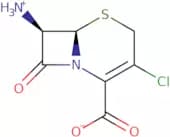
CAS:<p>7-Amino-3-chloro cephalosporanic acid is a molecule that can be used to synthesize the drug cefaclor. It is a synthetic compound that has been shown to have anticancer activity and antibacterial activity. This molecule is an ester hydrochloride and has a bulk density of 1.2 g/cm³. 7-Amino-3-chloro cephalosporanic acid is activated by hydrochloric acid in the presence of an organic solvent, such as ethyl acetate, at room temperature. The molecule is also bioactive and its expression can be induced by adding an activator, such as sodium butyrate or benzyl alcohol, to the medium.br>br><br>7-Amino-3-chloro cephalosporanic acid exhibits antibacterial activity against Gram positive bacteria, such as Bacillus subtilis and Staphylococcus epidermid</p>Formula:C7H7ClN2O3SPurity:Min. 95%Color and Shape:PowderMolecular weight:234.66 g/molN-Methyl-N-(1-naphthyl)-1-chlorobenzamide
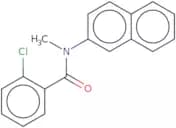
CAS:N-Methyl-N-(1-naphthyl)-1-chlorobenzamide is a versatile and useful chemical that can be used in the preparation of many different compounds. It is a reaction component and reagent, as well as a useful scaffold for the synthesis of many different compounds. It has high quality and is used in research chemicals. N-Methyl-N-(1-naphthyl)-1-chlorobenzamide has CAS No. 74881-60-0 and is a speciality chemical. It can also be used as a versatile building block or intermediates for the synthesis of more complex compounds.Formula:C18H14ClNOPurity:Min. 95%Molecular weight:295.76 g/mol5-(2-Chlorophenyl)-1-phenyl-1,3,4-triazole
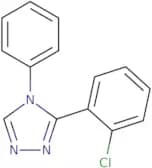
CAS:<p>5-(2-Chlorophenyl)-1-phenyl-1,3,4-triazole is a useful reagent and building block for the synthesis of various chemical compounds. It has been used as a reaction component in organic synthesis as well as a useful scaffold for new chemical compounds. 5-(2-Chlorophenyl)-1-phenyl-1,3,4-triazole is an intermediate in the production of pharmaceuticals and pesticides. It is also used as a speciality chemical for research purposes. Additionally, this compound can be used to make fine chemicals such as dyes and perfumes.</p>Formula:C14H10N3ClPurity:Min. 95%Color and Shape:PowderMolecular weight:255.7 g/mol1-Bromo-2-(4-bromophenyl)ethylene
CAS:The 1-Bromo-2-(4-bromophenyl)ethylene (1-BPEE) is a highly reactive anion radical that can be generated from the reaction of chlorine with various organic compounds. The 1-BPEE is often used as an analytical method for the determination of the concentration of bromine in environmental samples. It has been shown to have antiviral and antimicrobial properties, and has been found to inhibit hepatitis B virus and human immunodeficiency virus type 1. The 1-BPEE is also a potential candidate for use in removing chlorinated organics from wastewater effluent.Formula:C8H6Br2Purity:Min. 95%Color and Shape:Off-White To Light (Or Pale) Yellow SolidMolecular weight:261.94 g/mol5,7-Dichloro-1H-imidazo[4,5-b]pyridine
CAS:<p>5,7-Dichloro-1H-imidazo[4,5-b]pyridine is a synthetic compound that has been shown to inhibit the replication of herpes simplex virus in cell culture. It is active against a broad range of viruses including HIV and influenza A. The antiviral potency of 5,7-dichloro-1H-imidazo[4,5-b]pyridine against herpes simplex virus may be due to its ability to act as an agonist on adenosine receptor subtypes such as A2aR. This drug also has immunosuppressive properties and can be used for the treatment of immunodeficiency disorders.</p>Formula:C6H3Cl2N3Purity:Min. 95%Color and Shape:PowderMolecular weight:188.01 g/mol3-(3-Fluoro-4-methoxybenzoyl)propionic acid
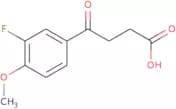
CAS:3-(3-Fluoro-4-methoxybenzoyl)propionic acid is a versatile building block that is used in the synthesis of many organic compounds. 3-(3-Fluoro-4-methoxybenzoyl)propionic acid has been used as a reagent in the synthesis of pharmaceuticals and other chemicals. 3-(3-Fluoro-4-methoxybenzoyl)propionic acid can be used to produce high quality research chemicals, speciality chemicals, and fine chemicals. This compound is also used to produce complex compounds and useful intermediates. 3-(3-Fluoro-4-methoxybenzoyl)propionic acid is available through chemical suppliers such as Sigma Aldrich or Acros Organics.Formula:C11H11FO4Purity:Min. 95%Molecular weight:226.2 g/molCimetropium bromide
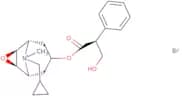
CAS:<p>Cimetropium bromide is a pharmacological agent that binds to muscarinic receptors, inhibiting the release of acetylcholine. It is used in the treatment of bowel disease, such as constipation and irritable bowel syndrome. Cimetropium bromide has been shown to be effective in treating symptoms of these diseases, including decreased intestinal motility, increased stool consistency, and relief from abdominal pain. Cimetropium bromide has also been found to be effective in reducing symptoms of inflammatory bowel disease. This drug inhibits the release of acetylcholine by binding with muscarinic receptors on the smooth muscle cells lining the intestine and bladder. Cimetropium bromide is a potent antimuscarinic agent that can cause dry mouth and blurred vision.</p>Formula:C21H28BrNO4Purity:Min. 95%Color and Shape:White PowderMolecular weight:438.36 g/molAuramine O hydrochloride
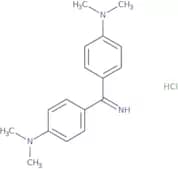
CAS:Controlled ProductAuramine O hydrochloride is a fluorescent dye that is used in the diagnosis of wastewater. Auramine O hydrochloride is a reactive dye that binds to malonic acid and forms stable complexes. It has been used as a fluorescence probe for polymerase chain reaction (PCR) detection of human serum samples, and it has been shown to be thermodynamically stable under conditions of pH 8-12, at temperatures up to 80°C, and in the presence of organic solvents. In addition, this dye can be activated with UV light or sodium hypochlorite solution. This dye also reacts with amino groups on proteins and lipids on cell membranes, which makes it useful for microscopy studies.Formula:C17H21N3•HClColor and Shape:Yellow PowderMolecular weight:303.83 g/mol2-Amino-3,5-dichlorobenzoic acid
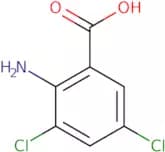
CAS:2-Amino-3,5-dichlorobenzoic acid is a petrochemical that has been used in the production of other chemicals, such as phosphorus pentachloride. It also serves as a precursor for molybdenum and ATP binding cassette transporter. 2-Amino-3,5-dichlorobenzoic acid binds to the hydrochloric acid and sodium hydroxide solution present in the stomach to produce hydrochloric acid and sodium chloride. 2-Amino-3,5-dichlorobenzoic acid is also a precursor for quinazolone, which is used in the production of dyes and pharmaceuticals. It has also been shown to inhibit plant physiology by inhibiting chlorophyll synthesis.Formula:C7H5Cl2NO2Purity:Min. 95%Color and Shape:PowderMolecular weight:206.03 g/mol1-(2-Chlorophenyl)-5-phenyl-1-H-pyrazole-3-carboxylic acid
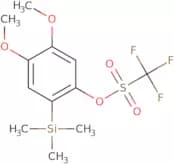
CAS:Controlled Product<p>1-(2-Chlorophenyl)-5-phenyl-1H-pyrazole-3-carboxylic acid is a high quality, reagent, complex compound that has been shown to be useful as an intermediate in the synthesis of a number of different compounds. It has been shown to be useful as a speciality chemical and research chemicals with versatile building blocks that can be used for the synthesis of other compounds. The CAS number for 1-(2-chlorophenyl)-5-phenyl-1H-pyrazole-3-carboxylic acid is 116572-69-1.</p>Formula:C16H11ClN2O2Purity:Min. 95%Molecular weight:298.72 g/mol4,5-Dimethoxy-2-(trimethylsilyl)phenyl trifluoromethanesulfonate
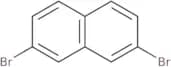
CAS:<p>4,5-Dimethoxy-2-(trimethylsilyl)phenyl trifluoromethanesulfonate is a reagent for the synthesis of propiolates. It is prepared by reacting methyl propiolate with tetrachloride, hexachloroethane, or tetrabromide in acetonitrile. The reactants are heated to reflux under argon and then cooled to room temperature. This product is an ionic liquid that can be used as a solvent. 4,5-Dimethoxy-2-(trimethylsilyl)phenyl trifluoromethanesulfonate is a zwitterion and reacts with amines to form quaternary ammonium salts. It can also be used for the synthesis of unactivated transition metal complexes by reacting it with palladium and amines.</p>Formula:C12H17F3O5SSiPurity:Min. 95%Color and Shape:Colorless PowderMolecular weight:358.41 g/mol2,7-Dibromonaphthalene
CAS:2,7-Dibromonaphthalene is a chemosensor that is used to sense the presence of halides in water. It reacts with anion radicals in the atmosphere to produce a fluorescent compound with a long wavelength emission. This reaction can be observed using ultraviolet spectroscopy and amination reactions. 2,7-Dibromonaphthalene has been shown to react with copper oxide to form a blue-green compound. This property has been used as an indicator of copper contamination in water and soil samples. 2,7-Dibromonaphthalene also reacts with metal ions to form metal cations, which can be detected using cyclen or other organic compounds.Formula:C10H6Br2Purity:Min. 95%Color and Shape:PowderMolecular weight:285.96 g/mol2-Bromothiophene
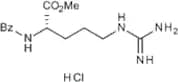
CAS:2-Bromothiophene is a brominated organic compound with six carbon atoms in a ring. It is synthesized by the Suzuki coupling reaction of 2-bromobenzene and aniline, which forms the pyrazole ring. The molecule can be used as a monomer for cationic polymerization to form polymers with high thermal stability. 2-Bromothiophene has been shown to be effective in treating chronic bronchitis, and can also be used as a photoelectron source.Formula:C4H3BrSPurity:Min. 95%Color and Shape:Clear LiquidMolecular weight:163.04 g/molN-α-Benzoyl-L-arginine methyl ester hydrochloride
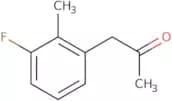
CAS:N-alpha-Benzoyl-L-arginine methyl ester hydrochloride is a useful intermediate in the synthesis of a variety of complex compounds. It is an important reagent for the synthesis of high quality fine chemicals, and can be used as a building block in the construction of new chemical compounds. The CAS number for N-alpha-Benzoyl-L-arginine methyl ester hydrochloride is 1784-04-9. This compound has been shown to be useful in research on speciality chemicals, and it has been utilized as a reaction component for the synthesis of versatile building blocks.Formula:C14H20N4O3•HClPurity:Min. 95%Color and Shape:PowderMolecular weight:328.79 g/mol3-Fluoro-2-methylphenylacetone
CAS:<p>3-Fluoro-2-methylphenylacetone is a reaction component and reagent that is useful in the synthesis of complex compounds. 3-Fluoro-2-methylphenylacetone, also known as 2-fluoromethylbenzaldehyde, is a versatile building block that can be used to synthesize a wide variety of chemical compounds. It has been shown to be an excellent intermediate and building block for the synthesis of pharmaceuticals, pesticides, agrochemicals, specialty chemicals, and other organic compounds. 3-Fluoro-2-methylphenylacetone is a fine chemical that has CAS No. 1017060-34-2.</p>Formula:C10H11FOPurity:Min. 95%Molecular weight:166.19 g/mol4-Iodophenylboronic acid
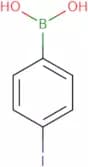
CAS:4-Iodophenylboronic acid is a chemical compound that has been shown to bind to disaccharides and form hydrogen bonding interactions. It has also been shown to enhance the chemiluminescence of ethylene diamine in a light emission assay, which is due to its ability to bind to fatty acids. 4-Iodophenylboronic acid has been used in studies on tumor xenografts and optical properties. 4-Iodophenylboronic acid has also been shown to have vibrational and nmr spectra that differ from other boronic acids. This compound is unique because it binds with water molecules more strongly than any other boronic acid.Formula:C6H6BIO2Purity:Min. 95%Color and Shape:PowderMolecular weight:247.83 g/mol4-Fluorophthalonitrile
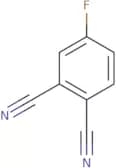
CAS:4-Fluorophthalonitrile is a colorless liquid that is insoluble in water and has a strong odor. This chemical is found naturally in coal tar and has been used to synthesize supramolecular devices, such as those that are capable of producing light. 4-Fluorophthalonitrile can be obtained synthetically by cross-coupling reactions with aryl chlorides or chlorine. It exhibits fluorescence when irradiated with light. 4-Fluorophthalonitrile also reacts with terminal alkynes to form aryl fluorides.Formula:C8H3FN2Purity:Min. 95%Molecular weight:146.12 g/molPentaerythrityl tetrachloride
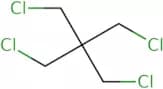
CAS:Pentaerythrityl tetrachloride is a chemical compound that has been shown to inhibit the activity of a number of enzymes. It is used as an industrial chemical for wastewater treatment, for the production of carbon tetrachloride, glycol ethers and phosphates, as well as in the manufacture of polymers and adhesives. Pentaerythrityl tetrachloride has also been shown to have anti-inflammatory properties by inhibiting growth factor-β1. This compound is also used in research to study nuclear DNA and silicon-zirconium oxide nanocomposite materials.Formula:C5H8Cl4Purity:Min. 95%Color and Shape:PowderMolecular weight:209.93 g/mol3-(2,2-Dichlorovinyl)-2,2-dimethylcyclopropanecarboxylic acid
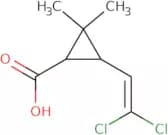
CAS:3-(2,2-Dichlorovinyl)-2,2-dimethylcyclopropanecarboxylic acid is a metabolite of the drug dextran sulfate. It is also an industrial chemical that has been used as a cross-linking agent in the manufacture of polymers and plastics. 3-(2,2-Dichlorovinyl)-2,2-dimethylcyclopropanecarboxylic acid binds to chloride ions in the blood and increases blood pressure by blocking the production of renin. This compound can be found in urine samples as a result of its excretion from the body. 3-(2,2-Dichlorovinyl)-2,2-dimethylcyclopropanecarboxylic acid has been shown to increase the levels of coagulation factors VIII and IX in human serum. It also has been shown to react with other chemicals in order to form ion pairs that can be detected using chemical ionFormula:C8H10Cl2O2Purity:Min. 95%Color and Shape:PowderMolecular weight:209.07 g/mol


![5,7-Dichloro-1H-imidazo[4,5-b]pyridine](/_next/image/?url=https%3A%2Fstatic.cymitquimica.com%2Fproducts%2F3D%2Fthumb-webp%2FFD139433.webp&w=3840&q=75)