Organic Halides
In this category, you can find organic molecules containing one or more halogen atoms in their structure. These organic halides include brominated, iodinated, chlorinated, and cyclic halide compounds. Organic halides are widely used in organic synthesis, pharmaceuticals, agrochemicals, and materials science due to their reactivity and ability to undergo a variety of chemical transformations. At CymitQuimica, we offer a comprehensive selection of high-quality organic halides to support your research and industrial applications, ensuring reliable and effective performance in your synthetic and analytical projects.
Subcategories of "Organic Halides"
Found 20440 products of "Organic Halides"
Sort by
Purity (%)
0
100
|
0
|
50
|
90
|
95
|
100
3-Methyl-3,8-diaza-bicyclo[3.2.1]octane dihydrochloride
CAS:3-Methyl-3,8-diaza-bicyclo[3.2.1]octane dihydrochloride is a high quality reagent that is useful as an intermediate in the synthesis of complex compounds and as a reagent for fine chemicals. 3-Methyl-3,8-diaza-bicyclo[3.2.1]octane dihydrochloride can be used as a versatile building block in the synthesis of speciality chemicals and research chemicals. It can also be used to synthesize a variety of reaction components, such as amines, carboxylic acids, alcohols, amides, and nitriles.Formula:C7H16Cl2N2Purity:Min. 95%Color and Shape:PowderMolecular weight:199.12 g/mol2-Amino-4'-chloroacetophenone hydrochloride
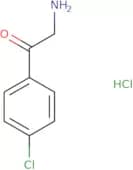
CAS:Controlled Product<p>2-Amino-4'-chloroacetophenone hydrochloride is a cytotoxic compound that inhibits the polymerization of tubulin. It has been shown to have cytotoxic effects and inhibit the growth of cancer cells in vitro at low micromolar concentrations. 2-Amino-4'-chloroacetophenone hydrochloride is a member of the cytotoxic class of compounds and can be used to slow or stop cell division by inhibiting the production of proteins vital for cell division, such as tubulin. This effect is due to its ability to bind to the beta subunit of tubulin, which disrupts its structure and prevents polymerization from occurring.</p>Formula:C8H8ClNO•HClPurity:Min. 95%Color and Shape:PowderMolecular weight:206.07 g/mol2,6-Bistrifluoromethyl benzoic acid
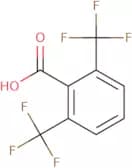
CAS:<p>2,6-Bistrifluoromethyl benzoic acid is a chiral compound that can be detected in urine samples at high concentrations. The compound can be detected by high-performance liquid chromatography (HPLC) after being derivatized with methyl ester. It has been shown to have a dihedral angle of about 180° and an enantiomeric purity of 99%. The efficient method for the synthesis of 2,6-Bistrifluoromethyl benzoic acid is also described. This method involves the use of a template molecule, which is prepared from 1-phenylethyl alcohol and 4-bromobutyraldehyde. The reaction proceeds smoothly using a solvent such as benzene or toluene in the presence of sodium borohydride. After purification, 2,6-Bistrifluoromethyl benzoic acid is obtained in excellent yield and enantiomerically pure</p>Formula:C9H4F6O2Purity:Min. 95%Color and Shape:White To Light (Or Pale) Yellow SolidMolecular weight:258.12 g/molPerfluoro-3,6,9-trioxatridecanoic acid
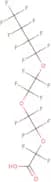
CAS:Perfluoro-3,6,9-trioxatridecanoic acid (PFOA) is a fluorinated chemical that is used in the production of zirconium oxide and other metal halides. It is processable, luminescent, and has a constant ligand. PFOA can be toxic to humans and animals through oral exposure or inhalation. PFOA may be bioaccumulated in humans and animals due to its hydrophobicity. It also has been shown to cause adverse effects on the liver and thyroid gland in rats. This chemical may have carcinogenic properties as it was found to induce tumor formation in mice following subcutaneous injection. PFOA has been shown to have toxic effects on cells grown in culture at concentrations greater than 10 μM.Formula:C10HF19O5Purity:Min. 95%Color and Shape:LiquidMolecular weight:562.08 g/mol3-(Trifluoromethyl)benzonitrile
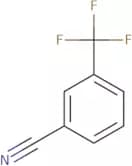
CAS:<p>3-(Trifluoromethyl)benzonitrile is an efficient method for the synthesis of diphenyl ethers. 3-(Trifluoromethyl)benzonitrile can be synthesized in a few steps from commercially available starting materials. The luminescence properties of 3-(Trifluoromethyl)benzonitrile make it an excellent candidate for use as a fluorescent probe. This compound has been used to study receptor binding and acceptor interactions in amine-containing monolayers, with molybdenum as the electron donor and benzonitrile as the electron acceptor. The bond cleavage of cyclopentane ring has also been studied using 3-(Trifluoromethyl)benzonitrile.</p>Formula:C8H4F3NPurity:Min. 95%Color and Shape:Clear LiquidMolecular weight:171.12 g/molAuramine O hydrochloride
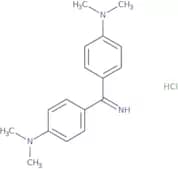
CAS:Controlled ProductAuramine O hydrochloride is a fluorescent dye that is used in the diagnosis of wastewater. Auramine O hydrochloride is a reactive dye that binds to malonic acid and forms stable complexes. It has been used as a fluorescence probe for polymerase chain reaction (PCR) detection of human serum samples, and it has been shown to be thermodynamically stable under conditions of pH 8-12, at temperatures up to 80°C, and in the presence of organic solvents. In addition, this dye can be activated with UV light or sodium hypochlorite solution. This dye also reacts with amino groups on proteins and lipids on cell membranes, which makes it useful for microscopy studies.Formula:C17H21N3•HClColor and Shape:Yellow PowderMolecular weight:303.83 g/mol3,4-Bis(difluoromethoxy) Roflumilast
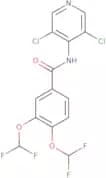
CAS:3,4-Bis(difluoromethoxy) roflumilast is a reagent that is used to synthesize fine chemicals. It is an intermediate for the synthesis of 3,4-bis(difluoromethoxy) roflumilast-1-carboxylic acid and can also be used as a building block for other research chemicals. 3,4-Bis(difluoromethoxy) roflumilast has been shown to be useful in reactions that require versatile building blocks.Formula:C14H8Cl2F4N2O3Purity:Min. 95%Color and Shape:PowderMolecular weight:399.12 g/mol5,6,12,13-Tetrachloroanthra[2,1,9-def:6,5,10-d'e'f']diisochromene-1,3,8,10-tetraone
CAS:<p>5,6,12,13-Tetrachloroanthra[2,1,9-def:6,5,10-d'e'f']diisochromene-1,3,8,10-tetraone is a polyester that is chemically related to the anthracenes. It can be used as a precursor for the synthesis of other polymers. This compound has been shown to induce apoptosis in cancer cells and can be used as an anticancer agent. 5,6,12,13-Tetrachloroanthra[2,1,9-def:6,5,10-d'e'f']diisochromene-1,3,8,10-tetraone has also been shown to have a fluorescence property that can be analyzed using an electron spin resonance spectroscopy technique.</p>Formula:C24H4Cl4O6Purity:Min. 95%Color and Shape:Red To Orange SolidMolecular weight:530.1 g/mol1-Biotinylamino-3,6,9-trioxaundecane-11-bromide
CAS:1-Biotinylamino-3,6,9-trioxaundecane-11-bromide is a high quality reagent that is used in research and development. It has a CAS number of 1041766-91-9. 1-Biotinylamino-3,6,9-trioxaundecane-11-bromide is a versatile building block that can be used as an intermediate or scaffold in chemical reactions. It is also a useful reaction component for the synthesis of fine chemicals.Formula:C18H32BrN3O5SPurity:Min. 95%Color and Shape:PowderMolecular weight:482.43 g/mol(2E,4E)-1-(4-Chlorophenyl)-5-phenylpenta-2,4-dien-1-one
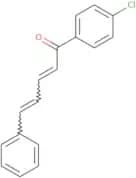
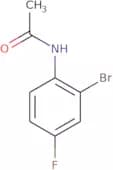
CAS:<p>2,4-Dien-1-one is a cyclic dienone that is used in the preparation of various pharmaceutical drugs. It has been reported to be an excellent building block for the synthesis of complex compounds. This compound has shown antimicrobial activity against methicillin resistant Staphylococcus aureus (MRSA) and Mycobacterium tuberculosis.<br>2,4-Dien-1-one is a versatile intermediate that can be used as a speciality chemical or research chemicals. It is also a useful scaffold for the synthesis of various pharmaceutical drugs and can be used as a reaction component for various reactions.</p>Formula:C17H13ClOPurity:Min. 95%Color and Shape:PowderMolecular weight:268.74 g/mol2'-Bromo-4'-fluoroacetanilide
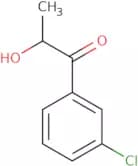
CAS:<p>2'-Bromo-4'-fluoroacetanilide is a synthetic derivative of acetanilide that is used in the treatment of diabetes mellitus. It has been shown to have antidiabetic properties as well as to inhibit the formation of nitrosamines, which are carcinogenic compounds. The synthesis of 2'-bromo-4'-fluoroacetanilide involves the addition of bromine and sodium hydrogen to acetylated acetanilide. This reaction occurs in a reaction vessel at an elevated temperature, with the solvent being an organic solvent. The final product is isolated by distillation and purified by recrystallization or column chromatography. Molecular docking analysis has shown that 2'-bromo-4'-fluoroacetanilide binds to ATP synthase, which is involved in gluconeogenesis and glycolysis, leading to its ability to inhibit glucose production in cells.</p>Formula:C8H7BrFNOPurity:Min. 95%Molecular weight:232.05 g/mol1-(3-Chlorophenyl)-2-hydroxy-1-propanone
CAS:1-(3-Chlorophenyl)-2-hydroxy-1-propanone is an optically active intermediate that is used in the synthesis of pharmaceuticals. It has been shown to be an enantioselective transesterification agent, and can be used in the preparation of esters such as hexane, butanoate and vinyl. The substrate concentration affects the yield of this compound, which may be due to its chiral nature. 1-(3-Chlorophenyl)-2-hydroxy-1-propanone is soluble in organic solvents such as hexane, dichloromethane, benzene and acetone.Formula:C9H9ClO2Purity:Min. 95%Color and Shape:Slightly Yellow PowderMolecular weight:184.62 g/mol2-[[(2,4-Difluorophenyl)-2-oxiranyl]methyl]-1H-1,2,4-triazole methanesulfonate
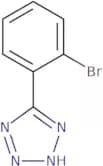
CAS:2-[[(2,4-Difluorophenyl)-2-oxiranyl]methyl]-1H-1,2,4-triazole methanesulfonate (CAS No. 86386-77-8) is a fine chemical that is used as a versatile building block in organic synthesis and has been shown to be a useful intermediate in the preparation of other compounds. This compound is also an important reagent for research purposes. 2-[(2,4-Difluorophenyl)-2-oxiranyl]methyl]-1H-1,2,4-triazole methanesulfonate can be used as an effective reaction component in the synthesis of complex compounds with high purity and quality.Formula:C11H9F2N3O•CH4O3SPurity:Min. 95%Color and Shape:White PowderMolecular weight:333.31 g/mol5-(2-Bromophenyl)-1H-tetrazole
CAS:<p>5-(2-Bromophenyl)-1H-tetrazole is a synthetic bidentate ligand that has an inhibitory effect on the enzyme nitric oxide synthase. It has been shown to inhibit the production of nitric oxide in cells by binding to iron and copper ions, which are essential for the synthesis of nitric oxide. 5-(2-Bromophenyl)-1H-tetrazole has a luminescent property, with a wavelength at around 530 nm. This compound is also characterized by its photophysical properties, such as high quantum yield, fast decay time, and low solubility in organic solvents. The inhibition mechanism of 5-(2-bromophenyl)-1H-tetrazole is not yet fully understood but it is thought to be related to its ability to bind chloride ions, which are required for nitric oxide synthesis.</p>Formula:C7H5BrN4Purity:Min. 95%Color and Shape:SolidMolecular weight:225.05 g/molL-Leucine ethyl ester hydrochloride
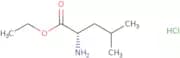
CAS:<p>L-Leucine ethyl ester hydrochloride (L-LEE) is a hydroxylated form of leucine, which is an essential amino acid. LEE has been shown to have anti-inflammatory effects, which may be due to its ability to inhibit the formation of proinflammatory cytokines. It also has been shown to have antioxidant and anti-atherogenic properties, as well as the ability to reduce cholesterol levels in rats. This product has been shown effective in treating bowel disease and metabolic disorders such as hepatic steatosis, fatty liver disease, and metabolic syndrome. LEE also can activate aryl hydrocarbon receptor ligand (AhR), which is involved in the regulation of genes that control inflammation and immune responses.</p>Formula:C8H17NO2•HClPurity:Min. 95 Area-%Color and Shape:PowderMolecular weight:195.69 g/mol2-Bromo-5-fluorobenzyl alcohol
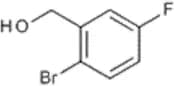
CAS:<p>2-Bromo-5-fluorobenzyl alcohol is a synthetic organoboron compound that can be used in the synthesis of other compounds. It has been shown to have a thermal expansion coefficient of 0.038 x 10^-6 K, which is an intermediate value for organic materials. The two polymorphic forms are monoclinic (space group P2/c) and hexagonal (P63). When 2-bromo-5-fluorobenzyl alcohol is irradiated with microwaves and magnetic fields, it undergoes anisotropic expansion, which suggests that intermolecular interactions are important in this phenomenon. This material has been shown to exhibit antifungal properties.</p>Formula:C7H6BrFOPurity:Min. 95%Color and Shape:PowderMolecular weight:205.02 g/mol3-Chloro-4-methylbenzonitrile
CAS:3-Chloro-4-methylbenzonitrile is a versatile building block that can be used as a reagent, intermediate, or scaffold for the synthesis of complex compounds. It is an important chemical in the pharmaceutical and chemical industries. 3-Chloro-4-methylbenzonitrile has been shown to react with many different types of functional groups including alcohols, amines, thiols, and halides. This compound has also been shown to have a high yield and purity when synthesized.Formula:C8H6ClNPurity:Min. 95%Molecular weight:151.59 g/mol2-Difluoromethoxyphenylboronic acid pinacol ester
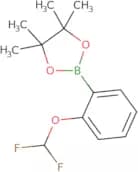
CAS:<p>2-Difluoromethoxyphenylboronic acid pinacol ester is a high quality reagent that can be used as a useful intermediate, fine chemical, or speciality chemical in reactions. This compound is an important building block for synthesizing other chemicals and can also be used to make novel compounds with pharmaceutical properties. 2-Difluoromethoxyphenylboronic acid pinacol ester is versatile and can be used in many different reactions. It has been reported to react with various other molecules to form new scaffolds and building blocks for use in organic synthesis.</p>Formula:C13H17BF2O3Purity:Min. 95%Color and Shape:PowderMolecular weight:270.08 g/mol4'-Trifluoromethoxy-β-methyl-β-nitrostyrene
CAS:4'-Trifluoromethoxy-beta-methyl-beta-nitrostyrene is a fine chemical that is a useful building block in organic synthesis. It can be used as a reagent, specialty chemical, or intermediate for the preparation of more complex compounds. This compound has been shown to be useful in the synthesis of natural products and pharmaceuticals.Formula:C10H8F3NO3Purity:Min. 95%Molecular weight:247.17 g/mol2,6-Diethyl-4-phenyl-1-propylpyridinium tetrafluoroborate
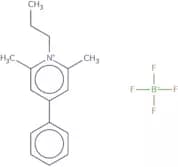
CAS:2,6-Diethyl-4-phenyl-1-propylpyridinium tetrafluoroborate is a building block and a versatile intermediate in organic synthesis. It can be used as a reactant in the preparation of fine chemicals and pharmaceuticals. 2,6-Diethyl-4-phenyl-1-propylpyridinium tetrafluoroborate has been shown to produce high quality reaction products with good yield.Formula:C16H20N·BF4Purity:Min. 95%Molecular weight:313.14 g/mol
![3-Methyl-3,8-diaza-bicyclo[3.2.1]octane dihydrochloride](/_next/image/?url=https%3A%2Fstatic.cymitquimica.com%2Fproducts%2F3D%2Fthumb-webp%2FFM140947.webp&w=3840&q=75)

![5,6,12,13-Tetrachloroanthra[2,1,9-def:6,5,10-d'e'f']diisochromene-1,3,8,10-tetraone](/_next/image/?url=https%3A%2Fstatic.cymitquimica.com%2Fproducts%2F3D%2Fthumb-webp%2FFT140318.webp&w=3840&q=75)

![2-[[(2,4-Difluorophenyl)-2-oxiranyl]methyl]-1H-1,2,4-triazole methanesulfonate](/_next/image/?url=https%3A%2Fstatic.cymitquimica.com%2Fproducts%2F3D%2Fthumb-webp%2FFD104245.webp&w=3840&q=75)