Organic Halides
In this category, you can find organic molecules containing one or more halogen atoms in their structure. These organic halides include brominated, iodinated, chlorinated, and cyclic halide compounds. Organic halides are widely used in organic synthesis, pharmaceuticals, agrochemicals, and materials science due to their reactivity and ability to undergo a variety of chemical transformations. At CymitQuimica, we offer a comprehensive selection of high-quality organic halides to support your research and industrial applications, ensuring reliable and effective performance in your synthetic and analytical projects.
Subcategories of "Organic Halides"
Found 20440 products of "Organic Halides"
Sort by
Purity (%)
0
100
|
0
|
50
|
90
|
95
|
100
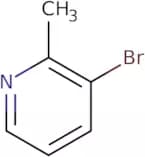
3-Bromo-2-methylpyridine
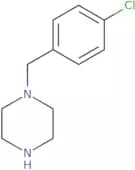
CAS:<p>3-Bromo-2-methylpyridine is a synthetic compound that has been shown to be an effective inhibitor of the cannabinoid receptor. It is used as a postprocessing agent in hydrogenation reduction reactions and can be used for the synthesis of pharmaceuticals. 3-Bromo-2-methylpyridine has been shown to bind to the cannabinoid type 1 receptor with high affinity, but it has not been determined whether this binding leads to inhibition. The chemical structure of 3-bromo-2-methylpyridine is similar to that of other cannabinoid type 1 receptor antagonists, such as SR141716A and AM251.</p>Formula:C6H6BrNPurity:Min. 96 Area-%Color and Shape:PowderMolecular weight:172.02 g/mol1-(4-Chlorobenzyl)piperazine
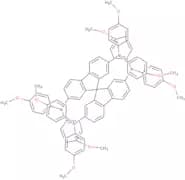
CAS:Controlled Product<p>1-(4-Chlorobenzyl)piperazine is an amine that belongs to the class of hydrogen-bond acid amides. It has a piperazine structure and is structurally related to other substances, such as dopamine. 1-(4-Chlorobenzyl)piperazine has been shown to inhibit spontaneous emission in animals and inhibit spontaneous activity at d4 receptors. This drug also inhibits the binding of agonists to the d4 receptor subtype, without affecting other subtypes.</p>Formula:C11H15ClN2Purity:Min. 98 Area-%Color and Shape:Colorless Clear LiquidMolecular weight:210.7 g/mol2,2',7,7'-Tetrakis-(N,N-di-4-methoxyphenylamino)-9,9'-spirobifluorene - Sublimed grade
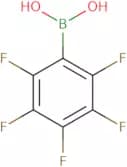
CAS:<p>2,2',7,7'-Tetrakis-(N,N-di-4-methoxyphenylamino)-9,9'-spirobifluorene (TPB) is a model system for investigating the transport of light signal in polymers. TPB can be used as a component in solar cells to increase their efficiency and improve their resistance to heat. TPB has shown high resistance to hydrochloric acid and other aggressive chemicals. TPB has been shown to be an effective photoelectron donor with a redox potential that is close to the one of copper; this property can be used for electrochemical impedance spectroscopy.</p>Formula:C81H68N4O8Purity:Min. 95%Color and Shape:Off-white to yellow solid.Molecular weight:1,225.43 g/molPentafluorobenzeneboronic acid
CAS:<p>Pentafluorobenzeneboronic acid is a boronic acid that is used in the synthesis of cationic polymers for use as an environmentally friendly alternative to perfluoroalkyl compounds. Pentafluorobenzeneboronic acid can be synthesized by the reaction of hydrochloric acid and pentafluorophenol. The energy efficiency of this molecule is low, which makes it an attractive candidate for use in polymer synthesis. Pentafluorobenzeneboronic acid reacts with nucleophiles at its α carbon to form a covalent linkage, which is reversible under certain conditions. This chemical has been shown to react with β-unsaturated ketones and trifluoroacetic acid to form polyenes with control experiments being done by adding ammonia gas or water to the reaction mixture.</p>Formula:C6H2BF5O2Purity:Min. 95%Color and Shape:SolidMolecular weight:211.88 g/mol2-(Bromomethyl)-5-chloropyridine hydrobromide
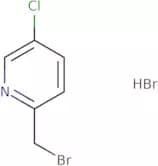
CAS:<p>2-(Bromomethyl)-5-chloropyridine hydrobromide is a versatile building block that can be used in the synthesis of complex compounds and research chemicals. This compound has a CAS number of 1646152-49-9 and is a useful building block for reactions involving nitration, bromination, chlorination, amination, and sulfonylation. 2-(Bromomethyl)-5-chloropyridine hydrobromide can also be used as a reagent or as a speciality chemical to react with other chemicals or to be used as a reaction component or scaffold in synthesizing more complex molecules.</p>Formula:C6H6Br2ClNPurity:Min. 95%Color and Shape:PowderMolecular weight:287.38 g/mol4-Chloro-3-fluoroaniline
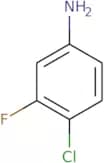
CAS:<p>4-Chloro-3-fluoroaniline is a synthetic compound with a molecular formula of C6H4ClFNO. It is an epoxide hydrolase inhibitor and has been shown to produce a frequency shift in the infrared spectrum. This compound also has an additive reaction yield and produces hydrogen fluoride when reacted with hydrochloric acid. 4-Chloro-3-fluoroaniline has two isomers, one that is fluorescent and the other that is not. The reaction product of the two isomers can be determined by mass spectrometry analysis. The dipole moment of this compound can be detected by fluorescence spectroscopy.</p>Formula:C6H5ClFNPurity:Min. 95%Color and Shape:PowderMolecular weight:145.56 g/mol3-(5-Chloro-2-hydroxyphenyl)pyrazole
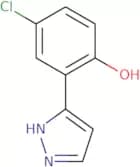
CAS:3-(5-Chloro-2-hydroxyphenyl)pyrazole is a monosubstituted, stepwise, substituted pyrazole. It has been shown to exhibit antibacterial and antifungal properties against phytopathogens. 3-(5-Chloro-2-hydroxyphenyl)pyrazole binds to metal ions in the active site of the enzyme and inhibits its activity. The phenylhydrazine group is reduced by NADH to form a covalent bond with the enzyme's cysteine residue. The binding of this compound prevents the formation of an enzyme-substrate complex that catalyzes an essential reaction, leading to cell death.Formula:C9H7ClN2OPurity:Min. 95%Color and Shape:PowderMolecular weight:194.62 g/mol(2,3,4,5,6-Pentafluorophenyl)cetone
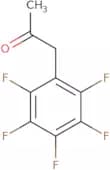
CAS:<p>(2,3,4,5,6-Pentafluorophenyl)cetone is a specialty chemical that is used as a reagent in organic synthesis. It has been used as a building block for the synthesis of other fine chemicals and research chemicals. CAS No. 19225-86-6</p>Formula:C9H5F5OPurity:Min. 95%Molecular weight:224.13 g/mol1-Pyrimidin-2-ylpiperidin-4-amine dihydrochloride
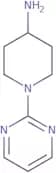
CAS:<p>1-Pyrimidin-2-ylpiperidin-4-amine dihydrochloride is a high quality, crystalline compound with a CAS number of 1179369-48-2. It is an intermediate in the synthesis of various fine chemicals, including pharmaceuticals and pesticides. 1-Pyrimidin-2-ylpiperidin-4-amine dihydrochloride also has applications as a versatile building block for the synthesis of other compounds and is used as a reaction component in organic chemistry. This reagent can be used to synthesize many different compounds for use in research or medical purposes.</p>Formula:C9H14N4·2HClPurity:Min. 95%Color and Shape:PowderMolecular weight:251.16 g/mol2-Bromo-5-fluorobenzyl alcohol
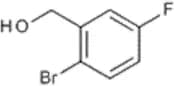
CAS:<p>2-Bromo-5-fluorobenzyl alcohol is a synthetic organoboron compound that can be used in the synthesis of other compounds. It has been shown to have a thermal expansion coefficient of 0.038 x 10^-6 K, which is an intermediate value for organic materials. The two polymorphic forms are monoclinic (space group P2/c) and hexagonal (P63). When 2-bromo-5-fluorobenzyl alcohol is irradiated with microwaves and magnetic fields, it undergoes anisotropic expansion, which suggests that intermolecular interactions are important in this phenomenon. This material has been shown to exhibit antifungal properties.</p>Formula:C7H6BrFOPurity:Min. 95%Color and Shape:PowderMolecular weight:205.02 g/mol4-Iodo-3-nitrobenzonitrile
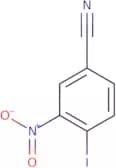
CAS:<p>4-Iodo-3-nitrobenzonitrile is a chemical intermediate that can be used to synthesize other chemicals. It is an aromatic compound with the formula CHNO. 4-Iodo-3-nitrobenzonitrile can be used as a reactive building block in organic synthesis and has shown to be useful in the preparation of complex compounds that are difficult to prepare by other methods. This chemical has been shown to have high quality and is stable at room temperature.</p>Formula:C7H3IN2O2Purity:Min. 95 Area-%Color and Shape:PowderMolecular weight:274.02 g/mol2-Chloro-5-nitrotoluene
CAS:<p>2-Chloro-5-nitrotoluene (2CNT) is an organic compound that is used as an intermediate in the synthesis of dyes and pharmaceuticals. It is a potent carcinogen, mutagen, and hepatotoxin. 2CNT can be synthesized from nitrobenzene and hydrochloric acid by a three-step process: nitration to form the corresponding nitro compound, followed by chlorination with chlorine gas to form 2CNT. The industrial preparation of 2CNT includes the following reaction yield:</p>Formula:C7H6ClNO2Purity:Min. 95%Color and Shape:PowderMolecular weight:171.58 g/molIodomethylboronic acid, pinacol ester
CAS:<p>Iodomethylboronic acid is a synthetic compound that contains a boron atom. Iodomethylboronic acid can be used to produce other compounds, such as dibutyl iodide and epoxides, by introducing an oxygenated linker. The properties of iodomethylboronic acid have been extensively studied using modelling and assays. It has been shown to form stable complexes with aromatic hydrocarbons and amines. Iodomethylboronic acid can also be used in the synthesis of radionuclides, which are radioactive isotopes of elements that emit radiation spontaneously or when they undergo radioactive decay. Iodomethylboronic acid is often used in chemical reactions as a quaternary ammonium salt, which is a positively charged ion (cation) with four groups attached to it. These groups may be either organic or inorganic in nature.</p>Formula:C7H14BIO2Purity:Min. 95%Color and Shape:PowderMolecular weight:267.9 g/mol2'-Bromo-4'-fluoroacetanilide
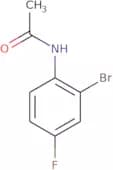
CAS:<p>2'-Bromo-4'-fluoroacetanilide is a synthetic derivative of acetanilide that is used in the treatment of diabetes mellitus. It has been shown to have antidiabetic properties as well as to inhibit the formation of nitrosamines, which are carcinogenic compounds. The synthesis of 2'-bromo-4'-fluoroacetanilide involves the addition of bromine and sodium hydrogen to acetylated acetanilide. This reaction occurs in a reaction vessel at an elevated temperature, with the solvent being an organic solvent. The final product is isolated by distillation and purified by recrystallization or column chromatography. Molecular docking analysis has shown that 2'-bromo-4'-fluoroacetanilide binds to ATP synthase, which is involved in gluconeogenesis and glycolysis, leading to its ability to inhibit glucose production in cells.</p>Formula:C8H7BrFNOPurity:Min. 95%Molecular weight:232.05 g/mol4,6-Dichloro-5-fluoropyrimidine
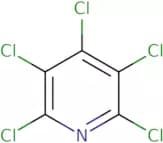
CAS:<p>4,6-Dichloro-5-fluoropyrimidine is a diluent that is used for the isolation of alkali metal chlorides and formamidine acetate. It reacts with phosphorus oxychloride and formamide to produce dichloroform, which can be used as a reactant in the synthesis of 4,6-dichloro-5-fluoropyrimidine. This compound can also be synthesized from chlorinating ethyl alcohol or methyl alcohol in the presence of an alkoxide. 4,6-Dichloro-5-fluoropyrimidine has been shown to be stable in an environment with high levels of chlorine (i.e., bleach).</p>Formula:C4HCl2FN2Purity:Min. 95%Color and Shape:Colourless LiquidMolecular weight:166.97 g/molPentachloropyridine
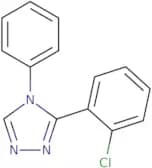
CAS:<p>Please enquire for more information about Pentachloropyridine including the price, delivery time and more detailed product information at the technical inquiry form on this page</p>Formula:C5Cl5NPurity:Min. 95%Color and Shape:White To Off-White SolidMolecular weight:251.32 g/mol5-(2-Chlorophenyl)-1-phenyl-1,3,4-triazole
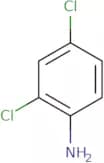
CAS:<p>5-(2-Chlorophenyl)-1-phenyl-1,3,4-triazole is a useful reagent and building block for the synthesis of various chemical compounds. It has been used as a reaction component in organic synthesis as well as a useful scaffold for new chemical compounds. 5-(2-Chlorophenyl)-1-phenyl-1,3,4-triazole is an intermediate in the production of pharmaceuticals and pesticides. It is also used as a speciality chemical for research purposes. Additionally, this compound can be used to make fine chemicals such as dyes and perfumes.</p>Formula:C14H10N3ClPurity:Min. 95%Color and Shape:PowderMolecular weight:255.7 g/mol2,4-Dichloroaniline
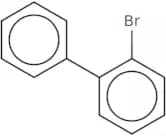
CAS:<p>2,4-Dichloroaniline is an organic compound that is used in analytical chemistry for the preparation of samples. 2,4-Dichloroaniline reacts with p-hydroxybenzoic acid to form a diazonium salt. This reaction takes place at room temperature and produces a deep violet color. The detection sensitivity of this reaction is 0.1 µg/mL. The glucuronide conjugate of 2,4-dichloroaniline has been detected in human urine samples and can be used as a marker for exposure to this chemical. 2,4-Dichloroaniline also inhibits protein synthesis by binding to amines or by affecting the availability of the amino acids required for protein synthesis. The hydrochloric acid present in stomachs converts 2,4-dichloroaniline into phenylglyoxylic acid, which is then excreted in the urine as its glucuronide conjugate</p>Formula:C6H5Cl2NPurity:Min. 95%Color and Shape:White To Beige To Grey To Red To Brown SolidMolecular weight:162.02 g/mol2-Bromobiphenyl
CAS:2-Bromobiphenyl is a halogenated aromatic hydrocarbon that is used in the synthesis of phenanthrene. It can be synthesized by the reaction of sodium carbonate with biphenyl and bromine. This reaction produces 2-bromobiphenyl, sodium chloride, and hydrogen bromide. The synthesis of 2-bromobiphenyl can also be achieved by the Suzuki coupling reaction of n-dimethyl formamide and boron trichloride. 2-Bromobiphenyl has a high melting point (269 degrees Celsius) and is a solid at room temperature (25 degrees Celsius). Due to its hydrophobic properties, it is insoluble in water but soluble in organic solvents such as ethylene dichloride or chloroform. 2-Bromobiphenyl is used as an analytical method for determining fatty acids in lipids, which are present in many industrial chemicals such asFormula:C12H9BrPurity:Min. 95%Color and Shape:Colourless To Yellow SolidMolecular weight:233.1 g/mol2-Bromo-5-fluorobenzaldehyde
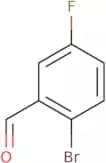
CAS:<p>2-Bromo-5-fluorobenzaldehyde is a chemical compound that has been shown to inhibit the activity of ns3 protease, an enzyme responsible for the cleavage of peptides in HIV. 2-Bromo-5-fluorobenzaldehyde binds to the active site of ns3 protease and prevents it from carrying out its function. This drug has also been shown to bind to the active site of ns5b polymerase and inhibit its activity, which is necessary for viral DNA synthesis. 2-Bromo-5-fluorobenzaldehyde has been used as a fungicide and has shown high potency against Candida albicans, Cryptococcus neoformans, Saccharomyces cerevisiae, and Aspergillus fumigatus.</p>Formula:C7H4BrFOPurity:Min. 95%Color and Shape:PowderMolecular weight:203.01 g/mol