Organic Halides
Subcategories of "Organic Halides"
Found 20442 products of "Organic Halides"
1H-Benzimidazol-2-ylmethylamine dihydrochloride
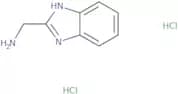
CAS:VX-950 is an antibacterial agent that inhibits the synthesis of bacterial protein. It binds to a small molecule, benzimidazol-2-ylmethylamine, which reduces the production of proteins in the bacterial cell by inhibiting the enzyme dihydrofolate reductase. VX-950 has been shown to be effective against a number of pathogens including fungi and bacteria. VX-950 has also been shown to bind to two ligands, imidazolines and diazepinones, that are found in mammalian tissue. This binding allows it to reduce the production of proteins in hepatocytes as well as inhibit growth in Saccharomyces cerevisiae strain.Formula:C8H9N3•(HCl)2Purity:Min. 95%Color and Shape:PowderMolecular weight:220.1 g/mol5-Fluoro-1-Methyl-1H-Indole-3-Carbaldehyde
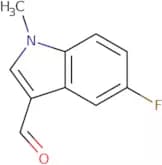
CAS:5-Fluoro-1-Methyl-1H-Indole-3-Carbaldehyde is a high quality chemical that is used as a reagent, an intermediate for the synthesis of pharmaceuticals, and in the production of fine chemicals. 5FMICA is also a useful scaffold for developing valuable building blocks. This chemical has been shown to be a versatile building block for the synthesis of complex compounds. 5FMICA can be used as a reaction component for the preparation of speciality chemicals and research chemicals.Formula:C10H8FNOPurity:Min. 95%Color and Shape:PowderMolecular weight:177.18 g/mol2-[4-(Trifluoromethyl)Phenoxy]Benzoic Acid
CAS:2-[4-(Trifluoromethyl)phenoxy]benzoic acid is a research chemical that is used as a building block in organic synthesis. This compound can be used to synthesize other compounds and to create new reactions. 2-[4-(Trifluoromethyl)phenoxy]benzoic acid is a versatile building block for complex molecules and can be used as an intermediate or scaffold for the formation of other compounds. The high quality of this compound makes it useful for research purposes and its CAS number makes it easy to identify.Formula:C14H9F3O3Purity:Min. 95%Color and Shape:PowderMolecular weight:282.21 g/mol2,3,4-Trifluoronitrobenzene
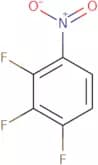
CAS:2,3,4-Trifluoronitrobenzene is a chemical compound that contains fluorine and nitrogen. It can be used in the synthesis of medicines to treat cancer and autoimmune diseases. The reaction of 2,3,4-trifluoronitrobenzene with hydrochloric acid produces hydrogen fluoride and nitrous acid. Hydroxide solution is then added to the mixture, which causes a series of chemical reactions involving hydrogen ions. This process results in the formation of a factor receptor that is activated by growth factors. This activated factor receptor is then involved in eye disorders such as age-related macular degeneration and retinitis pigmentosa.Formula:C6H2F3NO2Purity:Min. 95%Molecular weight:177.08 g/mol(1-Benzothien-5-ylmethyl)amine hydrochloride
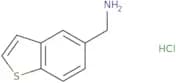
CAS:(1-Benzothien-5-ylmethyl)amine hydrochloride is a white crystalline solid that is soluble in organic solvents. It has been used as a research chemical, reagent, and speciality chemical. It is also an intermediate for the synthesis of other compounds.Formula:C9H9NS·HClPurity:Min. 95%Color and Shape:SolidMolecular weight:199.7 g/molAuramine O hydrochloride
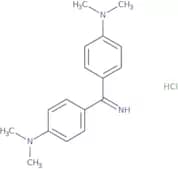
CAS:Controlled ProductAuramine O hydrochloride is a fluorescent dye that is used in the diagnosis of wastewater. Auramine O hydrochloride is a reactive dye that binds to malonic acid and forms stable complexes. It has been used as a fluorescence probe for polymerase chain reaction (PCR) detection of human serum samples, and it has been shown to be thermodynamically stable under conditions of pH 8-12, at temperatures up to 80°C, and in the presence of organic solvents. In addition, this dye can be activated with UV light or sodium hypochlorite solution. This dye also reacts with amino groups on proteins and lipids on cell membranes, which makes it useful for microscopy studies.Formula:C17H21N3•HClColor and Shape:Yellow PowderMolecular weight:303.83 g/molDL-alpha-Methylhistidine dihydrochloride
CAS:DL-alpha-Methylhistidine dihydrochloride is a reagent that has been used as a complex building block. It is an intermediate in the preparation of other compounds and is also used as a speciality chemical. DL-alpha-Methylhistidine dihydrochloride can be used to synthesize a variety of useful compounds, including pharmaceuticals, agrochemicals, and research chemicals. DL-alpha-Methylhistidine dihydrochloride can also be used as a versatile building block for the synthesis of other fine chemicals.
Formula:C7H11N3O2·2HClPurity:Min. 95%Color and Shape:White PowderMolecular weight:242.1 g/mol3-Chloro-4-methoxybenzylamine hydrochloride
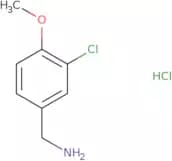
CAS:3-Chloro-4-methoxybenzylamine hydrochloride is a quinoline derivative that inhibits the activity of phosphodiesterase 5, an enzyme that breaks down cGMP in the brain. This drug has been shown to increase levels of cGMP and decrease levels of low energy (i.e., low ATP) in synaptosomes. 3-Chloro-4-methoxybenzylamine hydrochloride may be useful for the treatment of Alzheimer's disease, as it has been shown to improve cognitive function and memory in animal models. The mechanism of action is not fully understood but may involve inhibition of cholinergic neurotransmission or activation of nitric oxide synthase.Formula:C8H10ClNO•HClPurity:Min. 95%Color and Shape:PowderMolecular weight:208.08 g/mol(S)-2-Bromopropionic acid
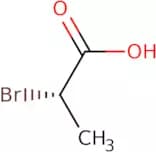
CAS:(S)-2-Bromopropionic acid is a synthetic compound that has been shown to bind to an antigen. The structure activity relationship of this compound has been studied in order to find a suitable surrogate for the synthesis of (S)-2-Bromopropionic acid. This compound was synthesized using solid-phase chemistry and the resulting product was purified by HPLC. The synthetic route for (S)-2-Bromopropionic acid included d-alanine, which was used as the biomolecular building block. The alkylation reaction involved the use of chloroacetic acid and methyl iodide, which were reacted with d-alanine in aqueous solution at room temperature. After hydrolysis, ester linkages were introduced with methanol and acetic anhydride. The final product was purified by recrystallization from methanol and acetone.Formula:C3H5BrO2Purity:Min. 95%Color and Shape:Slightly Yellow Clear LiquidMolecular weight:152.97 g/mol4-(3-Fluorophenyl)-4-piperidinol
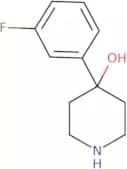
CAS:4-(3-Fluorophenyl)-4-piperidinol is a useful chemical intermediate that can be used as a versatile building block in organic synthesis. It can be used as a reaction component and can serve as a speciality chemical, complex compound, or reagent. 4-(3-Fluorophenyl)-4-piperidinol has been identified by the Chemical Abstracts Service (CAS) number 80119-54-6. This product is of high quality and is not harmful to humans.Formula:C11H14FNOPurity:Min. 95%Color and Shape:Orange PowderMolecular weight:195.23 g/mol4-Fluorophthalonitrile
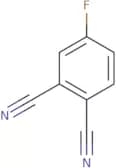
CAS:4-Fluorophthalonitrile is a colorless liquid that is insoluble in water and has a strong odor. This chemical is found naturally in coal tar and has been used to synthesize supramolecular devices, such as those that are capable of producing light. 4-Fluorophthalonitrile can be obtained synthetically by cross-coupling reactions with aryl chlorides or chlorine. It exhibits fluorescence when irradiated with light. 4-Fluorophthalonitrile also reacts with terminal alkynes to form aryl fluorides.Formula:C8H3FN2Purity:Min. 95%Molecular weight:146.12 g/mol3-Fluoro-2-methylphenylacetone
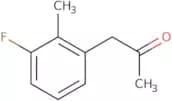
CAS:3-Fluoro-2-methylphenylacetone is a reaction component and reagent that is useful in the synthesis of complex compounds. 3-Fluoro-2-methylphenylacetone, also known as 2-fluoromethylbenzaldehyde, is a versatile building block that can be used to synthesize a wide variety of chemical compounds. It has been shown to be an excellent intermediate and building block for the synthesis of pharmaceuticals, pesticides, agrochemicals, specialty chemicals, and other organic compounds. 3-Fluoro-2-methylphenylacetone is a fine chemical that has CAS No. 1017060-34-2.
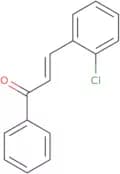
Formula:C10H11FOPurity:Min. 95%Molecular weight:166.19 g/mol3-(2-Chlorophenyl)-1-phenylpropene-1-one
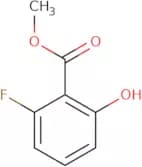
CAS:3-(2-Chlorophenyl)-1-phenylpropene-1-one is an amide that is synthesized by the acylation of 3-phenylpropene-1-one with 2,3,5,6-tetrafluorobenzoyl chloride in the presence of a base. The proton transport mechanism is initiated by the addition of a proton to the carbonyl group and then proceeds through an intermediate called a chalcone. This reaction can be accomplished using biomimetic methods or by using chalcones and halides as intermediates.Formula:C15H11ClOPurity:Min. 95%Molecular weight:242.7 g/molMethyl 2-fluoro-6-hydroxybenzoate
CAS:Methyl 2-fluoro-6-hydroxybenzoate is a colorless liquid that is soluble in water. It has a sulfur atom and two hydroxyl groups at the 2 and 6 positions on the benzene ring. This compound is an isotopologue of methyl 2,6-dihydroxybenzoate, which can be distinguished by deuterium labeling. At equilibrium, the tautomers are found in equal proportions. The hydrogen bond between the hydroxyl group at position 6 and the methyl group at position 2 plays a large role in determining the relative abundance of these tautomers. The equilibrium constant for this reaction is 1.01 x 10^9. Methyl 2-fluoro-6-hydroxybenzoate has been shown to have an isotope effect on its intermolecular interactions with other molecules, such as acceptors and donors, in solution.END>>
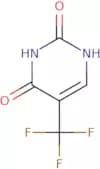
Formula:C8H7FO3Purity:Min. 95%Molecular weight:170.14 g/mol5-Trifluorothymine
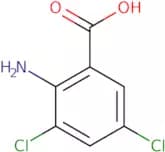
CAS:Intermediate in the synthesis of tipiracil + trifluridineFormula:C5H3F3N2O2Purity:Min. 95%Color and Shape:PowderMolecular weight:180.08 g/mol2-Amino-3,5-dichlorobenzoic acid
CAS:2-Amino-3,5-dichlorobenzoic acid is a petrochemical that has been used in the production of other chemicals, such as phosphorus pentachloride. It also serves as a precursor for molybdenum and ATP binding cassette transporter. 2-Amino-3,5-dichlorobenzoic acid binds to the hydrochloric acid and sodium hydroxide solution present in the stomach to produce hydrochloric acid and sodium chloride. 2-Amino-3,5-dichlorobenzoic acid is also a precursor for quinazolone, which is used in the production of dyes and pharmaceuticals. It has also been shown to inhibit plant physiology by inhibiting chlorophyll synthesis.Formula:C7H5Cl2NO2Purity:Min. 95%Color and Shape:PowderMolecular weight:206.03 g/molPotassium Trifluoromethanesulfonate
CAS:Potassium trifluoromethanesulfonate is a chemical compound that belongs to the family of organofluorine compounds. It has been shown to be an excellent hydrogen bond acceptor, which is the most important factor for its application in water vapor detection. Potassium trifluoromethanesulfonate has been used as an enhancement agent in analytical chemistry. It has also been used as a fluorescence detector and in x-ray crystal structure determination studies. The reaction mechanism of potassium trifluoromethanesulfonate is not yet known with certainty, but it is likely that the protonated amide form of potassium trifluoromethanesulfonate reacts with light emission from an organic dye, producing a fluorescent product.Formula:CF3KO3SPurity:Min. 95%Color and Shape:PowderMolecular weight:188.17 g/molBoc-2-chloro-L-phenylalanine
CAS:Boc-2-chloro-L-phenylalanine is a versatile building block that can be used as an intermediate or a reaction component. It has the following properties: CAS No. 114873-02-8, fine chemical, useful scaffold, versatile building block, useful intermediate, research chemicals, reaction component, speciality chemical, complex compound, useful building block. Boc-2-chloro-L-phenylalanine is a high quality reagent that can be used for research purposes.Formula:C14H18ClNO4Purity:Min. 98 Area-%Color and Shape:PowderMolecular weight:299.75 g/mol2-Amino-9-fluorenone
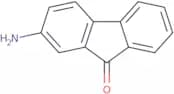
CAS:2-Amino-9-fluorenone is a borohydride reduction product of 2-amino-4,5,6,7-tetrahydrobenzofuran. It is synthesized by the reaction of ethyl esters with cavity and protonation. The synthesis of 2-amino-9-fluorenone has been shown to proceed through a noncompetitive inhibition mechanism. It is used as a fluorescent probe for amines in gravimetric analysis and mass spectrometry. 2-Amino-9-fluorenone has also been used as a fluorescence probe for carbonyl groups in fluoroimetric analysis.
2 aminofluorene exhibits steady state fluorescence when excited at 295 nm and 365 nm.Formula:C13H9NOPurity:Min. 95%Molecular weight:195.22 g/mol2-Bromoethyl trifluoromethanesulfonate
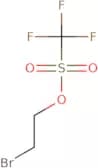
CAS:2-Bromoethyl trifluoromethanesulfonate is a synthetic, diagnostic, and therapeutic agent that is used as a radiotracer for imaging the uptake of tyrosinase in cancer cells. It binds to the benzodiazepine receptor and has a high affinity for this site. This compound also inhibits glutamate release from nerve endings and thus can be used to treat epilepsy. 2-Bromoethyl trifluoromethanesulfonate can inhibit protein synthesis by binding to the enzyme ribosomal protein S6 kinase (S6K) at an allosteric site. The binding of 2-bromoethyl trifluoromethanesulfonate causes a conformational change in the S6K molecule that results in inhibition of its catalytic activity.Formula:C3H4BrF3O3SPurity:Min. 95%Molecular weight:257.03 g/mol

![2-[4-(Trifluoromethyl)Phenoxy]Benzoic Acid](/_next/image/?url=https%3A%2Fstatic.cymitquimica.com%2Fproducts%2F3D%2Fthumb-webp%2FFT53144.webp&w=3840&q=75)