Organic Halides
Subcategories of "Organic Halides"
Found 20442 products of "Organic Halides"
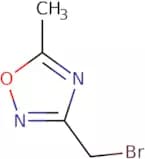
3-(Bromomethyl)-5-methyl-1,2,4-oxadiazole
CAS:3-(Bromomethyl)-5-methyl-1,2,4-oxadiazole is an activating molecule that can be used as a histochemical stain. It forms a blue dye when reacted with the amino acid histidine in tissue. This compound stains cells and tissues blue, which can be used to identify different types of cells. 3-(Bromomethyl)-5-methyl-1,2,4-oxadiazole is also useful for identifying the location of specific proteins by detecting their presence in different types of cells. This compound can also be used in vivo to activate angiotensinogen in wild-type mice and then analyzing the effects on angiotensin levels.
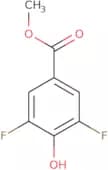
Formula:C4H5BrN2OPurity:Min. 95 Area-%Color and Shape:Yellow Clear LiquidMolecular weight:177 g/mol3,5-Difluoro-4-hydroxybenzoic acid methyl ester
CAS:3,5-Difluoro-4-hydroxybenzoic acid methyl ester (DFHBME) is a chemical compound that belongs to the class of useful building blocks. It is used in research as a reagent and in the synthesis of various complex compounds. DFHBME reacts with nucleophiles such as amines or alcohols to produce useful intermediates or scaffolds for organic synthesis. This compound is also useful as a speciality chemical due to its high quality and versatility.
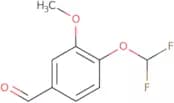
Formula:C8H6F2O3Purity:Min. 95%Color and Shape:PowderMolecular weight:188.13 g/mol3-Methoxy-4-(difluoromethoxy)benzaldehyde
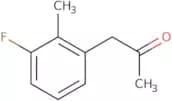
CAS:3-Methoxy-4-(difluoromethoxy)benzaldehyde is a chemical compound that has been found to have anti-tumor properties. It inhibits tumor cells by inducing cell apoptosis. 3-Methoxy-4-(difluoromethoxy)benzaldehyde induces apoptosis in human carcinoma cells, with optimal activity at doses of 10 micromolar and higher. This chemical can be used as an anti-tumor agent because it shows no genotoxic effects, and has high yield with a low toxicity profile. When this compound is exposed to UV radiation, the formation of reactive oxygen species (ROS) increases the rate of cell death. 3-Methoxy-4-(difluoromethoxy)benzaldehyde also has anti-inflammatory properties, which may be due to its ability to inhibit prostaglandin synthesis.Formula:C9H8F2O3Purity:Min. 95%Color and Shape:Colourless To Pale Yellow LiquidMolecular weight:202.15 g/mol3-Fluoro-2-methylphenylacetone
CAS:3-Fluoro-2-methylphenylacetone is a reaction component and reagent that is useful in the synthesis of complex compounds. 3-Fluoro-2-methylphenylacetone, also known as 2-fluoromethylbenzaldehyde, is a versatile building block that can be used to synthesize a wide variety of chemical compounds. It has been shown to be an excellent intermediate and building block for the synthesis of pharmaceuticals, pesticides, agrochemicals, specialty chemicals, and other organic compounds. 3-Fluoro-2-methylphenylacetone is a fine chemical that has CAS No. 1017060-34-2.
Formula:C10H11FOPurity:Min. 95%Molecular weight:166.19 g/mol2-Chloro-7-methoxyquinazoline
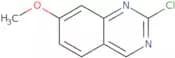
CAS:2-Chloro-7-methoxyquinazoline is a useful chemical that is used in the production of other compounds. It can be used as a building block for the synthesis of various organic compounds, such as pharmaceuticals and pesticides. This compound has been shown to have useful properties, such as high purity and low cost.Formula:C9H7ClN2OPurity:Min. 95%Color and Shape:Yellow PowderMolecular weight:194.62 g/mol2-Chlorobenzyl cyanide
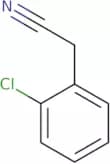
CAS:2-Chlorobenzyl cyanide (2CBA) is a disinfectant that has been used as an alternative to chlorine. It is not only effective against bacteria, but also against fungi, viruses, and parasites. 2CBA functions by the aerobic photooxidation of cells in water or air. In addition to its antimicrobial activity, 2CBA is also toxic to human ovary cells at high concentrations.
2CBA has a number of isomers, which differ in their solubility and ph-optimum. The most common form of 2CBA is the cis form, which has a higher solubility than the trans form. The cis form can be synthesized from benzyl chloride and sodium cyanide with sulfonation as the final step in production.
2CBA has an optimum ph value of 5-6 for its disinfectant activity; however, it can be used at a concentration of 1% at pH values below 5 or above 7Formula:C8H6ClNPurity:Min. 95%Color and Shape:Colorless PowderMolecular weight:151.59 g/mol2,4,6-Trimethylpyronium tetrafluoroborate
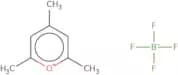
CAS:2,4,6-Trimethylpyronium tetrafluoroborate is a chemical compound that is used in pharmaceutical preparations. It is an analog of pyridinium diacetate and can be prepared by reacting 2,4,6-trimethylpyridine with hydrogen fluoride to form the corresponding pyridinium tetrafluoroborate. The chemical reactions of 2,4,6-trimethylpyridine are similar to those of other pyridines. It has been shown that 2,4,6-trimethylpyridine reacts with diazo compounds to produce a fluorescent product. This reaction can be monitored using a fluorescence assay and statistically analyzed. The plasma samples were analyzed using isotopic analysis and showed that the pyronium ion was present in human serum as well as inorganic materials such as water samples.Formula:C8H11O·BF4Purity:Min. 95%Molecular weight:209.98 g/molPotassiumtetrachloroaurate(III)
CAS:Potassiumtetrachloroaurate(III) is a chemical compound with the molecular formula KAuCl4. It is a white solid that has been shown to have anti-cancer properties in animal studies. Potassiumtetrachloroaurate(III) has also been found to be toxic to bacteria, such as Pseudomonas aeruginosa. The redox potential of potassiumtetrachloroaurate(III) can be changed by adding copper chloride or sodium citrate, which may affect its toxicity towards bacteria.
Formula:AuCl4KPurity:Min. 95%Molecular weight:377.88 g/molIodomethylboronic acid, pinacol ester
CAS:Iodomethylboronic acid is a synthetic compound that contains a boron atom. Iodomethylboronic acid can be used to produce other compounds, such as dibutyl iodide and epoxides, by introducing an oxygenated linker. The properties of iodomethylboronic acid have been extensively studied using modelling and assays. It has been shown to form stable complexes with aromatic hydrocarbons and amines. Iodomethylboronic acid can also be used in the synthesis of radionuclides, which are radioactive isotopes of elements that emit radiation spontaneously or when they undergo radioactive decay. Iodomethylboronic acid is often used in chemical reactions as a quaternary ammonium salt, which is a positively charged ion (cation) with four groups attached to it. These groups may be either organic or inorganic in nature.Formula:C7H14BIO2Purity:Min. 95%Color and Shape:PowderMolecular weight:267.9 g/mol(S)-2-Bromopropionic acid
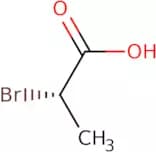
CAS:(S)-2-Bromopropionic acid is a synthetic compound that has been shown to bind to an antigen. The structure activity relationship of this compound has been studied in order to find a suitable surrogate for the synthesis of (S)-2-Bromopropionic acid. This compound was synthesized using solid-phase chemistry and the resulting product was purified by HPLC. The synthetic route for (S)-2-Bromopropionic acid included d-alanine, which was used as the biomolecular building block. The alkylation reaction involved the use of chloroacetic acid and methyl iodide, which were reacted with d-alanine in aqueous solution at room temperature. After hydrolysis, ester linkages were introduced with methanol and acetic anhydride. The final product was purified by recrystallization from methanol and acetone.Formula:C3H5BrO2Purity:Min. 95%Color and Shape:Slightly Yellow Clear LiquidMolecular weight:152.97 g/mol7-Amino-5-fluoro-1,3-dihydroindol-2-one
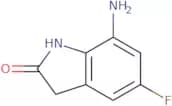
CAS:7-Amino-5-fluoro-1,3-dihydroindol-2-one is a compound that can be used as a research chemical. It has been shown to react with various other compounds in the laboratory and may have potential uses as a versatile building block or useful intermediate. 7-Amino-5-fluoro-1,3-dihydroindol-2-one is also known for its high quality and speciality chemical status.
Formula:C8H7FN2OPurity:Min. 95%Color and Shape:PowderMolecular weight:166.15 g/mol5-Fluoro-D-Tryptophan
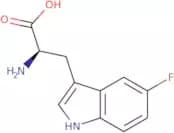
CAS:5-Fluoro-D-Tryptophan is a fluorescent substrate for the enzyme indoleamine 2,3 dioxygenase (IDO) that is used in assays to determine the activity of this enzyme. IDO is an enzyme that is found in animals and catalyzes the first step in tryptophan metabolism by converting it to 5-fluoro-kynurenine. The amount of fluorescence generated can be detected with a fluorescence detector. 5-Fluoro-D-Tryptophan has been shown to have higher levels of uptake by tumor tissue than by normal tissue, which may be due to its ability to inhibit protein synthesis and cell division.Formula:C11H11FN2O2Purity:Min. 95%Color and Shape:White/Off-White SolidMolecular weight:222.22 g/mol(4-Iodophenyl)acetic acid
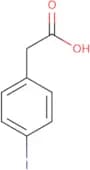
CAS:(4-Iodophenyl)acetic acid is a chemical compound that is used as an analog in the synthesis of other compounds. This compound has been shown to be effective against solid tumours, such as prostate and bladder cancer. The asymmetric synthesis of (4-iodophenyl)acetic acid has been achieved by using a constant of 2,2'-dichloro-1,1'-binaphthyl and the corresponding 1-bromoalkene. The uptake of this chemical compound in cells has been shown to be rapid and concentration dependent. It binds to two subunits of the prostacyclin receptor and blocks its activation by prostaglandins. (4-Iodophenyl)acetic acid also interacts with the membrane surface through hydrogen bonding with phosphatidylethanolamine and phosphatidylcholine lipids.Formula:C8H7IO2Purity:Min. 95%Color and Shape:Red PowderMolecular weight:262.04 g/mol3-Bromo-5-methyl-1H-1,2,4-triazole
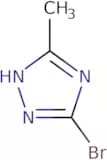
CAS:3-Bromo-5-methyl-1H-1,2,4-triazole is a bifunctional building block that can be used in organic synthesis as a versatile building block. It is also an important intermediate for the preparation of various types of chemical compounds and can be used as a research chemical or speciality chemical. This compound has been shown to have high purity and quality. 3-Bromo-5-methyl-1H-1,2,4-triazole is a complex compound that has been used in the synthesis of pharmaceuticals and agrochemicals.Formula:C3H4BrN3Purity:Min. 95%Color and Shape:PowderMolecular weight:161.99 g/molTetradecyltrimethylammonium chloride
CAS:Tetradecyltrimethylammonium chloride (TTAC) is a hydrophobic fluorescent probe that has been used to investigate the properties of lipid bilayers and micelles. TTAC is fluorescent in aqueous solution and it can be used as a molecular-weight marker for organic solvents. The fluorescence lifetime of TTAC is dependent on the solvent conditions and the presence of counterions, while its fluorescence intensity depends on the concentration of TTAC in solution. The hydrophobic nature of TTAC causes it to be solubilized by micelles, which are spherical aggregates formed from amphiphilic molecules. This property makes TTAC ideal for studying micelles with surface properties and steady-state fluorescence.Formula:C17H38N·ClColor and Shape:White PowderMolecular weight:291.94 g/mol4-Chloro-3-pyridinesulfonamide
CAS:4-Chloro-3-pyridinesulfonamide is an antibacterial sulfonamide that inhibits the enzyme carbonic anhydrase. It has been shown to inhibit the growth of cancer cells in vitro and in vivo. The anticancer effect may be due to its ability to block the growth of cancer cells by interfering with DNA synthesis and inducing apoptosis, which causes cell death. 4-Chloro-3-pyridinesulfonamide also inhibits tuberculosis and tuberculostatic activity may be due to its inhibition of mycobacterium tuberculosis ribosomes. 4-Chloro-3-pyridinesulfonamide binds to the active site of bacterial anhydrase as well as human carbonic anhydrase II, blocking the conversion of CO2 into bicarbonate ions, which leads to a decrease in pH. This drug also binds to DNA and RNA, inhibiting DNA synthesis and RNA synthesis respectively, leading to cellFormula:C5H5ClN2O2SPurity:Min. 95%Color and Shape:SolidMolecular weight:192.62 g/mol2-Chloro-5-nitrotoluene
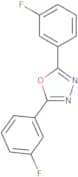
CAS:2-Chloro-5-nitrotoluene (2CNT) is an organic compound that is used as an intermediate in the synthesis of dyes and pharmaceuticals. It is a potent carcinogen, mutagen, and hepatotoxin. 2CNT can be synthesized from nitrobenzene and hydrochloric acid by a three-step process: nitration to form the corresponding nitro compound, followed by chlorination with chlorine gas to form 2CNT. The industrial preparation of 2CNT includes the following reaction yield:Formula:C7H6ClNO2Purity:Min. 95%Color and Shape:PowderMolecular weight:171.58 g/mol2,5-Di-(3-fluorophenyl)-1,3,4-oxadiazole
CAS:Please enquire for more information about 2,5-Di-(3-fluorophenyl)-1,3,4-oxadiazole including the price, delivery time and more detailed product information at the technical inquiry form on this page
Formula:C14H8F2N2OPurity:Min. 95%Color and Shape:PowderMolecular weight:258.22 g/mol5-Bromo-6-azauracil
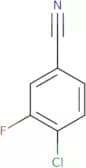
CAS:5-Bromo-6-azauracil is a nucleophilic compound that can be used to treat wastewater. It is also able to lyse cells and has been used as an immobilizing agent. The reactive nature of 5-Bromo-6-azauracil enables it to undergo nucleophilic substitutions with amines, which are present in the cell wall and other biomolecules. This process results in the formation of amide bonds, which leads to the inhibition of protein synthesis. 5-Bromo-6-azauracil has shown inhibitory effects on glucans, which may be due to its ability to form covalent bonds with glucose molecules.Formula:C3H2BrN3O2Purity:Min. 95%Color and Shape:White To Off-White SolidMolecular weight:191.97 g/mol4-Chloro-3-fluorobenzonitrile
CAS:4-Chloro-3-fluorobenzonitrile is a fluorination agent that reacts with potassium to form 4-chloro-3-fluoroaniline. 4-Chloro-3-fluorobenzonitrile is used in the preparation of other fluorinated compounds. The reaction takes place in a reactor and requires refluxing in chlorobenzonitrile with tetraphenylphosphonium fluoride.Formula:C7H3ClFNPurity:Min. 95%Color and Shape:PowderMolecular weight:155.56 g/mol