Organic Halides
Subcategories of "Organic Halides"
Found 20442 products of "Organic Halides"
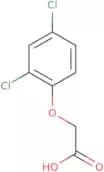
2,4-Dichlorophenoxyacetic acid
CAS:Controlled Product2,4-Dichlorophenoxyacetic acid is a chemical that is used to kill plants and has been shown to be toxic in humans. It has been used extensively in the past as an herbicide and insecticide. 2,4-Dichlorophenoxyacetic acid can be broken down by bacteria in wastewater treatment systems. This chemical has been shown to cause sublethal effects on cells, including changes in enzyme activities, protein genes, and gene expression levels. These changes are mediated by the production of reactive oxygen species (ROS). The mechanism of action for 2,4-dichlorophenoxyacetic acid involves the reaction with p-nitrophenyl phosphate (PNPP) to produce 2,4-dichlorobenzoic acid and formaldehyde. 2,4-Dichlorophenoxyacetic acid has also been shown to have an effect on human serum proteins.Formula:C8H6Cl2O3Purity:Min. 98%Color and Shape:White PowderMolecular weight:221.04 g/mol2-Chloro-6-methylaniline
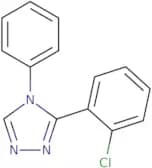
CAS:2-Chloro-6-methylaniline is a molecule that has been used for wastewater treatment and process optimization. It is synthesized from the reaction of amines with trifluoroacetic acid. 2-Chloro-6-methylaniline was found to stimulate the growth of human population in a study conducted at the University of Texas. This molecule has been shown to inhibit the proliferation of t-cells by binding to their surface receptors. 2-Chloro-6-methylaniline has also been shown to be effective in inhibiting dasatinib, which is an anti-cancer drug. 2CMA binds to dasatinib and inhibits its activity by competing with it for binding sites on the protein target. The structure of 2CMA is characterized by proton NMR spectroscopic data and liquid chromatography methods.Formula:C7H8ClNPurity:Min. 95%Color and Shape:Colourless To Purple To Brown LiquidMolecular weight:141.6 g/mol5-(2-Chlorophenyl)-1-phenyl-1,3,4-triazole
CAS:5-(2-Chlorophenyl)-1-phenyl-1,3,4-triazole is a useful reagent and building block for the synthesis of various chemical compounds. It has been used as a reaction component in organic synthesis as well as a useful scaffold for new chemical compounds. 5-(2-Chlorophenyl)-1-phenyl-1,3,4-triazole is an intermediate in the production of pharmaceuticals and pesticides. It is also used as a speciality chemical for research purposes. Additionally, this compound can be used to make fine chemicals such as dyes and perfumes.Formula:C14H10N3ClPurity:Min. 95%Color and Shape:PowderMolecular weight:255.7 g/mol2-Bromo-3-pyridinol
CAS:2-Bromo-3-pyridinol is a nicotinic acetylcholine receptor antagonist that has anti-influenza activity. It was synthesized as an analogue of the natural product pyridostigmine, which inhibited influenza in mice. 2-Bromo-3-pyridinol binds to the nicotinic acetylcholine receptor at the same site as nicotine and prevents it from being activated by acetylcholine. This drug also inhibits tumor growth and proliferation in vitro and in vivo, showing potent cytotoxicity against carcinoma cells by inhibiting protein synthesis and cell division. 2-Bromo-3-pyridinol has been shown to inhibit Alzheimer's disease in a mouse model of this disorder. The drug inhibits amyloid plaque formation and toxicity in cultured cells, suggesting its potential for treating this disease.Formula:C5H4BrNOPurity:Min. 95%Color and Shape:White To Off-White SolidMolecular weight:174 g/mol2,6-Dichlorobenzoic acid
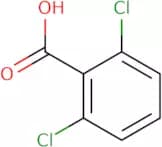
CAS:2,6-Dichlorobenzoic acid (2,6-DCBA) is a chemical substance that can be found in groundwater. 2,6-DCBA is metabolized by colon cells to produce metabolites, including 2,4-dichlorophenol and 4-chlorophenylacetic acid. The metabolic reaction products have been shown to inhibit the uptake of radioactive iodine by Caco-2 cells. 2,6-DCBA is also a monocarboxylic acid with two nitrogen atoms. It has been shown to have acute toxicities in rats and other animals. This substance can also be used as an analytical reagent for the determination of metals such as iron and copper.Formula:C7H4Cl2O2Purity:Min. 95%Color and Shape:PowderMolecular weight:191.01 g/mol3-Bromo-2-methylpyridine
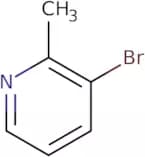
CAS:3-Bromo-2-methylpyridine is a synthetic compound that has been shown to be an effective inhibitor of the cannabinoid receptor. It is used as a postprocessing agent in hydrogenation reduction reactions and can be used for the synthesis of pharmaceuticals. 3-Bromo-2-methylpyridine has been shown to bind to the cannabinoid type 1 receptor with high affinity, but it has not been determined whether this binding leads to inhibition. The chemical structure of 3-bromo-2-methylpyridine is similar to that of other cannabinoid type 1 receptor antagonists, such as SR141716A and AM251.
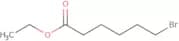
Formula:C6H6BrNPurity:Min. 96 Area-%Color and Shape:PowderMolecular weight:172.02 g/mol6-Bromohexanoic acid ethyl ester
CAS:6-Bromohexanoic acid ethyl ester is a fluorescent compound that has been used to assess the presence of azobenzene in urine samples. This product is also used as a marker for capsicum annuum, which is an edible plant. 6-Bromohexanoic acid ethyl ester has been shown to be effective in the diagnosis of cancer, especially carcinoma cells. Coumarin derivatives have been found to possess fluorescence properties similar to 6-bromohexanoic acid ethyl ester and are also used as markers for cancer cells. The use of polyclonal antibodies and hydrochloric acid for this product can lead to fluorescence properties that are specific for cancer cells.Formula:C8H15BrO2Purity:Min. 95%Color and Shape:Colourless To Pale Yellow LiquidMolecular weight:223.11 g/mol4-(Trifluoromethyl)benzyl bromide
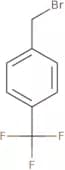
CAS:4-Trifluoromethylbenzyl bromide is a choline derivative that acts as an anticancer agent. It is structurally similar to the anticancer drug doxorubicin, which has been shown to be effective against breast cancer and leukemia. 4-Trifluoromethylbenzyl bromide interacts with cellular proteins, including choline kinase, and inhibits the mitochondrial pathway. This leads to cell death through apoptosis. The molecule also interacts with nucleotide bases such as thymine and cytosine in DNA, inhibiting transcription and replication. 4-Trifluoromethylbenzyl bromide binds strongly to the hydroxyl group of cholesterol by an electrophilic substitution mechanism to form a covalent bond with its hydroxy group. The molecule can also bind to chloride ions by an ionic bond.
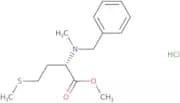
Formula:C8H6BrF3Purity:Min. 95%Color and Shape:White PowderMolecular weight:239.03 g/molN-Benzyl-N-methyl-L-methionine methyl ester hydrochloride
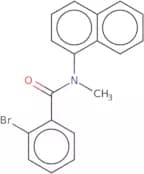
CAS:N-Benzyl-N-methyl-L-methionine methyl ester hydrochloride is a chemical substance that has been used as a reaction component in organic synthesis. It has also been used as a reagent for the quantitative determination of N,N'-dimethylbenzidine by measuring its absorption at 450 nm. It is soluble in water and ethanol and is stable up to 100 °C. The CAS Registry Number for this compound is 1272754-99-0.Formula:C14H21NO2S·HClPurity:Min. 95%Color and Shape:PowderMolecular weight:303.85 g/molN-Methyl-N-(1-naphthyl)-2-bromobenzamide
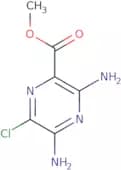
CAS:N-Methyl-N-(1-naphthyl)-2-bromobenzamide is a high quality reagent that is used as a complex compound. It has CAS No. 74881-58-6 and it can be used as a useful intermediate, fine chemical or speciality chemical. N-Methyl-N-(1-naphthyl)-2-bromobenzamide is also a versatile building block that is used in reactions to synthesize other compounds.Formula:C18H14BrNOPurity:Min. 95%Molecular weight:340.21 g/mol3,5-Diamino-6-chloropyrazine-2-carboxylic acid methyl ester
CAS:3,5-Diamino-6-chloropyrazine-2-carboxylic acid methyl ester is a low binding, mitochondrial labeling agent. It is photolabile and can be used in the study of respiratory complex activity. 3,5-Diamino-6-chloropyrazine-2-carboxylic acid methyl ester has been shown to inhibit the enzyme mitochondrial complex I and II. The azido group on the molecule is homologous to a phosphate group in ATP and can be used as a substrate analogue for ATP synthase. This allows 3,5-Diamino-6-chloropyrazine-2-carboxylic acid methyl ester to be used as an experimental tool for studying ATP synthesis.
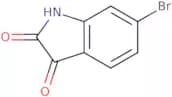
Formula:C6H7ClN4O2Purity:Min. 95%Color and Shape:PowderMolecular weight:202.6 g/mol6-Bromoisatin
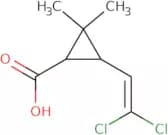
CAS:6-Bromoisatin is an antimicrobial agent that belongs to the group of ethylene diamines. It has been shown to be a potent inhibitor of cancer cell viability in vivo and can be used as a potential chemotherapy agent. 6-Bromoisatin is active against human pathogens, such as Staphylococcus aureus and Streptococcus pyogenes. This compound has also been shown to inhibit the growth of LPS-stimulated RAW264.7 macrophages, which are used in vitro for studying innate immunity. The mechanism of action involves inhibition of cyclic AMP production, which leads to cell death in cancer cells. 6-Bromoisatin also inhibits the proliferation and viability of granulosa cells and carcinoma cells, with IC50 values in the range of 0.5 - 2 µM.END>>Formula:C8H4BrNO2Purity:Min. 95%Color and Shape:Yellow PowderMolecular weight:226.03 g/mol3-(2,2-Dichlorovinyl)-2,2-dimethylcyclopropanecarboxylic acid
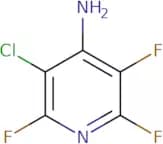
CAS:3-(2,2-Dichlorovinyl)-2,2-dimethylcyclopropanecarboxylic acid is a metabolite of the drug dextran sulfate. It is also an industrial chemical that has been used as a cross-linking agent in the manufacture of polymers and plastics. 3-(2,2-Dichlorovinyl)-2,2-dimethylcyclopropanecarboxylic acid binds to chloride ions in the blood and increases blood pressure by blocking the production of renin. This compound can be found in urine samples as a result of its excretion from the body. 3-(2,2-Dichlorovinyl)-2,2-dimethylcyclopropanecarboxylic acid has been shown to increase the levels of coagulation factors VIII and IX in human serum. It also has been shown to react with other chemicals in order to form ion pairs that can be detected using chemical ionFormula:C8H10Cl2O2Purity:Min. 95%Color and Shape:PowderMolecular weight:209.07 g/mol4-Amino-3-chloro-2,5,6-trifluoropyridine
CAS:4-Amino-3-chloro-2,5,6-trifluoropyridine is a reactive and unstable chemical compound that belongs to the group of anilines. It is used in the synthesis of hypsochromic dyes. The compound has been shown to interact with other molecules, such as chemo-, supramolecular-, and synthetically-. The fluorophore has been stabilized by a supramolecular approach. Chemically induced fluorescence properties have been observed for 4-amino-3-chloro-2,5,6-trifluoropyridine.Formula:C5H2ClF3N2Purity:Min. 95%Color and Shape:SolidMolecular weight:182.53 g/mol2-Bromo-5-nitroanisole
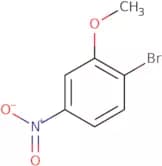
CAS:2-Bromo-5-nitroanisole is a chemical compound that has been shown to have glutamate receptor modulating properties. This molecule also has been shown to have allosteric modulating effects on metabotropic glutamate receptors. The molecular mechanism of 2-Bromo-5-nitroanisole involves the formation of a covalent bond with glutamine residues, which may be due to its nucleophilic character. This drug has been studied in clinical trials for the treatment of Alzheimer's disease and Parkinson's disease. It has also been studied for its effects on the frequency and severity of migraines.Formula:C7H6BrNO3Purity:Min. 98 Area-%Color and Shape:PowderMolecular weight:232.03 g/mol3-Bromo-4-methylbenzoic acid
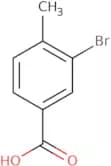
CAS:3-Bromo-4-methylbenzoic acid is a labile chemical compound that is used in the synthesis of retinoic acid, an analog of vitamin A. 3-Bromo-4-methylbenzoic acid can be synthesized by a two step process involving the boronic ester and biphenyl. The biphenyl is first treated with phosphorus pentachloride to produce a phenoxyacetate which reacts with 3-bromo-4-methylbenzoyl chloride in the presence of base to produce 3-bromo-4-methylbenzoic acid. This conversion can also be done via a solid phase synthesis where the biphenyl is anchored on silica gel and reacted with 3-bromo-4 methylbenzoyl chloride. The boronic esters are then cleaved from the solid support by treatment with sodium hydroxide under reflux conditions. 3 - Bromo -Formula:C8H7BrO2Purity:Min. 95%Color and Shape:PowderMolecular weight:215.04 g/molPyridazin-4-ylmethanamine hydrochloride
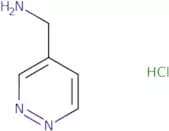
CAS:Pyridazin-4-ylmethanamine hydrochloride is a fine chemical that is used as a building block for more complex molecules. It is an intermediate in the synthesis of many organic compounds and has been used as a reagent to generate new compounds. This compound can be used as a versatile building block, as it can react with other chemicals to form new compounds. Pyridazin-4-ylmethanamine hydrochloride is also an effective scaffold for generating new drugs and pharmaceuticals.Formula:C5H8ClN3Purity:Min. 95%Color and Shape:Yellow PowderMolecular weight:145.59 g/molSodium 3,5,6-trichloro-2-pyridinol
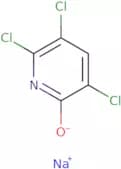
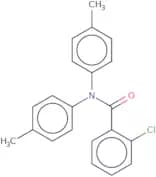
CAS:Sodium 3,5,6-trichloro-2-pyridinol is an inorganic compound that has been shown to be an effective biocide for the removal of hydrogen chloride and hydroxide solution. The optimal reaction was found to be at pH 10.3 with a reaction vessel containing 1% sodium hydroxide solution and a concentration of 0.2 grams per liter of hydrogen chloride. This compound reacts with hydrogen chloride to form hydrochloric acid (HCl) and sodium 3,5,6-trichloro-2-pyridinol hydrochloride (NCTP), which can then be removed by wastewater treatment or precipitation as sodium chloride. NCTP is also used for the treatment of skin conditions such as acne and eczema.Formula:C5HCl3NONaPurity:Min. 95%Color and Shape:Off-White SolidMolecular weight:220.42 g/mol2-Chloro-N,N'-di-p-tolylbenzamide
CAS:2-Chloro-N,N'-di-p-tolylbenzamide is a fine chemical that is used in the synthesis of complex compounds. It has a wide range of applications, including research chemicals and reagents. This compound is also a useful building block for the preparation of high quality pharmaceuticals and speciality chemicals. 2-Chloro-N,N'-di-p-tolylbenzamide may be used as a reaction component or scaffold in organic synthesis.Formula:C21H18ClNOPurity:Min. 95%Molecular weight:335.83 g/mol2-Bromoindene
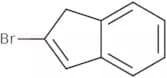
CAS:2-Bromoindene is a fluxional molecule that can adopt different conformations. 2-Bromoindene has a high fluxionality, which is the degree to which it undergoes tautomeric or structural change. This property can be attributed to the presence of functional groups such as hydroxyl and carboxyl groups on its structure. 2-Bromoindene has been shown to react with zirconium dichloride in the presence of a base such as potassium carbonate to form a cross-coupling product with ferrocene. It also reacts with stilbene derivatives in the presence of an electron acceptor such as ferric chloride, forming an aryl boronic acid. 2-Bromoindene is soluble in organic solvents, making it easy to extract for analysis by gas chromatography (GC). The compound can also be analyzed by infrared spectroscopy (IR), nuclear magnetic resonance spect
Formula:C9H7BrPurity:Min. 95%Color and Shape:PowderMolecular weight:195.06 g/mol