Organic Halides
Subcategories of "Organic Halides"
Found 20442 products of "Organic Halides"
2-[(4-Chlorophenyl)amino]nicotinic acid
CAS:2-[(4-Chlorophenyl)amino]nicotinic acid is a fine chemical that is useful for the production of a variety of compounds. It is also used as a research chemical and a building block in the synthesis of complex compounds. This compound has no known use as a drug, but it can be used as a reagent or intermediate in chemical reactions. The CAS number for this compound is 16344-26-6.Formula:C12H9ClN2O2Purity:Min. 95%Color and Shape:Brown PowderMolecular weight:248.66 g/molBoc-trans-4-fluoro-L-proline methyl ester
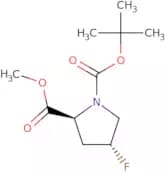
CAS:Boc-trans-4-fluoro-L-proline methyl ester is a high quality, reagent, complex compound that can be used as a useful intermediate or fine chemical. It is also a useful scaffold for the synthesis of new compounds and a versatile building block for the synthesis of various types of compounds. Boc-trans-4-fluoro-L-proline methyl ester has been used in research to study the mechanism of protein phosphorylation.Formula:C11H18FNO4Purity:Min. 95%Color and Shape:Colourless To Yellow Solid Or Liquid (May Vary)Molecular weight:247.26 g/mol3-Bromothiophene-2-carbaldehyde
CAS:3-Bromothiophene-2-carbaldehyde is an organic compound that has been shown to have antibacterial activity. It can be synthesized by reacting triethyl orthoformate with methyl ketones in the presence of a photocatalyst such as titanium dioxide or zinc oxide. This reaction produces 3-bromothiophene-2-carboxylic acid which reacts with ammonia and hydrogen bromide to form 3-bromothiophene-2-carbaldehyde. 3-Bromothiophene-2-carbaldehyde has been shown to inhibit the growth of cancer cells and induce apoptosis, which may be due to its ability to inhibit angiogenesis. The anticancer properties are most likely due to its ability to bind DNA and inhibit protein synthesis, leading to cell death.
Formula:C5H3BrOSPurity:Min. 95%Color and Shape:White To Yellow To Light Brown SolidMolecular weight:191.05 g/mol2-Fluoro-3-nitrotoluene
CAS:2-Fluoro-3-nitrotoluene is a synthetic compound that is used as a drug substance to produce other drugs. It has been shown to inhibit cardiac contractility and can be used in the treatment of cardiogenic shock. This drug also has a low degree of toxicity and can be administered in an outpatient setting. 2-Fluoro-3-nitrotoluene is not symmetrical, which means it has two different shapes or configurations. One of these configurations is more stable than the other one. 2-Fluoro-3-nitrotoluene has two possible isomers that are mirror images of each other, called enantiomers. These two isomers have opposite effects on cardiac contractility and the effect depends on the type of heart disease being treated.Formula:C7H6FNO2Purity:Min. 95%Color and Shape:Yellow Clear LiquidMolecular weight:155.13 g/mol[(3S,4R)-4-(4-Fluorophenyl)-3-piperidinyl]methanol
CAS:[(3S,4R)-4-(4-Fluorophenyl)-3-piperidinyl]methanol is a chemical with the molecular formula C10H17FN2O. It is a versatile building block that can be used as an intermediate in organic synthesis, or in the synthesis of complex compounds such as pharmaceuticals. This product has been shown to have high quality and is a useful reagent in research.Formula:C12H16FNOPurity:Min. 95%Color and Shape:PowderMolecular weight:209.26 g/mol1,4-Dibromo-2,3-bis(bromomethyl)but-2-ene
CAS:1,4-Dibromo-2,3-bis(bromomethyl)but-2-ene is an organosilicon compound that can be used in the synthesis of a wide variety of organic compounds. It is activated with silicon and germanium to produce a reactive intermediate that can then be reacted to form substituted cyclohexanes. This compound can also be used in the synthesis of heterocycles such as hexamethylbenzene and dibenzothiophene. 1,4-Dibromo-2,3-bis(bromomethyl)but-2-ene is prepared by the stepwise addition of bromine to pentane.Formula:C6H8Br4Purity:Min. 95%Color and Shape:Beige PowderMolecular weight:399.74 g/molL-Isoleucine methyl ester hydrochloride
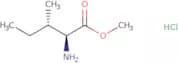
CAS:L-Isoleucine methyl ester hydrochloride (LIME) is a chemical pesticide that inhibits the synthesis of prostaglandins. It is used to treat inflammatory bowel disease and cancer, as well as other inflammatory diseases. LIME is metabolized by an enzyme called synthase to produce L-methionine methyl ester hydrochloride, which is a substrate for another enzyme called nitric oxide synthase. Nitrous acid and butyric acid are two metabolites of LIME that have been shown to inhibit the production of beta-amyloid peptides. One study has also shown that LIME can reduce the levels of vitamin D3 in rats with colitis.Formula:C7H16ClNO2Purity:Min. 95%Color and Shape:PowderMolecular weight:181.66 g/mol(1R,2S)-2-(3,4-Difluorophenyl)cyclopropanamine hydrochloride
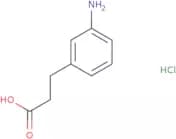
CAS:(1R,2S)-2-(3,4-Difluorophenyl)cyclopropanamine hydrochloride is a fine chemical that has been used as a building block to make other compounds. It is also an intermediate in organic synthesis and research chemicals. (1R,2S)-2-(3,4-Difluorophenyl)cyclopropanamine hydrochloride can be used in the production of complex compounds with high quality.Formula:C9H9F2N·HClPurity:Min. 95%Color and Shape:White PowderMolecular weight:205.63 g/molbeta-(3-Aminophenyl)propionic acid hydrochloride
CAS:Beta- (3-aminophenyl)propionic acid hydrochloride is a drug that belongs to the class of pharmaceuticals and is used as a gastric antacid. It has been shown to be effective in treating acute and chronic gastritis, as well as ulcers in humans. Beta-(3-aminophenyl)propionic acid hydrochloride has been shown to have strong effects on tissues, membranes, and chlorides. The drug binds to hydrogen chloride and chlorine ions in the stomach, thereby preventing the formation of hydrochloric acid (HCL). This prevents the damage caused by HCL on tissues and membranes of the stomach. Beta-(3-aminophenyl)propionic acid hydrochloride also has health effects with high concentrations, such as chloroform or chlorine gas.Formula:C9H12ClNO2Purity:Min. 95%Molecular weight:201.65 g/mol8-Hydroxyguanine hydrochloride
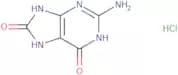
CAS:8-Hydroxyguanine hydrochloride is a fine chemical that is used as a building block in the synthesis of pharmaceuticals, agrochemicals and other organic compounds. It is also used as a reagent for research into the mechanisms of DNA damage. CAS No. 1246818-54-1 8-Hydroxyguanine hydrochloride is a complex compound that can be used as a versatile building block for the synthesis of many different types of molecules, including valuable intermediates and scaffolds for drug discovery.
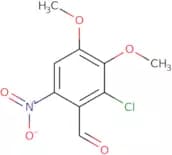
Formula:C5H5N5O2•HClPurity:Min. 90 Area-%Color and Shape:White PowderMolecular weight:203.59 g/mol2-Chloro-3,4-dimethoxy-6-nitrobenzaldehyde
CAS:2-Chloro-3,4-dimethoxy-6-nitrobenzaldehyde is a fine chemical with a CAS number of 82330-54-9. It is a versatile building block that can be used as a reagent or intermediate for the production of other chemicals. This product has been shown to have many different reactions. It is useful in the synthesis of complex compounds and offers high quality and purity.Formula:C9H8ClNO5Purity:Min. 95%Color and Shape:PowderMolecular weight:245.62 g/molPhenylthiophosphonic Dichloride
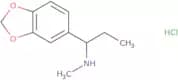
CAS:Formula:C6H5Cl2PSPurity:>98.0%(GC)(T)Color and Shape:Colorless to Light orange to Yellow clear liquidMolecular weight:211.04N-Methyl-3,4-methylenedioxyphenylpropane hydrochloride
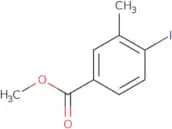
CAS:Controlled ProductN-Methyl-3,4-methylenedioxyphenylpropane hydrochloride is a high quality reagent that is a useful intermediate in the synthesis of complex compounds. It is used as a fine chemical and research chemicals in the manufacture of speciality chemicals. N-Methyl-3,4-methylenedioxyphenylpropane hydrochloride has been shown to be an excellent scaffold for the synthesis of many different compounds with high versatility. It can also be used as a building block or reaction component.Formula:C11H15NO2·HClColor and Shape:PowderMolecular weight:229.7 g/mol4-Iodo-3-methylbenzoic acid methyl ester
CAS:4-Iodo-3-methylbenzoic acid methyl ester is a chemical that is structurally analogous to 4-iodo-2,5-dimethoxybenzoic acid methyl ester. It is synthesized by the reaction of 3-methylbenzoic acid with ethyl chloroformate and iodomethane. 4-Iodo-3-methylbenzoic acid methyl ester has been shown to inhibit o6 alkylguanine DNA alkyltransferase (AGT) and o6 alkylguanine dna glycosylase (AGG). AGT and AGG are enzymes that repair DNA damage caused by reactive oxygen species. This inhibition leads to the accumulation of DNA damage in cells and induces apoptosis.Formula:C9H9IO2Purity:90%Color and Shape:PowderMolecular weight:276.07 g/mol3-Chlorophenylhydrazine hydrochloride
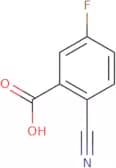
CAS:3-Chlorophenylhydrazine hydrochloride is a pyrazole that has been shown to have potent antibacterial activity. It is used in the treatment of inflammatory diseases and has been shown to be effective against Helicobacter pylori, which causes gastritis, peptic ulcers, and stomach cancer. 3-Chlorophenylhydrazine hydrochloride is an acidic compound with a molecular weight of 192.2 g/mol. It contains a pyrazole ring that is eluted with hydrochloric acid and reacts with gyrase enzymes in bacteria, inhibiting DNA synthesis. 3-Chlorophenylhydrazine hydrochloride also has anti-inflammatory properties due to its ability to inhibit prostaglandin synthesis.Formula:C6H7ClN2•HClPurity:Min. 95%Color and Shape:PowderMolecular weight:179.05 g/mol2-Cyano-5-fluorobenzoic acid
CAS:2-Cyano-5-fluorobenzoic acid (2C5FBA) is a chemical that is synthesized by the reaction of sodium nitrite with methyl ester. It can be used in organic synthesis as a target product and can also be used as an intermediate for the synthesis of other chemicals. 2C5FBA has been shown to react with nitrogen to produce cyanide, which is toxic to humans and animals. 2C5FBA also reacts with acid methyl to produce methyl esters, which are often used as solvents in industrial settings.
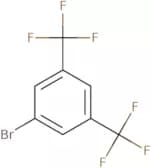
Formula:C8H4FNO2Purity:Min. 95%Color and Shape:PowderMolecular weight:165.12 g/mol3,5-Bis(Trifluoromethyl)bromobenzene
CAS:3,5-Bis(trifluoromethyl)bromobenzene is a chemical compound that has the chemical formula of C6H2BrF3. It is a colorless liquid that is soluble in organic solvents and decomposes at high temperatures. This compound can be synthesized by reacting hydrochloric acid with trifluoromethanesulfonic acid and 3-hydroxybenzaldehyde. The synthesis method is an efficient one because it does not require the use of expensive starting materials or the use of toxic reagents. This compound can also be used as a precursor for other compounds such as biphenyl, an aromatic hydrocarbon that has many industrial uses. 3,5-Bis(trifluoromethyl)bromobenzene can also be used to synthesize halides and ethyl esters.
Formula:C8H3BrF6Purity:Min. 95%Color and Shape:PowderMolecular weight:293 g/mol3-Piperazin-1-yl-benzo[d]isothiazole hydrochloride
CAS:3-Piperazin-1-yl-benzo[d]isothiazole hydrochloride is an atypical antipsychotic that belongs to the group of inorganic compounds. It has been shown to have a high affinity for acidic surfaces and can be used in industrial applications such as the removal of metal ions from water by filtration. 3-Piperazin-1-yl-benzo[d]isothiazole hydrochloride is synthesized by reacting an inorganic base with a piperazine compound, followed by hydrolysis of the piperazine ring using acid. Impurities are often found during synthesis, which may contain traces of other compounds such as pyridine or methylamine.Formula:C11H13N3SPurity:Min. 95%Color and Shape:PowderMolecular weight:219.31 g/mol2-Bromo-5-fluorobenzaldehyde
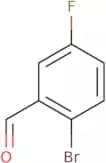
CAS:2-Bromo-5-fluorobenzaldehyde is a chemical compound that has been shown to inhibit the activity of ns3 protease, an enzyme responsible for the cleavage of peptides in HIV. 2-Bromo-5-fluorobenzaldehyde binds to the active site of ns3 protease and prevents it from carrying out its function. This drug has also been shown to bind to the active site of ns5b polymerase and inhibit its activity, which is necessary for viral DNA synthesis. 2-Bromo-5-fluorobenzaldehyde has been used as a fungicide and has shown high potency against Candida albicans, Cryptococcus neoformans, Saccharomyces cerevisiae, and Aspergillus fumigatus.
Formula:C7H4BrFOPurity:Min. 95%Color and Shape:PowderMolecular weight:203.01 g/molPentafluorobenzeneboronic acid
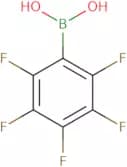
CAS:Pentafluorobenzeneboronic acid is a boronic acid that is used in the synthesis of cationic polymers for use as an environmentally friendly alternative to perfluoroalkyl compounds. Pentafluorobenzeneboronic acid can be synthesized by the reaction of hydrochloric acid and pentafluorophenol. The energy efficiency of this molecule is low, which makes it an attractive candidate for use in polymer synthesis. Pentafluorobenzeneboronic acid reacts with nucleophiles at its α carbon to form a covalent linkage, which is reversible under certain conditions. This chemical has been shown to react with β-unsaturated ketones and trifluoroacetic acid to form polyenes with control experiments being done by adding ammonia gas or water to the reaction mixture.Formula:C6H2BF5O2Purity:Min. 95%Color and Shape:SolidMolecular weight:211.88 g/mol
![2-[(4-Chlorophenyl)amino]nicotinic acid](/_next/image/?url=https%3A%2Fstatic.cymitquimica.com%2Fproducts%2F3D%2Fthumb-webp%2FFC136121.webp&w=3840&q=75)



![[(3S,4R)-4-(4-Fluorophenyl)-3-piperidinyl]methanol](/_next/image/?url=https%3A%2Fstatic.cymitquimica.com%2Fproducts%2F3D%2Fthumb-webp%2FFF92100.webp&w=3840&q=75)





![3-Piperazin-1-yl-benzo[d]isothiazole hydrochloride](/_next/image/?url=https%3A%2Fstatic.cymitquimica.com%2Fproducts%2F3D%2Fthumb-webp%2FFP50755.webp&w=3840&q=75)