Organic Halides
Subcategories of "Organic Halides"
Found 20442 products of "Organic Halides"
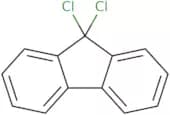
9,9-Dichlorofluorene
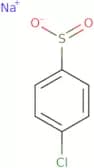
CAS:9,9-Dichlorofluorene is a bifluorenylidene that reacts with hydrochloric acid to form the trifluoroacetate anion. It is nucleophilic and can be used in organic synthesis to form carbon-fluorine bonds or chloroformates. 9,9-Dichlorofluorene also reacts with chloride ions to form the chloride anion. This reaction yields a high yield and has been used to synthesize other chemicals, including thioacetals and dimethylformamide. 9,9-Dichlorofluorene reacts with protonated nucleophiles in DMF and forms thioacetals following deprotection by hydrochloric acid. The reaction yield of this process is high and it has been extensively studied by NMR spectroscopy.Formula:C13H8Cl2Purity:Min. 95%Color and Shape:PowderMolecular weight:235.11 g/mol4-Chloro-benzene-sulfinic acid sodium salt
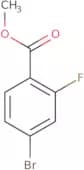
CAS:The 4-chloro-benzenesulfinic acid sodium salt is a type of sulfinic acid. It can be used to control experiments involving methides, halides, and human macrophages. Sodium salts of this compound have been shown to inhibit the growth of Candida glabrata and Galleria mellonella in vitro. The 4-chloro-benzenesulfinic acid sodium salt reacts with chloride ion to form a nucleophilic trifluoroacetate anion, which reacts with thiosulfonates to produce type strain. Trifluoroacetic acid is used as a solvent in the reaction.Formula:C6H4ClNaO2SPurity:Min. 95%Molecular weight:198.6 g/mol4-Bromo-2-fluorobenzoic acid methyl ester
CAS:4-Bromo-2-fluorobenzoic acid methyl ester is a synthetic chemical that is used as a drug substance in the synthesis of pharmaceuticals. It is also a reagent for organic synthesis, specifically cross coupling reactions. 4-Bromo-2-fluorobenzoic acid methyl ester can be used to introduce an alkyl group into a molecule, which can then be used in other synthetic reactions. This chemical has been shown to inhibit prolyl hydroxylase (PHD), which is an enzyme that catalyzes the conversion of proline to hydroxyproline. 4-Bromo-2-fluorobenzoic acid methyl ester also inhibits the Bcl-2 family proteins, including bcl2, bclxl and bax, which are known to play a role in apoptosis. 4-Bromo-2-fluorobenzoic acid methyl esterFormula:C8H6BrFO2Purity:Min. 95%Molecular weight:233.03 g/molDidecyl dimethyl ammonium chloride - 80% aqueous solution
CAS:Didecyl dimethyl ammonium chloride is a quaternary ammonium compound that has been shown to have a broad-spectrum antimicrobial activity. It has been used in disinfectants and as an active ingredient in pharmaceuticals, cosmetics, and foods. The compound is not toxic to humans or animals at concentrations up to 50%. Didecyl dimethyl ammonium chloride has been shown to be effective against infectious diseases caused by bacteria, viruses, fungi, and protozoa. This compound also has an effect on the epithelial-mesenchymal transition (EMT) process. Didecyl dimethyl ammonium chloride can be prepared by titration calorimetry or analytical method. The preparation of didecyl dimethyl ammonium chloride can be done using chloroform and benzalkonium chloride or glycol ether.
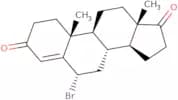
Formula:C22H48ClNColor and Shape:Clear LiquidMolecular weight:362.08 g/mol6a-Bromo androstenedione
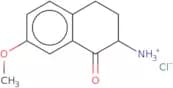
CAS:Controlled Product6a-Bromo androstenedione is a nonsteroidal, non-aromatizable, competitive inhibitor of aromatase. It binds to the active site of the enzyme and blocks the conversion of testosterone to estradiol. 6a-Bromo androstenedione has been shown to inhibit aromatase activity in vitro at an IC50 of about 5 nM. The affinity for the enzyme is about 10 times higher than that for aminoglutethimide, which is another competitive inhibitor of aromatase. 6a-Bromo androstenedione has also been shown to have inhibitory activity against estrogen synthetase in rats.Formula:C19H25BrO2Purity:Min. 95%Molecular weight:365.3 g/mol2-Amino-3,4-dihydro-7-methoxy-2H-1-naphthalenone, hydrochloride
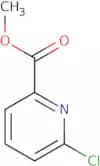
CAS:Controlled ProductPlease enquire for more information about 2-Amino-3,4-dihydro-7-methoxy-2H-1-naphthalenone, hydrochloride including the price, delivery time and more detailed product information at the technical inquiry form on this pageFormula:C11H14ClNO2Purity:Min. 95%Molecular weight:227.69 g/molMethyl 6-chloro-2-pyridinecarboxylate
CAS:Methyl 6-chloro-2-pyridinecarboxylate is a reactive, organic compound that belongs to the class of monomers. It is a white crystalline solid with a melting point of approximately 130 degrees Celsius. This chemical can be synthesized by reacting 2-chlorobenzothiazole with sodium carbonate in water at temperatures between 100 and 140 degrees Celsius. The reaction yields methyl 6-chloro-2-pyridinecarboxylate as well as chloride and picolinic acid as side products. This compound has been shown to have neurotoxic effects when administered to rats at high doses.Formula:C7H6ClNO2Purity:Min. 95%Molecular weight:171.58 g/molEthyl 7-bromoheptanoate
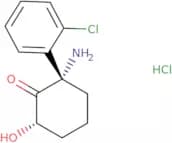
CAS:Ethyl 7-bromoheptanoate is a hydroxamic acid that has potent cytotoxicity against cancer cells. This compound has been shown to inhibit the growth of cancer cells and induce apoptosis in vitro. Ethyl 7-bromoheptanoate also inhibits the production of the epidermal growth factor, which may explain its anti-cancer properties. It also has antioxidant properties due to its ability to scavenge free radicals and inhibit lipid peroxidation. The pharmacokinetic properties of this compound are unknown, but it is known to have a biphenyl moiety, which is commonly used as an inhibitor in chemical biology studies.Formula:C9H17BrO2Purity:Min. 95%Molecular weight:237.13 g/mol(2S,6S)-2-Amino-2-(2-chlorophenyl)-6-hydroxycyclohexan-1-one HCl
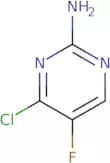
CAS:Controlled ProductPlease enquire for more information about (2S,6S)-2-Amino-2-(2-chlorophenyl)-6-hydroxycyclohexan-1-one HCl including the price, delivery time and more detailed product information at the technical inquiry form on this pageFormula:C12H15CI2NO2Purity:Min. 95%Color and Shape:PowderMolecular weight:471.07 g/mol4-chloro-5-fluoropyrimidin-2-amine
CAS:Please enquire for more information about 4-chloro-5-fluoropyrimidin-2-amine including the price, delivery time and more detailed product information at the technical inquiry form on this pageFormula:C4H3ClFN3Purity:Min. 95%Molecular weight:147.54 g/molFluorescent Brightener 251
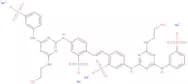
CAS:Fluorescent Brightener 251 is a quaternary ammonium salt that is used as a fluorescent whitening agent. It has been shown to be safe for use with human keratin and can be identified by its ultraviolet-visible spectra. This compound is a polybasic, anionic compound that is neutralized with a diluent and then chloride. The radiation emitted by the compound triggers the emission of visible light, which is what makes it fluorescent. Fluorescent Brightener 251 emits radiation in three wavelengths: 280 nm, 350 nm, and 420 nm. The evaporation rate of this compound depends on the counterions present in the solution. Fluorescent Brightener 251 undergoes a stepwise reaction with reactive compounds.Formula:C36H36N12O14S4•Na4Purity:Min. 95%Color and Shape:PowderMolecular weight:1,080.97 g/molEthyl 5-fluoroindole-2-carboxylate
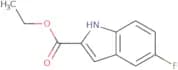
CAS:Ethyl 5-fluoroindole-2-carboxylate is a cytotoxic compound that belongs to the class of organic compounds called aryl rings. It has been shown to inhibit tumor growth in vitro and in vivo through the inhibition of protein synthesis. The molecular docking studies have shown that this compound binds to the enzyme SMMC-7721 cell, which is involved in DNA transcription and replication. It also inhibits activity of other enzymes, such as kinases and phosphatases, which are involved in cellular processes such as proliferation and differentiation. Ethyl 5-fluoroindole-2-carboxylate may be used for the treatment of blood cancer or monosugar diseases, such as diabetes mellitus or hyperlipidemia.Formula:C11H10FNO2Purity:Min. 95%Molecular weight:207.2 g/molChlorfenapyr
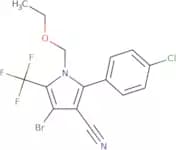
CAS:Chlorfenapyr is a polymerase chain inhibitor that binds to the terminal residues of the protein. It is used as an insecticide, and has been shown to be effective against insects such as termites, ants, cockroaches, and fleas. Chlorfenapyr prevents synthesis of proteins by binding to the ribosomes at the site where amino acids are joined together to form a new protein. This binding prevents translation and leads to cell death. Chlorfenapyr also inhibits certain mammalian enzymes, including kidney bean trypsin inhibitor, which may be due to its ability to bind with these proteins in both bound and free forms.
Formula:C15H11BrClF3N2OPurity:Min. 95%Color and Shape:White PowderMolecular weight:407.61 g/mol4-fluoro-1-methyl-1,4-diazoniabicyclo[2.2.2]octane
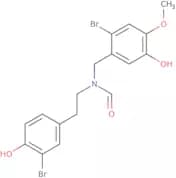
CAS:4-fluoro-1-methyl-1,4-diazoniabicyclo[2.2.2]octane (ditetrafluor) is a fluorine containing compound that can be used to treat cancer cells. It is a chiral molecule with four stereoisomers, two of which are active against cancer cells and the other two are inactive. Ditetrafluor has been shown to have antiviral activity against influenza A virus by inhibiting viral replication, but it does not have any effect on the common cold virus. This drug is also able to inhibit syncytia formation in cultured cells and has been shown to be effective in treating malaria caused by Plasmodium falciparum.Formula:C7H15B2F9N2Purity:Min. 95%Molecular weight:319.82 g/molN-(3-Bromo-4-hydroxyphenethyl)-N-(2-bromo-5-hydroxy-4-methoxybenzyl)formamide
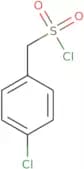
CAS:Controlled ProductPlease enquire for more information about N-(3-Bromo-4-hydroxyphenethyl)-N-(2-bromo-5-hydroxy-4-methoxybenzyl)formamide including the price, delivery time and more detailed product information at the technical inquiry form on this pageFormula:C17H17Br2NO4Purity:Min. 95%Molecular weight:459.13 g/mol(4-Chlorophenyl)methanesulphonyl chloride
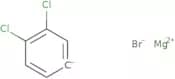
CAS:Please enquire for more information about (4-Chlorophenyl)methanesulphonyl chloride including the price, delivery time and more detailed product information at the technical inquiry form on this pageFormula:C7H6Cl2O2SPurity:Min. 95%Color and Shape:PowderMolecular weight:225.09 g/mol3,4-Dichlorophenylmagnesium bromide - 0.5M solution in tetrahydrofuran
CAS:3,4-Dichlorophenylmagnesium bromide - 0.5M solution in tetrahydrofuran is a chemical reagent that is used to produce methyl compounds. It is often used in the production of chlorinated compounds by substitution of chlorine atoms for hydrogen atoms on the carbon chain. 3,4-Dichlorophenylmagnesium bromide - 0.5M solution in tetrahydrofuran has a molecular structure that includes an electronegative chloro group and a titanium ligand. Acid catalysts are often used with this chemical to promote the reaction between the magnesium and halide ions, which produces methylation products. This may be done through x-ray analysis to determine the progress of the reaction.
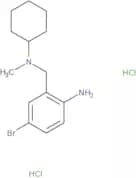
Formula:C6H3BrCl2MgPurity:Min. 95%Color and Shape:Clear LiquidMolecular weight:250.2 g/mol2-Amino-5-bromo-N-cyclohexyl-N-methylbenzylamine dihydrochloride
CAS:Please enquire for more information about 2-Amino-5-bromo-N-cyclohexyl-N-methylbenzylamine dihydrochloride including the price, delivery time and more detailed product information at the technical inquiry form on this pageFormula:C14H23BrCl2N2Purity:Min. 95%Color and Shape:PowderMolecular weight:370.16 g/mol6-Bromo-1H-pyrrolo[3,2-c]pyridine
CAS:Pyrroloquinoline quinones are a class of naturally occurring bioactive natural products that have been isolated from plants and fungi. Pyrroloquinoline quinone is an important intermediate in the synthesis of many other biologically active natural products. The pyrrole ring is synthesized by two different methods: (1) the oxidation of 2-pyridone, or (2) the reaction of methyl 4-hydroxypyrimidine-2-carboxylate with methylamine. Synthesis can be accomplished through a number of synthetic strategies, including bioorganic chemistry, organic chemistry, and synthetic strategies. The mechanisms for each step in the synthesis are discussed in detail below.Formula:C7H5BrN2Purity:Min. 95%Color and Shape:SolidMolecular weight:197.03 g/molL-Alaninol-2-chlorotrityl resin
Please enquire for more information about L-Alaninol-2-chlorotrityl resin including the price, delivery time and more detailed product information at the technical inquiry form on this page
Purity:Min. 95%



![4-fluoro-1-methyl-1,4-diazoniabicyclo[2.2.2]octane](/_next/image/?url=https%3A%2Fstatic.cymitquimica.com%2Fproducts%2F3D%2Fthumb-webp%2FFF106220.webp&w=3840&q=75)
![6-Bromo-1H-pyrrolo[3,2-c]pyridine](/_next/image/?url=https%3A%2Fstatic.cymitquimica.com%2Fproducts%2F3D%2Fthumb-webp%2FFB141720.webp&w=3840&q=75)