Organic Halides
Subcategories of "Organic Halides"
Found 20442 products of "Organic Halides"
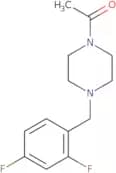
1-Acetyl-4-(2,4-difluorobenzyl)piperazine
CAS:Controlled ProductPlease enquire for more information about 1-Acetyl-4-(2,4-difluorobenzyl)piperazine including the price, delivery time and more detailed product information at the technical inquiry form on this page
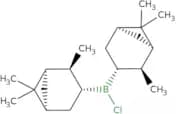
Formula:C13H16F2N2OPurity:Min. 95%Molecular weight:254.28 g/mol(-)-B-Chlorodiisopinocampheylborane, 60% in Hexane, ca. 1.7mol/L
CAS:(-)-B-Chlorodiisopinocampheylborane is a carbonyl group that can be used for asymmetric synthesis. It was synthesized from the reaction of chlorodiisopinocampheylborane with butyllithium and allyl bromide, followed by aqueous workup. The enantiomers were separated through thin layer chromatography on silica gel plates with hexane as the eluent. The resolution of racemic latanoprost lactol was achieved in the same manner. (-)-B-Chlorodiisopinocampheylborane is also a diketone that can be prepared from para-chloroacetophenone and sodium hydroxide in ethanol. This diketone undergoes an intramolecular cyclization to produce noradrenaline (norepinephrine) and hydrochloric acid, which can then be converted into dioxolanes or other products.Formula:C20H34BClPurity:Min. 95%Color and Shape:Clear LiquidMolecular weight:320.75 g/molDichloroacetyl chloride
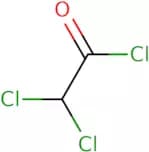
CAS:Dichloroacetyl chloride is a reactive chlorine compound that is used in the synthesis of pharmaceuticals, dyes, and pesticides. It reacts with hydrochloric acid to produce hydrochloric acid and dichloroacetic acid. Dichloroacetyl chloride can react with zirconium oxide to produce chlorides and zirconates. This reaction can be conducted at room temperature. The reaction mechanism for this reaction is not well understood; however, it has been shown that the hydroxyl group on the dichloroacetyl chloride molecule plays a significant role in this process. The phase transition temperature of dichloroacetyl chloride is -60°C. This compound has physiological activities such as reducing inflammation and fighting autoimmune diseases.Formula:C2HCl3OPurity:Min. 95%Molecular weight:147.39 g/mol2-Chloro-1-(1,2,5-trimethyl-1H-indol-3-yl)ethanone
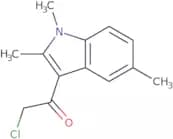
CAS:Controlled ProductPlease enquire for more information about 2-Chloro-1-(1,2,5-trimethyl-1H-indol-3-yl)ethanone including the price, delivery time and more detailed product information at the technical inquiry form on this pageFormula:C13H14ClNOPurity:Min. 95%Molecular weight:235.71 g/molN-2,3-Dihydro-1H-inden-2-yl-N-ethylamine hydrochloride
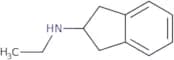
CAS:Controlled ProductPlease enquire for more information about N-2,3-Dihydro-1H-inden-2-yl-N-ethylamine hydrochloride including the price, delivery time and more detailed product information at the technical inquiry form on this pageFormula:C11H15NPurity:Min. 95%Molecular weight:161.24 g/mol1-(2-Chlorobenzyl)piperazine
CAS:Controlled Product1-(2-Chlorobenzyl)piperazine is a drug that binds to the adenosine receptor with high affinity. It has been shown to produce a bell-shaped dose-response curve, meaning that at low doses it increases the activity of adenosine receptors and at high doses it decreases the activity of these receptors. 1-(2-Chlorobenzyl)piperazine is an atypical agonist for this receptor because it does not have the typical skeleton structure of other drugs that bind to this receptor. It is also used as a research tool in assays to study the effects of drugs on adenosine receptors.Formula:C11H15ClN2Purity:Min. 95%Molecular weight:210.7 g/mol2,5-Dibromofuran
CAS:2,5-Dibromofuran is a synthetic chemical that is synthesized from acetonitrile and palladium-catalyzed cross-coupling reaction. It can be obtained by the reaction of sodium in anhydrous form with bromine and subsequent evaporation to dryness. 2,5-Dibromofuran has been shown to reversibly react with chloride at room temperature for one hour, which can be attributed to its electron withdrawing properties. The FTIR spectra of 2,5-dibromofuran show bands corresponding to carbonyl and hydroxyl groups. This chemical has been used in synthesis methods involving surfactants and anhydrous sodium chloride as well as uv irradiation.Formula:C4H2Br2OPurity:Min. 95%Molecular weight:225.87 g/molalpha-(1,1,2,2,2-Pentafluoroethyl)-omega-[Tetrafluoro(Trifluoromethyl)Ethoxy]-Poly[Oxy[Trifluoro(Trifluoromethyl)-1,2-Ethanediyl]] - Average MW 2000
CAS:Controlled ProductAlpha-(1,1,2,2,2-Pentafluoroethyl)-omega-[Tetrafluoro(Trifluoromethyl)Ethoxy]-Poly[Oxy[Trifluoro(Trifluoromethyl)-1,2-Ethanediyl]] - Average MW 2000 (FTFEPA) is a fluorinated compound that is a monofluorophosphate. It is used as an electrolyte in nonaqueous systems. FTFEPA has been shown to be effective in reducing the corrosion of metals such as magnesium and aluminum.Formula:(C3F6O)n•C5F12OPurity:Min. 95%(3-Chlorophenyl)acetyl chloride
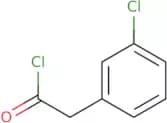
CAS:3-Chlorophenylacetic acid is a formamide that can be used in the synthesis of amines and phosphoinositides. It is also an intermediate in the preparation of dimethylformamide. 3-Chlorophenylacetic acid has been shown to cause cell dysfunction at high doses, but not at lower concentrations. The biological properties of this compound are similar to those of other formamidines and amines. 3-Chlorophenylacetic acid has been shown to catalyze the conversion of benzoic acid into benzoate, which is used as a preservative in foods, drugs, and cosmetics. This compound also inhibits the formation of heterocyclic amines during cooking by reacting with amino compounds, such as creatinine or ammonia.Formula:C8H6Cl2OPurity:Min. 95%Color and Shape:Clear LiquidMolecular weight:189.04 g/mol2-Amino-1-(2,3-dihydro-benzofuran-5-yl)-ethanolHydrochloride
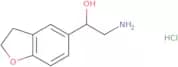
CAS:Controlled ProductPlease enquire for more information about 2-Amino-1-(2,3-dihydro-benzofuran-5-yl)-ethanolHydrochloride including the price, delivery time and more detailed product information at the technical inquiry form on this pageFormula:C10H14ClNO2Purity:Min. 95%Molecular weight:215.68 g/molCyanuric chloride
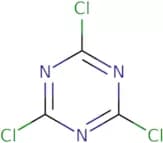
CAS:Cyanuric chloride is a water treatment agent that is used to remove chlorine from wastewater. It reacts with chlorine, forming cyanuric acid which is then removed from the water. Cyanuric chloride also has the ability to bind to human serum albumin and enzymes in biological samples. This binding inhibits their activity and makes them unavailable for use by bacteria. The antibacterial efficacy of cyanuric chloride has been shown in a study where it was found to have high resistance against many types of bacteria, such as Escherichia coli, Staphylococcus aureus, and Klebsiella pneumoniae.Formula:C3Cl3N3Purity:Min. 95%Color and Shape:White/Off-White SolidMolecular weight:184.41 g/mol1-Bromo-5-chloro-2-fluorobenzene
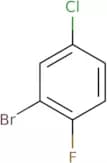
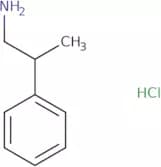
CAS:1-Bromo-5-chloro-2-fluorobenzene is an antibacterial and antifungal agent that belongs to the group of halogenated brominated compounds. It has shown effective inhibitory activity against a wide range of bacteria, including Staphylococcus aureus and gram-negative bacteria. 1-Bromo-5-chloro-2-fluorobenzene has been used as a treatment for small ulcers in the mouth caused by fungi. The drug inhibits bacterial growth by interfering with the synthesis of protein, DNA, and RNA. 1-Bromo-5-chloro-2-fluorobenzene also inhibits the growth of fungi by inhibiting their production of ergosterol, which is necessary for cell membrane function.Formula:C6H3BrClFPurity:Min. 95%Molecular weight:209.44 g/mol2-Phenylpropan-1-amine hydrochloride
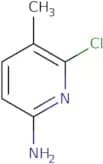
CAS:Controlled ProductPlease enquire for more information about 2-Phenylpropan-1-amine hydrochloride including the price, delivery time and more detailed product information at the technical inquiry form on this pageFormula:C9H14ClNPurity:Min. 95%Molecular weight:171.67 g/mol6-Chloro-5-methylpyridin-2-amine
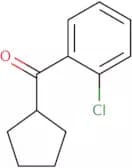
CAS:6-Amino-2-chloro-3-methylpyridine is a heteroaromatic compound that belongs to the class of imidazopyridine. It is a monomer used in research, and can be transformed into the cross-coupling reaction with electron irradiation, which provides an efficient method for synthesizing other heteroaromatic compounds. 6-Amino-2-chloro-3-methylpyridine has low ionization potential and can be used as a drug discovery agent.Formula:C6H7ClN2Purity:Min. 95%Molecular weight:142.59 g/mol2-Chlorophenyl cyclopentyl ketone
CAS:Controlled Product2-Chlorophenyl cyclopentyl ketone (2CCPK) is a synthetic, green, and scalable process for the preparation of cyclopentyl compounds. It has been used in analytical and preparative HPLC methods. 2CCPK is an acidic compound that can be analyzed by HPLC techniques. Preparative HPLC is used to isolate the product from impurities. The flow rate of 2CCPK can be determined using analytical HPLC techniques.
Formula:C12H13ClOPurity:Min. 95%Color and Shape:Clear LiquidMolecular weight:208.68 g/mol1-(4-Bromo-2,5-dimethoxybenzyl)piperazine
CAS:Controlled ProductPlease enquire for more information about 1-(4-Bromo-2,5-dimethoxybenzyl)piperazine including the price, delivery time and more detailed product information at the technical inquiry form on this page
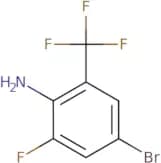
Formula:C13H19BrN2O2Purity:Min. 95%Molecular weight:315.21 g/mol4-Bromo-2-fluoro-6-(trifluoromethyl)aniline
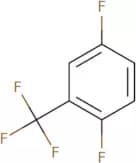
CAS:Please enquire for more information about 4-Bromo-2-fluoro-6-(trifluoromethyl)aniline including the price, delivery time and more detailed product information at the technical inquiry form on this pageFormula:C7H4BrF4NPurity:Min. 95%Color and Shape:Clear LiquidMolecular weight:258.01 g/mol1,4-Difluoro-2-(trifluoromethyl)benzene
CAS:1,4-Difluoro-2-(trifluoromethyl)benzene is a synthetic compound that is used to model some aspects of the reactivity of 2-fluoro-5-nitrobenzotrifluoride. The molecule was synthesized by reacting ethylene with difluoromethyl trifluorobromide and sodium fluoride in an ethylene atmosphere. This molecule has been modelled using quantum chemical calculations to investigate its potential reactivity. It is postulated that the molecule will behave as a nucleophile, and it has been suggested that electron density may be maximised around the fluorine atom at the 1,4 position.Formula:C7H3F5Purity:Min. 95%Molecular weight:182.09 g/molTribromofluoromethane - stablized with Copper
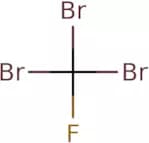
CAS:The tribromofluoromethane (CF3Br) is a reactive chemical that reacts with hydrochloric acid to form hydrogen fluoride and chloride. It is used in the production of chlorofluorocarbons and other chemicals. The CF3Br can also react with copper chloride to form CF3Cl2, which has been shown to have cytostatic effects on cells.
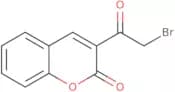
Formula:CBr3FPurity:Min. 95%Color and Shape:Colourless To Dark Yellow LiquidMolecular weight:270.72 g/mol3-(2-Bromoacetyl)-2H-chromen-2-one
CAS:3-(2-Bromoacetyl)-2H-chromen-2-one is a compound that has been shown to inhibit the growth of human liver cancer cells and has been used in the treatment of some cancers. 3-(2-Bromoacetyl)-2H-chromen-2-one is a nucleophile, which reacts with electrophiles, such as 2Nal, to form an intermediate covalent bond. The reaction mechanism for this process involves a nucleophilic substitution reaction, where one atom (the nucleophile) attacks another atom (the electrophile) from the side opposite its electron cloud. This process results in the formation of a covalent bond between the two atoms and the release of water. 3-(2-Bromoacetyl)-2H-chromen-2one was found to be effective against Streptococcus faecalis and other bacteria after being tested in vitro with these organisms. In addition to beingFormula:C11H7BrO3Purity:Min. 95%Color and Shape:PowderMolecular weight:267.08 g/mol



![alpha-(1,1,2,2,2-Pentafluoroethyl)-omega-[Tetrafluoro(Trifluoromethyl)Ethoxy]-Poly[Oxy[Trifluoro(T…](/_next/image/?url=https%3A%2Fstatic.cymitquimica.com%2Fproducts%2F3D%2Fthumb-webp%2FFP103632.webp&w=3840&q=75)