Organic Halides
Subcategories of "Organic Halides"
Found 20442 products of "Organic Halides"
4-Bromostyrene
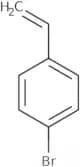
CAS:Bromostyrene is a colorless liquid that is soluble in ether and deionized water. It has a boiling point of about 147°C. Bromostyrene can be reduced with borohydride to produce 4-bromobutane. The graphical methods for determining the rate of bromohydride reduction are based on the change in proton concentration or the change in pH. Bromostyrene has been shown to have good proton transport properties, which may be due to its high dipole moment.Formula:C8H7BrPurity:Min. 95%Molecular weight:183.05 g/mol2-Bromo-4'-nitroacetophenone
CAS:2-Bromo-4'-nitroacetophenone is a chemical compound that has been shown to be active in enzyme inhibition experiments. It has been found to inhibit the activity of histidine decarboxylase, which catalyzes the conversion of histidine to histamine, and uv absorption. 2-Bromo-4'-nitroacetophenone binds to the active site of P450 enzymes, inhibiting their catalytic activity. This compound also inhibits fatty acid oxidation by binding to fatty acid hydroxylase and hydrogen bonds with tyrosine residues in proteins. 2-Bromo-4'-nitroacetophenone is structurally similar to 2-bromoacetophenone, which has been shown to have antihistaminic properties.Formula:C8H6BrNO3Purity:Min. 95%Color and Shape:PowderMolecular weight:244.04 g/mol2-Chloro-4-nitro-6-bromoaniline
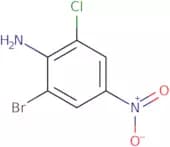
CAS:2-Chloro-4-nitro-6-bromoaniline is a dispersive, linear range, ammonolysis and chloride free oxidant for wastewater treatment. This compound is effective at removing organic pollutants from wastewater and has been shown to be both environmentally safe and cost effective. 2-Chloro-4-nitro-6-bromoaniline is also used as a polymerization initiator in the production of polyester resins. It can be manufactured by recycling anilines by reacting them with bromine in the presence of an acid catalyst. 2CNBBA is used as a hydrogen bond acceptor in microextraction of chlorinated compounds from water samples.Formula:C6H4BrClN2O2Purity:Min. 95%Molecular weight:251.46 g/mol1-(RS)-2-(Dibutylamino)-2-[2,7-dichloro-9-(4-chlorobenxylidene)]-9H-fluoren- 4-yl]ethanol - E/Z mixture
CAS:Please enquire for more information about 1-(RS)-2-(Dibutylamino)-2-[2,7-dichloro-9-(4-chlorobenxylidene)]-9H-fluoren- 4-yl]ethanol - E/Z mixture including the price, delivery time and more detailed product information at the technical inquiry form on this pageFormula:C30H32Cl3NOPurity:Min. 95%Molecular weight:528.94 g/molO-tert-Butyl-D-serine methyl ester hydrochloride
CAS:Please enquire for more information about O-tert-Butyl-D-serine methyl ester hydrochloride including the price, delivery time and more detailed product information at the technical inquiry form on this pageFormula:C8H17NO3·HClPurity:Min. 95%Molecular weight:211.69 g/mol3,4-Diaminobenzotrifluoride
CAS:3,4-Diaminobenzotrifluoride is a photophysical agent that emits light of a specific wavelength when irradiated with ultraviolet light. It has been shown to inhibit the growth of human cervical carcinoma cells in vitro and to cause apoptosis in these cells. 3,4-Diaminobenzotrifluoride also inhibits the proliferation of human liver and lung cancer cells in vitro. The mechanism by which this agent causes cell death is unknown. 3,4-Diaminobenzotrifluoride is an acid catalyst and stabilizes the chloride ion. This agent may inhibit DNA synthesis or affect proteins that are involved in signal transduction pathways for cell proliferation.Formula:C7H7F3N2Purity:Min. 95%Color and Shape:PowderMolecular weight:176.14 g/mol5-Methyl-4,5,6,7-tetrahydrothiazolo[5,4-c]pyridine-2-carboxylic acid hydrochloride
CAS:Intermediate in the synthesis of edoxabanFormula:C8H10N2O2S·HClPurity:Min. 95%Molecular weight:234.7 g/mol4-(Methylthio)benzylchloride
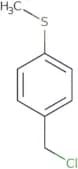
CAS:4-(Methylthio)benzylchloride is a molecule that belongs to the group of dendrons. It is a synthetic molecule with an acid chloride functional group. This compound has been synthesized by decarboxylation of 4-methylthiobenzaldehyde and then chlorination of the resulting alcohol. The microextraction technique was used to extract 4-(methylthio)benzylchloride from acidic solutions. In this technique, a small amount of solvent is absorbed on a solid phase and then eluted into another solvent in a laboratory instrument called the headspace. The headspace technique is used to extract 4-(methylthio)benzylchloride from acidic solutions because it has better sensitivity and selectivity than liquid-liquid extraction. The fluorescence properties of 4-(methylthio)benzylchloride allow it to be detected using luminescence spectroscopy at wavelengths between 400 nm and 700 nm, which makes it useful asFormula:C8H9ClSPurity:Min. 95%Molecular weight:172.68 g/mol6-Chloro-benzofuran-3-one
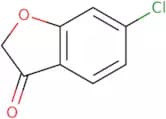
CAS:6-Chloro-benzofuran-3-one is an organic compound that is used in the synthesis of other chemical compounds. It is a useful scaffold for the construction of complex molecules and may be used as a reagent or reaction component in organic chemistry. This product has CAS number 3260-78-4, and is also known as 6-chlorobenzofuranone.Formula:C8H5ClO2Purity:Min. 98%Color and Shape:PowderMolecular weight:168.58 g/molDichloro(1,1-bis(diphenylphosphino)ferrocene)palladium(II)acetoneadduct
CAS:Controlled ProductPlease enquire for more information about Dichloro(1,1-bis(diphenylphosphino)ferrocene)palladium(II)acetoneadduct including the price, delivery time and more detailed product information at the technical inquiry form on this page
Formula:C37H34Cl2FeOP2PdPurity:Min. 95%Molecular weight:789.78 g/mol3-Bromo-2-(bromomethyl)pyridine
CAS:Please enquire for more information about 3-Bromo-2-(bromomethyl)pyridine including the price, delivery time and more detailed product information at the technical inquiry form on this pageFormula:C6H5Br2NPurity:Min. 95%Molecular weight:250.92 g/mol9,9-Dichlorofluorene
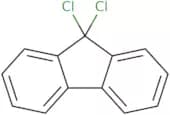
CAS:9,9-Dichlorofluorene is a bifluorenylidene that reacts with hydrochloric acid to form the trifluoroacetate anion. It is nucleophilic and can be used in organic synthesis to form carbon-fluorine bonds or chloroformates. 9,9-Dichlorofluorene also reacts with chloride ions to form the chloride anion. This reaction yields a high yield and has been used to synthesize other chemicals, including thioacetals and dimethylformamide. 9,9-Dichlorofluorene reacts with protonated nucleophiles in DMF and forms thioacetals following deprotection by hydrochloric acid. The reaction yield of this process is high and it has been extensively studied by NMR spectroscopy.Formula:C13H8Cl2Purity:Min. 95%Color and Shape:PowderMolecular weight:235.11 g/mol(4-Carboxybutyl)triphenylphosphonium bromide
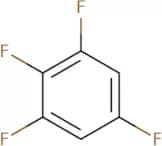
CAS:(4-Carboxybutyl)triphenylphosphonium bromide (CTBP) is a chemical compound that is used as a mosquito oviposition inhibitor. CTBP is derived from tetrazole, an organic compound that has been shown to have insecticidal properties. The mechanism of action of CTBP may be due to its reactive nature and ability to form toxic reaction products with an alkanoic acid. This effect has been demonstrated in the mitochondria of mosquitoes, leading to death by interference with energy production. CTBP can also be detected at low levels, making it suitable for use as a pesticide. It has been shown to have no effect on mammals or other vertebrates, which makes it safe for humans and animals alike.Formula:C23H24BrO2PPurity:Min. 95%Color and Shape:Off-White PowderMolecular weight:443.31 g/mol1,2,3,5-Tetrafluorobenzene
CAS:1,2,3,5-Tetrafluorobenzene is a chemical compound that belongs to the group of aromatic hydrocarbons. It has been shown to have antiinflammatory activity in vitro. 1,2,3,5-Tetrafluorobenzene is a metastable form of hydrogen fluoride and can be used as an intermediate in the synthesis of other fluorine-containing compounds. The molecule has a dipole moment and reacts with hydrogen ions to form hydrogen bonds. It also has high chemical stability and does not react with oxygen or nitrogen at room temperature.Formula:C6H2F4Purity:Min. 95%Color and Shape:Clear LiquidMolecular weight:150.07 g/mol[3-(1-Piperidin-1-ylcyclohexyl)phenyl]amine hydrochloride
CAS:Controlled Product3-(1-Piperidin-1-ylcyclohexyl)phenyl]amine hydrochloride is a ligand that binds to the acetylcholine receptor. 3-(1-Piperidin-1-ylcyclohexyl)phenyl]amine hydrochloride is an active analogue and has a high binding affinity for the cholinergic receptor. It has been shown to have a kinetic effect on the excitatory system, enhancing excitatory effects of acetylcholine without affecting inhibitory effects. 3-(1-Piperidin-1-ylcyclohexyl)phenyl]amine hydrochloride also has an antagonistic effect on modifiers of acetylcholine activity such as amantadine, but enhances the effects of other drugs, such as clonidine.
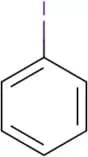
Formula:C17H26N2Purity:Min. 95%Molecular weight:258.4 g/molIodobenzene
CAS:Iodobenzene is a reactive chemical that can be used as a starting material for the synthesis of other chemicals. Iodobenzene reacts with sodium carbonate to produce trifluoroacetic acid and sodium iodide. Iodobenzene can also react with hydroxyl groups in the presence of palladium-catalyzed coupling reactions to form a reactive intermediate, which is then oxidized by hydrogen peroxide to form iodine. This reaction mechanism is important in the production of pharmaceuticals, dyes, and pesticides. Iodobenzene also has antiinflammatory activity that may be due to its ability to inhibit leukocyte migration into inflamed tissue by altering the expression of inflammatory cytokines and chemokines.Formula:C6H5IPurity:Min. 95%Molecular weight:204.01 g/mol2-Chloro-1-[4-(4-Fluorophenyl)-1-Piperazinyl]Ethanone
CAS:Controlled ProductPlease enquire for more information about 2-Chloro-1-[4-(4-Fluorophenyl)-1-Piperazinyl]Ethanone including the price, delivery time and more detailed product information at the technical inquiry form on this page
Formula:C12H14ClFN2OPurity:Min. 95%Molecular weight:256.7 g/molMAGE-3 Antigen (271-279) (human) trifluoroacetate salt
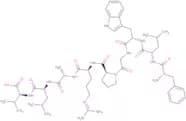
CAS:ALPHA FACTOR SIGNALING PEPTIDEFormula:C53H79N13O10Purity:Min. 95%Molecular weight:1,058.28 g/mol2-Amino-3,4-dihydro-7-methoxy-2H-1-naphthalenone, hydrochloride
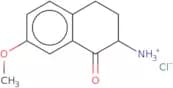
CAS:Controlled ProductPlease enquire for more information about 2-Amino-3,4-dihydro-7-methoxy-2H-1-naphthalenone, hydrochloride including the price, delivery time and more detailed product information at the technical inquiry form on this pageFormula:C11H14ClNO2Purity:Min. 95%Molecular weight:227.69 g/molMethyl 6-chloro-2-pyridinecarboxylate
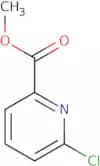
CAS:Methyl 6-chloro-2-pyridinecarboxylate is a reactive, organic compound that belongs to the class of monomers. It is a white crystalline solid with a melting point of approximately 130 degrees Celsius. This chemical can be synthesized by reacting 2-chlorobenzothiazole with sodium carbonate in water at temperatures between 100 and 140 degrees Celsius. The reaction yields methyl 6-chloro-2-pyridinecarboxylate as well as chloride and picolinic acid as side products. This compound has been shown to have neurotoxic effects when administered to rats at high doses.Formula:C7H6ClNO2Purity:Min. 95%Molecular weight:171.58 g/mol


![1-(RS)-2-(Dibutylamino)-2-[2,7-dichloro-9-(4-chlorobenxylidene)]-9H-fluoren- 4-yl]ethanol - E/Z mi…](/_next/image/?url=https%3A%2Fstatic.cymitquimica.com%2Fproducts%2F3D%2Fthumb-webp%2FFD71423.webp&w=3840&q=75)


![5-Methyl-4,5,6,7-tetrahydrothiazolo[5,4-c]pyridine-2-carboxylic acid hydrochloride](/_next/image/?url=https%3A%2Fstatic.cymitquimica.com%2Fproducts%2F3D%2Fthumb-webp%2FFM63141.webp&w=3840&q=75)



![[3-(1-Piperidin-1-ylcyclohexyl)phenyl]amine hydrochloride](/_next/image/?url=https%3A%2Fstatic.cymitquimica.com%2Fproducts%2F3D%2Fthumb-webp%2FFP120158.webp&w=3840&q=75)
![2-Chloro-1-[4-(4-Fluorophenyl)-1-Piperazinyl]Ethanone](/_next/image/?url=https%3A%2Fstatic.cymitquimica.com%2Fproducts%2F3D%2Fthumb-webp%2FFC93551.webp&w=3840&q=75)