Organic Halides
Subcategories of "Organic Halides"
Found 20442 products of "Organic Halides"
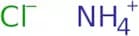
Ammonium chloride
CAS:Ammonium chloride is a salt of ammonium and chloride. It is used in wastewater treatment as a coagulant, to remove suspended solids from the water. In addition, ammonium chloride has been shown to have potent antitumor activity and is used in chemotherapy treatments. Ammonium chloride can be toxic if ingested or inhaled and should not be handled without proper safety precautions. Ammonium chloride also has an effect on the bowel disease, slowing down the rate at which it progresses. It is produced when trimethyl reacts with blood or water vapor. The surface methodology was used to obtain thermodynamic data for ammonium chloride. This method can be applied to other compounds that are difficult to analyze by other methods.Formula:NH4ClPurity:Min. 95%Color and Shape:PowderMolecular weight:53.49 g/molChloroacetic Acid-13C2
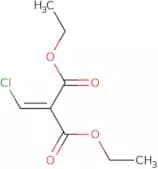
CAS:Please enquire for more information about Chloroacetic Acid-13C2 including the price, delivery time and more detailed product information at the technical inquiry form on this pagePurity:Min. 95%Diethyl 2-(chloromethylene)malonate
CAS:Please enquire for more information about Diethyl 2-(chloromethylene)malonate including the price, delivery time and more detailed product information at the technical inquiry form on this pagePurity:Min. 95%Sodium tetrachloropalladate(II)
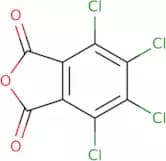
CAS:Sodium tetrachloropalladate(II) is a photoelectron acceptor that absorbs x-rays in the wavelength range of 0.2-1.5 Å. It is used as a nanomaterial for the preparation of microspheres and optical devices. Sodium tetrachloropalladate(II) has been shown to have a chloride ion content of 36%. The chemical composition of this element can be determined by using preparative methods such as suzuki coupling reaction, phase chromatography, or elemental analysis. The isolated yield of sodium tetrachloropalladate(II) can be determined by immobilizing it on an ion exchange resin and eluting with 0.1 M HCl.Formula:Cl4Na2PdPurity:Min. 95%Molecular weight:294.21 g/molTetrachlorophthalic anhydride
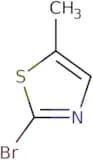
CAS:Controlled ProductTetrachlorophthalic anhydride (TCPA) is a reactive chemical that has been shown to have anti-inflammatory activity. TCPA has been found to inhibit the release of histamine from mast cells in humans, and it inhibits the production of pro-inflammatory cytokines such as tumor necrosis factor alpha (TNF-α). TCPA has also been shown to have a toxic effect on human lymphocyte transformation, which may be due to its ability to induce apoptosis. The toxicity of TCPA was studied in rats and mice, where it was found that TCPA did not cause any significant changes in clinical pathology or hydroxyl group levels.Formula:C8Cl4O3Purity:Min. 97.5 Area-%Color and Shape:White/Off-White SolidMolecular weight:285.89 g/mol2-Bromo-5-methyl-1,3-thiazole
CAS:2-Bromo-5-methyl-1,3-thiazole (2BMT) is a heterocyclic compound that is used as a chemical intermediate for the synthesis of drugs and other organic compounds. 2BMT is synthesized by a two step process from 2-methylbenzothiazole. This compound has been shown to inhibit the enzyme acetylcholinesterase, which produces acetylcholine at nerve endings and in the brain. The monoclonal antibody binding affinity of 2BMT has also been shown to be greater than that of neonicotinoid pesticides.Formula:C4H4BrNSPurity:Min. 95%Molecular weight:178.05 g/molPotassium chlorate
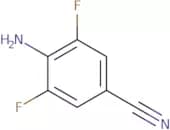
CAS:Controlled ProductPotassium chlorate is a strong oxidizing agent and a salt of potassium and chlorate. Potassium chlorate is used as an oxidizer in fireworks, propellants, and for the treatment of wastewater. It can also be used to generate chlorine dioxide, which is used as a disinfectant. Potassium chlorate has been shown to have genotoxic effects on rat liver cells, which may be due to its ability to induce transcriptional regulation by altering DNA methylation status. Chronic exposure to high concentrations of potassium chlorate can cause apical necrosis in rats. This type of necrosis is caused by the accumulation of potassium ions that lead to a disruption in membrane integrity. Chlorates are also known to cause chronic renal toxicity via oxidative stress mechanisms.Formula:ClKO3Purity:Min. 95%Color and Shape:White SolidMolecular weight:122.55 g/mol4-Amino-3,5-difluorobenzonitrile
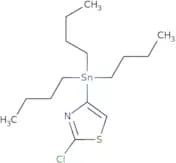
CAS:4-Amino-3,5-difluorobenzonitrile is a fine chemical used as a building block in research chemicals, reagent, and speciality chemical. It is versatile and can be used as a reaction component in the synthesis of complex compounds with various applications. CAS No. 110301-23-0 is an important intermediate for the synthesis of organic compounds and pharmaceuticals. 4-Amino-3,5-difluorobenzonitrile is also used as a scaffold for the synthesis of organic compounds.Formula:C7H4F2N2Purity:Min. 95%Color and Shape:PowderMolecular weight:154.12 g/mol2-Chloro-4-(tributylstannyl)thiazole
CAS:Controlled ProductPlease enquire for more information about 2-Chloro-4-(tributylstannyl)thiazole including the price, delivery time and more detailed product information at the technical inquiry form on this pagePurity:Min. 95%2-(4-fluorophenyl)-n-methylethanamine
CAS:Controlled ProductPlease enquire for more information about 2-(4-fluorophenyl)-n-methylethanamine including the price, delivery time and more detailed product information at the technical inquiry form on this page
Formula:C9H12FNPurity:Min. 95%Molecular weight:153.2 g/mol4-(Trifluoromethoxy)phenylboronic Acid (contains varying amounts of Anhydride)
CAS:4-(Trifluoromethoxy)phenylboronic acid is a boron-containing compound that has been shown to be a potent inhibitor of the histone deacetylase (HDAC) enzyme. It also has surfactant properties and can be used as a photochemical reagent. 4-(Trifluoromethoxy)phenylboronic acid is orally bioavailable and may have therapeutic potential for neurodegenerative diseases, such as Alzheimer's disease, Parkinson's disease, and Huntington's disease. It also has the ability to inhibit cancer cell growth by inhibiting HDAC activity. This drug has been found to cross-couple with organosilicon compounds in order to form new compounds with potent inhibitory activity against HDAC enzymes.
Formula:C7H6BF3O3Purity:Min. 95%Molecular weight:205.93 g/mol2,3,5-Trichloropyridine
CAS:2,3,5-Trichloropyridine is a chemical compound that reacts with chlorine and hydroxide to form hydrogen chloride and sodium hydroxide. It is used in the wastewater treatment process as an oxidizing agent for the removal of organic compounds from water. 2,3,5-Trichloropyridine is also used as a chlorinating agent for various purposes such as the production of acrylonitrile or the destruction of hazardous wastes. The reaction products are hydrochloric acid and sodium carbonate. This substance may react with nucleophiles to form more reactive species such as nitronium ions.
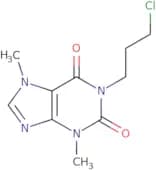
Formula:C5H2Cl3NPurity:Min. 95%Molecular weight:180.925281-(3-Chloropropyl)theobromine
CAS:Controlled Product1-(3-Chloropropyl)theobromine is the reaction product of acetylacetone with carbonate and water. It is a high-yielding remedy for cerebral thrombosis and other alkali burns. The chemical formula for 1-(3-chloropropyl)theobromine is C10H14ClO2. It is soluble in water, which makes it an excellent antidote for alkali burns. Acetylacetone reacts with carbonate to produce the alkanol, which then reacts with water to form 1-(3-chloropropyl)theobromine. This chemical has been found to be an effective treatment for cerebral thrombosis and other alkali burns due to its ability to react with both water and blood clots.
Formula:C10H13ClN4O2Purity:Min. 95%Molecular weight:256.69 g/mol3-Amino-5-bromopyridine
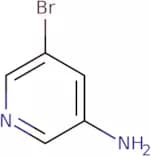
CAS:3-Amino-5-bromopyridine (3ABP) is a linker for the synthesis of cisplatin. It has been shown to have strong bactericidal activity against Escherichia coli and Staphylococcus aureus. 3ABP is cytotoxic to both renal proximal tubule cells and ring-opening cells, which are found in the kidney. It is also an inhibitor of nicotinic acetylcholine receptors (nAChRs), which are proteins that control nerve cell communication. 3ABP's pharmacokinetic properties make it suitable as a linker for cisplatin, as it has good oral bioavailability, low systemic toxicity, and high tissue selectivity.
Formula:C5H5BrN2Purity:Min. 98 Area-%Molecular weight:173.01 g/mol4-(4-Fluorophenyl)cyclohexanone
CAS:Please enquire for more information about 4-(4-Fluorophenyl)cyclohexanone including the price, delivery time and more detailed product information at the technical inquiry form on this pageFormula:C12H13FOPurity:Min. 95%Molecular weight:192.23 g/mol2-Fluoroaniline
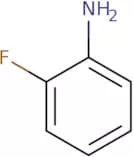
CAS:2-Fluoroaniline is an organic compound that is used as a substrate in enzyme studies. It is used to study the activity of enzymes such as diazonium salt hydrolase, methyl ketone oxidase, and flow system. 2-Fluoroaniline has been shown to be metabolized by rat liver microsomes. This compound also reacts with hydrochloric acid to produce ionization techniques and langmuir adsorption isotherm. 2-Fluoroaniline can be used as an alternative to trifluoroacetic acid for the removal of water vapor from a gas stream.
Formula:C6H6FNPurity:Min. 95%Molecular weight:111.12 g/molDesethyl chloroquine
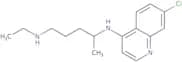
CAS:Desethyl chloroquine is a drug that is used to treat malaria and other infectious diseases. It is an antimalarial drug that has been shown to be effective in the treatment of malaria and related diseases such as toxoplasmosis, amebiasis, trypanosomiasis, and leishmaniasis. Methods for the preparation of desethyl chloroquine are described in the analytical section. To measure the concentration of desethyl chloroquine in blood, it is recommended to collect a sample of blood by venipuncture or fingerstick. The concentration-time curve in blood can be analyzed using a fluorescence detector and LC-MS/MS method. When analyzing pharmacokinetic properties, it is important to take into account the matrix effect due to human serum proteins. Desethyl chloroquine has potent inducers that affect its pharmacokinetics and metabolism, including CYP3A4 enzymes and glutathione reductase.Formula:C16H22ClN3Purity:Min. 95%Color and Shape:Slightly Yellow PowderMolecular weight:291.82 g/mol(R)-1,2,3,4-Tetrahydro-5-methoxy-N-propyl-2-naphthalenamine hydrochloride
CAS:Controlled ProductPlease enquire for more information about (R)-1,2,3,4-Tetrahydro-5-methoxy-N-propyl-2-naphthalenamine hydrochloride including the price, delivery time and more detailed product information at the technical inquiry form on this pageFormula:C14H22ClNOPurity:Min. 95%Molecular weight:255.78 g/mol1-Trifluoromethylcyclopropane-1-carboxylic acid
CAS:1-Trifluoromethylcyclopropane-1-carboxylic acid is a ketone that is used in research in organic chemistry for the preparation of imidazole. It can be prepared by the transformation of ethyl 2-(trifluoromethyl)acrylate, and is also obtained from 1,4-dichloroacetone. 1-Trifluoromethylcyclopropane carboxylic acid has been shown to have some medicinal properties. It has been used in research on cancer cells and as an anti-inflammatory agent. The compound has a steric effect on the body and can be used as a weight loss drug, with one kilogram of 1-Trifluoromethylcyclopropane carboxylic acid being equivalent to 3 kilograms of weight loss.Formula:C5H5F3O2Purity:Min. 95%Color and Shape:PowderMolecular weight:154.09 g/mol4-Dimethylaminopyridinium Bromide Perbromide
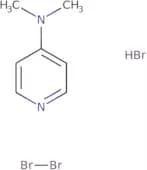
CAS:Controlled Product4-Dimethylaminopyridinium Bromide Perbromide is a synthetic compound that contains a phenolic hydroxyl group. It reacts with chloride to form the perbromide salt, which is anhydrous and insoluble in water. The compound has been shown to inhibit the growth of cancer cells by interfering with DNA replication and transcription.Formula:C7H11Br3N2Purity:Min. 95%Molecular weight:362.89 g/mol