Organic Halides
Subcategories of "Organic Halides"
Found 20443 products of "Organic Halides"
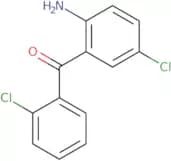
2-Amino-2',5-dichlorobenzophenone
CAS:2-Amino-2',5-dichlorobenzophenone (2,5-DCP) is a molecule with a chromatographic retention time of 23.8 minutes. 2,5-DCP has been detected in human urine samples using the chemical ionization technique as well as the Nova-Pak C18 column and an acetic acid/methanol mobile phase. This compound has been used as a standard for the detection of benzodiazepine drugs such as diazepam and flunitrazepam in urine samples by gas chromatography. 2,5-DCP has also been used in analytical toxicology to detect lormetazepam and lorazepam metabolites in human urine samples.
Formula:C13H9Cl2NOPurity:Min. 95%Color and Shape:Off-White PowderMolecular weight:266.12 g/molN'-Cyanobenzenecarboximidamide hydrochloride
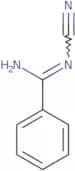
CAS:N-Cyanobenzenecarboximidamide hydrochloride (NCBCH) is an intermediate for the synthesis of azomethine dyes. It can be used to produce azo dyes with a methoxy group at the 3 position and a hydrogen atom at the 4 position. NCBCH is also an excellent substrate for chemical reactions involving fragmentation, extraction, or elimination. NCBCH can be synthesized from methyl ether and benzonitrile in the presence of benzamidine. The product is then treated with methanol to give a tautomeric mixture of benzyl and methyl ether.Formula:C8H7N3Purity:Min. 95%Molecular weight:145.16 g/mol4,16a-Dibromoestrone
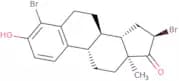
CAS:Controlled Product4,16a-Dibromoestrone is a brominated triol that is synthesized by the reductive borohydride reduction of estriol. The reduction of estriol with sodium borohydride in methanol yields 4,16a-dibromoestrone in high yield. The conversion from estriol to 4,16a-dibromoestrone can be performed using either palladium or chloride. This product has been shown to be an efficient reductive agent for the synthesis of methyl esters from carboxylic acids. This product also undergoes glucuronidation.Formula:C18H20Br2O2Purity:Min. 95%Molecular weight:428.16 g/molMethyl 1-aminocyclohexanecarboxylate hydrochloride
CAS:Please enquire for more information about Methyl 1-aminocyclohexanecarboxylate hydrochloride including the price, delivery time and more detailed product information at the technical inquiry form on this pageFormula:C8H15NO2Purity:Min. 95%Molecular weight:157.21 g/molManganese dichloride
CAS:Manganese dichloride is a chemical compound that is used as an oxidation catalyst. It has been shown to have the ability to remove nitrogen from wastewater and to be used for the treatment of sodium carbonate in water. Manganese dichloride can also be used as a catalyst for the removal of volatile organic compounds from air or water. Manganese dichloride is also used in x-ray diffraction data, where it was found that this compound has a high crystallinity with α subunit and nitrogen atoms. This substance is not toxic to brain functions and does not react with water, which makes it suitable for use in wastewater treatment plants. Manganese dichloride has also been shown to have an anti-cancer effect on brain tumours and can inhibit epidermal growth factor (EGF).Formula:MnCl2Purity:Min. 95%Color and Shape:PowderMolecular weight:125.84 g/molEicosafluorononane
CAS:Controlled ProductEicosafluorononane is a hydrogen fluoride that is used as a chemical reagent to produce dry weight in cells. It has been shown to promote growth factor-induced cell proliferation and monoclonal antibody production. Eicosafluorononane has also been used for diagnostic purposes, with the ability to react with cell culture media and form fluorescent compounds. This agent is lipophilic and can be used in humans, which makes it an ideal candidate for use in a basic fibroblast model. The reaction solution of eicosafluorononane can also be used to measure boron nitride, mainly due to its high thermal expansion coefficient and low solubility coefficient. Eicosafluorononane reacts with trifluoroacetic acid at high temperatures, forming a volatile compound that can be collected by condensation.Formula:C9F20Purity:Min. 95%Molecular weight:488.06 g/molIsomethadone hydrochloride
CAS:Controlled ProductIsomethadone hydrochloride is the drug substance in a solid oral dosage form. It is an active substance that can be used to treat inflammatory diseases and target tissue. Isomethadone hydrochloride is a type of natural polymer with a metal ion as its active ingredient. The absorption mechanism for this drug is not known, but it appears to work by causing dysfunction in the membranes of cells. Isomethadone hydrochloride has been shown to cause addiction in animals and humans, and may have potential toxic effects on liver function. Symptoms of Isomethadone hydrochloride overdose include: -Nausea and vomiting -Constipation -Loss of appetite -Headache -Drowsiness -Confusion -Muscle spasms -Tremors and seizuresFormula:C21H28ClNOPurity:Min. 95%Molecular weight:345.91 g/mol(R)-(-)-1-[(4-Chlorophenyl)phenylmethyl]piperazine
CAS:Controlled Product(R)-(-)-1-[(4-Chlorophenyl)phenylmethyl]piperazine is a chemical compound that belongs to the group of c1-4 alkyl, high yield. It has a chemical formula of C12H17ClN2O and an organic base. This compound is hydrolyzed in vivo to levocetirizine, its active form. (R)-(-)-1-[(4-Chlorophenyl)phenylmethyl]piperazine is an antihistamine that binds to H1 receptors in the central nervous system, which results in decreased production of histamine and other proinflammatory substances. It also has optical activity, with (+) being the active form.Formula:C17H19ClN2Purity:Min. 95%Molecular weight:286.8 g/mol4-(3-Phenyl-1,2,4-oxadiazol-5-yl)piperidine hydrochloride
CAS:Please enquire for more information about 4-(3-Phenyl-1,2,4-oxadiazol-5-yl)piperidine hydrochloride including the price, delivery time and more detailed product information at the technical inquiry form on this page
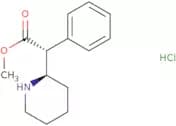
Formula:C13H15N3OPurity:Min. 95%Molecular weight:229.28 g/molDL-threo-methylphenidate hydrochloride
CAS:Controlled ProductD-threo-methylphenidate hydrochloride (DL-threo-MPH) is an inorganic acid that has been shown to be effective in the treatment of symptoms associated with attention deficit hyperactivity disorder (ADHD) and narcolepsy. It has long-term efficacy, which means it can be taken for a long time without causing adverse effects. DL-threo-MPH is also used to treat alopecia areata, which is an autoimmune disease that causes hair loss. This drug works by increasing dopamine levels in the brain and blocking the reuptake of dopamine. DL-threo-MPH has been tested on mice and found to have pharmacokinetic properties that are similar to those of dextromethorphan, but is more potent and selective.Formula:C14H20ClNO2Purity:Min. 95%Molecular weight:269.77 g/mol9-Chloro-11beta,17,21-trihydroxy-16beta-methylpregna-1,4-diene-3,20-dione 17-valerate
CAS:Controlled ProductPrednisolone is a synthetic corticosteroid that is used in the treatment of a number of lung diseases, including asthma. Prednisolone is used to decrease the inflammation and swelling around the airways and lungs. Prednisolone is used to treat certain skin conditions, such as eczema and dermatitis. This drug also decreases the activity of the immune system by inhibiting production of substances that cause inflammation. The onset of action for prednisolone is typically one day with a duration of up to two weeks. It has been shown to be more effective when taken orally than when applied topically. It may be taken with or without food and can be given as an oral or an intravenous dose. Prednisolone tablets must be dissolved in water before they are placed under the tongue (sublingual). The tablets will dissolve quickly under the tongue, releasing prednisolone into your bloodstream. Enteric-coated tablets should not be crushed or chewed
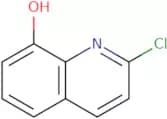
Formula:C27H37ClO6Purity:Min. 95%Molecular weight:493.03 g/mol2-Chloroquinolin-8-ol
CAS:2-Chloroquinolin-8-ol is a chemical compound that binds to the human serum albumin and has cytotoxic effects on cancer cells. It has been shown to be an inhibitor of survivin, a protein that can promote cancer cell survival. 2-Chloroquinolin-8-ol has also been shown to inhibit the proliferation of human epidermoid carcinoma cells in vitro. This agent also inhibits the growth of Trichophyton mentagrophytes, a fungus that causes tinea versicolor, by binding to the ribosomal RNA. The binding constants for 2-chloroquinolin-8-ol were determined using atomic orbital calculations and vibrational spectroscopy. It has also been shown to bind with high affinity to hepg2 cells and cervical cancer cells.Formula:C9H6ClNOPurity:Min. 95%Molecular weight:179.6 g/molgamma-Butyrobetaine hydrochloride
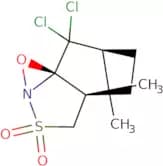
CAS:Gamma-butyrobetaine hydrochloride (GBB) is a metabolite of gamma-butyrobetaine, which is found in the human body. GBB is synthesized from lysine and methionine through an enzymatic pathway that starts with the conversion of lysine to homocysteine. GBB is then converted to gamma-butyrobetaine by methylating the hydroxyl group on its terminal carbon. GBB can be found in urine samples as well as in carnitine and fatty acid metabolism. It has been shown to have an inhibitory effect on creatine kinase and can be used to diagnose metabolic disorders such as carnitine deficiency or prognosis following a heart attack.Formula:C7H16ClNO2Purity:Min. 95%Color and Shape:PowderMolecular weight:181.66 g/mol(+)-(8,8-Dichlorocamphorylsulfonyl)oxaziridine
CAS:Please enquire for more information about (+)-(8,8-Dichlorocamphorylsulfonyl)oxaziridine including the price, delivery time and more detailed product information at the technical inquiry form on this pageFormula:C10H13Cl2NO3SPurity:Min. 95%Molecular weight:298.19 g/molDimethylammonium dichlorotri(mu-chloro)bis[(R)-(+)-5,5'-bis(diphenylphosphino)-4,4'-bi-1,3-benzodioxole]diruthenate(II)
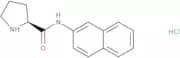
CAS:Controlled ProductPlease enquire for more information about Dimethylammonium dichlorotri(mu-chloro)bis[(R)-(+)-5,5'-bis(diphenylphosphino)-4,4'-bi-1,3-benzodioxole]diruthenate(II) including the price, delivery time and more detailed product information at the technical inquiry form on this pageFormula:C78H64Cl5O8P4Ru2NPurity:Min. 95%Molecular weight:1,646.64 g/molL-Proline-beta-naphthylamide hydrochloride
CAS:L-proline analogueFormula:C15H16N2O·HClPurity:Min. 95%Molecular weight:276.76 g/mol1-(2-Fluorobenzyl)piperazine
CAS:Controlled Product1-(2-Fluorobenzyl)piperazine (1FP) is an inhibitor of cholinesterase, which is an enzyme that breaks down the neurotransmitter acetylcholine. It binds to the active site of the enzyme and prevents it from functioning. 1FP has a high affinity for benzylpiperazine (BZP), but lower affinity for phenylpiperazine (PP). The conformational kinetic study showed that 1FP inhibits BZP more effectively than PP. This is due to the fact that 1FP has a higher dihedral angle, making it more likely to bind in the active site of BZP.
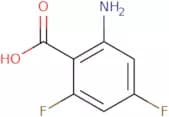
Purity:Min. 95%2-Amino-4,6-difluorobenzoic acid
CAS:Please enquire for more information about 2-Amino-4,6-difluorobenzoic acid including the price, delivery time and more detailed product information at the technical inquiry form on this page
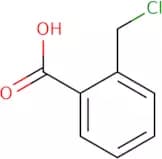
Formula:C7H5F2NO2Purity:Min. 95%Molecular weight:173.12 g/mol2-(Chloromethyl)benzoic acid
CAS:2-(Chloromethyl)benzoic acid (CMBA) is a reactive chemical that can be used as an oxidant or a carbanion. CMBA is activated by sulfinyl, alicyclic, and sulfoxides, which are organic compounds with one or more sulfur atoms. These reactions may be either alkylation or condensation reactions. The activated CMBA can then react with chlorine to form chlorinated products. This reaction can be catalyzed by low energy sources, such as light or heat.
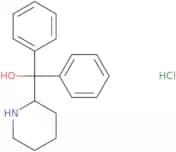
Formula:C8H7ClO2Purity:Min. 95%Color and Shape:PowderMolecular weight:170.59 g/molPipradrolHydrochloride
CAS:Controlled ProductPipradrol Hydrochloride is a nonsteroidal anti-inflammatory drug (NSAID) that has been clinically used to treat symptoms of infectious diseases, autoimmune diseases and inflammatory diseases. It is a prodrug that is hydrolyzed to the active form, pipradrol in the body. Pipradrol Hydrochloride inhibits the cyclooxygenase enzymes COX 1 and COX 2, which are responsible for the formation of prostaglandins from arachidonic acid. Prostaglandins are involved in pain and inflammation. Pipradrol Hydrochloride has been shown to have an inhibitory effect on institutionalized geriatric patients with psychotic depression or depression.Formula:C18H22ClNOPurity:Min. 95%Molecular weight:303.83 g/mol





![(R)-(-)-1-[(4-Chlorophenyl)phenylmethyl]piperazine](/_next/image/?url=https%3A%2Fstatic.cymitquimica.com%2Fproducts%2F3D%2Fthumb-webp%2FFC53712.webp&w=3840&q=75)