Organic Halides
Subcategories of "Organic Halides"
Found 20443 products of "Organic Halides"
J147
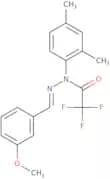
CAS:2,2,2-Trifluoroacetic acid 1-(2,4-dimethylphenyl)-2-[(3-methoxyphenyl)methylene]hydrazide is a neuroprotective drug that belongs to the class of hydrazides. It has been shown to have neurotrophic activity in vitro and in vivo and can be used for the treatment of conditions such as diabetic neuropathy or cancer tissues. 2,2,2-Trifluoroacetic acid 1-(2,4-dimethylphenyl)-2-[(3-methoxyphenyl)methylene]hydrazide also has anti-inflammatory properties and can be used for the treatment of autoimmune diseases. The drug's mechanism of action is not fully understood but is thought to involve monoamine neurotransmitters.Formula:C18H17F3N2O2Purity:Min. 95%Molecular weight:350.34 g/molDiethyl Chlorothiophosphate
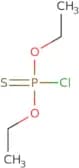
CAS:Diethyl chlorothiophosphate is a chlorinating agent that reacts with sodium carbonate to form diethyl phosphorochloridate. It is used as an analytical reagent and in the production of monoclonal antibodies. It has been shown to effectively inhibit protein synthesis in bacteria by reacting with amino groups, which are essential for protein formation. Diethyl chlorothiophosphate is also able to induce antibody responses in mice. This drug may be toxic if inhaled or ingested and may cause skin irritation.Formula:C4H10ClO2PSPurity:Min. 95%Molecular weight:188.61 g/mol1-[2-(5-Chloro-1H-indol-3-yl)ethyl]-5-oxopyrrolidine-3-carboxylic acid
CAS:Controlled ProductPlease enquire for more information about 1-[2-(5-Chloro-1H-indol-3-yl)ethyl]-5-oxopyrrolidine-3-carboxylic acid including the price, delivery time and more detailed product information at the technical inquiry form on this pageFormula:C15H15ClN2O3Purity:Min. 95%Molecular weight:306.74 g/molPiperazine-2-carboxylic acid methyl esterdihydrochloride
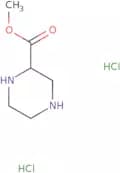
CAS:Piperazine-2-carboxylic acid methyl ester (PPCM) is a chemical compound that is used as an intermediate in the production of ethylenediamine and piperazine-2-carboxylic acid dihydrochloride. It is a white crystalline solid that can be synthesized by reacting ethylene diamine with piperazine-2-carboxylic acid. PPCM has been shown to inhibit the growth of bacteria, yeast, and fungi by inhibiting protein synthesis. This chemical also inhibits the production of proteins essential for respiration and cell wall formation.Formula:C6H14Cl2N2O2Purity:Min. 95%Molecular weight:217.09 g/mol2,5-Dimethoxy-4-methylamphetamine hydrochloride
CAS:Controlled Product2,5-Dimethoxy-4-methylamphetamine hydrochloride is a molecule that belongs to the class of phenethylamines. It has a serotonergic activity and can be used in the treatment of depression. This drug also affects the dopaminergic system and 5-HT2 receptors. 2,5-Dimethoxy-4-methylamphetamine hydrochloride is an agonist for 5HT1A receptors and an antagonist for 5HT2A and 5HT2C receptors. It has been shown to have a significant effect on locomotor activity in humans. The effects of this drug are dose dependent, with high doses leading to hallucinogenic effects.
Formula:C12H20ClNO2Purity:Min. 95%Molecular weight:245.75 g/mol4-Bromo-1-butanol
CAS:4-Bromo-1-butanol is a synthetic fatty acid used as a reagent in the synthesis of glycyrrhetinic acid. It is a colorless liquid with a strong odor. This substance has impurities that are not specified. It reacts with n-hexane and thionyl chloride to form bromobutanoic acid, which can be used as an intermediate in the production of other substances. 4-Bromo-1-butanol is also used in the synthesis of polyvinyl pyrrolidone, which is an organic polymer that is soluble in water and polar solvents such as alcohols and acetone. The molecular weight of this compound ranges from 300 to 3,000 g/mol, with a melting point below 100 °C. Formamide is another substance that can be synthesized using 4-bromo-1 butanol. Formamide is a colorless liquid with a pungent odor and it hasFormula:C4H9BrOPurity:80%MinColor and Shape:Colorless Clear LiquidMolecular weight:153.02 g/molProperidine hydrochloride
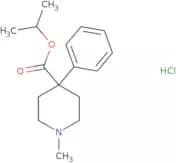
CAS:Controlled ProductPlease enquire for more information about Properidine hydrochloride including the price, delivery time and more detailed product information at the technical inquiry form on this page
Formula:C16H24ClNO2Purity:Min. 95%Molecular weight:297.82 g/mol3,4-(Dibenzyloxy)phenethylamineHydrochloride
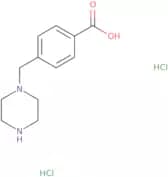
CAS:3,4-(Dibenzyloxy)phenethylamine Hydrochloride is an antidiabetic drug that belongs to the class of medicines used to treat diabetes mellitus. This drug inhibits the synthesis of fatty acids and the production of glucose by pancreatic β-cells. 3,4-(Dibenzyloxy)phenethylamine Hydrochloride also has a hypoglycemic effect on rats with diabetes mellitus. The medicine has been shown to be effective in inhibiting apoptotic cell death in k562 cells and also has an inhibitory effect on dopamine-stimulated cAMP production.Formula:C22H24ClNO2Purity:Min. 95%Molecular weight:369.88 g/mol4-(Piperazinomethyl)benzoic acid, dihydrochloride
CAS:Controlled ProductPlease enquire for more information about 4-(Piperazinomethyl)benzoic acid, dihydrochloride including the price, delivery time and more detailed product information at the technical inquiry form on this pageFormula:C12H18Cl2N2O2Purity:Min. 95%Molecular weight:293.19 g/molN-[1,1'-Biphenyl]-4-yl-9,9-dimethyl-9H-fluoren-2-amine
CAS:N-Biphenyl-4-yl-9,9-dimethyl-9H-fluoren-2-amine is a fluorescent probe that is used in fluorescence spectroscopy, chemiluminescence detection, and electron spin resonance. It has been shown to be selective for metal ions such as Cu(II), Fe(III), and Mn(II) in the presence of thioacetal. The probe can be synthesized by reacting 4-(phenylazo)benzoic acid with 9,9'-dimethoxybiphenyl. In addition to being a probe, N-Biphenyl-4-yl-9,9'-dimethyl-9H -fluoren 2 amine has been used as an herbal medicine to treat cancer and other diseases in China.
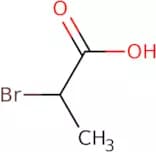
Formula:C27H23NPurity:Min. 95%Molecular weight:361.48 g/mol2-Bromopropionic acid
CAS:2-Bromopropionic acid is a tetroxide used in organic synthesis. It is an intermediate in the synthesis of 2,4-dibromopropionamide and 2,4-dibromo-3-methylpentanoic acid. The reaction mechanism of this process starts with the formation of a bromine atom from bromine monoxide and hydrogen peroxide. This bromine atom reacts with the carbon to form an alkyl radical that reacts with another molecule of bromine monoxide to form an alkyl radical that is stabilized by two atoms of hydrogen (i.e., CBr). The alkyl radical then undergoes a nucleophilic attack on iodobenzene to form an iodoalkane intermediate. This intermediate reacts with acetic acid to form the desired product, acetyl chloride. This reaction also produces iodoacetic acid as a byproduct.
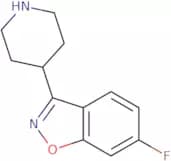
Formula:C3H5BrO2Purity:Min. 95%Molecular weight:152.97 g/mol6-Fluoro-3-(4-piperidinyl)-1,2-benzisoxazole
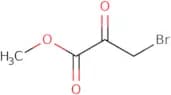
CAS:6-Fluoro-3-(4-piperidinyl)-1,2-benzisoxazole is a drug candidate that belongs to a new class of atypical antipsychotics. It has been synthesized using an efficient method and was found to bind to the m1 receptor with high affinity. 6-Fluoro-3-(4-piperidinyl)-1,2-benzisoxazole has shown efficacy in vitro studies against 5HT1a receptors and in vivo studies against fibroblast cells. This drug is also effective against serotonin levels, which may be due to its ability to inhibit the reuptake of serotonin by blocking the serotonin transporter.Formula:C12H13FN2OPurity:Min. 95%Color and Shape:PowderMolecular weight:220.24 g/molMethyl bromopyruvate
CAS:Methyl bromopyruvate is a medication with various functions. It can be used to treat viral infections such as hepatitis and AIDS, as well as to treat psychosis and depression. Methyl bromopyruvate has been shown to be an effective antiviral agent that inhibits the synthesis of viral proteins by methylating their amino acids. Methyl bromopyruvate also inhibits the production of fatty acids by blocking the enzyme enolase, which catalyzes the conversion of 2-phosphoglycerate into phosphoenolpyruvate. This drug is metabolized in the liver through conjugation with glutathione or glucuronide or by oxidation to a reactive carbon-centered species. Methyl bromopyruvate is also used for treatment of insulin resistance in patients with type II diabetes mellitus.Formula:C4H5BrO3Purity:Min. 95%Color and Shape:Colourless To Yellow LiquidMolecular weight:180.98 g/mol4-Hydroxy-N-(2-Piperidinylmethyl)-2,5-Bis(2,2,2-Trifluoroethoxy)Benzamide
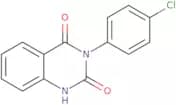
CAS:Please enquire for more information about 4-Hydroxy-N-(2-Piperidinylmethyl)-2,5-Bis(2,2,2-Trifluoroethoxy)Benzamide including the price, delivery time and more detailed product information at the technical inquiry form on this pageFormula:C17H20F6N2O4Purity:Min. 95%Molecular weight:430.34 g/mol3-(4-Chlorophenyl)quinazoline-2,4(1H,3H)-dione
CAS:Controlled ProductPlease enquire for more information about 3-(4-Chlorophenyl)quinazoline-2,4(1H,3H)-dione including the price, delivery time and more detailed product information at the technical inquiry form on this pageFormula:C14H9ClN2O2Purity:Min. 95%Molecular weight:272.69 g/mol6-Bromo-1H-pyrrolo[3,2-c]pyridine
CAS:Pyrroloquinoline quinones are a class of naturally occurring bioactive natural products that have been isolated from plants and fungi. Pyrroloquinoline quinone is an important intermediate in the synthesis of many other biologically active natural products. The pyrrole ring is synthesized by two different methods: (1) the oxidation of 2-pyridone, or (2) the reaction of methyl 4-hydroxypyrimidine-2-carboxylate with methylamine. Synthesis can be accomplished through a number of synthetic strategies, including bioorganic chemistry, organic chemistry, and synthetic strategies. The mechanisms for each step in the synthesis are discussed in detail below.Formula:C7H5BrN2Purity:Min. 95%Color and Shape:SolidMolecular weight:197.03 g/molN'-Cyanobenzenecarboximidamide hydrochloride
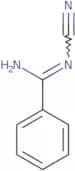
CAS:N-Cyanobenzenecarboximidamide hydrochloride (NCBCH) is an intermediate for the synthesis of azomethine dyes. It can be used to produce azo dyes with a methoxy group at the 3 position and a hydrogen atom at the 4 position. NCBCH is also an excellent substrate for chemical reactions involving fragmentation, extraction, or elimination. NCBCH can be synthesized from methyl ether and benzonitrile in the presence of benzamidine. The product is then treated with methanol to give a tautomeric mixture of benzyl and methyl ether.Formula:C8H7N3Purity:Min. 95%Molecular weight:145.16 g/molMagnesium bromide diethyl etherate
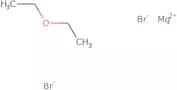
CAS:Controlled ProductMagnesium bromide diethyl etherate is a magnesium salt of diethyl etherate, which is used in the preparation of caproic acid. It has been shown to be an efficient method for the synthesis of acyl halides through the reaction of aromatic hydrocarbons and chloride. The product has high melting point and is a cyclohexane ring. Magnesium bromide diethyl etherate can also be used for muscle cell proliferation and acrylate encapsulation. This product's reaction products are primary alcohols, which are useful in the production of polyurethane, polyesters, and polyamides.Formula:Br2Mg·C4H10OPurity:Min. 95%Molecular weight:258.23 g/mol5-Fluoro-2-nitroaniline
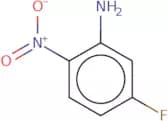
CAS:5-Fluoro-2-nitroaniline is a sulfonated compound that acts as a growth factor. It has been shown to be effective in the treatment of cancer, especially in the epidermal growth factor receptor (EGFR) signaling pathway. 5-Fluoro-2-nitroaniline has also been shown to have antithrombotic properties and may be beneficial for cardiovascular diseases. This compound is an inhibitor of the human serum albumin binding site on EGFR and inhibits the activation of EGFR by its ligand, epidermal growth factor. The sulfonation reaction increases the polarity of the molecule, which has been attributed to increased activity against cancer cells.Formula:C6H5FN2O2Purity:Min. 95%Color and Shape:PowderMolecular weight:156.11 g/molPentafluoropropionic anhydride
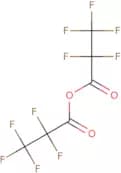
CAS:Pentafluoropropionic anhydride is a chemical compound that reacts with fatty acids to form trifluoroacetic acid. In analytical chemistry, it is used to determine the amount of fatty acids in biological samples. Pentafluoropropionic anhydride has been shown to react with human serum and rat striatal tissue to form carbon disulphide and hydrochloric acid. It reacts with amines in the sample preparation phase, forming receptor molecules that can be analyzed by gas chromatography-mass spectrometry.
Formula:C6F10O3Purity:Min. 95%Molecular weight:310.05 g/mol

![1-[2-(5-Chloro-1H-indol-3-yl)ethyl]-5-oxopyrrolidine-3-carboxylic acid](/_next/image/?url=https%3A%2Fstatic.cymitquimica.com%2Fproducts%2F3D%2Fthumb-webp%2FFC119446.webp&w=3840&q=75)



![N-[1,1'-Biphenyl]-4-yl-9,9-dimethyl-9H-fluoren-2-amine](/_next/image/?url=https%3A%2Fstatic.cymitquimica.com%2Fproducts%2F3D%2Fthumb-webp%2FFB151933.webp&w=3840&q=75)

![6-Bromo-1H-pyrrolo[3,2-c]pyridine](/_next/image/?url=https%3A%2Fstatic.cymitquimica.com%2Fproducts%2F3D%2Fthumb-webp%2FFB141720.webp&w=3840&q=75)