Organic Halides
Subcategories of "Organic Halides"
Found 20443 products of "Organic Halides"
[(4-Methyl-1,3-thiazol-2-yl)methyl]amine dihydrochloride
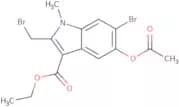
CAS:Please enquire for more information about [(4-Methyl-1,3-thiazol-2-yl)methyl]amine dihydrochloride including the price, delivery time and more detailed product information at the technical inquiry form on this pageFormula:C5H8N2SPurity:Min. 95%Molecular weight:128.2 g/molEthyl5-acetoxy-6-bromo-2-(bromomethyl)-1-methyl-1H-indole-3-carboxylate
CAS:Controlled ProductEthyl 5-acetoxy-6-bromo-2-(bromomethyl)-1-methyl-1H-indole-3-carboxylate is a chemical compound that has been shown to have anti viral activity in vitro. The structure of the compound suggests that it may inhibit the production of inflammatory cytokines. This drug inhibits the activity of enzymes such as hydroxylases and lipases, which are important for the inflammatory process. Ethyl 5-acetoxy-6-bromo-2-(bromomethyl)-1-methyl-1H-indole-3 carboxylate may be an effective treatment for bowel disease and other inflammatory conditions.Formula:C15H15Br2NO4Purity:Min. 95%Molecular weight:433.09 g/mol[(4-Methyl-1H-imidazol-5-yl)methyl]amine hydrochloride
CAS:Please enquire for more information about [(4-Methyl-1H-imidazol-5-yl)methyl]amine hydrochloride including the price, delivery time and more detailed product information at the technical inquiry form on this pageFormula:C5H9N3Purity:Min. 95%Molecular weight:111.15 g/mol5-[4-(3-Chlorophenyl)piperazin-1-yl]-5-oxopentanoic acid
CAS:Controlled ProductPlease enquire for more information about 5-[4-(3-Chlorophenyl)piperazin-1-yl]-5-oxopentanoic acid including the price, delivery time and more detailed product information at the technical inquiry form on this page
Formula:C15H19ClN2O3Purity:Min. 95%Molecular weight:310.78 g/mol[3-(Trifluoromethyl)-4,5,6,7-tetrahydro-1H-indazol-1-yl]acetic acid
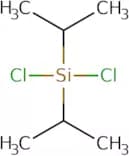
CAS:Please enquire for more information about [3-(Trifluoromethyl)-4,5,6,7-tetrahydro-1H-indazol-1-yl]acetic acid including the price, delivery time and more detailed product information at the technical inquiry form on this pageFormula:C10H11F3N2O2Purity:Min. 95%Molecular weight:248.2 g/molDichlorodiisopropylsilane
CAS:Dichlorodiisopropylsilane is a cycloaddition process, which is the addition of two molecules to create a new ring. It reacts with an unsaturated organic compound, such as an alkene or alkyne, to produce a reactive functional group. Dichlorodiisopropylsilane has been used in chemistry as a cross-linking agent for proteins and as a solid catalyst. The chemical stability of dichlorodiisopropylsilane makes it useful in the synthesis of model proteins. This compound also has low bioavailability due to its high reactivity with hydrochloric acid found in the stomach.
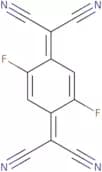
Formula:C6H14Cl2SiPurity:Min. 95%Color and Shape:Clear LiquidMolecular weight:185.17 g/mol2,5-Difluoro-7,7,8,8-tetracyanoquinodimethane
CAS:2,5-Difluoro-7,7,8,8-tetracyanoquinodimethane is a donor molecule that has an acceptor property. It can be used in the fabrication of organic light emitting devices. 2,5-Difluoro-7,7,8,8-tetracyanoquinodimethane is a molecule with a molecular structure that consists of two benzene rings and two quinonediimide groups. The molecule has a fluorine atom at position 5 and another fluorine atom at position 8. This molecule has been shown to have good transport properties and to emit light when irradiated with UV radiation.Formula:C12H2F2N4Purity:Min. 95%Color and Shape:PowderMolecular weight:240.17 g/molEpichlorohydrine
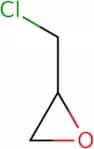
CAS:Epichlorohydrine is a chemical compound that binds to calcium and sodium ions. It is used in wastewater treatment, where it reacts with fatty acids to form epoxides. Epichlorohydrine has been shown to have carcinogenic effects in animals and humans, which are due to its genotoxic properties. The carcinogenic properties of epichlorohydrine can be attributed to the formation of reactive oxygen species, such as hydroxyl radicals and hydrogen peroxide, which cause DNA damage. Epichlorohydrine also has photosynthetic activity when exposed to sunlight or ultraviolet light.Formula:C3H5ClOPurity:Min. 95%Color and Shape:Clear LiquidMolecular weight:92.52 g/mol6-Chloro-1-methyl-1H-indole-2-carboxylic acid
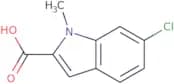
CAS:Please enquire for more information about 6-Chloro-1-methyl-1H-indole-2-carboxylic acid including the price, delivery time and more detailed product information at the technical inquiry form on this pageFormula:C10H8ClNO2Purity:Min. 95%Molecular weight:209.63 g/molBromobenzene
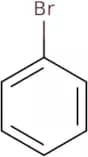
CAS:Bromobenzene is a reactive molecule that can be used in organic syntheses. It can also be used to change the properties of other molecules, such as reducing the reactivity of anhydrous sodium. Bromobenzene has been shown to have hepatotoxic effects in rats by inducing liver lesions and affecting iron homeostasis. Bromobenzene is toxic to humans and reacts with oxygen to form bromate, which is toxic to cells. The reaction mechanism for this process has not been elucidated yet, but it is believed that a tetrazolium dye may be involved in the oxidation catalyst. br>br> Bromobenzene is an aromatic compound with chemical formula C6H5Br. This molecule consists of benzene ring with two bromine atoms attached at ortho positions on the ring (see figure). br>br> The general structure for aromatic compounds is as follows: br>br> CFormula:C6H5BrPurity:Min. 95%Molecular weight:157.01 g/molN-(2-Benzoyl-4-chlorophenyl)-2-chloro-N-methylacetamide
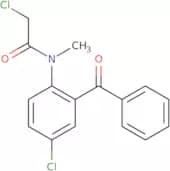
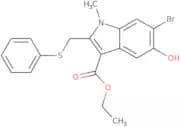
CAS:Please enquire for more information about N-(2-Benzoyl-4-chlorophenyl)-2-chloro-N-methylacetamide including the price, delivery time and more detailed product information at the technical inquiry form on this pageFormula:C16H13Cl2NO2Purity:Min. 95%Molecular weight:322.19 g/molEthyl 6-bromo-5-hydroxy-1-methyl-2-(phenylsulfanylmethyl)indole-3-carboxylate
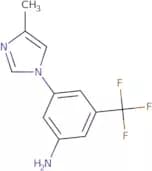
CAS:Controlled ProductPlease enquire for more information about Ethyl 6-bromo-5-hydroxy-1-methyl-2-(phenylsulfanylmethyl)indole-3-carboxylate including the price, delivery time and more detailed product information at the technical inquiry form on this pagePurity:Min. 95%3-(4-Methyl-1H-imidazol-1-yl)-5-trifluoromethylaniline
CAS:3-(4-Methyl-1H-imidazol-1-yl)-5-trifluoromethylaniline (MTIA) is a diazotization agent that is used in the industrial production of nilotinib, an anti-cancer drug. MTIA reacts with ethyl acetate to form ethyl 3-(4-methyl-1H-imidazol-1-yl)-5-(trifluoromethyl)aniline, which can then be reacted with hydrochloric acid to produce MTIA hydrochloride. The MTIA hydrochloride can be dissolved in water and used as a diazotization agent. The sequence of these reactions is: 3-(4-Methyl-1H-imidazol-1-yl)-5-(trifluoromethyl)aniline + ethyl acetate → ethyl 3-(4-methyl--1H--Formula:C11H10F3N3Purity:Min. 98 Area-%Color and Shape:PowderMolecular weight:241.21 g/mol6-(2-Bromoethyl)-1,3-dimethyl-1H-pyrrolo[3,4-d]pyrimidine-2,4(3H,6H)-dione
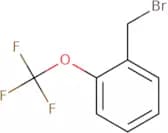
CAS:Controlled ProductPlease enquire for more information about 6-(2-Bromoethyl)-1,3-dimethyl-1H-pyrrolo[3,4-d]pyrimidine-2,4(3H,6H)-dione including the price, delivery time and more detailed product information at the technical inquiry form on this pageFormula:C10H12BrN3O2Purity:Min. 95%Molecular weight:286.13 g/mol2-(Trifluoromethoxy)benzyl bromide
CAS:2-(Trifluoromethoxy)benzyl bromide is a computational study of ionic liquids with substitutions. The viscosity of the liquid was found to be dependent on the size of the substituent and the number of substitutions. The compound was found to be selective for one isomer over another due to its different structural features. Experimental studies have shown that 2-(trifluoromethoxy)benzyl bromide has high permeability in ionic liquids, which is a desired property in ionic liquids. Advances in this field have led to new compounds and more knowledge about the properties of ionic liquids.
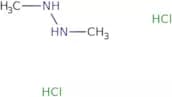
Purity:Min. 95%N,N'-Dimethylhydrazine dihydrochloride
CAS:Controlled ProductN,N'-Dimethylhydrazine dihydrochloride (DMHD) is a nonsteroidal anti-inflammatory drug that inhibits the production of prostaglandins by blocking cyclooxygenase-2 (COX-2). It works by inhibiting tumor growth and inducing apoptosis. DMHD has been shown to inhibit angiogenesis and induce apoptosis in liver cells. DMHD also inhibits the mitochondrial membrane potential, which is important for regulating cell function. The molecular docking analysis has shown that DMHD binds to COX-2 protein with high affinity and specificity. DMHD also inhibits fatty acid synthesis, which may be due to its inhibition of mitochondrial beta-oxidation enzymes. DMHD has been shown to have toxic effects on colon cells in rats. This agent can cause damage to the colon lining through a number of mechanisms, including causing DNA damage and increasing oxidative stress.
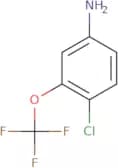
Formula:C2H8N2Purity:Min. 95%Molecular weight:60.1 g/mol4-Chloro-3-(trifluoromethoxy)aniline
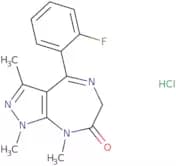
CAS:Please enquire for more information about 4-Chloro-3-(trifluoromethoxy)aniline including the price, delivery time and more detailed product information at the technical inquiry form on this pageFormula:C7H5ClF3NOPurity:Min. 95%Color and Shape:Clear LiquidMolecular weight:211.57 g/molZolazepam hydrochloride
CAS:Controlled ProductZolazepam is a benzodiazepine that has antinociceptive properties and is used as an anesthetic. The effective dose of zolazepam in humans is 5-10 mg intravenously, with a maximum dose of 25 mg. Zolazepam has been found to have no effect on systolic blood pressure or heart rate, but does cause significant reduction in terminal half-life. Zolazepam's antinociceptive effects are mediated through the inhibition of calcium ion channels, which results in decreased neuronal activity in the spinal cord and brainstem. Zolazepam causes sedation and immobilization by suppressing the function of neurons that control skeletal muscles. Zolazepam also has been shown to inhibit osteoclast formation, which may be beneficial for patients with metabolic bone diseases such as Paget's disease or osteoporosis.Purity:Min. 95%2,4-Dinitrobenzenesulfonyl chloride
CAS:2,4-Dinitrobenzenesulfonyl chloride is a chemical reagent that is used in analytical chemistry. It reacts with pyrazole rings to form 2-aminopyridine derivatives. The reaction can be enhanced by adding metal ions such as copper(II) or zinc(II). 2,4-Dinitrobenzenesulfonyl chloride is also used in the solid-phase synthesis of heterocycles and in the synthesis of pharmaceuticals. The compound has been shown to react with human serum and form an unstable intermediate that undergoes hydrolysis to produce sulfate ion and trifluoroacetic acid. This reaction mechanism can be applied to other nucleophilic compounds such as bromide ion. 2,4-Dinitrobenzenesulfonyl chloride reacts with the amine group of proteins using the S N 1 mechanism. The resulting product is a chlorinated amino acid derivative which exhibits fluorescence properties when reacted with
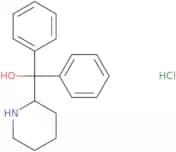
Formula:C6H3ClN2O6SPurity:Min. 95%Molecular weight:266.62 g/molPipradrolHydrochloride
CAS:Controlled ProductPipradrol Hydrochloride is a nonsteroidal anti-inflammatory drug (NSAID) that has been clinically used to treat symptoms of infectious diseases, autoimmune diseases and inflammatory diseases. It is a prodrug that is hydrolyzed to the active form, pipradrol in the body. Pipradrol Hydrochloride inhibits the cyclooxygenase enzymes COX 1 and COX 2, which are responsible for the formation of prostaglandins from arachidonic acid. Prostaglandins are involved in pain and inflammation. Pipradrol Hydrochloride has been shown to have an inhibitory effect on institutionalized geriatric patients with psychotic depression or depression.Formula:C18H22ClNOPurity:Min. 95%Molecular weight:303.83 g/mol
![[(4-Methyl-1,3-thiazol-2-yl)methyl]amine dihydrochloride](/_next/image/?url=https%3A%2Fstatic.cymitquimica.com%2Fproducts%2F3D%2Fthumb-webp%2FFM124176.webp&w=3840&q=75)

![[(4-Methyl-1H-imidazol-5-yl)methyl]amine hydrochloride](/_next/image/?url=https%3A%2Fstatic.cymitquimica.com%2Fproducts%2F3D%2Fthumb-webp%2FFM125220.webp&w=3840&q=75)
![5-[4-(3-Chlorophenyl)piperazin-1-yl]-5-oxopentanoic acid](/_next/image/?url=https%3A%2Fstatic.cymitquimica.com%2Fproducts%2F3D%2Fthumb-webp%2FFC124636.webp&w=3840&q=75)
![[3-(Trifluoromethyl)-4,5,6,7-tetrahydro-1H-indazol-1-yl]acetic acid](/_next/image/?url=https%3A%2Fstatic.cymitquimica.com%2Fproducts%2F3D%2Fthumb-webp%2FFT119888.webp&w=3840&q=75)
![6-(2-Bromoethyl)-1,3-dimethyl-1H-pyrrolo[3,4-d]pyrimidine-2,4(3H,6H)-dione](/_next/image/?url=https%3A%2Fstatic.cymitquimica.com%2Fproducts%2F3D%2Fthumb-webp%2FFB117220.webp&w=3840&q=75)