Biochemicals and Reagents
Subcategories of "Biochemicals and Reagents"
- Biomolecules(98,575 products)
- By Biological Target(100,693 products)
- By Pharmacological Effects(6,937 products)
- Cryopreservatives(21 products)
- Desinfectants and Related Compounds(28 products)
- Hormones(400 products)
- Plant Biology(6,907 products)
- Secondary Metabolites(14,367 products)
Found 130493 products of "Biochemicals and Reagents"
2-[[5-[4-(Dimethylsulfamoyl)phenyl]-8-methyl-2-oxo-1,6,7,9-tetrahydropyrrolo[3,2-H]isoquinolin-3-ylidene]amino]oxy-4-hydroxybutanoic acid
CAS:2-[[5-[4-(Dimethylsulfamoyl)phenyl]-8-methyl-2-oxo-1,6,7,9-tetrahydropyrrolo[3,2-H]isoquinolin-3-ylidene]amino]oxy-4-hydroxybutanoic acid is a synthetic isoquinoline derivative, often investigated in the field of medicinal chemistry and cancer pharmacology. This compound is typically synthesized through complex organic reactions involving the modification of isoquinoline skeletons, commonly used as scaffolds for designing biologically active molecules.Formula:C24H28N4O7SPurity:Min. 95%Molecular weight:516.6 g/molPROTAC CDK9 Degrader-1
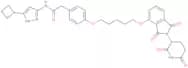
CAS:PROTAC CDK9 Degrader-1 is a combination therapy that includes two different types of drugs. One drug inhibits the activity of cyclin-dependent kinases (CDKs). The other drug inhibits the activity of autophagy enzymes. Together, these drugs inhibit the growth of cancer cells and are currently being investigated as a treatment for leukemia and lymphoma in human patients.
Formula:C33H35N5O7Purity:Min. 95%Molecular weight:613.66 g/molMeseclazone
CAS:Meseclazone is a non-steroidal anti-inflammatory drug (NSAID) that is used to treat inflammation, pain, and stiffness caused by arthritis. Meseclazone is a prodrug that is converted in vivo to mesalazine, its active form. Mesalazine has been shown to have biological properties that are similar to acetylsalicylic acid, including ionotropic gelation. This drug also has the ability to form hydrogen bonds with acidic or basic groups, which helps it act as a cavity filler. Meseclazone also contains a carbonyl group and hydrochloric acid, which can be used for the synthesis of other drugs.
Formula:C11H10ClNO3Purity:Min. 95%Molecular weight:239.65 g/molN2-[2-[4-[(2-Naphthalenylcarbonyl)amino]phenyl]acetyl]-L-arginyl-L-isoleucyl-L-α-aspartyl-N-[(2S)-2-methylbutyl]-L-argininamide
CAS:N2-[2-[4-[(2-Naphthalenylcarbonyl)amino]phenyl]acetyl]-L-arginyl-L-isoleucyl-L-α-aspartyl-N-[(2S)-2-methylbutyl]-L-argininamide is a synthetic peptide drug, which is a product of advanced chemical synthesis processes. It functions as a selective inhibitor, targeting specific proteolytic enzymes involved in pathological conditions. The molecular structure allows it to engage in precise interactions with target enzymes, thereby modulating biological pathways and offering therapeutic potential.Formula:C46H66N12O8Purity:Min. 95%Molecular weight:915.09 g/molApadenoson-d5
CAS:Apadenoson-d5 is a synthetic ligand for the beta 2 adrenergic receptor, a protein that regulates the rate of cellular metabolism and the release of hormones. It has been shown to bind to both rat and human beta 2 adrenergic receptors with high affinity. Apadenoson-d5 has also been shown to inhibit the function of adenylate cyclase, an enzyme involved in the production of cAMP, which is important for many cell functions including signaling. Apadenoson-d5 may be used as a research tool or pharmacological agent.Formula:C23H30N6O6Purity:Min. 95%Molecular weight:486.5 g/molSHR0302
CAS:SHR0302 is a peptide that activates the G protein-coupled receptor. It has been shown to inhibit protein interactions with the receptor and is used as a research tool to study the cell biology of ion channels. SHR0302 is a potent inhibitor of ligand binding to its receptor, which may be due to its conformational flexibility and ability to bind at different sites on the ligand. SHR0302 can also be used as an antibody for immunohistochemical detection of the receptor in tissue sections. SHR0302 has a molecular weight of 2,867 g/mol and CAS number 1445987-21-2.Formula:C18H24N8O6S2Purity:Min. 95%Molecular weight:512.6 g/molHsp70, His tagged human
CAS:Hsp70, His tagged human, is a recombinant protein, which is derived from human cells and engineered with a hexahistidine (His) tag. It is part of the Heat Shock Protein 70 family, known for its crucial role in cellular stress response. The His tag facilitates purification and detection via affinity chromatography, making it a convenient tool for research applications.Purity:Min. 95%BMS-582949
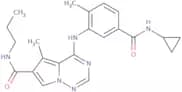
CAS:BMS-582949 is an investigational pharmaceutical compound, specifically a chemokine receptor antagonist, that has been derived through synthetic chemical processes. Its mode of action involves selectively inhibiting the C-C chemokine receptor type 2 (CCR2), a receptor involved in the migration and activation of monocytes and other immune cells. By blocking CCR2, BMS-582949 aims to modulate inflammatory pathways that are implicated in various diseases.Formula:C22H26N6O2Purity:Min. 95%Molecular weight:406.48 g/molPNRI-299
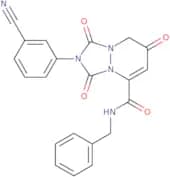
CAS:PNRI-299 is a synthetic small molecule that has been shown to inhibit cancer cell growth by targeting the transcriptional regulator protein, nuclear factor κB (NF-κB). NF-κB is a redox signal that regulates the expression of genes involved in cellular responses to stress. PNRI-299 has been shown to suppress the expression of these genes, leading to decreased proliferation and increased apoptosis. PNRI-299 also inhibits the transition from G1 to S phase in cells; thus it may be used as an anti-cancer drug.Formula:C21H15N5O4Purity:Min. 95%Molecular weight:401.4 g/molEtabenzarone
CAS:Etabenzarone is a research tool that was developed for the study of ion channels and protein interactions. It is a ligand that binds to the receptor Ligand and has been used to study cell biology, antibody production, and pharmacology. Etabenzarone is also an inhibitor that prevents the activation of ion channels by binding to them. It has been shown to bind to proteins in cell culture experiments as well as inhibit their function.Formula:C23H27NO3Purity:Min. 95%Molecular weight:365.50 g/molCGM-097
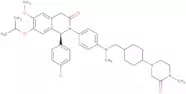
CAS:CGM-097 is a potent antitumor agent that targets senescent cells. It is a monoclonal antibody that specifically binds to the apoptosis protein, which prevents its translocation to the nucleus and induces apoptosis. CGM-097 has been shown to have potent antitumor activity in vivo models of melanoma and BCR-ABL positive leukemia. CGM-097 has been shown to be chemically stable in vitro and in vivo, with no significant toxicity observed at higher doses. The drug’s synergistic effects are due to its ability to target both tumor cells and their surrounding microenvironment, as well as upregulating genes involved in cell death and immune response.Formula:C38H47ClN4O4Purity:Min. 95%Molecular weight:659.26 g/molRiluzole-13C,15N2
CAS:Riluzole is a drug that binds to the glutamate receptor, which is a ligand-gated ion channel. It is used as a research tool in pharmacology and cell biology. Riluzole can be used to study glutamate receptors and protein interactions. This product has the CAS number 1215552-03-6, has high purity, and is an inhibitor.
Formula:C8H5F3N2OSPurity:Min. 95%Molecular weight:237.18 g/mol2-Methyl-3-[4-(3-pyrrolidin-1-ylpropoxy)phenyl]-5-(trifluoromethyl)quinazolin-4-one
CAS:2-Methyl-3-[4-(3-pyrrolidin-1-ylpropoxy)phenyl]-5-(trifluoromethyl)quinazolin-4-one is a potent and selective inhibitor of the type I phosphodiesterase (PDE1). It has been shown to inhibit PDE1 in human platelets and erythrocytes. It also inhibits the activation of protein kinase C by thrombin. This agent binds to a region on PDE1 that does not overlap with the binding site for most PDE inhibitors, suggesting that it may be useful as an alternative treatment for conditions such as asthma and inflammation.
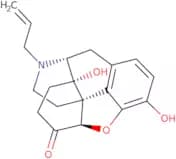
Formula:C23H24F3N3O2Purity:Min. 95%Molecular weight:431.4 g/molNaloxone
CAS:Controlled Productµ- and Ύ-opioid receptor antagonist; antidote for opioid overdoseFormula:C19H21NO4Purity:Min. 95%Color and Shape:PowderMolecular weight:327.37 g/molCDM-NAG
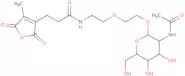
CAS:CDM-NAG is a specialized biochemical substrate, which is a chemical compound derived from the structural modification of chitin. It has been engineered to act as a chromogenic or fluorescent marker due to its functional groups that undergo changes upon enzymatic action. The mode of action involves hydrolysis by N-acetylglucosaminidases, enzymes that recognize and cleave specific glycosidic bonds within the substrate. Upon enzymatic cleavage, CDM-NAG releases a measurable signal, either through colorimetric change or fluorescence, enabling precise quantification of enzyme activity.
Formula:C20H30N2O11Purity:Min. 95%Molecular weight:474.5 g/molTerbufoxon sulfoxide
CAS:Terbufoxon sulfoxide is a pesticide that belongs to the class of sulfoxides. It is used as an insecticide against chrysomelidae, which are pests that affect cereal crops. Terbufoxon sulfoxide has been shown to inhibit acetylcholinesterase activity in laboratory animals and produce toxic effects in humans. Terbufoxon sulfoxide may interact with other pesticides such as carbofuran, which can cause adverse effects on the environment and human health.Formula:C9H21O4PS2Purity:Min. 95%Molecular weight:288.4 g/mol(-)-MK 801 maleate
CAS:NMDA antagonist, less active enantiomerFormula:C16H15N·C4H4O4Purity:Min. 95%Molecular weight:337.37 g/molMK-2461
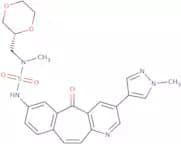
CAS:MK-2461 is an orally bioavailable small molecule that binds to the epidermal growth factor receptor (EGFR) and inhibits its downstream signaling. It has been shown to have potent antitumor activity in cell culture and in vivo against a range of tumor types. MK-2461 binds to the EGFR with high affinity, inhibiting the downstream signaling pathway by blocking the activation of molecules such as Raf, MEK1/2, and ERK1/2. The binding site of MK-2461 is located on the extracellular domain of EGFR.
Formula:C24H25N5O5SPurity:Min. 95%Molecular weight:495.55 g/molClanfenur
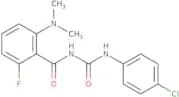
CAS:Clanfenur is a triazine that has been shown to have antitumour activity. It has been shown to inhibit the growth of cancer cells in vitro and in vivo. Clanfenur inhibits cell proliferation by binding to the target cell and blocking the synthesis of DNA, RNA, and proteins. This compound also prevents energy production and disrupts the cell's metabolism. Clanfenur also binds to chromatin, which may be responsible for its antitumour activity. Clanfenur is chemically stable and can be used as a chemical probe for chromatographic analysis. Clinical studies have found that clanfenur exhibits low toxicity in humans with no serious side effects reported. The toxic effects of clanfenur are limited to mild nausea, vomiting, diarrhoea, fever, anorexia or weight loss in some patients.Formula:C16H15ClFN3O2Purity:Min. 95%Molecular weight:335.76 g/mol
![2-[[5-[4-(Dimethylsulfamoyl)phenyl]-8-methyl-2-oxo-1,6,7,9-tetrahydropyrrolo[3,2-H]isoquinolin-3-y…](/_next/image/?url=https%3A%2Fstatic.cymitquimica.com%2Fproducts%2F3D%2Fthumb-webp%2FVJA06359.webp&w=3840&q=75)

![N2-[2-[4-[(2-Naphthalenylcarbonyl)amino]phenyl]acetyl]-L-arginyl-L-isoleucyl-L-α-aspartyl-N-[(2S)-…](/_next/image/?url=https%3A%2Fstatic.cymitquimica.com%2Fproducts%2F3D%2Fthumb-webp%2FZEA83345.webp&w=3840&q=75)



![2-Methyl-3-[4-(3-pyrrolidin-1-ylpropoxy)phenyl]-5-(trifluoromethyl)quinazolin-4-one](/_next/image/?url=https%3A%2Fstatic.cymitquimica.com%2Fproducts%2F3D%2Fthumb-webp%2FSWB57441.webp&w=3840&q=75)