Biochemicals and Reagents
Subcategories of "Biochemicals and Reagents"
- Biomolecules(98,575 products)
- By Biological Target(100,710 products)
- By Pharmacological Effects(6,937 products)
- Cryopreservatives(21 products)
- Desinfectants and Related Compounds(28 products)
- Hormones(421 products)
- Plant Biology(6,907 products)
- Secondary Metabolites(14,367 products)
Found 130493 products of "Biochemicals and Reagents"
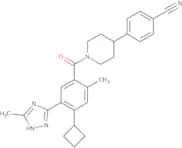
FASN-IN-2
CAS:FASN-IN-2 is a chemical inhibitor, specifically targeting fatty acid synthase (FASN), a key enzyme involved in lipogenesis. It is derived from synthetic chemical methods and engineered to interfere with the enzymatic function of FASN by binding to its active site, thereby preventing the conversion of acetyl-CoA and malonyl-CoA to fatty acids. This inhibition is crucial as FASN is overexpressed in various cancer cells, contributing to their rapid proliferation and survival by providing necessary lipids for membrane synthesis.Formula:C27H29N5OPurity:Min. 95%Molecular weight:439.6 g/mol(-)-Sparteine
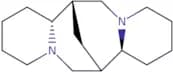
CAS:Sparteine acts as an inhibitor of voltage-gated sodium channels. In organic chemisty, it is used for chiral synthesis.
Formula:C15H26N2Purity:Min. 95%Color and Shape:Yellow Clear LiquidMolecular weight:234.38 g/molHLI 373 dihydrochloride
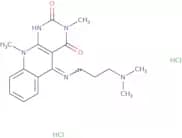
CAS:HLI 373 dihydrochloride is a research tool that can be used as an activator or ligand. It has been shown to bind to the receptor and cell biology, which can be used for ion channels, high purity, protein interactions, pharmacology, peptides, and life science. HLI 373 dihydrochloride is a potent inhibitor of the voltage-gated potassium channel Kv1.5 in neuronal cells.Formula:C18H25Cl2N5O2Purity:Min. 95%Molecular weight:414.3 g/mol1H-Purine-2,6-diamine, N6-(1R,2S,4S)-bicyclo(2.2.1)hept-2-yl-N2-phenyl
CAS:1H-Purine-2,6-diamine, N6-(1R,2S,4S)-bicyclo(2.2.1)hept-2-yl-N2-phenyl is a potent and selective activator of the GABAA receptor that is used as a research tool to study the role of ion channels in life science and pharmacology. It has been shown to induce convulsions in mice, with an ED50 value of 0.04 mg/kg body weight. This compound is also used as a reagent for antibody production and cell biology research.Formula:C18H20N6Purity:Min. 95%Molecular weight:320.4 g/molCD8a antibody (PE)
CD8a antibody (PE) was raised in Mouse using the alpha chainc of chicken CD8 as the immunogen.Purity:Min. 95%CD20 antibody (PE-CY7)
CD20 antibody (PE-CY7) was raised in mouse using human CD20 as the immunogen.Purity:Min. 95%2Abz-Acp-Ala-Phe(4-NO2)-Leu
CAS:Please enquire for more information about 2Abz-Acp-Ala-Phe(4-NO2)-Leu including the price, delivery time and more detailed product information at the technical inquiry form on this pageFormula:C31H42N6O8Purity:Min. 95%Molecular weight:626.7 g/molCD20 antibody (Allophycocyanin-CY7)
CD20 antibody (Allophycocyanin) was raised in mouse using human CD20 as the immunogen.
Purity:Min. 95%TAS-116
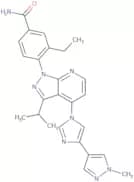
CAS:TAS-116 is a cytosolic inhibitor that disrupts the chaperone function of Hsp90. TAS-116 has potent antitumor activity in mouse tumor models and significant cytotoxicity against human stromal tumours. This drug inhibits epidermal growth factor (EGF) receptor signaling, which may be due to its ability to inhibit the ATPase activity of Hsp90. TAS-116 also interacts with the ATPase domain of Hsp90 and binds to two amino acid residues on the surface of the ATPase domain, which are important for substrate binding. These interactions have been shown to be critical for TAS-116’s inhibition of EGF receptor signaling and potent antitumor activity.Formula:C25H26N8OPurity:Min. 95%Molecular weight:454.53 g/molMSC2530818
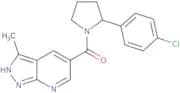
CAS:MSC2530818 is a small molecule kinase inhibitor that is selective for the epidermal growth factor receptor (EGFR) and has been shown to inhibit the proliferation of colorectal carcinoma cells in vivo. MSC2530818 interacts with the ATP binding site of EGFR and blocks its activity. This inhibition leads to decreased expression of two downstream targets, cyclin D1 and c-Myc, which are involved in cell cycle progression. In vitro, MSC2530818 inhibits the proliferation of cancer cells by targeting EGFR and blocking its activity. The compound has also been shown to be bioavailable and able to inhibit tumor xenografts when orally administered.
MSC2530818 may be useful as an anti-cancer therapy for tumors that have activated EGFR signaling pathways, such as colorectal carcinoma cells or breast cancer cells with HER2 overexpression (ERBB2).Formula:C18H17ClN4OPurity:Min. 95%Molecular weight:340.81 g/molCD28 antibody (FITC)
CD28 antibody (FITC) was raised in hamster using CD28 costimulatory receptor as the immunogen.Purity:Min. 95%Parainfluenza type 3 antibody (FITC)
Parainfluenza type 3 antibody (FITC) was raised in mouse using hemagluttinin of parainfluenza virus, type 3 as the immunogen.CD16 antibody (PE-CY7)
CD16 antibody (PE) was raised in rat using murine CD16/32 (CD16/Fc gamma II and CD32/Fc gamma III receptors)Purity:Min. 95%Alobresib (GS-5829)
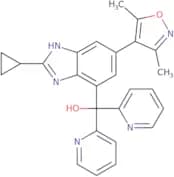
CAS:Alobresib is a lysine-specific inhibitor of the bromodomain and extra-terminal domain (BET) family. Alobresib has been shown to selectively inhibit H3K27me3 binding to the BET family of proteins, which may be an important event in cancer development. Alobresib also has the potential to be repositioned as an antineoplastic drug that can be used for the treatment of cancer, such as leukemia, lymphoma, and myeloid leukemia.Formula:C26H23N5O2Purity:Min. 95%Molecular weight:437.5 g/molMAP4343
CAS:MAP4343 is a peptide that has been shown to activate the ERK1/2 and JNK pathways. MAP4343 has also been shown to bind to the TGF-β receptor, which is a receptor tyrosine kinase that regulates cell proliferation, differentiation, and apoptosis. The ligand for this receptor is Transforming Growth Factor beta 1 (TGF-β1). MAP4343 can be used as a research tool for studying protein interactions and receptors. MAP4343 is an inhibitor of Ion channels, such as voltage-gated potassium channels. It can inhibit ion channel currents in Xenopus oocytes expressing human potassium channels by binding to the extracellular domain of these channels. This inhibition leads to a decrease in the membrane potential.Formula:C22H34O2Purity:Min. 95%Molecular weight:330.5 g/molCD90 antibody (Spectral Red)
CD90 antibody (Spectral Red) was raised in rat using murine T-Cell hybridoma c6/G8, produced by fusion of porl insulin-specific BALB/c T cells with the AKR thymoma line BW 5147 as the immunogen.Purity:Min. 95%CD106 antibody (PE)
CD106 antibody (PE) was raised in Mouse using human CD106/VCAM-1 as the immunogen.Purity:Min. 95%Vps34-IN-1
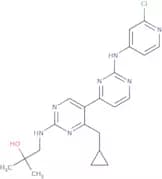
CAS:Vps34-IN-1 is a potent inhibitor of autophagy. It can be used as a cancer treatment and has been shown to inhibit tumor growth in vivo. Vps34-IN-1 prevents the production of phosphatases that are necessary for the degradation of proteins by autophagy, which leads to cell death. The drug also inhibits lipid kinase activity and flt3-ITD, which are both involved in the hematopoietic process. In vitro studies have shown that Vps34-IN-1 does not affect healthy cells but only cancerous cells.Formula:C21H24ClN7OPurity:Min. 95%Molecular weight:425.91 g/molMBX2546
CAS:MBX2546 is a synthetic biochemical compound, which is derived from advanced chemical synthesis techniques to create a stable and reactive molecular structure. Its design leverages cutting-edge methodologies in organic chemistry, allowing for precise customization at the atomic level. With a mode of action that involves binding to specific molecular targets, MBX2546 can modulate or inhibit biochemical pathways of interest, providing a powerful tool for investigators aiming to dissect complex biological processes.Formula:C18H21N3O5SPurity:Min. 95%Molecular weight:391.4 g/mol